


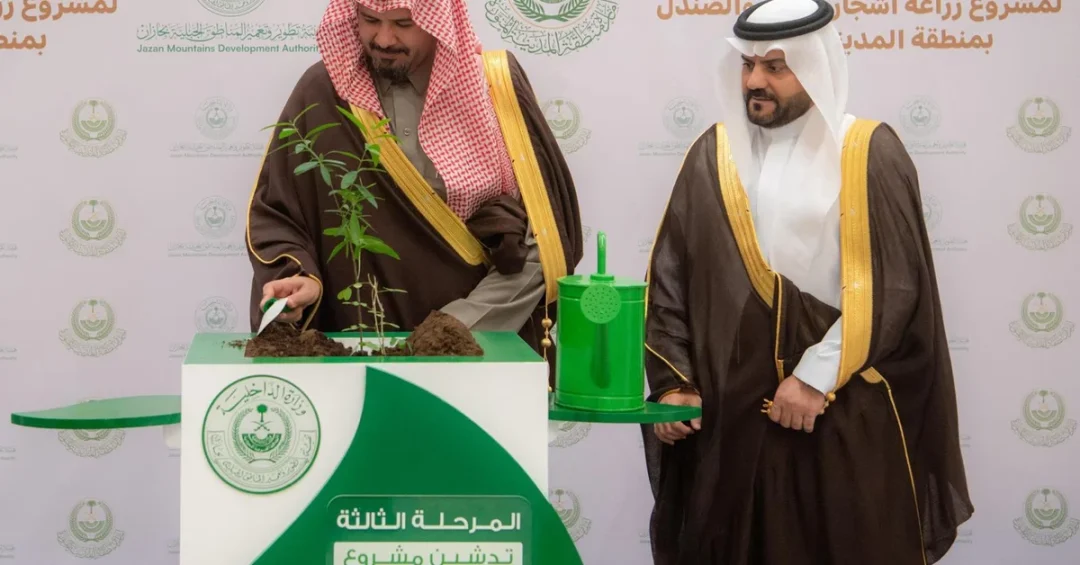
Prince Salman bin Sultan bin Abdulaziz, Governor of Madinah Region, inaugurated a project to plant oud and sandalwood trees across the region on January 7, 2025. The initiative aims to cultivate these unique and valuable tree species to boost environmental sustainability, support economic diversification, and raise public awareness about preserving ecological diversity. The project aligns with the Kingdom of Saudi Arabia’s Vision 2030 objectives, emphasizing sustainable development and environmental stewardship.
Context and Background
Madinah, a city of profound religious and historical significance, is increasingly focusing on green initiatives as part of the national push toward environmental sustainability. The oud and sandalwood trees are prized for their fragrant wood and oils, which hold high cultural and economic value in the region and globally. By planting these species, the project seeks to enhance vegetation cover and create new economic opportunities for local communities.
Key Details
Prince Salman bin Sultan bin Abdulaziz expressed strong support for the project, recognizing it as a vital step in diversifying the region’s vegetation cover. The project is designed to promote ecological balance and preserve biodiversity while generating sustainable income through the cultivation of high-value trees. Local farmers and entrepreneurs are expected to benefit from training and resources provided under the initiative.
Implications and Impact
The project reinforces Madinah’s role as a leader in environmental conservation within Saudi Arabia. It also supports the national strategy to combat desertification, improve air quality, and promote green spaces in urban and rural areas. By introducing economically valuable tree species, the project could create a new niche market for oud and sandalwood products, contributing to the local economy.
Vision 2030 Alignment
This tree-planting project directly supports Vision 2030’s goals of environmental sustainability, economic diversification, and social responsibility. It reflects the Kingdom’s commitment to a greener future by preserving natural resources and promoting sustainable land use. As Saudi Arabia transforms under Vision 2030, initiatives like this one help build a more resilient, environmentally conscious, and prosperous society.
20 Questions
Q1. Who inaugurated the oud and sandalwood tree planting project in Madinah?
A1. Prince Salman bin Sultan bin Abdulaziz, Governor of Madinah Region, inaugurated the project on January 7, 2025, as reported by the Saudi Press Agency.
Q2. What are the main goals of the project?
A2. The project aims to cultivate unique tree species with high environmental and economic value, boost the local economy, and raise awareness about preserving ecological diversity in the region.
Q3. Why were oud and sandalwood trees chosen for this project?
A3. Oud and sandalwood are prized for their fragrant wood and oils, which have significant cultural and economic value locally and globally, making them ideal for sustainable economic development.
Q4. How does the project support environmental sustainability?
A4. By planting these trees, the project enhances vegetation cover, improves air quality, prevents soil erosion, and promotes ecological balance, all contributing to long-term environmental health.
Q5. What is Prince Salman’s role in the initiative?
A5. Prince Salman officially inaugurated the project and expressed support and appreciation for it, recognizing its importance in enhancing sustainability and diversifying vegetation cover.
Q6. When was the project inaugurated?
A6. The project was inaugurated on January 7, 2025, according to the official announcement by the Saudi Press Agency.
Q7. Where is the project taking place?
A7. The project is being implemented across the Madinah Region, which includes both urban and rural areas, to maximize environmental and economic benefits.
Q8. How does the project align with Vision 2030?
A8. The project supports Vision 2030’s goals of environmental sustainability, economic diversification, and social responsibility by promoting green initiatives and sustainable resource management.
Q9. What economic benefits are expected from planting oud and sandalwood trees?
A9. The trees produce valuable wood and oils for perfumes and medicines, creating new income streams for local farmers, entrepreneurs, and the regional economy.
Q10. How will the project raise public awareness?
A10. The initiative includes educational campaigns and community engagement activities to inform residents about the importance of ecological diversity and sustainable practices.
Q11. Who announced the project?
A11. The project was announced by the Saudi Press Agency (SPA), the official state news service of the Kingdom of Saudi Arabia.
Q12. What environmental challenges does the project address?
A12. The project helps combat desertification, enhances biodiversity, and improves climate resilience by increasing green cover and promoting sustainable land use in the region.
Q13. Is the project part of a larger national strategy?
A13. Yes, it is part of the Saudi Green Initiative and the broader Vision 2030 plan that aims to plant billions of trees and restore vast areas of land across the Kingdom.
Q14. How will local communities benefit from this project?
A14. Communities will gain economic opportunities through tree cultivation, training programs, and potential jobs in harvesting, processing, and marketing oud and sandalwood products.
Q15. What is the significance of Madinah in this context?
A15. Madinah is a historic and religiously significant city, and this project highlights its commitment to leading environmental conservation and sustainable development in the region.
Q16. How does the project preserve ecological diversity?
A16. By introducing unique tree species and protecting local flora, the project helps maintain balanced ecosystems and supports the survival of diverse plant and animal life in the area.
Q17. What role do government agencies play in the project?
A17. The project is supported by regional authorities and environmental ministries that provide resources, expertise, and oversight to ensure its successful implementation and long-term impact.
Q18. Can this model be replicated in other regions of Saudi Arabia?
A18. Yes, the success of this project could serve as a replicable model for other regions aiming to achieve similar environmental and economic benefits through targeted tree planting.
Q19. What is the timeline for the project’s completion?
A19. While no specific completion date has been announced, the project is expected to unfold over several years to allow tree growth and yield sustainable economic returns.
Q20. How can the public support this initiative?
A20. The public can support the initiative by participating in awareness programs, adopting sustainable practices, and encouraging the cultivation of native and economically valuable trees in their communities.
Reader Feedback
We value your thoughts. Please share your feedback on this article.
Your feedback helps us improve our coverage.