


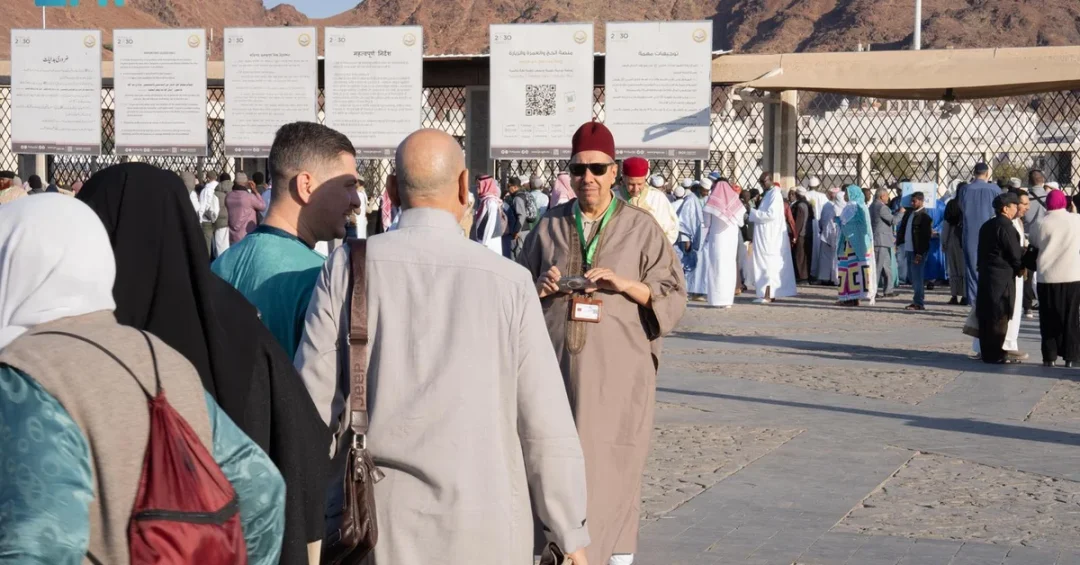
The third group of participants in the Custodian of the Two Holy Mosques Program for Umrah and Visitation, organized by the Ministry of Islamic Affairs, Dawah, and Guidance, visited key historical and religious landmarks in Madinah on January 25, 2025. The group, consisting of 250 male and female pilgrims from 18 African countries, is part of a broader initiative that will host 1,000 pilgrims from 66 countries this year. During their stay, they toured Mount Uhud and the Martyrs’ Cemetery, as well as the Quba Mosque, where they performed prayers and learned about ongoing expansion projects under King Salman bin Abdulaziz Al Saud.
Context and Background
The Custodian of the Two Holy Mosques Program for Umrah and Visitation is an annual initiative designed to welcome pilgrims from around the world, fostering cultural and religious exchange. This year’s program, running for the Islamic year 1446 AH, reflects Saudi Arabia’s commitment to serving Islam and its followers, a core value of the Kingdom’s leadership. The visits to Madinah highlight the historical depth of Islamic heritage, with Mount Uhud and the Martyrs’ Cemetery commemorating significant events in early Islamic history.
Key Details
At the Quba Mosque, the pilgrims performed prayers and received briefings on its historical significance as the first mosque built after Prophet Mohammed’s migration to Madinah. They were also informed about the ongoing expansion and development projects under the Custodian of the Two Holy Mosques King Salman bin Abdulaziz Al Saud’s initiative, which aims to enhance the mosque’s capacity and improve services for worshippers. Following their stay in Madinah, the guests will proceed to Makkah to perform the Umrah rituals, completing their spiritual journey.
Implications and Impact
This program strengthens Saudi Arabia’s role as a global hub for Islamic pilgrimage and cultural diplomacy. By hosting pilgrims from diverse nations, including 18 African countries in this group, the Kingdom promotes interfaith understanding and showcases its modern infrastructure and hospitality. The visits also underscore Saudi Arabia’s dedication to preserving and developing Islamic heritage sites, aligning with its broader goals of cultural exchange and religious tolerance.
Vision 2030 Alignment
The initiative directly supports Vision 2030’s objectives of enhancing tourism and cultural engagement, particularly in the religious tourism sector. By expanding facilities like the Quba Mosque and hosting global pilgrims, Saudi Arabia is positioning itself as a leading destination for spiritual and historical tourism. This program not only enriches the pilgrim experience but also contributes to economic diversification and international goodwill, reinforcing the Kingdom’s commitment to serving the global Muslim community.
20 Questions
Q1. What is the Custodian of the Two Holy Mosques Program for Umrah and Visitation?
A1. It is an annual initiative organized by the Saudi Ministry of Islamic Affairs, Dawah, and Guidance to host pilgrims from around the world for Umrah and visits to Islamic sites, promoting cultural exchange and religious devotion.
Q2. How many pilgrims are in the third group visiting Madinah?
A2. The third group comprises 250 male and female pilgrims from 18 African countries, as part of a larger program hosting 1,000 pilgrims from 66 countries this year.
Q3. What historical sites did the group visit in Madinah?
A3. The group toured Mount Uhud, the Martyrs’ Cemetery, and the Quba Mosque, all significant landmarks in Islamic history.
Q4. Why is Mount Uhud significant in Islam?
A4. Mount Uhud is the site of the Battle of Uhud, a key early Islamic battle. It is revered for its historical and religious importance, and the Martyrs’ Cemetery nearby honors fallen companions of the Prophet Mohammed.
Q5. What is the Quba Mosque known for?
A5. The Quba Mosque is recognized as the first mosque built after Prophet Mohammed’s migration to Madinah, making it a deeply significant religious site for Muslims worldwide.
Q6. Who organized this program?
A6. The program is organized by the Ministry of Islamic Affairs, Dawah, and Guidance under the patronage of the Custodian of the Two Holy Mosques King Salman bin Abdulaziz Al Saud.
Q7. How does the program serve international pilgrims?
A7. The program provides logistical support, cultural tours, and spiritual guidance, allowing pilgrims from various countries to perform Umrah and visit Islamic landmarks with ease.
Q8. What expansion projects are underway at the Quba Mosque?
A8. The expansion projects aim to increase the mosque’s capacity and improve facilities for worshippers, part of King Salman’s initiative to enhance religious sites.
Q9. Which countries are represented in the third group?
A9. The group includes pilgrims from 18 African countries, though the program overall hosts participants from 66 nations, reflecting global diversity.
Q10. What happens after the pilgrims’ stay in Madinah?
A10. After Madinah, the pilgrims will travel to Makkah to perform the Umrah rituals, completing their spiritual journey under the program’s guidance.
Q11. How does this program support Saudi Arabia’s religious tourism goals?
A11. By enhancing infrastructure and hosting international pilgrims, the program boosts religious tourism, a key sector for economic diversification under Vision 2030.
Q12. What is the role of the Ministry of Islamic Affairs in this program?
A12. The ministry oversees the program’s organization, including logistics, cultural activities, and religious education, ensuring a meaningful experience for pilgrims.
Q13. How many pilgrims will be hosted in total this year?
A13. The program will host a total of 1,000 male and female pilgrims from 66 countries in the year 1446 AH.
Q14. Why is the program named after the Custodian of the Two Holy Mosques?
A14. The name honors Saudi Arabia’s role as the guardian of Islam’s holiest sites in Makkah and Madinah, underscoring the Kingdom’s commitment to serving pilgrims.
Q15. What cultural activities are included in the program?
A15. The program includes visits to historical landmarks, prayers at significant mosques, and educational briefings on Islamic heritage, promoting cultural understanding.
Q16. How does the program reflect Saudi Arabia’s Vision 2030?
A16. Vision 2030 emphasizes enhancing tourism, cultural exchange, and global engagement. This program directly aligns by attracting international visitors and showcasing Saudi heritage.
Q17. What is the significance of the Martyrs’ Cemetery in Madinah?
A17. The cemetery, near Mount Uhud, is the burial site of companions of the Prophet Mohammed who died in the Battle of Uhud, holding deep spiritual importance.
Q18. Are there plans to expand the Custodian of the Two Holy Mosques Program?
A18. The program is annual, and expansions may occur as Saudi Arabia continues to enhance its pilgrimage infrastructure and host more international pilgrims under Vision 2030.
Q19. How do pilgrims benefit from the educational briefings at Quba Mosque?
A19. The briefings provide insights into the mosque’s historical and religious significance, fostering a deeper appreciation of Islamic heritage and the Kingdom’s development efforts.
Q20. What message does this program send to the global community?
A20. It demonstrates Saudi Arabia’s dedication to Islamic unity, cultural diplomacy, and hospitality, reinforcing its role as a global leader in serving pilgrims and promoting peace.
Reader Feedback
We value your thoughts. Please share your feedback on this article.
Your feedback helps us improve our coverage.