


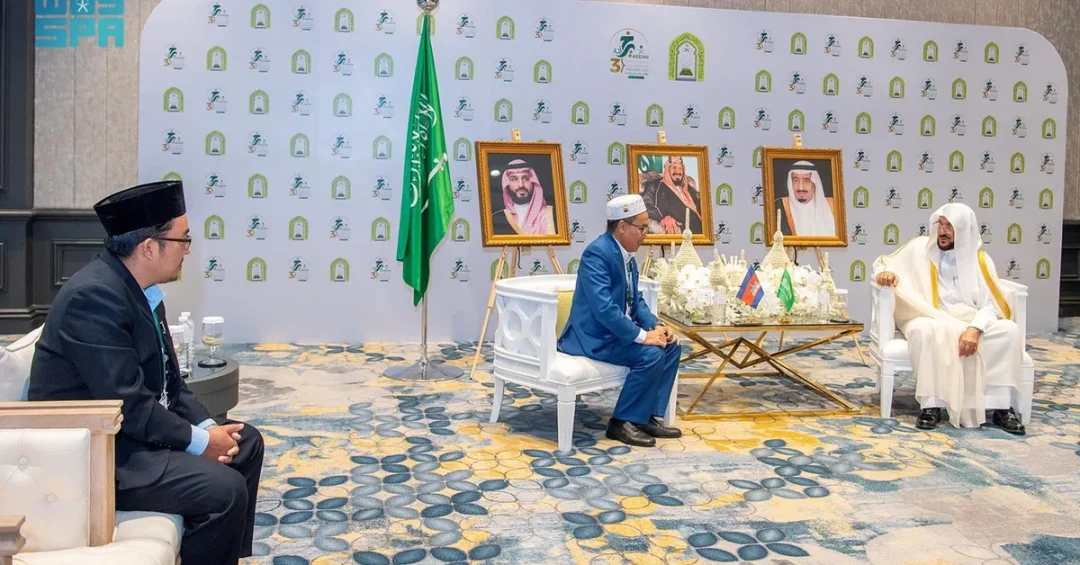
The Minister of Islamic Affairs, Dawah, and Guidance, Sheikh Dr. Abdullatif Al Alsheikh, met with a Cambodian delegation in Bangkok on January 25, 2025, during the 3rd ASEAN Khair Ummah Conference. The delegation was headed by Advisor and Special Mission for Islamic Affairs Ali Musa, who conveyed his country’s recognition of Saudi Arabia’s pivotal role in serving the global Muslim community.
Context and Background
The ASEAN Khair Ummah Conference serves as a key platform for fostering dialogue and cooperation among Muslim-majority and Muslim-minority nations in Southeast Asia. Saudi Arabia’s active participation underscores its commitment to strengthening ties with ASEAN member states, a region of growing strategic importance under Vision 2030. The meeting in Bangkok highlights the Kingdom’s ongoing efforts to promote moderate Islamic values and enhance humanitarian support.
Key Details
During the meeting, Advisor Ali Musa commended Saudi Arabia’s efforts under its wise leadership in serving the Two Holy Mosques, the holy sites, and their visitors, including pilgrims, Umrah performers, and other visitors. He highlighted the exceptional care provided to them from their arrival in the Kingdom until their departure. Advisor Musa also emphasized the strong bilateral relations between Saudi Arabia and Cambodia, expressing gratitude for the Kingdom’s historical support for his country. He lauded Saudi Arabia’s global leadership in addressing the needs of Muslims worldwide, as demonstrated by initiatives like the ASEAN Conference.
Implications and International Impact
The meeting reinforces Saudi Arabia’s role as a global hub for Islamic affairs and its dedication to humanitarian and cultural diplomacy. For Cambodia, the engagement signifies access to Saudi expertise in religious guidance and support for Muslim communities. Regionally, it strengthens Saudi Arabia’s ties with ASEAN, a bloc of over 650 million people, and opens avenues for expanded cooperation in education, humanitarian aid, and interfaith dialogue. The Kingdom’s active role in the conference also highlights its soft power influence, countering extremist narratives and promoting tolerance.
Vision 2030 Alignment
This diplomatic engagement aligns with Vision 2030’s goals of enhancing Saudi Arabia’s global partnerships and positioning the Kingdom as a leader in Islamic affairs and humanitarian service. By fostering relations with ASEAN nations, Saudi Arabia advances its economic diversification and cultural outreach objectives, creating a more interconnected and prosperous future for all stakeholders.
20 Questions
Q1. Who is the Minister of Islamic Affairs, Dawah, and Guidance in Saudi Arabia?
A1. Sheikh Dr. Abdullatif Al Alsheikh is the Minister, responsible for overseeing religious affairs, guiding Islamic organizations, and promoting moderate values.
Q2. What was the purpose of the meeting in Bangkok?
A2. The meeting aimed to strengthen bilateral relations and discuss Islamic cooperation between Saudi Arabia and Cambodia during the ASEAN Khair Ummah Conference.
Q3. Who led the Cambodian delegation at the meeting?
A3. The delegation was led by Advisor and Special Mission for Islamic Affairs Ali Musa.
Q4. What is the ASEAN Khair Ummah Conference?
A4. It is a regional conference focused on fostering dialogue and cooperation among Muslim communities in ASEAN member states.
Q5. Why is the ASEAN region important to Saudi Arabia?
A5. ASEAN is a region of strategic importance under Vision 2030, offering opportunities for economic and cultural partnerships.
Q6. What did Advisor Ali Musa commend about Saudi Arabia?
A6. He commended the Kingdom’s leadership in serving the Two Holy Mosques and providing exceptional care to pilgrims and visitors.
Q7. How did the Cambodian delegation express gratitude to Saudi Arabia?
A7. They expressed gratitude for Saudi Arabia’s historical support for Cambodia and its global leadership in Muslim affairs.
Q8. What is the role of the Two Holy Mosques in Saudi Arabia’s foreign policy?
A8. Serving the Two Holy Mosques reinforces Saudi Arabia’s Islamic leadership and dedication to religious services worldwide.
Q9. How does this meeting impact Saudi-Cambodian relations?
A9. It strengthens cooperation in religious guidance and supports Cambodia’s Muslim community.
Q10. What is the significance of the ASEAN Khair Ummah Conference for Vision 2030?
A10. It aligns with Vision 2030’s goal of enhancing global partnerships and cultural outreach in Southeast Asia.
Q11. Did the meeting involve any new agreements?
A11. No new agreements were announced; the focus was on affirming existing cooperation and mutual support.
Q12. Why is Saudi Arabia considered a leader in Islamic affairs?
A12. Due to its stewardship of the Two Holy Mosques, its humanitarian initiatives, and its role in promoting moderate Islam.
Q13. What is Cambodia’s religious demographic context?
A13. Cambodia has a small Muslim minority, and Saudi support helps meet their religious and educational needs.
Q14. How does the meeting promote interfaith dialogue?
A14. By fostering understanding and cooperation, it counters extremism and supports tolerance in ASEAN.
Q15. What other ministries are involved in Vision 2030 diplomatic outreach?
A15. The Ministry of Foreign Affairs and other ministries collaborate to build strategic partnerships.
Q16. Will Cambodia participate in future ASEAN Khair Ummah Conferences?
A16. Likely, as the conference encourages continued engagement among member states.
Q17. How does the meeting reflect Saudi Arabia’s soft power?
A17. Through religious and cultural diplomacy, Saudi Arabia enhances its global influence.
Q18. What is the broader impact on Muslims in Southeast Asia?
A18. It increases access to Saudi religious services and humanitarian aid, supporting Muslim communities.
Q19. Are there any future events planned between Saudi Arabia and Cambodia?
A19. Based on this meeting, future joint initiatives in Islamic education or development may be considered.
Q20. How does the conference support Vision 2030’s cultural outreach goals?
A20. By building ties with ASEAN, it supports economic diversification and international cooperation.
Reader Feedback
We value your thoughts. Please share your feedback on this article.
Your feedback helps us improve our coverage.