


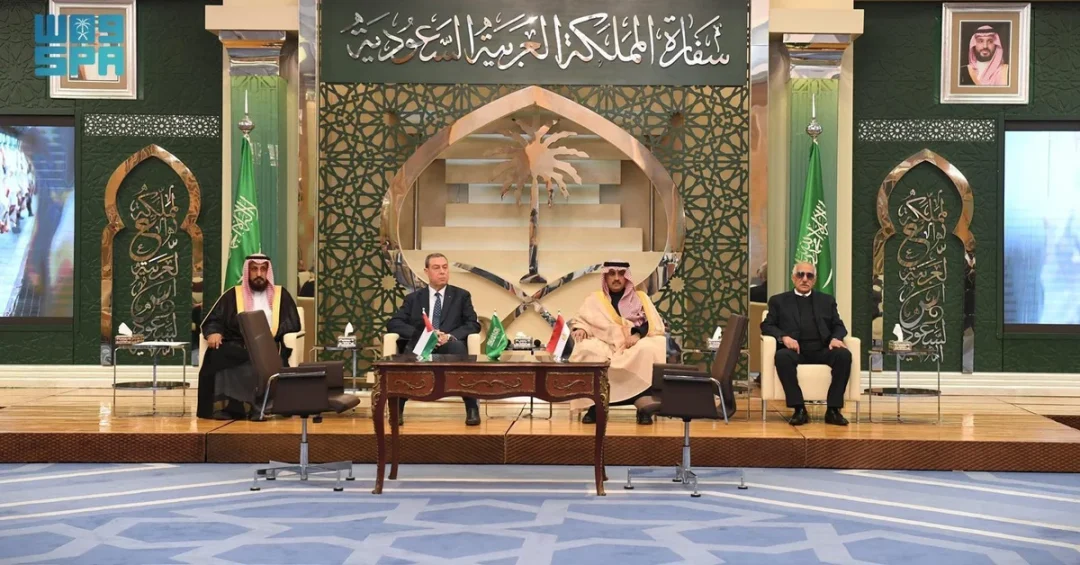
Saudi Arabia, through its Project for Utilization of Hady and Adahi, delivered shares of 30,000 sacrificial animals to Egypt and an equal number to Palestine during a ceremony at the Kingdom’s embassy in Cairo on February 8, 2025. The handover was led by Saudi Deputy Ambassador to Egypt Abdulrahman bin Salem Al-Dahas, underscoring the Kingdom’s commitment to humanitarian support and Islamic solidarity.
Context and Background
The Project for Utilization of Hady and Adahi is an annual initiative supervised by the Saudi Ministry of Islamic Affairs, Dawah and Guidance. It facilitates the sacrifice of livestock during Hajj and Eid al-Adha and distributes the meat to beneficiaries in 26 Islamic countries. In 2025, the project underscores Saudi Arabia’s role as a leader in Islamic philanthropy and its dedication to aiding communities in need.
Key Details
During the ceremony, Project General Supervisor Saad Al-Wabel highlighted the Kingdom’s keenness to ensure efficient delivery of sacrificial meat to beneficiaries. Palestinian Ambassador to Egypt Diab Al-Louh expressed gratitude to the Custodian of the Two Holy Mosques King Salman bin Abdulaziz Al Saud and Crown Prince Mohammed bin Salman bin Abdulaziz Al Saud for the annual provision. He noted that the aid comes when the Gaza Strip faces extremely difficult humanitarian conditions. Egyptian representatives also thanked the Saudi leadership for their support.
Implications and Impact
This delivery reinforces Saudi Arabia’s ongoing humanitarian efforts in the region, particularly for Palestine, where the need for relief has intensified. The project strengthens bilateral ties with Egypt and Palestine, showcasing the Kingdom’s commitment to alleviating suffering and promoting stability. It also aligns with Saudi Arabia’s broader foreign policy of supporting brotherly nations through tangible aid.
Vision 2030 Alignment
The initiative reflects Saudi Arabia’s Vision 2030 goals of enhancing humanitarian and charitable contributions globally. By institutionalizing aid through projects like Hady and Adahi, the Kingdom demonstrates its role as a responsible global actor, leveraging its Islamic heritage to foster solidarity and development. The sustained delivery of sacrificial meat exemplifies Saudi Arabia’s long-term commitment to humanitarian principles and regional partnership.
20 Questions
Q1. What is the Project for Utilization of Hady and Adahi?
A1. It is a Saudi initiative that manages the sacrifice of livestock during Hajj and Eid al-Adha, distributing meat to beneficiaries in 26 Islamic countries, ensuring efficiency and religious compliance.
Q2. Who delivered the sacrificial shares to Egypt and Palestine?
A2. Saudi Deputy Ambassador to Egypt Abdulrahman bin Salem Al-Dahas delivered the shares during a ceremony at the Kingdom’s embassy in Cairo.
Q3. How many sacrificial animals were delivered to Egypt?
A3. Shares of 30,000 sacrificial animals were handed over to the Arab Republic of Egypt.
Q4. How many sacrificial animals were delivered to Palestine?
A4. An equal number of shares, 30,000 sacrificial animals, were delivered to the State of Palestine.
Q5. Who is the General Supervisor of the project?
A5. The General Supervisor is Saad Al-Wabel, who emphasized the Kingdom’s commitment to facilitating meat delivery.
Q6. To how many Islamic countries does the project deliver meat?
A6. The project delivers sacrificial meat to 26 Islamic countries across the world.
Q7. What did the Palestinian Ambassador say about the aid?
A7. Ambassador Diab Al-Louh thanked King Salman and Crown Prince Mohammed bin Salman, noting Gaza’s dire need for enhanced relief efforts.
Q8. Why is the Gaza Strip mentioned in this context?
A8. The delivery coincides with extremely difficult humanitarian conditions in Gaza, where intensified relief is critically needed.
Q9. How did Egyptian representatives respond?
A9. They expressed thanks and appreciation to the Saudi leadership for their support to the Arab nation.
Q10. What is the role of the Saudi Ministry of Islamic Affairs?
A10. The ministry supervises the project, ensuring that sacrifices are performed according to Islamic guidelines and meat is distributed properly.
Q11. Does this project occur annually?
A11. Yes, the Project for Utilization of Hady and Adahi is an annual initiative during Hajj and Eid al-Adha.
Q12. What is the significance of the Custodian of the Two Holy Mosques title?
A12. The title refers to King Salman bin Abdulaziz Al Saud, signifying his guardianship over Mecca and Medina, Islam’s holiest sites.
Q13. How does this project align with Vision 2030?
A13. It supports Vision 2030’s goals of enhancing humanitarian contributions and reinforcing Saudi Arabia’s global charitable role.
Q14. What is the official source for this news?
A14. The information was released by the Saudi Press Agency (SPA).
Q15. What is the date of the delivery?
A15. The ceremony took place on February 8, 2025.
Q16. Where did the delivery ceremony occur?
A16. The ceremony was held at the Kingdom’s embassy in Cairo, Egypt.
Q17. What is the broader regional impact of this aid?
A17. The delivery strengthens bilateral ties with Egypt and Palestine and showcases Saudi solidarity and humanitarian commitment.
Q18. How does this project ensure meat reaches beneficiaries?
A18. The project employs a systematic process for slaughtering, packaging, and transporting meat to designated countries and communities.
Q19. What was the Palestinian Ambassador’s title?
A19. He is Diab Al-Louh, the Palestinian Ambassador to Egypt.
Q20. What does the project reflect about Saudi foreign policy?
A20. It reflects a policy rooted in Islamic philanthropy, humanitarian support, and sustainable development for partner nations.
Reader Feedback
We value your thoughts. Please share your feedback on this article.
Your feedback helps us improve our coverage.