


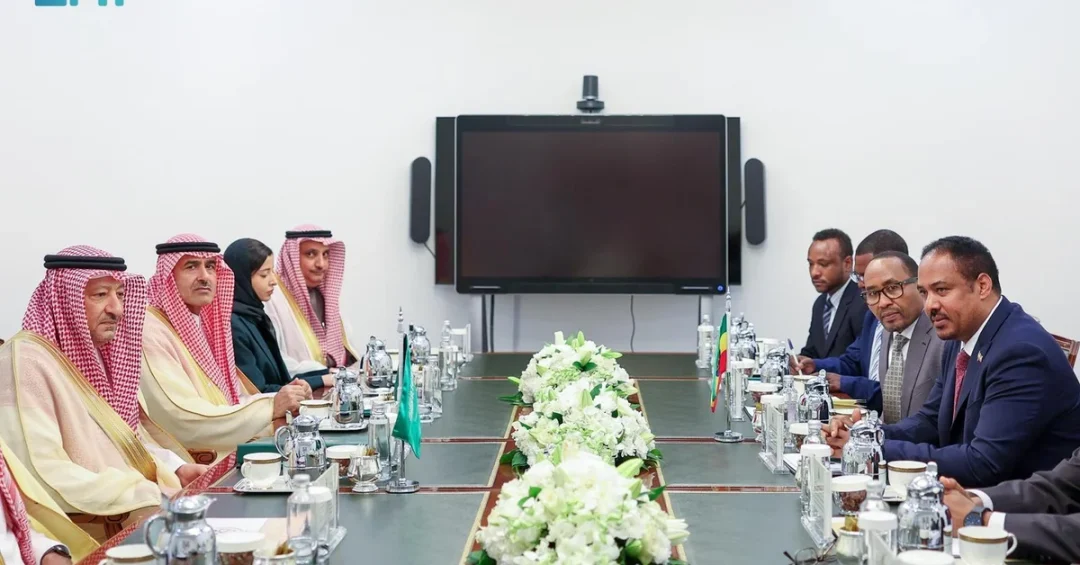
Senior officials from Saudi Arabia and Ethiopia convened in Riyadh on December 1, 2024, for the first round of political consultations between the Saudi Ministry of Foreign Affairs and the Ministry of Foreign Affairs of the Federal Democratic Republic of Ethiopia. The meeting, hosted at the Saudi Ministry of Foreign Affairs headquarters, underscores the Kingdom’s commitment to deepening bilateral ties and fostering dialogue with strategic partners in the Horn of Africa.
Context and Background
The consultations were led by Saudi Vice Minister of Foreign Affairs Eng. Waleed El-Khereiji and Ethiopia’s Minister of State for Foreign Affairs, Ambassador Mesganu Arga. This inaugural session reflects a shared interest in enhancing cooperation and exchanging perspectives on regional and international matters. Ethiopia, with its growing influence in the Horn of Africa, is a key partner for Saudi Arabia under the Kingdom’s broader strategy to strengthen diplomatic and economic connections across the continent.
Key Details
Discussions centered on ways to boost collaboration in areas of mutual interest, including economic development, trade, and security. The meeting provided a platform for both delegations to review current bilateral relations and explore new avenues for partnership. Notable attendees included Saudi Ambassador to Ethiopia Dr. Fahd Al-Humaidani, Director General of Expatriate Affairs at the Ministry of Foreign Affairs Ambassador Dr. Mohammed Al-Shammari, and Ethiopian Ambassador to Saudi Arabia Dr. Muktar Kedir Abdu. Their presence highlighted the importance both nations place on effective diplomatic engagement.
Implications and Impact
The political consultations signal a positive step toward more structured and sustained dialogue between Riyadh and Addis Ababa. As Saudi Arabia continues to expand its global diplomatic footprint, ties with Ethiopia—a key player in African geopolitical and economic affairs—hold significant potential for joint initiatives, including in renewable energy and infrastructure. The discussions also touched on pressing regional issues, underscoring the Kingdom’s constructive role in promoting stability and cooperation both within the region and beyond.
Vision 2030 Alignment
This round of consultations aligns directly with Saudi Vision 2030 and its goals of building effective partnerships with African nations to diversify the Kingdom’s economy and enhance its global influence. By strengthening relations with Ethiopia, Saudi Arabia aims to expand trade, investment, and cultural exchange, further opening new channels for shared growth and regional stability. The forward-looking dialogue exemplifies the Kingdom’s pragmatic yet ambitious approach to diplomacy, ensuring it remains a central hub for international cooperation in the years ahead.
20 Questions
Q1. What was the purpose of the first round of political consultations between Saudi Arabia and Ethiopia?
A1. The consultations aimed to enhance cooperation between the two countries in various fields and to discuss developments on regional and international issues, marking a step toward stronger bilateral ties.
Q2. Who led the Saudi delegation at the consultations?
A2. The Saudi delegation was led by Vice Minister of Foreign Affairs Eng. Waleed El-Khereiji, representing the Ministry of Foreign Affairs of Saudi Arabia.
Q3. Who headed the Ethiopian delegation?
A3. The Ethiopian delegation was headed by Ambassador Mesganu Arga, the Minister of State for Foreign Affairs of the Federal Democratic Republic of Ethiopia.
Q4. Where were the consultations held?
A4. The consultations were held at the headquarters of the Saudi Ministry of Foreign Affairs in Riyadh, the capital of Saudi Arabia.
Q5. When did the consultations take place?
A5. The first round of political consultations took place on December 1, 2024, as announced by the Saudi Press Agency.
Q6. Which Saudi officials attended the meeting besides the Vice Minister?
A6. The meeting was attended by Saudi Ambassador to Ethiopia Dr. Fahd Al-Humaidani and Director General of Expatriate Affairs Ambassador Dr. Mohammed Al-Shammari.
Q7. Which Ethiopian official attended the consultations?
A7. Ethiopian Ambassador to Saudi Arabia Dr. Muktar Kedir Abdu attended the consultations, along with other delegation members.
Q8. How does this event relate to Saudi Arabia’s Vision 2030?
A8. The consultations support Vision 2030 by strengthening diplomatic ties with African nations, opening avenues for trade, investment, and cultural exchange to diversify the economy and expand global influence.
Q9. Why is Ethiopia considered a strategic partner for Saudi Arabia?
A9. Ethiopia is a key player in the Horn of Africa with growing geopolitical and economic influence, making it a valuable partner for Saudi Arabia in regional stability and cooperation.
Q10. What topics were discussed during the consultations?
A10. The discussions focused on ways to enhance cooperation in various fields, including economic development and trade, as well as reviewing regional and international issues.
Q11. How does this event impact Saudi-Ethiopian relations?
A11. It signals a positive step toward more structured and sustained dialogue, potentially strengthening trade, security, and cultural ties between the two nations.
Q12. What role does the Saudi Ministry of Foreign Affairs play in such consultations?
A12. The Saudi Ministry of Foreign Affairs leads diplomatic engagements, facilitating high-level discussions to promote cooperation and align with the Kingdom’s foreign policy goals.
Q13. Could the consultations lead to new agreements between the two countries?
A13. Yes, the consultations provide a platform for exploring new agreements in areas such as renewable energy, infrastructure, and security, fostering mutual benefits.
Q14. What is the significance of holding the first round in Riyadh?
A14. Hosting the consultations in Riyadh highlights Saudi Arabia’s central role in regional diplomacy and its capacity to convene important international discussions.
Q15. How does this align with Saudi Arabia’s broader international engagement?
A15. The consultations align with the Kingdom’s strategy to expand its diplomatic footprint and build partnerships with key African nations, promoting shared stability and growth.
Q16. Are there plans for future rounds of consultations?
A16. While unconfirmed, the success of the first round suggests both sides may agree to hold regular consultations to deepen cooperation and address emerging issues.
Q17. How might the consultations benefit Ethiopia’s economy?
A17. Enhanced cooperation could open new trade and investment opportunities for Ethiopia, particularly in sectors like agriculture, energy, and trade, supported by Saudi investment.
Q18. What is the role of the Saudi Ambassador to Ethiopia in these talks?
A18. The Saudi Ambassador provides on-the-ground expertise and helps facilitate communication between the two governments, ensuring continuity in bilateral relations.
Q19. How does this event improve Saudi Arabia’s image globally?
A19. By engaging in peaceful dialogue and cooperation, Saudi Arabia demonstrates its commitment to diplomacy, stability, and positive international relations, reinforcing its role as a reliable global partner.
Q20. What can we expect next in Saudi-Ethiopian relations?
A20. Continued dialogue and potential joint initiatives in trade, security, and cultural exchange are likely, as both nations build on this foundation for a stronger partnership.
Reader Feedback
We value your thoughts. Please share your feedback on this article.
Your feedback helps us improve our coverage.