


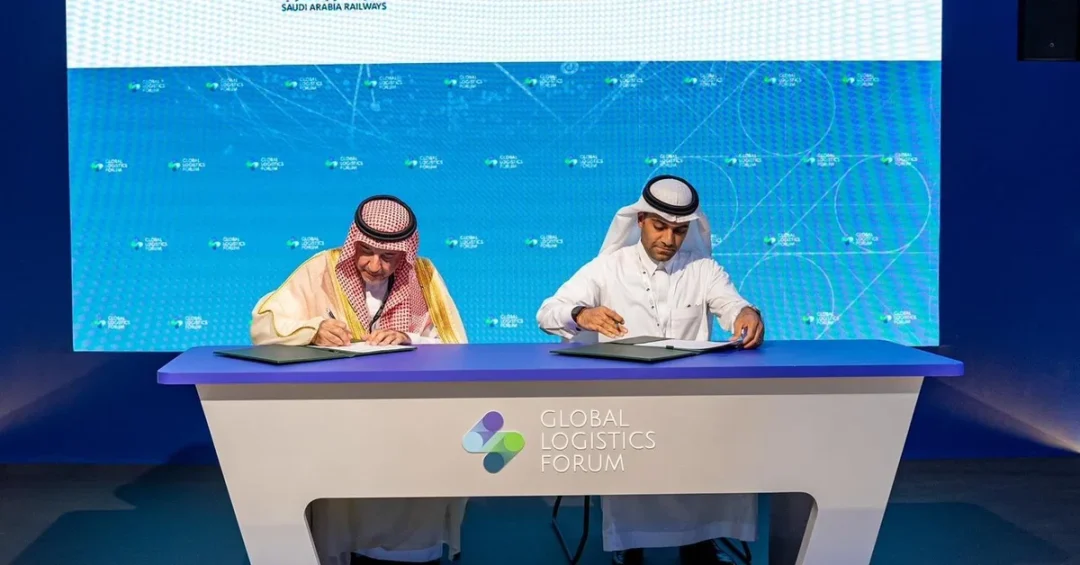
Saudi Arabia Railways (SAR) signed two contracts with Bahri Logistics and memoranda of understanding with the Ministry of Transport and Logistic Services, DHL, and Agility Global on the sidelines of the Global Logistics Forum, held October 12-14 in Riyadh, to enhance its transportation network, improve connectivity, and offer a wider range of logistics services. These agreements were announced by the Saudi Press Agency (SPA) as part of SAR’s strategic goals of providing safe, sustainable, and efficient transportation solutions. By strengthening partnerships and expanding its capabilities, SAR aims to contribute to the Kingdom’s Vision 2030 and National Transport and Logistics Strategy, positioning Saudi Arabia as a global logistics hub.
Context and Background
The Global Logistics Forum, hosted in Riyadh, brought together key players from the international logistics and transportation sectors to discuss innovations, partnerships, and strategies for improving global supply chains. SAR’s participation underscores Saudi Arabia’s growing role as a leader in regional and global logistics, aligning with its ambitions to diversify the economy and reduce dependence on oil. The event provided a platform for SAR to showcase its commitment to modernizing rail infrastructure and integrating it with other transport modes.
Key Details
The two contracts signed with Bahri Logistics focus on expanding rail freight services, particularly for industrial and commercial goods, leveraging Bahri’s expertise in maritime and land logistics. Memoranda of understanding with the Ministry of Transport and Logistic Services, DHL, and Agility Global will facilitate collaboration on logistics solutions, including last-mile delivery, warehousing, and digital tracking systems. These partnerships are designed to streamline operations across SAR’s network, which spans over 5,000 kilometers and connects key industrial and urban centers in the Kingdom.
Implications and Impact
These agreements are expected to boost trade efficiency within Saudi Arabia and with neighboring countries, enhancing the Kingdom’s position as a transit hub for goods moving between Asia, Europe, and Africa. By integrating rail with other transport services, SAR aims to reduce logistics costs and carbon emissions, supporting environmental sustainability goals. The partnerships also align with the National Transport and Logistics Strategy’s target of increasing the logistics sector’s contribution to GDP from 6% to 10% by 2030, creating thousands of jobs and attracting foreign investment.
Vision 2030 Alignment
This development directly supports Vision 2030’s objectives of transforming Saudi Arabia into a global investment powerhouse and a hub connecting three continents. By expanding its logistics network through strategic partnerships, SAR is helping to build a resilient, integrated transport system that facilitates economic growth, trade diversification, and innovation. As the Kingdom continues to modernize its infrastructure, these agreements mark a significant step toward realizing the ambitious goals of the National Transport and Logistics Strategy and cementing Saudi Arabia’s role as a leader in the global logistics industry.
20 Questions
Q1. What is the Global Logistics Forum?
A1. The Global Logistics Forum was an international event held in Riyadh from October 12-14, 2024, focusing on innovations and partnerships in logistics and transportation, where Saudi Arabia Railways signed key agreements.
Q2. Who signed the contracts with Bahri Logistics?
A2. Saudi Arabia Railways (SAR) signed two contracts with Bahri Logistics on the sidelines of the Global Logistics Forum to enhance rail freight services and expand the logistics network.
Q3. What memoranda of understanding did SAR sign?
A3. SAR signed memoranda of understanding with the Ministry of Transport and Logistic Services, DHL, and Agility Global to improve connectivity and offer wider logistics services.
Q4. What is the main goal of SAR’s agreements?
A4. The main goal is to enhance the transportation network, improve connectivity, and offer a wider range of logistics services, aligning with SAR’s strategic goals.
Q5. How do these agreements support Vision 2030?
A5. They support Vision 2030 by contributing to the National Transport and Logistics Strategy, positioning Saudi Arabia as a global logistics hub and diversifying the economy.
Q6. What is the National Transport and Logistics Strategy?
A6. It is a Saudi strategy aimed at transforming the Kingdom into a global logistics hub by improving infrastructure, connectivity, and efficiency across all transport modes.
Q7. Who is Bahri Logistics?
A7. Bahri Logistics is a Saudi logistics company specializing in maritime and land transport, partnering with SAR to expand rail freight services for industrial and commercial goods.
Q8. What role does DHL play in these agreements?
A8. DHL, a global logistics company, signed a memorandum of understanding with SAR to collaborate on last-mile delivery, warehousing, and digital tracking solutions.
Q9. What is Agility Global’s involvement?
A9. Agility Global, a logistics provider, signed a memorandum of understanding with SAR to enhance supply chain services and improve operational efficiency through integration.
Q10. When did the Global Logistics Forum take place?
A10. The Global Logistics Forum took place from October 12-14, 2024, in Riyadh, providing a platform for SAR to announce the partnerships.
Q11. How long is SAR’s railway network?
A11. SAR’s railway network spans over 5,000 kilometers, connecting key industrial and urban centers across Saudi Arabia.
Q12. What are the environmental benefits of these agreements?
A12. The agreements aim to reduce logistics costs and carbon emissions by integrating rail with other transport modes, supporting sustainability goals through efficient freight movement.
Q13. How will these agreements impact trade in Saudi Arabia?
A13. They will boost trade efficiency within Saudi Arabia and with neighboring countries, enhancing the Kingdom’s role as a transit hub for goods between Asia, Europe, and Africa.
Q14. What is the target for the logistics sector’s GDP contribution?
A14. The National Transport and Logistics Strategy targets increasing the logistics sector’s contribution to GDP from 6% to 10% by 2030.
Q15. How many jobs could these partnerships create?
A15. The partnerships are expected to create thousands of jobs by expanding the logistics sector and attracting foreign investment, as part of Vision 2030’s economic diversification.
Q16. What is SAR’s vision for safety and sustainability?
A16. SAR aims to provide safe, sustainable, and efficient transportation solutions, as stated in its strategic goals, reducing emissions and improving reliability.
Q17. How does SAR connect to urban centers?
A17. SAR’s network links major cities like Riyadh, Jeddah, and Dammam, facilitating passenger and freight movement across the Kingdom.
Q18. What is the Ministry of Transport’s role?
A18. The Ministry of Transport and Logistic Services signed a memorandum of understanding with SAR to coordinate on policy and infrastructure improvements, aligning with national strategies.
Q19. Are these agreements part of a larger trend?
A19. Yes, they reflect Saudi Arabia’s broader push to modernize infrastructure and diversify the economy, with rail playing a key role in the logistics transformation.
Q20. What is the significance of these agreements globally?
A20. They position Saudi Arabia as a global logistics hub by enhancing connectivity and efficiency, attracting international partners and investment, and supporting Vision 2030’s goals.
Reader Feedback
We value your thoughts. Please share your feedback on this article.
Your feedback helps us improve our coverage.