


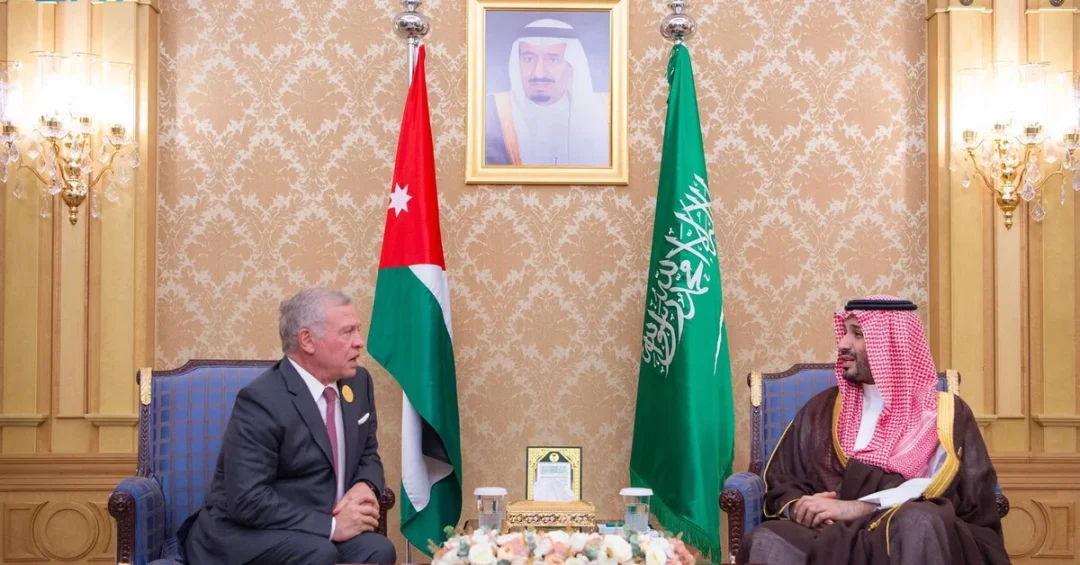
RIYADH — His Royal Highness Prince Mohammed bin Salman bin Abdulaziz Al Saud, Crown Prince and Prime Minister of Saudi Arabia, met with King Abdullah II bin Al-Hussein of the Hashemite Kingdom of Jordan on November 11, 2024, on the sidelines of the Extraordinary Arab and Islamic Summit. The high-level meeting, held in Riyadh, underscored the deep and enduring ties between the two sister nations, as both leaders reviewed bilateral relations and explored opportunities for further development across multiple sectors.
Context and Background
The meeting took place during a critical moment for the region, as Arab and Islamic leaders convened an extraordinary summit to address escalating challenges, including the situations in Palestine and Lebanon. The gathering reflects Saudi Arabia’s ongoing leadership in convening international dialogue to promote stability and peace. King Abdullah II’s presence in Riyadh highlights the close coordination between Saudi Arabia and Jordan on matters of mutual concern and regional security.
Key Details
During their discussions, the Crown Prince and the King reviewed a wide range of topics on the summit’s agenda, with a particular focus on the Palestinian cause and the situation in Lebanon. Both leaders emphasized the importance of unified Arab and Islamic efforts to address these pressing issues. The meeting was attended by several senior Saudi officials, including Minister of National Guard Prince Abdullah bin Bandar bin Abdulaziz, Minister of Defense Prince Khalid bin Salman bin Abdulaziz, and Minister of Foreign Affairs Prince Faisal bin Farhan bin Abdullah. The accompanying delegation of the Jordanian monarch was also present, reflecting the breadth of diplomatic engagement.
Implications and Impact
The meeting reaffirms the strategic partnership between the Kingdom of Saudi Arabia and Jordan, two pillars of stability in the Middle East. By coordinating closely on issues such as the humanitarian and political crises in Palestine and Lebanon, both nations are working to foster a unified response that prioritizes peace, security, and the well-being of affected populations. This collaboration is instrumental in advancing regional diplomacy and supporting efforts to de-escalate tensions.
Vision 2030 Alignment
This high-level engagement is a testament to Saudi Arabia’s role as a diplomatic hub under Vision 2030, which seeks to position the Kingdom as a global leader in fostering peace and cooperation. The Crown Prince’s leadership in hosting such pivotal summits and bilateral talks aligns with the Vision’s goals of promoting regional stability, enhancing international partnerships, and strengthening the Kingdom’s standing as a responsible global actor committed to constructive dialogue.
20 Questions
Q1. Who met with King Abdullah II of Jordan?
A1. His Royal Highness Prince Mohammed bin Salman bin Abdulaziz Al Saud, Crown Prince and Prime Minister of Saudi Arabia, met with King Abdullah II.
Q2. When did the meeting take place?
A2. The meeting occurred on November 11, 2024, during the Extraordinary Arab and Islamic Summit in Riyadh.
Q3. What was the purpose of the meeting?
A3. The leaders discussed bilateral relations, regional developments, and key topics on the summit’s agenda, including Palestine and Lebanon.
Q4. Where was the meeting held?
A4. The meeting was held in Riyadh, Saudi Arabia, on the sidelines of the Extraordinary Arab and Islamic Summit.
Q5. What did the leaders discuss regarding Palestine?
A5. They reviewed the situation in Palestine and coordinated on efforts to support the Palestinian cause within the framework of Arab and Islamic unity.
Q6. What did the leaders discuss regarding Lebanon?
A6. They addressed the situation in Lebanon and explored ways to enhance regional efforts to address challenges there.
Q7. Who attended the meeting from the Saudi side?
A7. Senior officials included Minister of National Guard Prince Abdullah bin Bandar, Minister of Defense Prince Khalid bin Salman, and Minister of Foreign Affairs Prince Faisal bin Farhan.
Q8. What does this meeting show about Saudi-Jordan relations?
A8. It underscores the strong, fraternal ties between the two kingdoms and their shared commitment to regional stability and cooperation.
Q9. Why was the summit considered extraordinary?
A9. The Extraordinary Arab and Islamic Summit was convened to address urgent issues, particularly the crises in Palestine and Lebanon.
Q10. How does this meeting support Vision 2030?
A10. It aligns with Vision 2030’s goal of positioning Saudi Arabia as a diplomatic leader that fosters peace and strategic partnerships.
Q11. What is the role of the Saudi Minister of Foreign Affairs in such meetings?
A11. Prince Faisal bin Farhan Abdullah leads diplomatic efforts and coordinates foreign policy, ensuring effective communication with allied nations.
Q12. How does Jordan view its relationship with Saudi Arabia?
A12. Jordan regards Saudi Arabia as a key strategic ally and often coordinates on regional issues, reflecting a strong, long-standing partnership.
Q13. What topics were on the summit’s agenda besides bilateral relations?
A13. The agenda included the Palestinian cause, the Lebanon situation, and broader Arab and Islamic efforts to address these challenges.
Q14. Who else attended from the Jordanian side?
A14. An accompanying delegation of the Jordanian king was present, though specific names were not disclosed in the official statement.
Q15. Did the meeting produce any formal agreements?
A15. The meeting focused on reviewing relations and discussing summit topics; no formal agreements were announced in the official readout.
Q16. How often do Saudi and Jordanian leaders meet?
A16. They meet regularly at summits and through bilateral visits, reflecting the ongoing high-level dialogue between the two countries.
Q17. What is the significance of the Saudi Minister of Defense’s attendance?
A17. Prince Khalid bin Salman’s presence highlights the importance of defense and security cooperation in the bilateral relationship.
Q18. How does this meeting affect regional stability?
A18. It strengthens coordination on key issues, helping to foster a unified Arab and Islamic approach that supports peace and stability.
Q19. What is the next expected step after this meeting?
A19. The leaders will continue diplomatic engagement through follow-up discussions and coordinated actions within the summit’s framework.
Q20. Why is Saudi Arabia a suitable host for such summits?
A20. Saudi Arabia is a regional leader with strong diplomatic ties and a Vision 2030 commitment to fostering international cooperation and peace.
Reader Feedback
We value your thoughts. Please share your feedback on this article.
Your feedback helps us improve our coverage.