


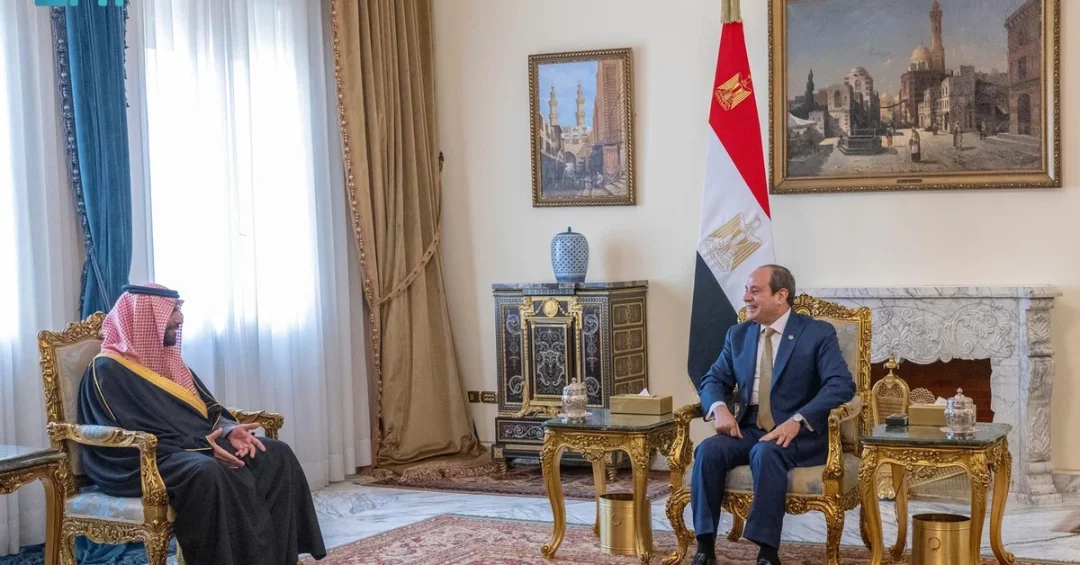
Upon directives from the Kingdom’s leadership, Minister of Culture Prince Badr bin Abdullah bin Farhan met with President of the Arab Republic of Egypt Abdel Fattah El-Sisi in Cairo on December 17, 2024. The meeting underscores the deep and enduring ties between Saudi Arabia and Egypt, reflecting a shared commitment to regional stability and cultural collaboration. Prince Badr delivered greetings from the Custodian of the Two Holy Mosques King Salman bin Abdulaziz Al Saud and His Royal Highness Prince Mohammed bin Salman bin Abdulaziz Al Saud, Crown Prince and Prime Minister, to President El-Sisi.
Context and Background
This high-level meeting, conducted at the direct request of Saudi leadership, builds on a history of strategic partnership between the two nations. Egypt and Saudi Arabia have long cooperated on political, economic, and cultural fronts, with both countries playing a pivotal role in Middle Eastern affairs. The meeting comes at a time of increased regional dialogue and mutual efforts to promote cultural exchange as a driver of unity and development.
Key Details
The Saudi delegation included prominent officials such as Minister of State and Cabinet Member Dr. Essam bin Saad bin Saeed, Vice Minister of Culture Hamed bin Mohammed Fayez, Assistant Minister of Culture Rakhan Ibrahim Al-Touq, and Saudi Ambassador to Egypt Saleh bin Eid Al-Husseini. The presence of these senior figures highlights the importance Saudi Arabia places on fostering robust bilateral relations. The meeting focused on areas of mutual interest, particularly in cultural sectors, as part of broader diplomatic engagements.
Implications and Impact
The meeting reaffirms Saudi Arabia’s proactive foreign policy under the leadership of King Salman and Crown Prince Mohammed bin Salman, emphasizing dialogue and cooperation with key regional partners. By prioritizing cultural diplomacy, the Kingdom strengthens ties with Egypt, a cornerstone of Arab unity. This engagement is expected to facilitate new initiatives in arts, heritage preservation, and educational exchanges, benefiting both nations economically and socially.
Vision 2030 Alignment
This diplomatic initiative aligns seamlessly with Saudi Vision 2030, which seeks to position the Kingdom as a global cultural hub and diversify its economy through soft power and international collaboration. By deepening cultural ties with Egypt, Saudi Arabia advances its goals of promoting cross-cultural understanding, supporting tourism, and enhancing its global standing, contributing to a more interconnected and prosperous region.
20 Questions
Q1. Who met with President Abdel Fattah El-Sisi in Cairo?
A1. Saudi Minister of Culture Prince Badr bin Abdullah bin Farhan met with President El-Sisi in Cairo on December 17, 2024, upon directives from the country’s leadership.
Q2. What was the purpose of the meeting?
A2. The meeting aimed to deliver greetings from King Salman and Crown Prince Mohammed bin Salman to the Egyptian president and discuss cultural cooperation between the two nations.
Q3. Who delivered the greetings to President El-Sisi?
A3. Prince Badr bin Abdullah bin Farhan delivered the greetings from Custodian of the Two Holy Mosques King Salman bin Abdulaziz Al Saud and Crown Prince Mohammed bin Salman.
Q4. Which Saudi officials attended the meeting?
A4. The delegation included Minister of State Dr. Essam bin Saad bin Saeed, Vice Minister of Culture Hamed bin Mohammed Fayez, Assistant Minister Rakhan Ibrahim Al-Touq, and Ambassador Saleh bin Eid Al-Husseini.
Q5. What was the source of this news?
A5. The news was reported by the Saudi Press Agency (SPA) from Cairo on December 17, 2024, based on official information from the Saudi government.
Q6. Why is this meeting significant for Saudi-Egypt ties?
A6. It underscores the strong strategic partnership between the two countries, highlighting continuous communication at high levels to enhance cooperation in cultural and diplomatic fields.
Q7. How does this meeting reflect Saudi Vision 2030?
A7. It supports Vision 2030’s goal of promoting cultural exchange and soft power, positioning Saudi Arabia as a global cultural hub through international partnerships.
Q8. What is the role of the Saudi Ministry of Culture in such meetings?
A8. The Ministry leads cultural diplomacy initiatives, fostering international collaborations that align with national development goals and enhance the Kingdom’s cultural profile abroad.
Q9. Was the meeting pre-planned or upon request?
A9. The meeting took place upon directives from the Kingdom’s leadership, indicating a strategic decision to prioritize bilateral engagements with Egypt.
Q10. What topics were likely discussed during the meeting?
A10. Possible topics included cultural exchange programs, heritage preservation, joint initiatives in arts and education, and broader regional cooperation under Vision 2030.
Q11. How did President El-Sisi respond to the Saudi greetings?
A11. The SPA report did not detail the president’s response, but such meetings are typically conducted with mutual respect and a focus on strengthening ties.
Q12. What does this meeting indicate about Saudi foreign policy?
A12. It reflects a proactive, diplomacy-driven approach prioritizing dialogue with key Arab allies to advance shared interests and regional stability.
Q13. How does culture feature in Saudi-Egypt relations?
A13. Culture is a vital pillar, with both nations sharing historical, linguistic, and artistic ties that are nurtured through joint events and cultural agreements.
Q14. What is the significance of the Vice Minister of Culture’s presence?
A14. The Vice Minister’s attendance emphasizes the high-level commitment to implementing cultural strategies discussed, ensuring follow-up on collaborative projects.
Q15. Could this lead to new cultural initiatives?
A15. Yes, such high-level meetings often pave the way for new agreements in heritage conservation, festivals, and educational exchanges between Saudi Arabia and Egypt.
Q16. How does this meeting align with Saudi leadership directives?
A16. The meeting was held upon direct orders from King Salman and Crown Prince Mohammed bin Salman, showing their focus on strengthening Arab unity and cultural ties.
Q17. What is the role of the Saudi ambassador to Egypt in this context?
A17. Ambassador Saleh bin Eid Al-Husseini facilitated the meeting, representing the Kingdom and ensuring diplomatic protocols were observed between the delegations.
Q18. Why is cultural diplomacy important for Saudi Arabia?
A18. Cultural diplomacy helps build mutual understanding, enhances the Kingdom’s global image, and supports Vision 2030’s goal of diversifying the economy through cultural industries.
Q19. What does the Assistant Minister of Culture’s role entail?
A19. Assistant Minister Rakhan Ibrahim Al-Touq likely contributed insights on cultural programs and international partnerships, aiding in the strategic planning of bilateral initiatives.
Q20. How often do such Saudi-Egypt cultural meetings occur?
A20. These meetings occur periodically as part of ongoing diplomatic exchanges, with frequency increasing during periods of heightened collaboration on cultural and economic fronts.
Reader Feedback
We value your thoughts. Please share your feedback on this article.
Your feedback helps us improve our coverage.