


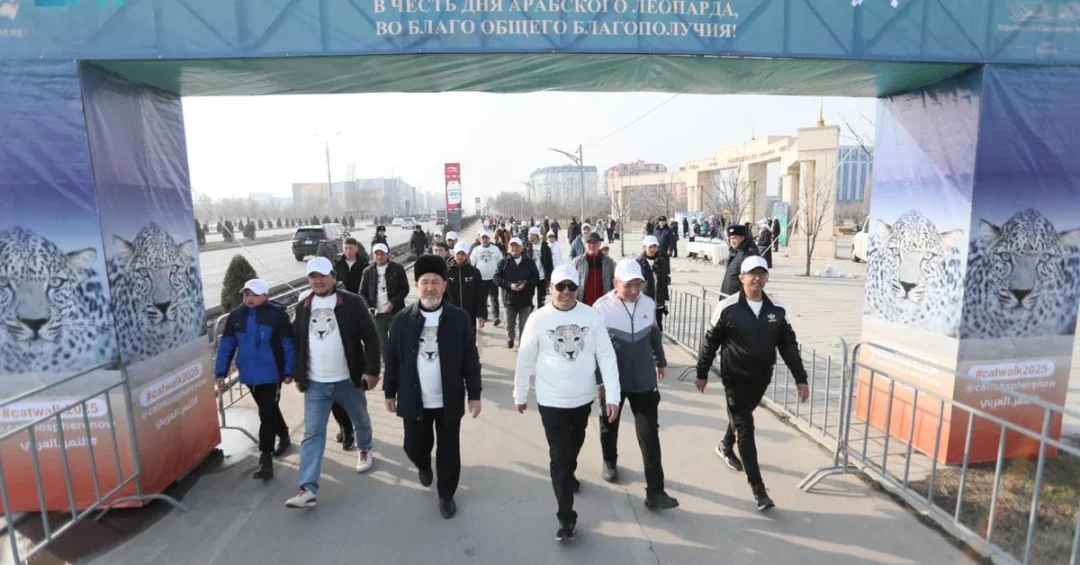
The Saudi Embassy in the Kyrgyz Republic hosted a special march titled “Catwalk” on February 10, 2025, to promote physical fitness and raise awareness about the preservation of endangered wild cats, including the Arabian leopard. The event, held in Bishkek, was attended by Saudi Ambassador Ibrahim Radi, Kyrgyz Deputy Minister of Foreign Affairs Temirbek Erkinov, and other officials. It marked the annual observance of the International Day of the Arabian Leopard, recognized by the United Nations on February 10, highlighting the species’ critical role in biodiversity and the urgency of protecting their natural habitats.
Context and Background
The Arabian leopard (Panthera pardus nimr) is classified as critically endangered by the International Union for Conservation of Nature, with fewer than 200 individuals estimated to remain in the wild. Saudi Arabia has long been at the forefront of conservation efforts for this iconic species, which holds cultural and ecological significance in the Arabian Peninsula. The International Day of the Arabian Leopard was established by the United Nations in 2023 following a Saudi-led initiative, underscoring the Kingdom’s commitment to wildlife preservation and environmental sustainability.
Key Details
The “Catwalk” march was designed to combine fitness with environmental education, drawing participants from diplomatic circles, local government, and the public. Ambassador Radi emphasized the importance of international cooperation in safeguarding biodiversity, while Deputy Minister Erkinov commended Saudi Arabia’s leadership on conservation issues. The event also included informational displays about the Arabian leopard’s habitat, threats, and ongoing recovery programs supported by Saudi institutions such as the Royal Commission for AlUla and the National Center for Wildlife.
Implications and Impact
This initiative reflects Saudi Arabia’s growing role in global environmental diplomacy. By partnering with the Kyrgyz Republic—a country with its own rich biodiversity challenges—the Kingdom strengthens bilateral ties and fosters knowledge exchange on species protection. The event also promotes the Vision 2030 goal of enhancing quality of life through environmental stewardship, aligning with international frameworks like the UN Sustainable Development Goals. Such public awareness campaigns are vital for mobilizing support for conservation efforts across borders.
Vision 2030 Alignment
Saudi Arabia’s commitment to preserving the Arabian leopard directly supports Vision 2030’s environmental and sustainability pillars. The Kingdom has integrated wildlife conservation into its national development plans, including the Saudi Green Initiative, which aims to protect 30% of the country’s land and sea areas by 2030. By celebrating the Arabian leopard on the global stage, Saudi Arabia reaffirms its leadership in biodiversity conservation and its dedication to leaving a thriving natural heritage for future generations.
20 Questions
Q1. What event did the Saudi Embassy in the Kyrgyz Republic organize on February 10, 2025?
A1. The embassy organized a march titled “Catwalk” to promote physical fitness and raise awareness about preserving endangered wild cats, including the Arabian leopard.
Q2. Where was the march held?
A2. The march took place in Bishkek, the capital of the Kyrgyz Republic.
Q3. Who attended the event from the Saudi side?
A3. Saudi Ambassador Ibrahim Radi attended and participated in the march.
Q4. Which Kyrgyz official attended the event?
A4. Kyrgyz Deputy Minister of Foreign Affairs Temirbek Erkinov attended the event.
Q5. What is the International Day of the Arabian Leopard?
A5. It is an annual observance on February 10, recognized by the United Nations, to raise awareness about the Arabian leopard’s role in biodiversity and the need to protect it.
Q6. Why was February 10 chosen for this day?
A6. February 10 was designated by the UN following a Saudi-led initiative to highlight the critical status of the Arabian leopard and promote conservation action.
Q7. How many Arabian leopards are estimated to remain in the wild?
A7. Fewer than 200 individuals are estimated to remain, making the species critically endangered.
Q8. What is the scientific name of the Arabian leopard?
A8. The scientific name is Panthera pardus nimr.
Q9. Which Saudi institutions are involved in Arabian leopard conservation?
A9. The Royal Commission for AlUla and the National Center for Wildlife are key Saudi entities supporting recovery programs.
Q10. How does the march connect fitness to conservation?
A10. The “Catwalk” march combined physical activity with environmental education, encouraging participants to learn about endangered species while staying active.
Q11. What broader goal does this event support under Vision 2030?
A11. It supports the goal of enhancing quality of life through environmental stewardship and biodiversity protection.
Q12. How does Saudi Arabia’s conservation work align with global frameworks?
A12. The efforts align with the UN Sustainable Development Goals and the Saudi Green Initiative, which targets protecting 30% of land and sea areas by 2030.
Q13. What is the significance of holding the event in Kyrgyzstan?
A13. It strengthens Saudi-Kyrgyz bilateral ties and enables knowledge exchange on conservation challenges common to both countries.
Q14. Did the event include any educational components?
A14. Yes, informational displays about the Arabian leopard’s habitat, threats, and recovery programs were featured.
Q15. What role did the UN play in establishing the International Day of the Arabian Leopard?
A15. The UN officially recognized the day in 2023 after Saudi Arabia proposed the initiative to promote global awareness.
Q16. How does the Arabian leopard contribute to biodiversity?
A16. As an apex predator, it helps maintain the ecological balance of its habitat by controlling prey populations and indicating ecosystem health.
Q17. What are the main threats to the Arabian leopard?
A17. Habitat loss, prey depletion, and illegal hunting are the primary threats facing the species.
Q18. Has Saudi Arabia implemented specific policies to protect the Arabian leopard?
A18. Yes, the Kingdom has established protected areas, captive breeding programs, and anti-poaching measures as part of its national conservation strategy.
Q19. How does public awareness help conservation efforts?
A19. Awareness campaigns like the march mobilize community support, reduce human-wildlife conflict, and encourage funding for protection initiatives.
Q20. What message did Ambassador Radi convey at the event?
A20. He emphasized the importance of international cooperation in safeguarding biodiversity and highlighted Saudi Arabia’s commitment to wildlife preservation.
Reader Feedback
We value your thoughts. Please share your feedback on this article.
Your feedback helps us improve our coverage.