


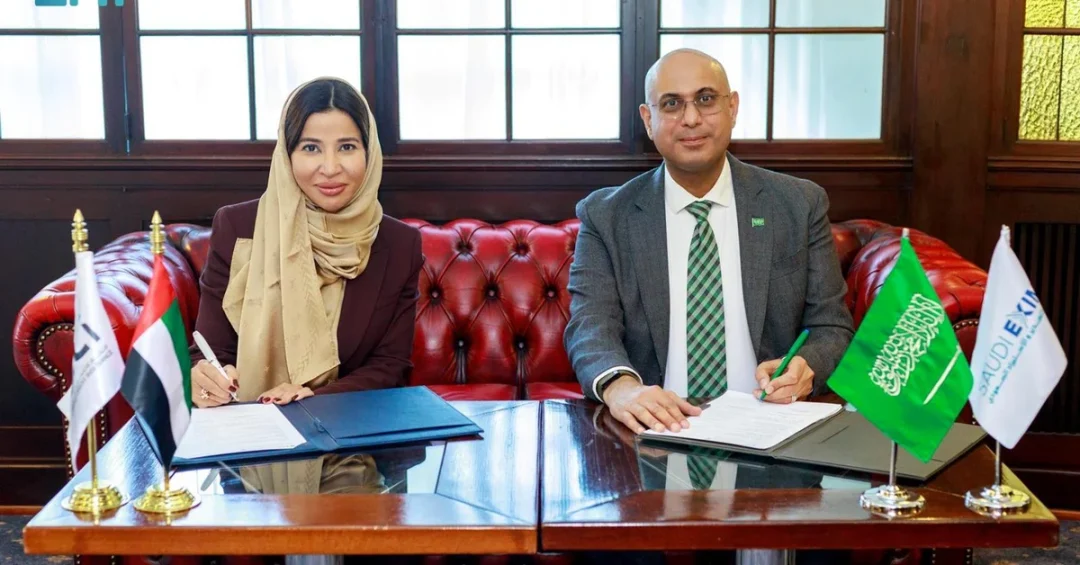
The Saudi Export-Import Bank (Saudi EXIM) has signed a Memorandum of Understanding (MoU) with Etihad Credit Insurance (ECI) to enhance cooperation in export financing and insurance. The agreement was reached on the sidelines of the Berne Union’s annual meeting in Hamburg, Germany, held on October 17, 2024, as reported by the Saudi Press Agency (SPA). This partnership aims to strengthen export credit systems in global trade, with a particular focus on enabling Saudi non-oil exports to reach international markets.
Context and Background
This MoU marks a strategic step in Saudi Arabia’s ongoing efforts to diversify its economy under Vision 2030. By collaborating with ECI, a leading export credit agency in the United Arab Emirates, Saudi EXIM is expanding its network of international partnerships to provide comprehensive support for exporters. The agreement specifically covers insurance against export credit risks and facilitates the participation of small and medium enterprises (SMEs) in global trade, which are key drivers of economic growth and job creation.
Key Details
The MoU was signed by Eng. Saad bin Abdulaziz Al-Khalb, CEO of Saudi EXIM Bank, and Raja Al Mazrouei, CEO of ECI. During the Berne Union meeting, Eng. Al-Khalb also participated in a panel discussion where he highlighted the bank’s provision of credit facilities worth $1.2 billion to international export houses to address global trade challenges. He emphasized the bank’s commitment to enhancing international cooperation and expanding its strategic partnerships, noting that all renewable energy investments are a high priority for the bank, aligning with Saudi Arabia’s commitment to sustainable transformation.
Implications and Impact
This partnership is expected to boost trade flows between Saudi Arabia and other markets by reducing financial risks for exporters. The focus on SMEs is particularly significant, as these enterprises often face barriers to entering global markets due to limited access to financing and insurance. By building bridges of communication through extensive meetings with export credit agencies and financial institutions worldwide, Saudi EXIM is creating new opportunities for trade exchange and economic cooperation. This collaboration also strengthens the UAE-Saudi ties within the Gulf Cooperation Council, promoting regional economic integration.
Vision 2030 Aligment
The MoU directly supports Vision 2030 by accelerating the growth of non-oil exports and diversifying the Saudi economy. By empowering local exporters and providing financial tools that support sustainable practices, Saudi EXIM is helping to achieve the Vision’s goals of increasing the share of non-oil exports in the national GDP and fostering a vibrant private sector. This agreement is a forward-looking step that reinforces Saudi Arabia’s role as a global trade hub and its commitment to long-term economic resilience.
20 Questions
Q1. What is the Saudi Export-Import Bank (Saudi EXIM)?
A1. Saudi EXIM is a Saudi government-owned institution that provides export financing, insurance, and guarantees to support non-oil exports, helping Saudi businesses compete in global markets.
Q2. What is Etihad Credit Insurance (ECI)?
A2. ECI is the UAE’s federal export credit agency, offering insurance and reinsurance solutions to protect exporters and investors against commercial and non-commercial risks, promoting UAE trade.
Q3. What is the purpose of the MoU signed between Saudi EXIM and ECI?
A3. The MoU aims to enhance cooperation in export financing and insurance, including credit risk coverage and enabling small and medium enterprises to export, fostering bilateral trade growth.
Q4. Where was the MoU signed?
A4. The MoU was signed in Hamburg, Germany, on the sidelines of the Berne Union’s annual meeting, a key event for export credit agencies worldwide.
Q5. What is the Berne Union?
A5. The Berne Union is an international organization of export credit and investment insurers, founded in 1934, that facilitates cooperation and best practices in trade finance.
Q6. Who signed the MoU on behalf of Saudi EXIM?
A6. The MoU was signed by Eng. Saad bin Abdulaziz Al-Khalb, the CEO of Saudi EXIM Bank, during the Hamburg meeting.
Q7. Who signed the MoU on behalf of Etihad Credit Insurance?
A7. The MoU was signed by Raja Al Mazrouei, the CEO of Etihad Credit Insurance, reflecting strong leadership commitment.
Q8. How does this MoU support Saudi non-oil exports?
A8. By providing insurance and financing, the MoU reduces risks for exporters, enabling them to access new markets and increase the volume of non-oil exports from Saudi Arabia.
Q9. What role do small and medium enterprises (SMEs) play in this agreement?
A9. The MoU specifically includes provisions to enable SMEs to export, helping them overcome financial barriers and participate in global trade, which supports economic diversification.
Q10. What financial facilities did Saudi EXIM provide to international export houses?
A10. Saudi EXIM provided credit facilities worth $1.2 billion to international export houses to help them navigate global trade challenges.
Q11. How does this agreement align with Saudi Vision 2030?
A11. The agreement supports Vision 2030 by boosting non-oil exports, diversifying the economy, and strengthening the private sector, which are core objectives of the national transformation plan.
Q12. What did Eng. Saad Al-Khalb say about renewable energy?
A12. He affirmed that renewable energy investments are a high priority for the bank and that Saudi Arabia is committed to supporting sustainable business practices through financial products.
Q13. How will this MoU benefit the UAE-Saudi economic relationship?
A13. The MoU deepens bilateral trade ties by facilitating cross-border financing and insurance, promoting regional economic integration and cooperation within the Gulf Cooperation Council.
Q14. What types of risks does the agreement cover?
A14. The agreement covers export credit risks, including commercial and political risks, providing security for exporters and lenders involved in cross-border transactions.
Q15. Why was Hamburg chosen for this signing?
A15. Hamburg hosted the Berne Union annual meeting, making it a strategic venue for export credit agencies to network and formalize partnerships like this MoU.
Q16. How does Saudi EXIM empower local exporters?
A16. Saudi EXIM provides financial tools, training, and insurance products that reduce export barriers, enabling local companies to compete effectively in international markets.
Q17. What is the significance of the $1.2 billion credit facilities?
A17. The $1.2 billion in credit facilities demonstrates Saudi EXIM’s capacity to support large-scale trade flows and its commitment to stabilizing global supply chains.
Q18. How does the MoU promote sustainable business practices?
A18. The bank prioritizes financing for renewable energy and sustainable projects, aligning with global environmental standards and Saudi Arabia’s green initiatives.
Q19. What organizations did Saudi EXIM meet during the event?
A19. Saudi EXIM held extensive meetings with export credit agencies and financial institutions from around the world to strengthen trade relations.
Q20. What is the expected impact of this MoU on Saudi exports?
A20. The MoU is expected to increase Saudi non-oil export volumes by providing better risk coverage, attracting more international buyers, and integrating SMEs into global supply chains.
Reader Feedback
We value your thoughts. Please share your feedback on this article.
Your feedback helps us improve our coverage.