


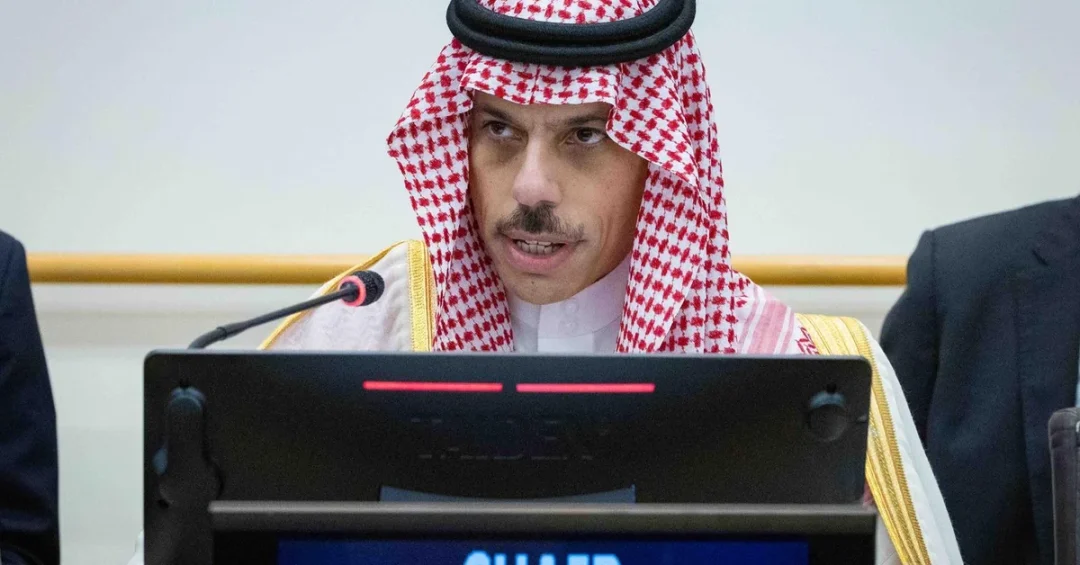
Saudi Minister of Foreign Affairs Prince Faisal bin Farhan bin Abdullah chaired an emergency ministerial meeting of the League of Arab States and the Organization of Islamic Cooperation (OIC) on September 27, 2024, to address the escalation of Israeli military attacks against the State of Palestine and the Lebanese Republic. The meeting, convened on the sidelines of the high-level week of the 79th United Nations General Assembly session in New York City, underscored Saudi Arabia’s ongoing leadership in coordinating regional responses to critical geopolitical developments.
Context and Background
Prince Faisal bin Farhan, who also serves as the Chairman of the Arab-Islamic Ministerial Committee on developments in the Gaza Strip, called the urgent gathering amid rising tensions in the Middle East. The meeting sought to intensify Arab and Islamic diplomatic efforts within the international community, with a particular focus on engaging the permanent member states of the United Nations Security Council. Participants emphasized the need to immediately halt Israeli attacks on Palestine and Lebanon, warning that the expansion of the conflict undermines peace and security efforts both regionally and globally.
Key Details
Discussions during the meeting explored strategies to strengthen joint Arab and Islamic initiatives, including the recently announced International Alliance to Implement the Two-State Solution. The alliance, backed by Saudi Arabia and its partners, aims to advance relevant international resolutions and ensure the establishment of an independent Palestinian state. Attendees included Deputy Minister for International Multilateral Affairs and General Supervisor of the Public Diplomacy Deputyship Ambassador Dr. Abdulrahman Al-Rassi, as well as the Kingdom of Saudi Arabia’s permanent representative to the United Nations in New York, Ambassador Dr. Abdulaziz Al-Wasil.
Implications and Impact
Saudi Arabia’s leadership in this emergency session reaffirms its central role in shaping diplomatic responses to regional crises. By convening high-level discussions during the UN General Assembly, the Kingdom effectively leveraged international platforms to amplify the voice of Arab and Islamic nations. The focus on the two-state solution reflects a commitment to sustainable peace, aligning with broader international consensus and highlighting Saudi Arabia’s capacity to mediate complex geopolitical issues. The meeting also signals the Kingdom’s proactive approach to preventing further destabilization in the region.
Vision 2030 Alignment
This diplomatic effort is consistent with Vision 2030, which emphasizes Saudi Arabia’s role as a pillar of regional stability and a champion of multilateral cooperation. By advancing dialogue and supporting peaceful resolutions, the Kingdom reinforces its global standing as a responsible actor committed to security and prosperity. The emergency ministerial meeting demonstrates how Saudi Arabia’s foreign policy strategies support Vision 2030’s objectives, creating an environment conducive to economic growth, cultural exchange, and international partnerships.
20 Questions
Q1. Who chaired the emergency ministerial meeting?
A1. Saudi Minister of Foreign Affairs and Chairman of the Arab-Islamic Ministerial Committee on developments in the Gaza Strip, Prince Faisal bin Farhan bin Abdullah chaired the meeting.
Q2. When was the meeting held?
A2. The meeting took place on September 27, 2024, on the sidelines of the high-level week of the 79th United Nations General Assembly session in New York City.
Q3. Which organizations were involved in the meeting?
A3. The meeting involved the League of Arab States and the Organization of Islamic Cooperation (OIC).
Q4. What was the main focus of the discussions?
A4. The discussions focused on addressing the escalation of Israeli military attacks against the State of Palestine and the Lebanese Republic and protecting regional security.
Q5. Why was the meeting considered urgent?
A5. The meeting was urgent due to the rapid escalation of Israeli attacks, which pose a threat to peace and security regionally and globally.
Q6. Which countries did the meeting aim to protect?
A6. The meeting aimed to protect the State of Palestine and the Lebanese Republic from Israeli military attacks.
Q7. What is the International Alliance to Implement the Two-State Solution?
A7. It is a recently announced initiative backed by Saudi Arabia and its partners to advance relevant international resolutions and ensure the establishment of an independent Palestinian state.
Q8. Who attended the meeting from Saudi Arabia?
A8. Ambassador Dr. Abdulrahman Al-Rassi and Ambassador Dr. Abdulaziz Al-Wasil attended the meeting from Saudi Arabia.
Q9. What role did the UN Security Council play in the discussions?
A9. Participants emphasized engaging the permanent member states of the UN Security Council to halt Israeli attacks and protect regional security.
Q10. How does this meeting align with Saudi Arabia’s foreign policy?
A10. It aligns with Saudi Arabia’s leadership in coordinating regional responses and supporting multilateral diplomacy to address critical geopolitical developments.
Q11. What is the Arab-Islamic Ministerial Committee?
A11. It is a committee chaired by Prince Faisal bin Farhan on developments in the Gaza Strip, coordinating Arab and Islamic efforts on the issue.
Q12. Was the meeting open to the public?
A12. No, the meeting was a private emergency ministerial session on the sidelines of the UN General Assembly.
Q13. What is the importance of the two-state solution in this context?
A13. The two-state solution is seen as a framework for achieving sustainable peace and ensuring the establishment of an independent Palestinian state.
Q14. How does Saudi Arabia engage with the international community on this issue?
A14. Saudi Arabia intensifies diplomatic efforts through platforms like the UN, engaging with permanent Security Council members and international bodies.
Q15. What is Vision 2030’s relevance to foreign policy here?
A15. Vision 2030 positions Saudi Arabia as a pillar of stability, and this diplomatic effort reinforces its global role as a responsible actor committed to peace.
Q16. Did the meeting produce any formal outcomes?
A16. The meeting emphasized intensified efforts and explored joint initiatives, with a focus on engaging the international community for immediate action.
Q17. How does this meeting affect Saudi Arabia’s regional relations?
A17. It strengthens Saudi Arabia’s leadership role and fosters cooperation with Arab and Islamic nations in addressing shared security concerns.
Q18. What specific attacks were discussed?
A18. The meeting focused on Israeli military attacks against the State of Palestine and the Lebanese Republic, as reported by official Saudi sources.
Q19. Was the meeting linked to any previous Saudi initiatives?
A19. Yes, it builds on Saudi-led efforts, including the Arab-Islamic Ministerial Committee and support for the International Alliance to Implement the Two-State Solution.
Q20. What is the significance of holding the meeting at the UN General Assembly?
A20. Holding the meeting at the UN General Assembly allowed Saudi Arabia to leverage a global platform to amplify Arab and Islamic calls for peace and security.
Reader Feedback
We value your thoughts. Please share your feedback on this article.
Your feedback helps us improve our coverage.