


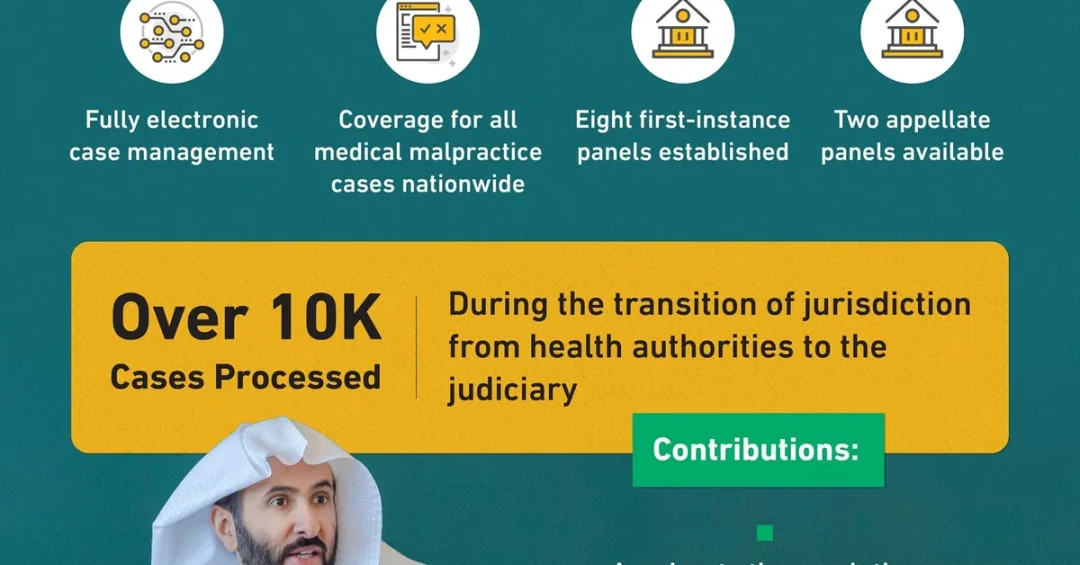
The Saudi Ministry of Justice (MoJ) has inaugurated the head office for medical malpractice claims judicial panels at the Riyadh General Court, marking a significant step in streamlining the resolution of medical disputes across the Kingdom. This initiative, announced by the Saudi Press Agency on December 19, 2024, establishes eight first-instance panels and two appellate panels operating under a unified standard identity and a new operational model. The specialized panels are designed to expedite the handling of medical malpractice cases, saving litigants time and effort through electronic operations, and feature a dedicated section for medical experts that collaborates with the Ministry of Health to supply necessary expertise.
Context and Background
This development follows the earlier transfer of jurisdiction for medical-legal commissions from the Ministry of Health to the general judiciary, a move aimed at enhancing judicial oversight and efficiency. In preparation for this transition, judges and their assistants received comprehensive training to ensure competence, scholarly qualifications, and practical experience, thereby improving the quality of judicial outcomes. The MoJ has also taken steps to ensure accessibility, offering interpreting services for remote sessions to non-Arabic speakers through the ministry’s Unified Translation Center.
Key Details
The new head office is tasked with handling all medical malpractice cases across the Kingdom, utilizing a fully electronic system to accelerate case processing. The MoJ has activated conciliation center activities related to medical malpractice cases and enabled the “Najiz Government” account for the Ministry of Health and its branches to facilitate the filing of public interest cases. Notably, the medical malpractice claims panels at the Riyadh General Court have already processed over 10,000 cases during the transition of jurisdiction from health authorities to the judiciary, underscoring the effectiveness of the new judicial framework. The MoJ also collaborates with the Saudi Commission for Health Specialties via the Khibrah platform to secure expert consultations for medical malpractice cases.
Implications and Impact
The establishment of these specialized panels is expected to significantly reduce case processing times, providing faster justice for patients and healthcare providers alike. By centralizing expertise and operating electronically, the system minimizes administrative burdens and enhances transparency. The inclusion of translation services ensures that non-Arabic speakers, including foreign medical professionals and patients, can fully participate in proceedings. This initiative reinforces Saudi Arabia’s commitment to legal modernization and aligns with broader efforts to improve the business environment and public trust in the healthcare sector.
Vision 2030 Alignment
This reform directly supports Saudi Vision 2030 by strengthening the rule of law, enhancing judicial efficiency, and improving the quality of life for citizens and residents. By creating a more predictable and efficient legal framework for medical malpractice claims, the Kingdom is fostering a safer healthcare environment and boosting investor confidence in the health sector. The initiative also reflects Vision 2030’s goal of building a transparent and accountable government, positioning Saudi Arabia as a regional leader in judicial innovation and healthcare governance.
20 Questions
Q1. What is the purpose of the new head office for medical malpractice claims judicial panels?
A1. The head office aims to expedite the resolution of medical disputes by centralizing expertise and operating electronically, saving litigants time and effort while ensuring fair outcomes.
Q2. Where is the head office located?
A2. The head office is located at the Riyadh General Court, serving as the central hub for medical malpractice claims across the Kingdom.
Q3. How many judicial panels are operating under this initiative?
A3. The initiative includes eight first-instance panels and two appellate panels, all under a unified standard identity and operational model.
Q4. How does the electronic system work for these panels?
A4. The panels operate fully electronically, allowing for streamlined submission of documents, case tracking, and virtual hearings, reducing processing times significantly.
Q5. What role does the Ministry of Health play in this initiative?
A5. The Ministry of Health collaborates with the judicial panels by providing necessary medical expertise through a dedicated section within the head office.
Q6. How were judges prepared for this new system?
A6. Judges and their assistants received training to ensure competence, scholarly qualifications, and practical experience, enhancing the quality of judicial outcomes.
Q7. Are translation services available for non-Arabic speakers?
A7. Yes, the Ministry of Justice offers interpreting services for remote sessions through its Unified Translation Center, ensuring accessibility for all participants.
Q8. How does the MoJ secure expert medical consultations?
A8. The MoJ collaborates with the Saudi Commission for Health Specialties via the Khibrah platform to secure expert consultations for medical malpractice cases.
Q9. What is the Najiz Government account?
A9. The Najiz Government account is a digital tool enabled for the Ministry of Health and its branches to facilitate the filing of public interest cases related to medical malpractice.
Q10. How many cases have been processed by these panels so far?
A10. The panels at the Riyadh General Court processed over 10,000 cases during the transition of jurisdiction from health authorities to the judiciary.
Q11. What types of cases do these panels handle?
A11. The panels handle all medical malpractice claims across the Kingdom, including cases involving negligence, errors in treatment, and other disputes.
Q12. Does this initiative include conciliation services?
A12. Yes, the Ministry of Justice has activated conciliation center activities related to medical malpractice cases to facilitate amicable resolutions.
Q13. How does this initiative improve the healthcare sector?
A13. By providing faster and more transparent justice, the initiative builds trust in the healthcare system and encourages higher standards of care among providers.
Q14. When did the transfer of jurisdiction from health authorities to the judiciary occur?
A14. The jurisdiction for medical-legal commissions was transferred from the Ministry of Health to the general judiciary prior to the launch of the new head office.
Q15. What is the significance of the unified standard identity?
A15. The unified standard identity ensures consistency and professionalism across all medical malpractice panels, enhancing credibility and operational efficiency.
Q16. How does this initiative save litigants time and effort?
A16. The electronic system reduces the need for physical appearances and paperwork, accelerating case processing and minimizing delays.
Q17. Can foreign patients or doctors participate in proceedings?
A17. Yes, interpreting services allow non-Arabic speakers to participate fully in remote hearings, ensuring equal access to justice.
Q18. How does this reform align with Vision 2030?
A18. It strengthens the rule of law, enhances judicial efficiency, and improves quality of life, supporting Vision 2030’s goals of transparency and accountability.
Q19. What is the Khibrah platform?
A19. The Khibrah platform is a digital tool connecting the MoJ with medical experts from the Saudi Commission for Health Specialties for case consultations.
Q20. What are the benefits of having appellate panels dedicated to medical malpractice?
A20. The appellate panels provide a dedicated avenue for appeals, ensuring consistent legal interpretation and high-quality judicial outcomes in complex medical cases.
Reader Feedback
We value your thoughts. Please share your feedback on this article.
Your feedback helps us improve our coverage.