


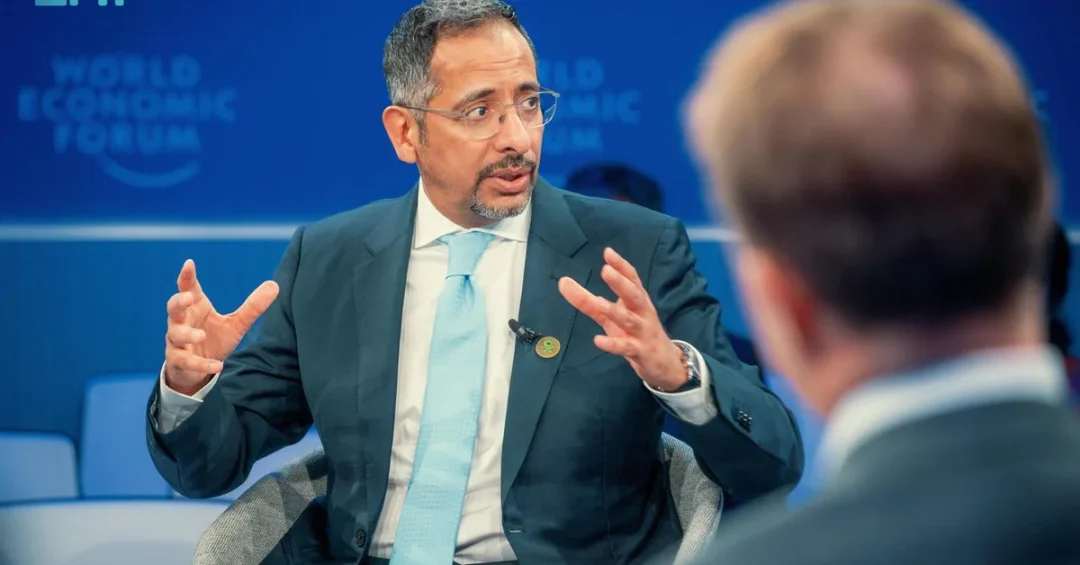
During the World Economic Forum (WEF) 2025 session titled “Next-Gen Industrial Infrastructure,” Saudi Minister of Industry and Mineral Resources Bandar Alkhorayef outlined the Kingdom’s comprehensive strategy to revolutionize industrial infrastructure through advanced technologies and strategic projects. The session, held in Davos on January 25, 2025, featured a distinguished panel including Amani Abou-Zeid, Commissioner for Infrastructure, Energy, and Digitization at the African Union Commission, Christophe De Vusser, Worldwide Managing Partner at Bain & Company, and Niclas Mårtensson, Chief Executive Officer of Stena Line.
Context and Background
Minister Alkhorayef’s participation underscores Saudi Arabia’s commitment to diversifying its economy under Vision 2030. By highlighting the integration of cutting-edge technologies, the Kingdom aims to accelerate industrial progress and enhance global competitiveness. The session comes as the global smart infrastructure market is projected to grow to $2 trillion over the next decade, presenting significant opportunities for innovation and sustainable development.
Key Details
During the session, Alkhorayef emphasized that Saudi Arabia’s adoption of technology is a key enabler for faster progress across industries. He shared examples of transformative initiatives, including making the automotive sector a leader in electric vehicles and advancements in renewable energy. The minister also discussed the Future Factories Program, which aims to upgrade 4,000 factories with technologies like artificial intelligence (AI), 3D printing, and automation. These efforts are supported by bold government initiatives, such as offering loans to enable technology adoption and creating opportunities for global players to test and pilot new technologies in the Kingdom.
International Implications
The minister noted the importance of building a robust local database to maximize the potential of AI and emphasized partnerships with globally recognized national companies like SABIC and Ma’aden to foster innovation and ensure global endorsements for Saudi Arabia’s technological advancements. The session also explored how blended infrastructure investments can meet increasing industrial demands while fostering responsible and sustainable development.
Vision 2030 Alignment
Minister Alkhorayef’s participation at WEF 2025 reaffirms Saudi Arabia’s leadership in reshaping the future of industrial infrastructure. By advancing innovative technologies and fostering sustainable development, the Kingdom is paving the way for transformative changes in the global industrial landscape, directly contributing to the goals of Vision 2030 for economic diversification, job creation, and sustainable growth.
20 Questions
Q1. Who represented Saudi Arabia at the WEF 2025 “Next-Gen Industrial Infrastructure” session?
A1. Minister of Industry and Mineral Resources Bandar Alkhorayef represented Saudi Arabia at the session.
Q2. What was the main focus of Minister Alkhorayef’s presentation?
A2. He highlighted Saudi Arabia’s efforts to revolutionize industrial infrastructure using advanced technologies and strategic projects.
Q3. Where and when did the WEF session take place?
A3. The session took place in Davos, Switzerland, on January 25, 2025.
Q4. Who were the other panelists in the session?
A4. Panelists included Amani Abou-Zeid, Christophe De Vusser, and Niclas Mårtensson.
Q5. What is the projected growth of the global smart infrastructure market?
A5. The global smart infrastructure market is projected to grow to $2 trillion over the next decade.
Q6. How does technology adoption benefit Saudi industries according to the minister?
A6. Technology adoption is seen as a key enabler for faster industrial progress and economic diversification.
Q7. What specific sectors did Alkhorayef mention as transformative initiatives?
A7. He mentioned the automotive sector’s focus on electric vehicles and advancements in renewable energy.
Q8. What is the Future Factories Program?
A8. It is a program aiming to upgrade 4,000 factories with AI, 3D printing, and automation technologies.
Q9. What government supports are available for technology adoption?
A9. The government offers loans to enable technology adoption and creates opportunities for global tech pilots.
Q10. Why is a robust local database important for AI?
A10. It is important to maximize the potential of AI in industrial applications.
Q11. Which Saudi companies were highlighted as partners in innovation?
A11. SABIC and Ma’aden were highlighted as globally recognized national companies fostering innovation.
Q12. How does the session relate to sustainable development?
A12. It explored blended infrastructure investments to meet industrial demands while promoting sustainable development.
Q13. What is the Vision 2030 relevance of this initiative?
A13. It supports economic diversification, job creation, and sustainable growth under Vision 2030.
Q14. What role do international players have in Saudi technology pilots?
A14. Global players can test and pilot new technologies in Saudi Arabia, supported by government initiatives.
Q15. How does the Kingdom aim to attract international investors?
A15. By converting industrial cities into smart cities to enhance competitiveness and attract talent.
Q16. What is the expected impact on the young Saudi population?
A16. The initiatives aim to create quality jobs for the Kingdom’s young population.
Q17. What is the significance of the “Next-Gen Industrial Infrastructure” session?
A17. It showcased Saudi leadership in reshaping global industrial infrastructure through innovation.
Q18. How does the minister view the role of physical infrastructure?
A18. He emphasized the government’s active role in improving both physical infrastructure and connectivity.
Q19. What is the global endorsement strategy for Saudi technology?
A19. Partnerships with companies like SABIC and Ma’aden ensure global endorsements for technological advancements.
Q20. What is the overall message from Minister Alkhorayef’s participation?
A20. Saudi Arabia is committed to leading the future of industrial infrastructure through technology and sustainable development.
Reader Feedback
We value your thoughts. Please share your feedback on this article.
Your feedback helps us improve our coverage.