


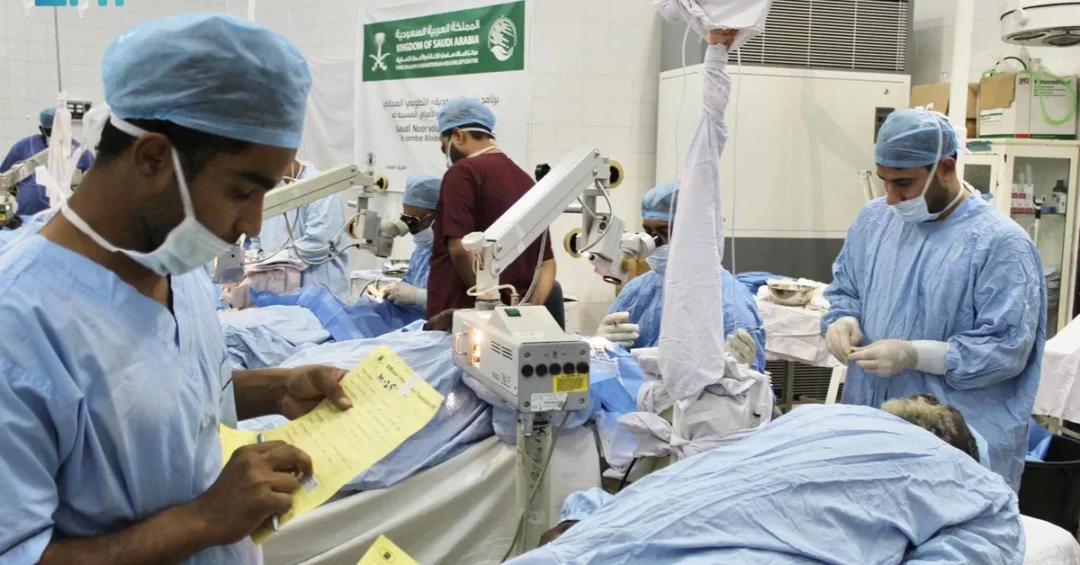
The King Salman Humanitarian Aid and Relief Center (KSrelief) has successfully concluded the Saudi Noor Voluntary Program for combating blindness in Farafenni, The Gambia, marking a significant milestone in the Kingdom’s ongoing humanitarian efforts. The program, which took place from December 26 to 31, 2024, provided critical eye care services to thousands of individuals, demonstrating Saudi Arabia’s commitment to global health and humanitarian aid.
Context and Background
The Saudi Noor Voluntary Program is a flagship initiative of Saudi Arabia, implemented through its humanitarian arm, KSrelief. The program focuses on combating preventable blindness and providing essential eye care in underserved regions worldwide. This recent mission in The Gambia is part of a series of medical volunteer projects that reflect the Kingdom’s dedication to supporting healthcare systems in countries with limited access to specialized medical services.
Key Details
During the six-day campaign, the volunteer medical team examined 3,655 cases, distributed 750 pairs of eyeglasses, and performed 196 successful eye surgeries. These procedures addressed various eye diseases, restoring sight and improving quality of life for countless patients. The initiative was coordinated with local health authorities in The Gambia to ensure effective delivery and alignment with community needs.
International Impact
This mission underscores Saudi Arabia’s role as a leading global humanitarian actor. By providing high-impact medical interventions, the Kingdom strengthens bilateral ties with African nations like The Gambia and contributes to the United Nations Sustainable Development Goals, particularly Goal 3 (Good Health and Well-being). Such efforts elevate Saudi Arabia’s standing as a reliable partner in international development, fostering goodwill and cooperation across regions.
Vision 2030 Alignment
The Saudi Noor Voluntary Program aligns seamlessly with Saudi Arabia’s Vision 2030, which emphasizes the Kingdom’s global humanitarian role and commitment to international solidarity. By deploying specialized medical teams and resources, KSrelief exemplifies the Vision’s pillars of a vibrant society and a responsible global contributor. This initiative not only alleviates suffering but also reinforces Saudi Arabia’s long-term strategy to build bridges of cooperation and support sustainable development worldwide.
20 Questions
Q1. What is KSrelief?
A1. KSrelief is the King Salman Humanitarian Aid and Relief Center, Saudi Arabia’s official humanitarian agency that coordinates and delivers aid and relief projects globally.
Q2. What is the Saudi Noor Voluntary Program?
A2. It is a Saudi initiative that provides eye care services, including examinations and surgeries, to combat blindness in underserved communities worldwide.
Q3. When did the program take place in The Gambia?
A3. The program ran from December 26 to 31, 2024, in Farafenni, The Gambia.
Q4. How many people were examined during the program?
A4. The volunteer medical team examined a total of 3,655 cases during the six-day campaign.
Q5. How many eyeglasses were distributed?
A5. A total of 750 pairs of eyeglasses were distributed to patients in need.
Q6. How many surgeries were performed?
A6. The team performed 196 successful eye surgeries for patients suffering from various eye diseases.
Q7. Where in The Gambia was the program held?
A7. The program was held in Farafenni, a town in The Gambia.
Q8. Who organized the program?
A8. The program was organized by KSrelief, the humanitarian arm of the Kingdom of Saudi Arabia.
Q9. What is the main goal of the program?
A9. The main goal is to combat preventable blindness and provide essential eye care to communities with limited medical access.
Q10. How does this program support Vision 2030?
A10. It supports Vision 2030 by showcasing Saudi Arabia’s global humanitarian role and commitment to international development and solidarity.
Q11. What types of treatments were provided?
A11. Treatments included eye examinations, distribution of corrective eyeglasses, and surgical procedures for eye diseases.
Q12. Who benefited from the program?
A12. Thousands of Gambian patients suffering from eye diseases and vision impairments benefited directly from the program.
Q13. Is this a one-time initiative?
A13. No, it is part of a series of ongoing medical volunteer projects by KSrelief in various countries.
Q14. How does this help the local health system?
A14. It provides specialized medical services that may not be readily available locally, reducing the burden on local healthcare facilities.
Q15. What kind of eye diseases were treated?
A15. Common eye diseases such as cataracts, glaucoma, and other conditions leading to vision impairment were addressed.
Q16. How were patients selected?
A16. Patients were selected in coordination with local health authorities based on medical need and suitability for treatment.
Q17. Did the program involve local doctors?
A17. Yes, it often involves collaboration with local medical staff to ensure knowledge transfer and sustainability.
Q18. How does this relate to the United Nations goals?
A18. The program aligns with UN Sustainable Development Goal 3, which aims to ensure healthy lives and promote well-being for all.
Q19. What is the next step for this program?
A19. KSrelief plans to continue similar medical missions in other countries based on need and available resources.
Q20. How can others support such initiatives?
A20. Support can be provided through donations to KSrelief or by participating in awareness programs about global eye health needs.
Reader Feedback
We value your thoughts. Please share your feedback on this article.
Your feedback helps us improve our coverage.