


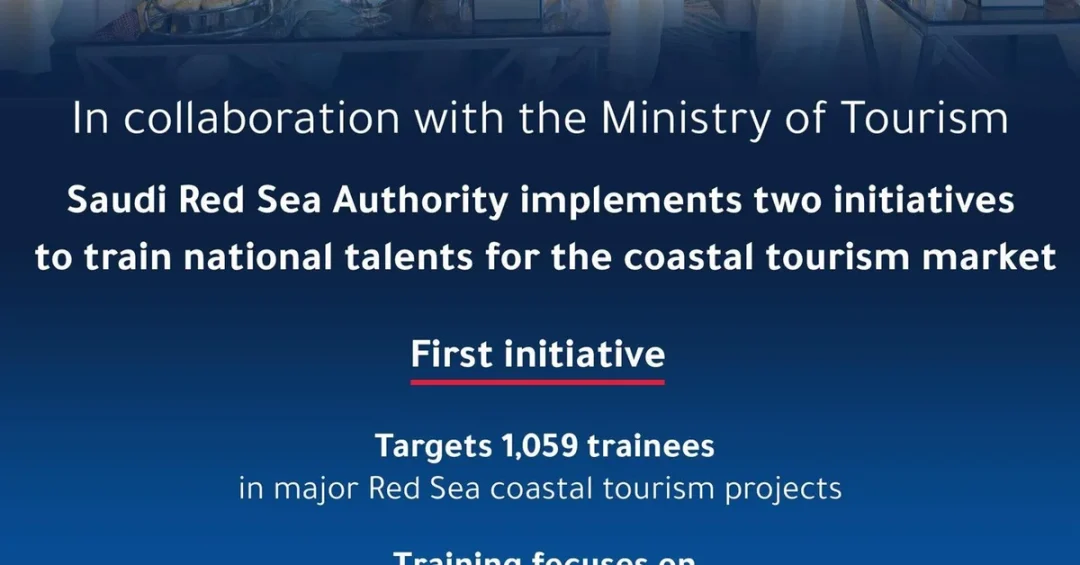
The Saudi Red Sea Authority (SRSA), in collaboration with the Ministry of Tourism, has trained over 1,000 Saudi nationals in coastal tourism and hospitality as part of two pioneering initiatives announced in Riyadh on July 28, 2024. The programs are designed to equip local talent with world-class skills for luxury resorts, cruise operations, and travel agencies, reinforcing the Kingdom’s ambition to become a leading global coastal tourism destination.
Context and Background
The training initiatives are part of the second edition of the Tourism Trailblazers Program, a flagship effort to develop national human resources in alignment with Vision 2030. As Saudi Arabia opens its Red Sea coast to international visitors through megaprojects like Red Sea Global, Cruise Saudi, and NEOM, the demand for skilled professionals in luxury hospitality and marine tourism has surged. The programs aim to bridge this gap by providing targeted training based on international best practices.
Key Details
One initiative targeted 1,059 trainees working in major Red Sea projects, focusing on customer service experiences and safety principles. The other initiative integrated public and private sectors by selecting elite human resources for a specialized training program on a European cruise liner. This program was accredited by the University of Plymouth, in partnership with Dale Carnegie UK, and supervised by Umm Al-Qura University. Participants gained expertise in hospitality, guest service, and cruise ship operations management.
Implications and Impact
These efforts underscore Saudi Arabia’s commitment to creating a skilled national workforce capable of driving the coastal tourism sector. By training local talent, the Kingdom reduces reliance on foreign expertise, enhances service quality, and boosts economic diversification. The initiatives also strengthen integration between public and private sectors, positioning the Red Sea coast as a competitive global destination for luxury tourism and cruise travel.
Vision 2030 Alignment
The programs align directly with Vision 2030 objectives to diversify the economy and develop human capital. SRSA aims to provide over 210,000 jobs by 2030 and contribute more than SAR85 billion to the GDP. By investing in national talent, Saudi Arabia is building a sustainable tourism ecosystem that supports long-term growth and positions the Kingdom as a premier global destination for coastal and luxury tourism.
20 Questions
Q1. What is the Saudi Red Sea Authority?
A1. The Saudi Red Sea Authority (SRSA) is a government agency overseeing the development and regulation of coastal tourism along the Red Sea coast, supporting Vision 2030 goals.
Q2. How many nationals were trained in the initiative?
A2. Over 1,000 Saudi nationals were trained, with 1,059 trainees participating in the Tourism Trailblazers Program focusing on luxury coastal resorts and cruise operations.
Q3. What is the Tourism Trailblazers Program?
A3. It is a flagship training program by SRSA and the Ministry of Tourism designed to develop national talent in coastal tourism and hospitality according to international standards.
Q4. Which megaprojects are involved in the training?
A4. Major Red Sea tourism projects include Red Sea Global, Cruise Saudi, and NEOM, where trainees gained practical experience.
A5. The training focused on customer service experiences and safety principles to ensure high-quality service in luxury coastal resorts and cruise ships.
Q6. Who collaborated with SRSA for the training?
A6. The Ministry of Tourism collaborated with SRSA, alongside partners including Dale Carnegie UK, the University of Plymouth, and Umm Al-Qura University.
Q7. What accreditation did the cruise liner training have?
A7. The training on the European cruise liner was accredited by the University of Plymouth, ensuring international quality standards.
Q8. How does this initiative support Vision 2030?
A8. It supports Vision 2030 by developing human capital, diversifying the economy, and positioning Saudi Arabia as a leading global coastal tourism destination.
Q9. What job creation goals does SRSA have by 2030?
A9. SRSA aims to provide over 210,000 jobs by 2030 in the coastal tourism sector.
Q10. What is the economic contribution target for SRSA by 2030?
A10. SRSA aims to contribute more than SAR85 billion to Saudi Arabia’s GDP by 2030.
Q11. How does the training integrate public and private sectors?
A11. The initiatives involve collaboration between ministries, public agencies, and private companies to select and train elite human resources for luxury tourism.
Q12. What skills did trainees learn on the cruise liner?
A12. Trainees learned hospitality, guest service, and management of hospitality operations on board cruise ships, following European best practices.
Q13. Why is coastal tourism important for Saudi Arabia?
A13. Coastal tourism diversifies the economy, creates jobs, and showcases the Red Sea’s natural beauty, aligning with Vision 2030 to boost non-oil revenue.
Q14. How does this training benefit local communities?
A14. It provides career opportunities for Saudi nationals in luxury tourism, reducing unemployment and fostering economic growth in coastal regions.
Q15. What role does Umm Al-Qura University play?
A15. Umm Al-Qura University supervised the training program, ensuring academic oversight and alignment with educational standards.
Q16. How does the initiative ensure quality standards?
A16. The training follows international best practices and is accredited by reputable institutions like the University of Plymouth.
Q17. What is the long-term vision for Red Sea tourism?
A17. The vision is to make the Red Sea coast a leading global destination for luxury and sustainable tourism, attracting international visitors.
Q18. How does this initiative compare to global training programs?
A18. The program meets high international standards through partnerships with global experts like Dale Carnegie UK and the University of Plymouth.
Q19. What is the significance of the 1,059 trainees number?
A19. It represents a substantial investment in national talent, showing the Kingdom’s commitment to preparing a skilled workforce for major tourism projects.
Q20. How can interested nationals participate in future programs?
A20. Information on future training is typically released through SRSA and Ministry of Tourism official channels and announcements.
Reader Feedback
We value your thoughts. Please share your feedback on this article.
Feedback submitted successfully. Thank you.
(function(){var articleRef=window.location.pathname||window.location.href;var b=document.getElementById(‘fb-submit’);if(!b)return;b.addEventListener(‘click’,function(){var n=document.getElementById(‘fb-name’).value.trim();var m=document.getElementById(‘fb-message’).value.trim();var ok=document.getElementById(‘fb-success’);var er=document.getElementById(‘fb-error’);ok.style.display=’none’;er.style.display=’none’;if(!n||!m){er.textContent=’Name and message are required.’;er.style.display=’block’;return;}b.disabled=true;fetch(‘/api/feedback’,{method:’POST’,headers:{‘Content-Type’:’application/json’},body:JSON.stringify({name:n,message:m,article_reference:articleRef})}).then(function(r){if(!r.ok)throw new Error(‘submit failed’);return r.json();}).then(function(){ok.style.display=’block’;document.getElementById(‘fb-message’).value=”;}).catch(function(){er.textContent=’Error submitting feedback. Please try again.’;er.style.display=’block’;}).finally(function(){b.disabled=false;});});})();