


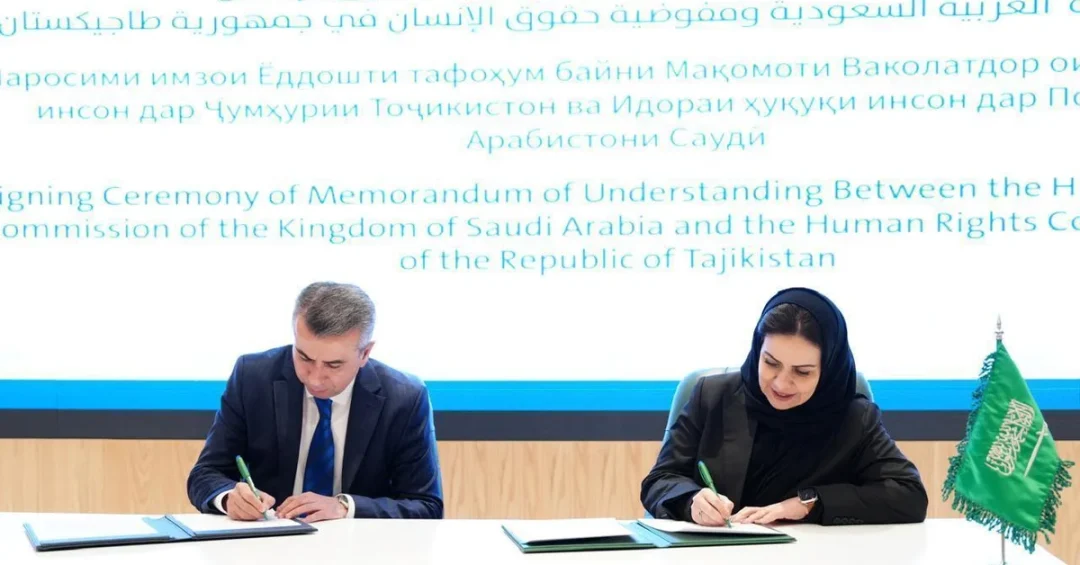
The Human Rights Commission (HRC) of Saudi Arabia and the Commission of Human Rights of the Republic of Tajikistan signed a memorandum of understanding (MoU) in Riyadh on December 19, 2024, to strengthen bilateral cooperation and exchange expertise in the field of human rights. The agreement was signed by Saudi HRC President Dr. Hala bint Mazyad Al-Tuwaijri and Tajikistan Commissioner for Human Rights Umed Bobozoda, marking a significant step in international human rights collaboration.
Context and Background
The MoU underscores Saudi Arabia’s commitment to advancing human rights through international partnerships, in line with the Kingdom’s Vision 2030 goals of promoting justice, equality, and social development. Both commissions aim to enhance the capacities of their personnel through joint programs and projects in research, publications, and data exchange.
This agreement reflects Saudi Arabia’s expanding diplomatic engagement with Central Asian nations, including Tajikistan, to foster mutual understanding and share best practices in human rights protection and promotion.
Key Details
The MoU includes provisions for sharing expertise, statistics, reports, media publications, and scientific research to enhance and protect human rights. It focuses on education about the rights of individuals with disabilities, children, women, and the elderly, as well as other human rights issues.
Dr. Hala bint Mazyad Al-Tuwaijri emphasized that the agreement is part of the HRC’s broader efforts to collaborate with national, regional, and international organizations, including governmental and non-governmental institutions, to achieve its objectives and strengthen relationships with international bodies.
Implications and Impact
The MoU is expected to foster greater cooperation between the two nations in human rights capacity-building, enabling more effective protection of vulnerable groups. It also positions Saudi Arabia as a leader in regional human rights initiatives, contributing to stability and development in Central Asia.
Tajikistan Commissioner for Human Rights Umed Bobozoda praised the agreement as a milestone in bilateral relations, noting that it will facilitate the exchange of knowledge and promote a culture of human rights in both countries.
20 Questions
Q1. What is the main purpose of the MoU signed between Saudi Arabia and Tajikistan?
A1. The MoU aims to enhance cooperation and exchange expertise between the human rights commissions of both countries, focusing on capacity-building, joint programs, and research.
Q2. Who signed the MoU on behalf of Saudi Arabia?
A2. The MoU was signed by Dr. Hala bint Mazyad Al-Tuwaijri, President of the Saudi Human Rights Commission.
Q3. Who signed the MoU on behalf of Tajikistan?
A3. The MoU was signed by Umed Bobozoda, Tajikistan Commissioner for Human Rights.
Q4. When and where was the MoU signed?
A4. The MoU was signed on December 19, 2024, in Riyadh, Saudi Arabia.
Q5. What areas of cooperation are covered by the MoU?
A5. The MoU covers sharing expertise, joint programs, research projects, data exchange on statistics, reports, media publications, and scientific research related to human rights.
Q6. Which specific groups are highlighted in the MoU’s human rights education focus?
A6. The MoU highlights education about the rights of individuals with disabilities, children, women, and the elderly.
Q7. How does this MoU align with Saudi Arabia’s Vision 2030?
A7. The MoU supports Vision 2030’s goals of promoting justice, equality, and social development through international collaboration and human rights advancement.
Q8. What is the role of the Saudi Human Rights Commission in this agreement?
A8. The HRC signed the MoU to strengthen its international partnerships and enhance its capacity to protect and promote human rights.
Q9. How will the MoU benefit personnel from both commissions?
A9. It will build their capacities through joint training, programs, and projects, enabling better human rights protection.
Q10. Why is this MoU significant for Saudi-Tajikistan relations?
A10. It marks a milestone in bilateral ties, fostering mutual understanding and cooperation in human rights, a key area of international diplomacy.
Q11. What types of data will be exchanged under the MoU?
A11. The MoU includes exchange of statistics, reports, media publications, and scientific research to enhance human rights protection.
Q12. Is this MoU part of a broader Saudi strategy?
A12. Yes, it is part of the HRC’s efforts to collaborate with national, regional, and international organizations to achieve its objectives.
Q13. How does the MoU promote human rights education?
A13. It focuses on educating about the rights of vulnerable groups, such as persons with disabilities, children, women, and the elderly.
Q14. What international bodies are involved in similar cooperation?
A14. The HRC collaborates with governmental and non-governmental institutions globally to protect and promote human rights.
Q15. What is the expected impact of the MoU on human rights in Tajikistan?
A15. It will facilitate knowledge sharing and capacity-building, improving human rights protection for vulnerable populations in Tajikistan.
Q16. How does the MoU support Saudi Arabia’s global role?
A16. It positions Saudi Arabia as a leader in human rights diplomacy, contributing to regional stability and development.
Q17. Are there any joint research initiatives planned under the MoU?
A17. Yes, the MoU includes joint programs and projects in research and publications related to human rights.
Q18. What did Commissioner Bobozoda say about the agreement?
A18. He praised it as a milestone in bilateral relations, emphasizing its role in promoting a culture of human rights in both countries.
Q19. How will the MoU affect cooperation with Central Asian nations?
A19. It strengthens Saudi Arabia’s ties with Central Asia, promoting shared values and best practices in human rights.
Q20. What is the long-term vision for this partnership?
A20. The partnership aims to deepen collaboration over time, enhancing human rights protections and supporting sustainable development in both nations.
Vision 2030 Alignment
This MoU directly supports Saudi Arabia’s Vision 2030 by reinforcing the Kingdom’s commitment to human rights, international cooperation, and social development. By partnering with Tajikistan, Saudi Arabia demonstrates its leadership in fostering global partnerships that promote justice, equality, and the protection of vulnerable groups, contributing to a more inclusive and stable world.
Reader Feedback
We value your thoughts. Please share your feedback on this article.
Your feedback helps us improve our coverage.