


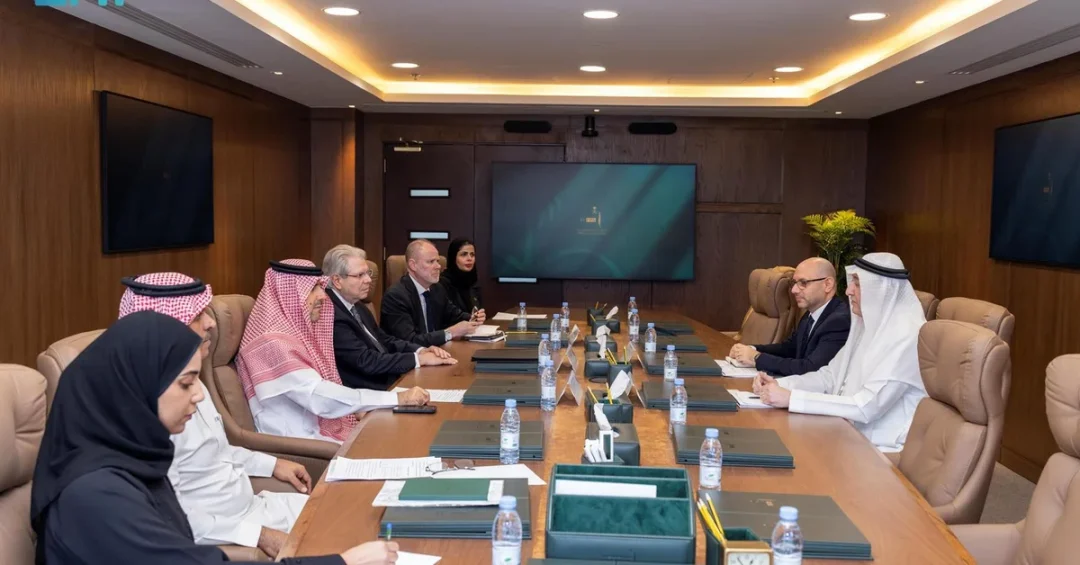
President of the Saudi General Court of Audit (GCA) Dr. Hussam bin Abdulmohsen Al-Anqari held a consultative meeting on Wednesday with Eng. Mohammed Alsaati, special advisor to the President of the Islamic Development Bank (IsDB), at the GCA headquarters in Riyadh. The meeting was also attended by U.S. Comptroller General and head of the Government Accountability Office (GAO) Gene Dodaro, who serves as vice chairman of the Steering Committee of the International Organization of Supreme Audit Institutions (INTOSAI).
Context and Background
Dr. Al-Anqari also serves as chairman of INTOSAI’s Steering Committee for Cooperation with the Donor Community, a role that places Saudi Arabia at the forefront of global efforts to strengthen public financial oversight. The meeting, reported by the Saudi Press Agency, brought together key figures from Saudi Arabia, the United States, and the IsDB to discuss enhanced collaboration between audit institutions and international donors.
Key Details
The discussion focused on avenues for collaboration between INTOSAI’s Steering Committee and the IsDB, which is one of several donors led by the World Bank. Participants explored ways to enhance the role of donors by supporting initiatives aimed at strengthening the capacities of supreme audit institutions in developing countries. This effort aligns with the committee’s work and is consistent with the priorities of INTOSAI and its donor partners. Dr. Al-Anqari highlighted the significant successes resulting from INTOSAI’s collaboration with donor entities, emphasizing the committee’s role in empowering supreme audit institutions through knowledge exchange and global best practices.
Implications and Impact
The trilateral meeting underscores Saudi Arabia’s growing leadership in international governance and accountability frameworks. By hosting discussions between U.S. and IsDB officials, the Kingdom reinforces its position as a diplomatic hub for global institutional cooperation. The focus on developing countries’ audit capacities has direct implications for transparency and public financial management worldwide, supporting sustainable development goals and good governance standards.
Vision 2030 Alignment
The consultative meeting aligns closely with Saudi Arabia’s Vision 2030 objectives, which prioritize transparency, accountability, and institutional excellence as pillars of national transformation. By leading global efforts to empower audit institutions in developing nations, the Kingdom demonstrates its commitment to international partnership and knowledge transfer. This initiative reflects Saudi Arabia’s broader ambition to serve as a bridge between developed and developing economies, contributing to a more stable and accountable global financial system.
20 Questions
Q1. Who chaired the consultative meeting in Riyadh?
A1. Dr. Hussam bin Abdulmohsen Al-Anqari, President of the Saudi General Court of Audit and chairman of INTOSAI’s Steering Committee, chaired the meeting on Wednesday in Riyadh.
Q2. Who attended from the United States?
A2. U.S. Comptroller General and GAO head Gene Dodaro attended, serving as vice chairman of the INTOSAI Steering Committee.
Q3. What is the role of Eng. Mohammed Alsaati?
A3. Eng. Mohammed Alsaati is the special advisor to the President of the Islamic Development Bank (IsDB) and participated in the discussions.
Q4. What was the main focus of the discussion?
A4. The discussion focused on avenues for collaboration between INTOSAI’s Steering Committee and the IsDB regarding donor support for audit institutions.
Q5. How does the IsDB relate to the World Bank?
A5. The IsDB is one of several donors led by the World Bank, working alongside other international financial institutions.
Q6. What is INTOSAI’s role in this context?
A6. INTOSAI is the International Organization of Supreme Audit Institutions, which coordinates standards and cooperation among national audit bodies.
Q7. What initiatives were discussed during the meeting?
A7. Participants discussed initiatives to strengthen the capacities of supreme audit institutions in developing countries through donor support.
Q8. How does this align with Saudi Arabia’s priorities?
A8. The meeting supports Saudi Arabia’s Vision 2030 goals of enhancing transparency, accountability, and institutional excellence nationally and globally.
Q9. What successes has INTOSAI seen with donors?
A9. Dr. Al-Anqari highlighted significant successes from INTOSAI’s collaboration with donor entities in empowering audit institutions in developing nations.
Q10. How does knowledge exchange help audit institutions?
A10. Knowledge exchange allows audit institutions to adopt global best practices, improving their performance and public financial management accountability.
Q11. Where did the meeting take place?
A11. The meeting was held at the General Court of Audit headquarters in Riyadh, Saudi Arabia.
Q12. When did the meeting occur?
A12. The consultative meeting took place on Wednesday, as reported by the Saudi Press Agency on October 31, 2024.
Q13. What is the Steering Committee’s purpose?
A13. The Steering Committee coordinates INTOSAI’s cooperation with the donor community to support supreme audit institutions worldwide.
Q14. How does this meeting impact developing countries?
A14. The meeting aims to enhance donor-driven initiatives that strengthen audit capacities, improving governance and transparency in developing nations.
Q15. What is the role of the GAO in global audit?
A15. The U.S. Government Accountability Office provides leadership and expertise in government auditing, with its comptroller general serving on INTOSAI’s Steering Committee.
Q16. Why is Saudi Arabia involved in INTOSAI leadership?
A16. Saudi Arabia’s leadership in INTOSAI reflects its commitment to global governance standards and its active role in international institutional development.
Q17. How does the IsDB benefit from this collaboration?
A17. The IsDB benefits by aligning its donor activities with INTOSAI’s priorities, ensuring effective use of resources for audit capacity building.
Q18. What are the global best practices mentioned?
A18. Global best practices refer to internationally accepted auditing standards and methodologies that improve the quality and reliability of public audits.
Q19. How does public financial management improve?
A19. Stronger audit institutions ensure greater accountability and transparency in how public funds are managed, reducing waste and corruption.
Q20. What is the long-term vision for this cooperation?
A20. The long-term vision is a global network of capable audit institutions that uphold financial integrity, supporting sustainable development and economic stability.
Reader Feedback
We value your thoughts. Please share your feedback on this article.
Your feedback helps us improve our coverage.