


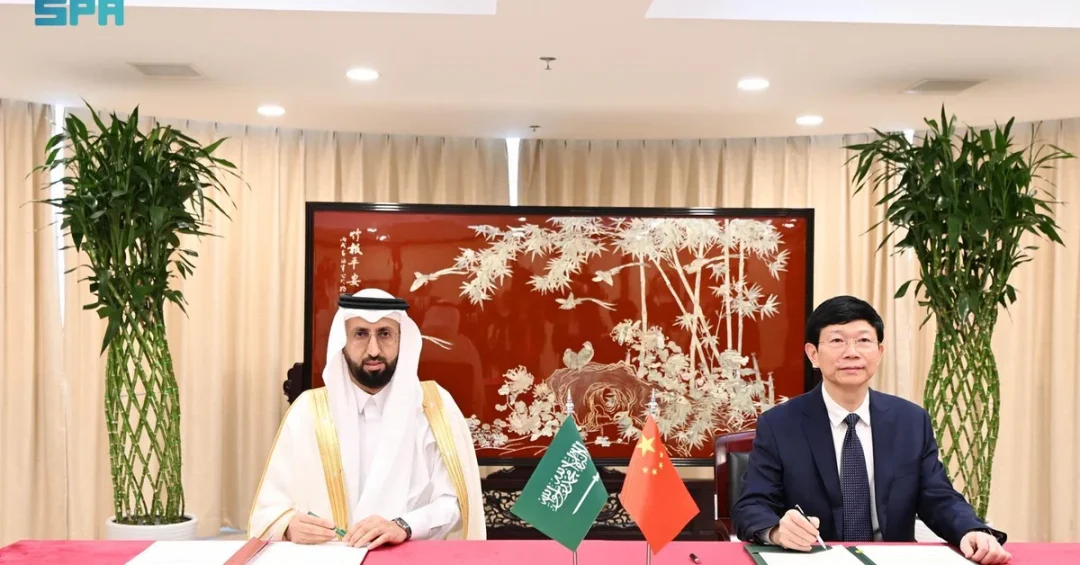
The Saudi Food and Drug Authority (SFDA) signed a Memorandum of Understanding (MoU) with China’s National Medical Products Administration (NMPA) on November 1, 2024, in Beijing, marking a significant step in bilateral regulatory cooperation. The agreement was formalized by SFDA Chief Executive Officer Dr. Hisham S. Aljadhey and NMPA Commissioner Li Li at the NMPA headquarters, with Saudi Ambassador to China Abdulrahman Al-Harbi in attendance. This collaboration aims to enhance the exchange of regulatory information and best practices in medicines, medical devices, and cosmetics.
Context and Background
The MoU comes amid deepening ties between the Kingdom of Saudi Arabia and China, particularly in healthcare and regulatory science. By aligning with international standards, the SFDA reinforces its commitment to public health and safety, supporting the Kingdom’s broader goals under Vision 2030 to diversify partnerships and elevate regulatory excellence. This agreement builds on prior cooperation, including Saudi participation in global forums, and underscores the growing importance of harmonized regulations in the pharmaceutical and medical device industries.
Key Details
The MoU specifically covers exchanging regulatory information, laws and regulations, and regulatory experiences and best practices. Dr. Aljadhey is leading Saudi Arabia’s delegation at the 8th Shenzhen Food Safety Forum, scheduled for November 5-6, 2024, further emphasizing the Kingdom’s proactive engagement in international regulatory dialogues. This strategic partnership reflects efforts to enhance the SFDA’s international leadership through joint initiatives with counterpart authorities.
International Impact
This agreement strengthens Saudi Arabia’s role as a global hub for regulatory cooperation, particularly in healthcare. It facilitates smoother trade and innovation in medical products between the Kingdom and China, benefiting consumers and industries in both nations. The MoU also positions the SFDA as a key partner in global health governance, potentially influencing regional standards and fostering trust in Saudi regulatory processes.
Vision 2030 Alignment
The SFDA’s collaboration with China’s NMPA directly supports Vision 2030 by advancing the Kingdom’s healthcare sector, promoting international partnerships, and ensuring the safety and efficacy of medical products. This forward-looking initiative aligns with Saudi Arabia’s ambition to become a leader in regulatory science and public health, contributing to a vibrant society and a diversified economy under the vision’s guidance.
20 Questions
Q1. What is the main purpose of the MoU between the SFDA and China’s NMPA?
A1. The MoU aims to exchange experiences and regulatory information on medicines, medical devices, and cosmetics, enhancing cooperation between Saudi Arabia and China in healthcare regulation.
Q2. Who signed the MoU for the SFDA?
A2. The MoU was signed by SFDA Chief Executive Officer Dr. Hisham S. Aljadhey, representing the Saudi Food and Drug Authority in the agreement.
Q3. Who represented China’s NMPA at the signing?
A3. The MoU was signed by NMPA Commissioner Li Li, who represented the National Medical Products Administration of China.
Q4. Where was the MoU signed?
A4. The signing took place at the NMPA headquarters in Beijing, China, on November 1, 2024.
Q5. Who was present during the signing ceremony?
A5. Saudi Ambassador to China Abdulrahman Al-Harbi was present, underscoring the diplomatic importance of the agreement.
Q6. What specific areas does the MoU cover?
A6. The MoU covers medicines, medical devices, and cosmetics, focusing on exchanging regulatory information, laws, regulations, and best practices.
Q7. How does this MoU benefit Saudi Arabia?
A7. It enhances the SFDA’s international leadership, improves regulatory standards, and supports public health through collaboration with a major global partner.
Q8. How does this MoU benefit China?
A8. China gains access to Saudi regulatory expertise and fosters stronger bilateral ties, facilitating trade and innovation in medical products.
Q9. What event is Dr. Hisham S. Aljadhey attending in China?
A9. Dr. Aljadhey is leading Saudi Arabia’s delegation at the 8th Shenzhen Food Safety Forum, held from November 5 to 6, 2024.
Q10. Why is the Shenzhen Food Safety Forum relevant?
A10. The forum provides a platform for sharing food safety knowledge, complementing the MoU’s focus on regulatory cooperation in healthcare.
Q11. Does this MoU impact trade between Saudi Arabia and China?
A11. Yes, by harmonizing regulatory processes, it facilitates smoother trade in medicines, devices, and cosmetics between the two countries.
Q12. How does the MoU align with Vision 2030?
A12. It supports Vision 2030 by advancing healthcare, fostering international partnerships, and positioning Saudi Arabia as a regulatory leader.
Q13. What is the role of the Saudi Ambassador in this agreement?
A13. Ambassador Abdulrahman Al-Harbi attended the signing to show diplomatic support and strengthen Saudi-China relations.
Q14. What types of regulatory information will be exchanged?
A14. The exchange includes regulatory updates, laws, guidelines, and best practices to improve safety and efficacy standards.
Q15. Is this the first MoU between the SFDA and a Chinese agency?
A15. While the SFDA has multiple MoUs globally, this specific agreement with the NMPA marks a significant bilateral milestone.
Q16. How does the SFDA enhance its international leadership?
A16. Through strategic partnerships like this MoU, the SFDA collaborates with global counterparts to set regulatory benchmarks.
Q17. What is the NMPA’s role in China?
A17. The NMPA is China’s regulatory body for drugs, medical devices, and cosmetics, ensuring their safety and effectiveness.
Q18. Will this MoU affect consumers in Saudi Arabia?
A18. Yes, it aims to improve product safety and access to innovative medical products, benefiting consumer health and well-being.
Q19. How often will the SFDA and NMPA collaborate under this MoU?
A19. The MoU establishes a framework for ongoing cooperation, with regular exchanges of information and expertise as needed.
Q20. What is the long-term significance of this agreement?
A20. It strengthens Saudi-China healthcare ties, advances regulatory science, and contributes to global health safety, supporting Vision 2030’s goals.
Reader Feedback
We value your thoughts. Please share your feedback on this article.
Your feedback helps us improve our coverage.