


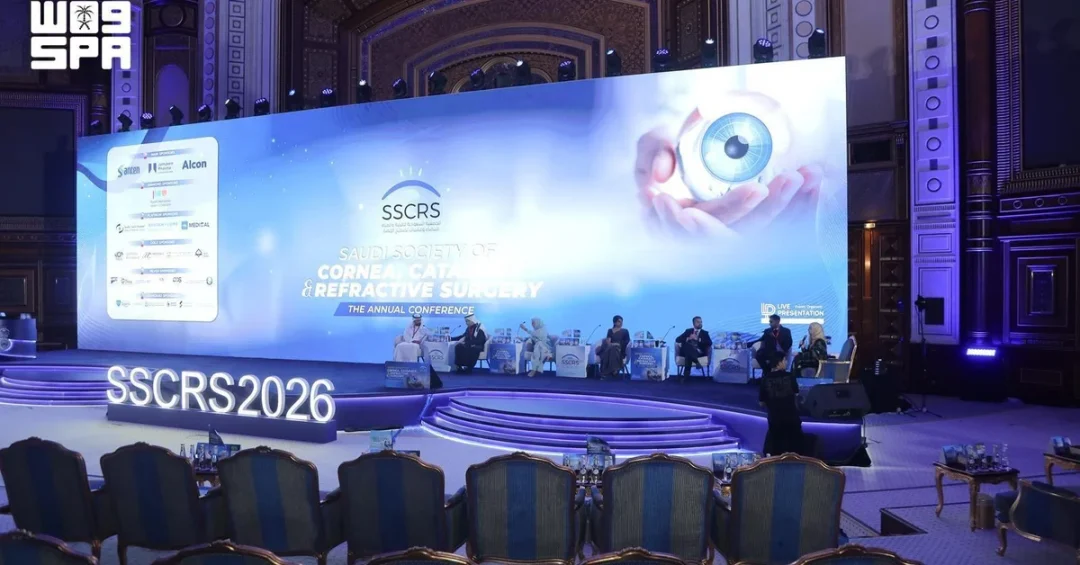
The First Annual International Conference of the Saudi Society of Cornea, Cataract, and Refractive Surgery concluded in Jeddah on Saturday with a formal set of recommendations calling for expanded local and multicenter research, stronger continuing medical education, and specialized training programs for the Kingdom’s next generation of eye specialists. The conference, held under the umbrella of Saudi Arabia’s recognized scientific societies and attended by leading national and international ophthalmologists, issued outcomes that are expected to shape clinical practice in cornea, cataract, and refractive care across the country. The recommendations were announced through official Saudi channels and reflect the Kingdom’s broader commitment to evidence-based medicine and patient-centred care.
Why does a single medical conference in Jeddah matter beyond the Kingdom’s borders? Because the decisions taken at gatherings like this one influence how millions of patients are diagnosed and treated, and because Saudi Arabia is steadily positioning itself as a hub for medical innovation in the Middle East. The recommendations aim to generate scientific data that better reflect the needs of patients in Saudi Arabia, rather than relying exclusively on studies conducted in other regions with different genetic, environmental, and lifestyle profiles. That distinction matters for a population with high rates of diabetes and dry eye disease, and it signals a maturing research culture that aligns directly with the national drive for excellence in healthcare.
Context and Background
What is the Saudi Society of Cornea, Cataract, and Refractive Surgery, and why has it chosen this moment to convene its first annual international conference? The society brings together ophthalmologists who specialize in three closely linked areas of eye care: the cornea, the transparent front surface of the eye; cataract, the clouding of the eye’s natural lens; and refractive surgery, which corrects vision problems such as short-sightedness and astigmatism. By hosting an international event in Jeddah, the society created a platform where Saudi specialists could compare notes with global experts, share surgical outcomes, and agree on priorities for the coming years. The conference format — plenary sessions, workshops, and closed-door recommendation drafting — is a proven model for turning academic discussion into practical guidance.
The timing reflects a wider transformation in Saudi healthcare. Under Vision 2030, the Kingdom has committed to raising the quality and capacity of its medical services, expanding research output, and reducing dependence on imported expertise by training its own specialists to world standards. Ophthalmology is a particularly visible field because conditions such as cataract and refractive error affect large numbers of people, and because surgical techniques evolve quickly. A national society that can issue credible recommendations is therefore an asset, not just for doctors but for patients, hospitals, insurers, and the health authorities that plan budgets and workforce needs. The Jeddah meeting is best understood as one step in a longer journey toward self-reliant, high-quality eye care.
Regional context adds another layer. Gulf populations share many risk factors — high rates of diabetes, exposure to intense sunlight and dust, and rising screen time — that influence eye health. Research conducted in Riyadh, Jeddah, Dammam, or Abha can be more directly relevant to patients in those cities than studies from Europe or North America. By calling for multicenter research within Saudi Arabia, the conference is effectively arguing that local evidence should guide local practice, while still learning from international best practice. That balance between global knowledge and local relevance runs through all of the recommendations.
Key Details and Recommendations
What exactly did the delegates agree on? The recommendations cover four broad areas. First, the conference called for expanding local and multicenter research so that scientific data better reflect the needs of patients in Saudi Arabia. Second, it emphasized strengthening scientific cooperation and exchanging expertise between specialists in Saudi Arabia and international experts. Third, it urged the fostering of partnerships among scientific societies, universities, and healthcare institutions to advance education, scientific research, and clinical practice. Fourth, it set out specific clinical priorities in dry eye and ocular surface disease, refractive surgery, and cataract surgery.
In the field of dry eye and ocular surface diseases, the recommendations called for enhancing early diagnosis and comprehensive patient assessment, utilizing modern evidence-based diagnostic and therapeutic methods, and employing advanced technologies to evaluate the cornea and ocular surface. These measures, delegates noted, would help improve diagnostic accuracy and the selection of appropriate treatment plans. Dry eye is often dismissed as a minor inconvenience, but in severe cases it can cause persistent pain, visual disturbance, and even damage to the eye surface. Early, accurate diagnosis allows clinicians to intervene before the condition becomes chronic, which is both better for patients and more cost-effective for the health system.
The conference also recommended keeping pace with advances in refractive surgery and improving cataract surgery practices through the exchange of expertise on the latest surgical techniques, intraocular lens power calculations, and the selection of the appropriate lens for each patient. Intraocular lens power calculation is a highly technical step: if the calculation is inaccurate, the patient may still need glasses after cataract surgery. Sharing expertise on this step, and on lens selection, directly improves visual outcomes. Finally, the recommendations called for supporting the training of young physicians and practitioners through workshops and educational programs — an investment in the workforce that will deliver returns for decades.
International and Regional Impact
How will these recommendations be received outside Saudi Arabia? International ophthalmology is a collaborative field, and societies in Europe, North America, and Asia regularly exchange data and host joint sessions. When a Saudi society commits to multicenter research and to hosting international experts, it strengthens the Kingdom’s voice in that global conversation. Saudi researchers who publish locally generated data become credible partners in international studies, and Saudi hospitals that adopt evidence-based protocols become reference points for the region. The conference therefore has a diplomatic dimension as well as a clinical one.
Regionally, the recommendations are likely to be watched closely by neighbouring Gulf states that face similar patient profiles and workforce challenges. If Saudi Arabia demonstrates that local research can change practice, other countries may follow suit, creating a virtuous circle of regional data-sharing. The emphasis on partnerships among scientific societies, universities, and healthcare institutions is particularly portable: it does not require new technology, only sustained cooperation. For international readers, the significance is that a major Middle Eastern health system is investing in the kind of long-term research infrastructure that improves outcomes for everyone, including visitors and expatriates who receive care in the Kingdom.
Economic and Strategic Significance
Why should economists and policymakers pay attention to an ophthalmology conference? Because eye care is a significant and growing part of healthcare spending, and because preventing blindness and visual impairment keeps people in the workforce. Cataract surgery is one of the most cost-effective interventions in medicine, and refractive surgery is increasingly common among younger, economically active adults. Improving the accuracy of diagnosis and treatment reduces the need for repeat procedures and follow-up care, which saves money for both the public health system and private patients. The conference’s call for better data is, in economic terms, a call for more efficient allocation of resources.
Strategically, the recommendations support the localization of high-value medical services. Saudi Arabia has been expanding its capacity to perform advanced surgery domestically, reducing the need for patients to travel abroad for treatment. That shift keeps spending inside the Kingdom, builds local expertise, and creates jobs for Saudi physicians, nurses, and technicians. It also supports the growth of medical tourism, as international patients increasingly look to Gulf centres for high-quality, competitively priced care. A society that can issue its own clinical recommendations is a society that can attract patients and partners on its own terms.
Vision 2030 Alignment
How does this connect to Vision 2030? The Vision’s health sector objectives include improving the quality and efficiency of health services, promoting preventive care, and developing a skilled national workforce. The Jeddah recommendations advance each of these goals. Local and multicenter research builds the knowledge base needed for preventive and precision care. Continuing medical education and specialized training programs develop Saudi talent, which is central to the Vision’s human-capital ambitions. Partnerships among societies, universities, and healthcare institutions mirror the Vision’s emphasis on collaboration across sectors and with international partners.
The conference also reflects the broader modernization of Saudi professional life. Scientific societies are taking a more active role in setting standards, universities are linking research to clinical practice, and young physicians are being given structured pathways to develop their skills. These are the quiet, cumulative changes that turn a vision document into everyday reality. For patients in Saudi Arabia, the practical result should be earlier diagnosis, more appropriate treatment, and better visual outcomes. For the international audience, the message is that the Kingdom is not only investing in hospitals and equipment but also in the intellectual infrastructure that makes excellent care sustainable. The First Annual International Conference of the Saudi Society of Cornea, Cataract, and Refractive Surgery has set a benchmark; the task now is implementation, and the momentum generated in Jeddah suggests that the Kingdom’s eye-care community is ready to deliver.
20 Questions
Q1. What was the main outcome of the Jeddah ophthalmology conference?
A1. The First Annual International Conference of the Saudi Society of Cornea, Cataract, and Refractive Surgery concluded with recommendations to expand local and multicenter research, strengthen continuing medical education, and develop specialized training programs for eye specialists in Saudi Arabia.
Q2. Where and when did the conference take place?
A2. The conference was held in Jeddah and concluded on Saturday, according to the official announcement carried by the Saudi Press Agency. It was the first annual international gathering organized by the Saudi Society of Cornea, Cataract, and Refractive Surgery.
Q3. Why is local research important in ophthalmology?
A3. Local research generates scientific data that better reflect the needs of patients in Saudi Arabia, whose genetic, environmental, and lifestyle factors may differ from populations studied elsewhere. This helps clinicians choose treatments that are more likely to work for Saudi patients.
Q4. What does the conference recommend for dry eye and ocular surface diseases?
A4. It calls for enhancing early diagnosis and comprehensive patient assessment, using modern evidence-based diagnostic and therapeutic methods, and employing advanced technologies to evaluate the cornea and ocular surface, thereby improving diagnostic accuracy and treatment planning.
Q5. What is meant by multicenter research?
A5. Multicenter research involves collecting and analyzing data from multiple hospitals or clinics rather than a single site. This produces larger, more representative samples and stronger evidence, which is particularly valuable when studying conditions that vary across regions.
Q6. How will the recommendations affect cataract surgery?
A6. They encourage the exchange of expertise on the latest surgical techniques, intraocular lens power calculations, and the selection of the appropriate lens for each patient. Better calculations and lens choices lead to improved visual outcomes after surgery.
Q7. What role does continuing medical education play?
A7. Continuing medical education keeps practicing physicians up to date with new techniques, technologies, and evidence. The conference recommends strengthening it so that Saudi specialists can maintain international standards and adopt innovations safely and effectively.
Q8. Who attended the conference?
A8. The conference brought together specialists from Saudi Arabia and international experts in cornea, cataract, and refractive surgery, along with representatives of scientific societies, universities, and healthcare institutions, according to the official announcement.
Q9. What are the benefits of early diagnosis in eye care?
A9. Early diagnosis allows treatment to begin before a condition becomes advanced or chronic. In dry eye disease, for example, early intervention can prevent persistent pain and surface damage, improving quality of life and reducing the need for more intensive treatment later.
Q10. How does the conference support young physicians?
A10. It calls for supporting the training of young physicians and practitioners through workshops and educational programs. This structured approach helps them develop surgical and diagnostic skills under experienced supervision, building the next generation of Saudi eye specialists.
Q11. What is refractive surgery?
A11. Refractive surgery corrects common vision problems such as short-sightedness, long-sightedness, and astigmatism, usually by reshaping the cornea. The conference recommends keeping pace with advances in this field and sharing expertise on the latest techniques.
Q12. Why is international cooperation emphasized?
A12. International cooperation allows Saudi specialists to exchange expertise with global leaders, adopt best practices, and contribute their own data to the worldwide evidence base. It also raises the international profile of Saudi ophthalmology and attracts collaborative research opportunities.
Q13. What partnerships does the conference encourage?
A13. It encourages partnerships among scientific societies, universities, and healthcare institutions. Such partnerships combine clinical experience, academic research, and institutional resources, creating a stronger foundation for education, research, and improved patient care.
Q14. How does this align with Vision 2030?
A14. Vision 2030 seeks to improve healthcare quality, promote preventive care, and develop national talent. The conference recommendations support these goals by building local research capacity, expanding training, and strengthening collaboration across the health sector.
Q15. What technologies are relevant to cornea and ocular surface evaluation?
A15. Advanced diagnostic technologies can include corneal topography, tomography, and other imaging tools that assess the shape, thickness, and surface health of the eye. These help clinicians detect disease earlier and select more precise treatments.
Q16. Will these recommendations change patient care immediately?
A16. Implementation will take time, as recommendations must be translated into protocols, training, and research projects. However, they set a clear direction for the profession and provide a framework that hospitals and universities can adopt progressively.
Q17. What is the significance of intraocular lens power calculation?
A17. It determines the correct lens strength to implant during cataract surgery. Accurate calculation is essential for good vision after surgery; errors can leave patients needing glasses or further procedures, so sharing expertise in this area improves outcomes.
Q18. How might the conference affect medical tourism in Saudi Arabia?
A18. By raising standards and building a reputation for evidence-based eye care, the conference supports the Kingdom’s efforts to attract international patients. High-quality outcomes and recognized expertise are key factors that influence where patients choose to travel for treatment.
Q19. What is the role of the Saudi Press Agency in this announcement?
A19. The Saudi Press Agency is the official national news agency that reported the conference conclusions. Its coverage provides an authoritative record of the recommendations, ensuring that the public and the medical community receive accurate information from an official Saudi channel.
Q20. What happens next after the conference?
A20. The recommendations will be taken up by scientific societies, universities, and healthcare institutions, which are expected to develop research projects, training programs, and clinical protocols. Progress will depend on sustained collaboration and investment in local capacity.
Reader Feedback
We value your thoughts. Please share your feedback on this article.
Your feedback helps us improve our coverage.
Related articles
 Saudi Vice Health Minister Joins UN General Assembly Health Talks
 Saudi Arabia Joins G20 Ebola Response Meeting
 Jeddah Hosts First International Cornea and Cataract Conference
 King Khaled Eye Hospital Hosts 43rd Global Conference
 First International Eye Surgery Conference Opens in Jeddah
 Yanbu Healthcare Program Earns Global Hospital Rating