


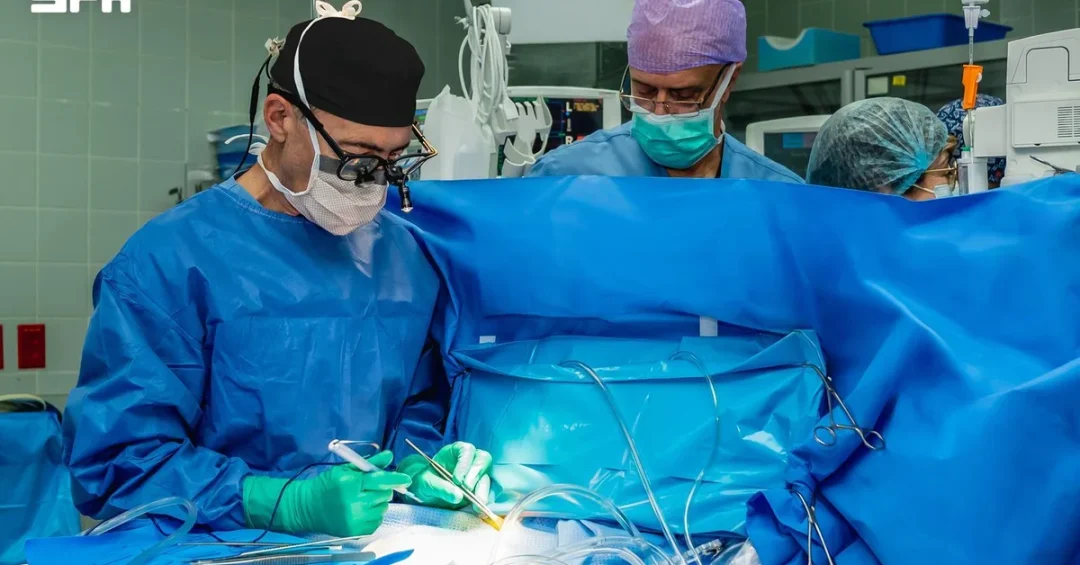
King Faisal Specialist Hospital and Research Centre (KFSH) has successfully treated two children using a single donor heart in the first paediatric domino heart transplant of its kind in the Middle East and Europe. According to the Saudi Press Agency (SPA), the donor heart was transplanted into a child with end-stage heart failure, while the healthy pulmonary valve and root from his explanted heart were used to treat a second child, extending the benefit of a single donated heart to two patients.
Context and Background
Domino heart transplantation is a highly specialised procedure that uses healthy tissue from the explanted heart of a transplant recipient to treat another patient, maximising the therapeutic value of each donated organ. This approach is particularly valuable in paediatric care, where donor organs are scarce and growing children often require multiple surgeries. The successful procedure at KFSH marks a significant advancement for paediatric cardiac care in the region.
The first patient, a 12-year-old boy with dilated cardiomyopathy and end-stage heart failure, had spent approximately six weeks in hospital receiving continuous medication to support his heart while awaiting transplantation. Although he required a complete heart transplant, his pulmonary valve and root remained healthy and suitable for transplantation. At the same time, a nine-year-old boy with severe aortic stenosis and regurgitation underwent a complex Ross procedure, having previously undergone two procedures to repair the affected valve.
Key Details
During the operation, the second child’s healthy pulmonary valve was moved to the aortic position to replace the damaged valve, while the vacated pulmonary position was reconstructed using the pulmonary valve and root taken from the first child’s explanted heart.
The first child therefore became both a heart recipient and a source of viable cardiac tissue for the second patient, enabling one donor heart to benefit two children through a carefully coordinated sequence of procedures. Because the transplanted valve is living tissue, it has the potential to grow with the child, which may reduce the need for repeated valve replacement surgery as the patient develops, unlike conventional prosthetic valves, which remain fixed in size.
Executive Director of the Heart Centre of Excellence at KFSH Dr. Hani Alsergani said: “This is one of the rarest forms of partial heart transplantation in children and places KFSH among a select group of centres worldwide capable of performing it, building on the hospital’s expertise in heart transplantation and complex congenital cardiac surgery.”
The achievement required the simultaneous coordination of two complex operations and close collaboration among specialists in heart transplantation, paediatric and congenital cardiac surgery, paediatric cardiology, heart failure, cardiac imaging, anaesthesia and critical care, supported by perfusion, nursing and transplant coordination teams. It also relied on the hospital’s ability to assess, preserve and prepare viable cardiac tissue for transplantation.
Implications and Impact
This groundbreaking procedure positions Saudi Arabia at the forefront of paediatric cardiac transplantation, not only in the Middle East but also on the global stage. It demonstrates the Kingdom’s capacity to perform highly complex, life-saving surgeries that were previously available only in a few leading centres worldwide. The success also highlights the importance of organ donation and the potential for innovative techniques to expand the impact of each donated organ.
For international patients and medical professionals, this achievement signals that Saudi Arabia offers world-class healthcare services. KFSH’s recognition as the top hospital in the Middle East and Africa and 12th globally among the world’s top 250 academic medical centers for 2026, according to SPA, further reinforces its reputation for excellence. The hospital was also recognized as the most valuable healthcare brand in the Kingdom and the Middle East for 2026 by Brand Finance, and listed by Newsweek among the World’s Best Hospitals, World’s Best Smart Hospitals, and World’s Best Specialized Hospitals for 2026.
Vision 2030 Alignment
This medical milestone aligns with Saudi Vision 2030’s goals to enhance healthcare quality and position the Kingdom as a global leader in specialised medical services. By advancing paediatric cardiac care and fostering medical innovation, KFSH contributes to the vision’s Health Sector Transformation Program, which aims to improve health outcomes and establish Saudi Arabia as a hub for cutting-edge medical treatment. The successful domino heart transplant underscores the Kingdom’s commitment to investing in world-class healthcare infrastructure and expertise, ultimately benefiting patients both within Saudi Arabia and around the world.
20 Questions
Q1. What is a domino heart transplant?
A1. A domino heart transplant uses healthy tissue from the explanted heart of a transplant recipient to treat another patient, maximising the therapeutic value of a single donated organ.
Q2. Who performed the first paediatric domino heart transplant in the Middle East and Europe?
A2. King Faisal Specialist Hospital and Research Centre (KFSH) in Riyadh performed the procedure, as reported by the Saudi Press Agency.
Q3. How old were the two children involved in the procedure?
A3. The first patient was a 12-year-old boy with end-stage heart failure, and the second was a nine-year-old boy with severe aortic stenosis and regurgitation.
Q4. What was the condition of the first child?
A4. He had dilated cardiomyopathy and end-stage heart failure and had spent about six weeks in hospital awaiting a transplant.
Q5. What was the condition of the second child?
A5. He had severe aortic stenosis and regurgitation and had previously undergone two procedures to repair the affected valve.
Q6. What procedure did the second child undergo?
A6. He underwent a complex Ross procedure, during which his healthy pulmonary valve was moved to the aortic position.
Q7. How was the second child’s pulmonary position reconstructed?
A7. It was reconstructed using the pulmonary valve and root taken from the first child’s explanted heart.
Q8. What makes the transplanted valve special?
A8. Because it is living tissue, it has the potential to grow with the child, possibly reducing the need for repeated valve replacements.
Q9. Who commented on the success of the procedure?
A9. Dr. Hani Alsergani, Executive Director of the Heart Centre of Excellence at KFSH, praised the achievement as one of the rarest forms of partial heart transplantation in children.
Q10. What does this procedure signify for KFSH?
A10. It places KFSH among a select group of centres worldwide capable of performing such complex procedures, building on its expertise in heart transplantation and congenital cardiac surgery.
Q11. What coordination was required for the surgery?
A11. The procedure required the simultaneous coordination of two complex operations and collaboration among specialists in various fields, supported by perfusion, nursing, and transplant coordination teams.
Q12. How does this procedure benefit organ donation?
A12. It maximises the therapeutic value of a single donated heart by enabling it to benefit two patients, thus encouraging organ donation and efficient use of scarce resources.
Q13. What recognition has KFSH received recently?
A13. KFSH was ranked first in the Middle East and Africa and 12th globally among the world’s top 250 academic medical centers for 2026.
Q14. What other accolades has KFSH earned?
A14. It was recognized as the most valuable healthcare brand in the Kingdom and the Middle East for 2026 by Brand Finance, and listed by Newsweek among the World’s Best Hospitals, Smart Hospitals, and Specialized Hospitals.
Q15. How does this achievement align with Saudi Vision 2030?
A15. It supports the Health Sector Transformation Program’s goals to enhance healthcare quality and establish Saudi Arabia as a global leader in specialised medical services.
Q16. What is the significance of this procedure for paediatric care?
A16. It offers a new option for children with complex heart conditions, potentially reducing the need for multiple surgeries as they grow.
Q17. What challenges did the medical team face?
A17. The team had to coordinate two complex operations simultaneously and ensure the preservation and preparation of viable cardiac tissue for transplantation.
Q18. How does this impact Saudi Arabia’s healthcare reputation?
A18. It reinforces the Kingdom’s position as a leader in advanced medical care and attracts international patients seeking specialised treatments.
Q19. What is the Ross procedure?
A19. The Ross procedure is a cardiac surgery where a patient’s healthy pulmonary valve is moved to the aortic position to replace a damaged aortic valve.
Q20. What does this mean for future transplant innovations?
A20. It demonstrates the potential of domino transplants to expand the benefits of organ donation and encourages further innovations in transplant medicine.
Reader Feedback
We value your thoughts. Please share your feedback on this article.
Your feedback helps us improve our coverage.