


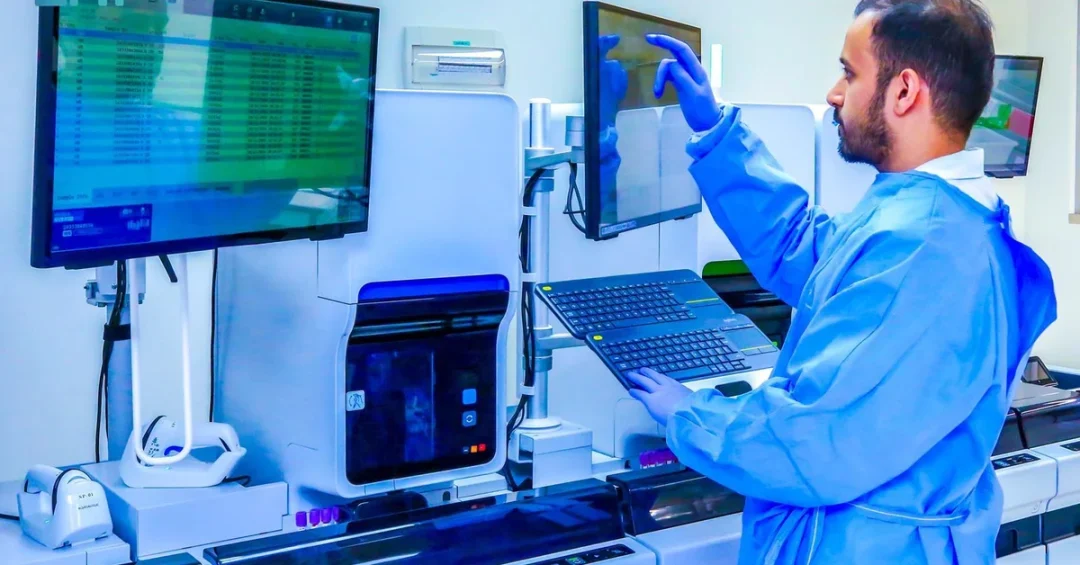
King Faisal Specialist Hospital & Research Centre (KFSHRC) has been awarded the Arab Award for Research in Healthcare within the 2024 Medical Excellence Awards by the Hamdan Bin Rashid Al Maktoum Foundation for Medical and Educational Sciences, recognizing a landmark study that is reshaping how the world diagnoses Mendelian diseases. The award, announced via the Saudi Press Agency, honors research that addressed persistent barriers in identifying the genetic causes of rare inherited disorders and demonstrated how a more holistic diagnostic approach can dramatically improve outcomes for undiagnosed patients worldwide.
Why does this recognition matter beyond the laboratory? Because it places a Saudi institution at the very center of a global effort to solve one of modern medicine’s most stubborn challenges: giving families with rare genetic conditions a definitive answer. The study, titled “Diagnostic implications of pitfalls in causal variant identification,” analyzed a cohort of 4,577 families and uncovered critical gaps in the diagnostic pipeline that have little to do with the sequencing technology itself. By confronting those gaps directly, KFSHRC researchers showed that diagnostic yield could improve by as much as 71 percent when non-sequencing challenges are properly addressed — a finding with profound implications for undiagnosed disease programs across the globe.
Context and Background
What exactly are Mendelian diseases, and why have they remained so difficult to diagnose? Named after Gregor Mendel, the father of modern genetics, Mendelian disorders are conditions caused by mutations in a single gene. Individually rare, collectively they affect millions of people worldwide. For families navigating these conditions, the journey to a diagnosis is often long, expensive, and emotionally exhausting. Many patients endure years of inconclusive tests, repeated specialist visits, and the uncertainty of not knowing what is affecting their health or that of their children.
The Hamdan Bin Rashid Al Maktoum Foundation for Medical and Educational Sciences has long championed efforts to close these gaps. Its Medical Excellence Awards celebrate innovation and research across the Arab world, with categories including Best Research in Healthcare, Innovation in Healthcare, and the Hamdan Award for Distinguished Personalities. The foundation’s decision to recognize KFSHRC in the Best Research in Healthcare category reflects both the scientific rigor of the study and its practical relevance to patients and health systems across the region. The award was announced in Riyadh on December 22, 2024, through the Saudi Press Agency, underscoring the Kingdom’s growing role as a contributor to global medical knowledge.
KFSHRC’s achievement did not emerge in isolation. It reflects years of sustained investment in genomics, bioinformatics, and clinical research infrastructure in Saudi Arabia. The hospital has built one of the region’s most advanced genetics programs, drawing on a diverse patient population and a commitment to translating research into clinical practice. That foundation made it possible to assemble and analyze a cohort large enough to generate findings with global relevance — a scale of study that few institutions in the region could attempt.
Key Details of the Award-Winning Study
What did the KFSHRC team actually discover that the global genetics community had been missing? The study examined 4,577 families and identified several key barriers to accurate genetic diagnosis. These included phenotypic complexities, in which patients present with overlapping or atypical symptoms that complicate interpretation; novel gene-disease associations not yet captured in reference databases; novel inheritance patterns that defy standard assumptions; and pedigree analysis-related challenges that require careful family history work. None of these obstacles can be resolved by simply running more sequencing — they demand deeper clinical expertise and integrated analytical approaches.
The results were striking. By addressing non-sequencing challenges alone, the researchers demonstrated that diagnostic yield could improve by 71 percent. More importantly, they successfully identified causal variants in 54.5 percent of cases that had previously remained undiagnosed. For those families, the study did not just produce data — it produced answers. The research underscores the need for a holistic approach to diagnosis that extends beyond sequencing technologies and incorporates comprehensive clinical evaluation, family history analysis, and expert interpretation.
This finding has direct implications for undiagnosed disease programs worldwide, many of which have invested heavily in sequencing capacity while underinvesting in the interpretive and clinical layers that determine whether a variant is truly causal. KFSHRC’s work offers a practical roadmap: invest in the human and analytical infrastructure alongside the technology. The recognition from the Hamdan Foundation reinforces KFSHRC’s position as a leader in genetic research and healthcare innovation, underscoring its commitment to advancing scientific knowledge, fostering innovation, and delivering transformative solutions that improve patient outcomes while setting global healthcare benchmarks.
International and Regional Impact
How will a study conducted in Riyadh change the way hospitals in London, Boston, or Tokyo approach genetic diagnosis? The answer lies in the universality of the problem. Undiagnosed diseases affect every health system, and the barriers identified by KFSHRC — phenotypic complexity, novel gene-disease associations, inheritance pattern ambiguity, and pedigree analysis — are not unique to Saudi Arabia. By quantifying the impact of addressing these non-sequencing factors, the study provides an actionable framework that any undiagnosed disease program can adopt. International research networks focused on rare diseases are already emphasizing the need for multidisciplinary diagnostic teams, and this research supplies the evidence base for that shift.
Within the Arab world, the award carries additional significance. The Hamdan Medical Awards are designed to celebrate excellence across the region, and KFSHRC’s success demonstrates that Arab institutions can produce research of the highest global caliber. For neighboring countries building or expanding their own genetics programs, KFSHRC offers a model of what sustained investment in research infrastructure can achieve. The recognition also strengthens regional collaboration, as the foundation’s platform brings together researchers, clinicians, and institutions committed to advancing healthcare across the Middle East.
The study’s emphasis on holistic diagnosis also resonates with broader trends in precision medicine. As health systems move toward personalized care, the ability to accurately identify the genetic basis of disease becomes foundational. KFSHRC’s findings suggest that precision medicine cannot be built on sequencing alone; it requires integrated clinical and analytical expertise. That insight is relevant not only to rare disease programs but also to cancer genomics, pharmacogenomics, and other fields where accurate variant interpretation determines treatment decisions.
Economic and Strategic Significance
What does a medical research award have to do with a nation’s economic future? In Saudi Arabia’s case, the connection is direct. Vision 2030 calls for a diversified economy in which knowledge, innovation, and high-value services play a central role. Healthcare and biotechnology are identified as strategic sectors with the potential to create skilled jobs, attract investment, and generate intellectual property. KFSHRC’s international recognition strengthens the Kingdom’s position as a destination for medical research and innovation, supporting the broader goal of building a knowledge-based economy.
The hospital’s broader track record reinforces this trajectory. KFSHRC has been ranked first in the Middle East and Africa and 20th globally among the world’s top 250 academic medical centers for the second consecutive year. It was named the most valuable healthcare brand in the Kingdom and the Middle East by the 2024 Brand Finance rankings, and it was included in the World’s Best Smart Hospitals 2025 list by Newsweek. These distinctions are not merely accolades; they signal to investors, partners, and patients that Saudi Arabia is home to world-class healthcare infrastructure. They also support medical tourism ambitions and the development of a health sector capable of exporting expertise and services.
From a strategic perspective, genetic research has particular importance for Saudi Arabia and the wider region. Consanguinity rates in parts of the Middle East are higher than in many Western populations, which increases the prevalence of certain Mendelian disorders. Research that improves diagnosis in this context has immediate public health value and positions Saudi institutions as leaders in a field of direct regional relevance. The KFSHRC study thus serves both global science and local health needs, a dual benefit that aligns with Vision 2030’s emphasis on responsive, high-quality healthcare.
Vision 2030 Alignment
How does this award connect to the Kingdom’s long-term ambitions? Vision 2030 envisions a Saudi Arabia that is not only economically diversified but also a global leader in innovation, research, and quality of life. The Health Sector Transformation Program, a key Vision 2030 initiative, aims to improve healthcare outcomes, enhance preventive care, and build a health system that ranks among the best in the world. KFSHRC’s recognition by the Hamdan Bin Rashid Al Maktoum Foundation is a concrete demonstration of progress toward those goals, showing that Saudi institutions can compete and excel on the international stage.
The award also highlights the importance of human capital development. Behind the study is a team of Saudi and international researchers, clinicians, and data scientists whose expertise reflects years of investment in education and training. Vision 2030 places great emphasis on developing national talent, and KFSHRC’s success illustrates how that investment translates into globally significant output. As the Kingdom continues to expand its research ecosystem — through initiatives in genomics, artificial intelligence, and precision medicine — achievements like this one will serve as benchmarks and inspiration for the next generation of Saudi scientists.
Ultimately, the Hamdan Foundation award is more than a trophy. It is a signal that Saudi Arabia’s healthcare and research institutions are contributing solutions to global problems, earning respect from international peers, and advancing a vision of a knowledge-driven, innovative nation. For patients with undiagnosed genetic conditions and the families who support them, that contribution may one day mean the difference between uncertainty and a clear diagnosis — a fitting testament to the Kingdom’s commitment to improving lives at home and around the world.
20 Questions
Q1. What award did KFSHRC receive?
A1. KFSHRC received the Arab Award for Research in Healthcare within the 2024 Medical Excellence Awards, presented by the Hamdan Bin Rashid Al Maktoum Foundation for Medical and Educational Sciences.
Q2. Who presented the award to KFSHRC?
A2. The award was bestowed by the Hamdan Bin Rashid Al Maktoum Foundation for Medical and Educational Sciences, a prominent organization that celebrates excellence in medical innovation and research across the Arab world.
Q3. What was the title of the award-winning study?
A3. The study was titled “Diagnostic implications of pitfalls in causal variant identification,” and it focused on challenges in diagnosing Mendelian diseases, which are genetic disorders caused by mutations in a single gene.
Q4. How many families were studied in the research?
A4. The research analyzed a cohort of 4,577 families, allowing researchers to identify key barriers to accurate genetic diagnosis and to demonstrate the impact of addressing non-sequencing challenges.
Q5. What are Mendelian diseases?
A5. Mendelian diseases are genetic disorders caused by mutations in one gene. Individually rare, they collectively affect millions of people worldwide and often present significant diagnostic challenges for clinicians and families.
Q6. What key barriers to diagnosis did the study identify?
A6. The study identified phenotypic complexities, novel gene-disease associations, novel inheritance patterns, and pedigree analysis-related challenges as major barriers to accurate genetic diagnosis beyond sequencing technology itself.
Q7. By how much could diagnostic yield improve by addressing non-sequencing challenges?
A7. The research demonstrated that addressing non-sequencing challenges alone could improve diagnostic yield by 71 percent, highlighting the importance of holistic diagnostic approaches in genetic medicine.
Q8. What percentage of previously undiagnosed cases had causal variants identified?
A8. The study successfully identified causal variants in 54.5 percent of previously undiagnosed cases, providing definitive answers for many families who had long awaited clarity about their conditions.
Q9. Why is a holistic approach important in genetic diagnosis?
A9. A holistic approach is important because sequencing alone cannot resolve complexities such as phenotypic overlap, novel inheritance patterns, and pedigree analysis. Integrating clinical expertise with genetic data improves diagnostic accuracy.
Q10. What does the award say about KFSHRC’s position in genetic research?
A10. The award reinforces KFSHRC’s position as a leader in genetic research and healthcare innovation, underscoring its commitment to advancing scientific knowledge and delivering transformative solutions that improve patient outcomes.
Q11. What are the Hamdan Medical Awards?
A11. The Hamdan Medical Awards celebrate excellence in medical innovation and research across the Arab world, with categories such as Best Research in Healthcare, Innovation in Healthcare, and the Hamdan Award for Distinguished Personalities.
Q12. How has KFSHRC been ranked among global academic medical centers?
A12. KFSHRC has been ranked first in the Middle East and Africa and 20th globally among the world’s top 250 academic medical centers for the second consecutive year, reflecting its sustained excellence.
Q13. What recognition did KFSHRC receive from Brand Finance in 2024?
A13. KFSHRC was named the most valuable healthcare brand in the Kingdom and the Middle East by the 2024 Brand Finance rankings, highlighting its strong reputation and impact in the region.
Q14. Which list included KFSHRC among the World’s Best Smart Hospitals?
A14. Newsweek included KFSHRC in its World’s Best Smart Hospitals 2025 list, recognizing the hospital’s use of advanced technology and digital innovation in healthcare delivery.
Q15. How does this research benefit global undiagnosed disease programs?
A15. The research offers valuable insight that helps improve global programs for undiagnosed diseases by showing that addressing non-sequencing challenges can significantly increase diagnostic yield and identify causal variants.
Q16. What is the significance of the award for Saudi Arabia’s healthcare sector?
A16. The award highlights Saudi Arabia’s growing role in global medical research and supports Vision 2030 goals by showcasing the Kingdom’s capacity for innovation, knowledge creation, and high-quality healthcare.
Q17. How does the study align with Vision 2030?
A17. The study aligns with Vision 2030 by advancing healthcare innovation, improving patient outcomes, and contributing to the development of a knowledge-based economy driven by research and technology.
Q18. What makes KFSHRC’s research particularly relevant to the Middle East?
A18. Higher consanguinity rates in parts of the Middle East increase the prevalence of certain Mendelian disorders, making research that improves genetic diagnosis directly relevant to regional public health needs.
Q19. What does the award mean for patients with rare genetic conditions?
A19. The award recognizes research that provides a pathway to faster, more accurate diagnoses, offering hope and clarity to patients and families affected by rare genetic conditions in Saudi Arabia and worldwide.
Q20. What is the broader message of this recognition?
A20. The recognition demonstrates that Saudi institutions can produce world-class research with global impact, reinforcing the Kingdom’s commitment to innovation, excellence, and improving lives through science and healthcare.
Reader Feedback
We value your thoughts. Please share your feedback on this article.
Your feedback helps us improve our coverage.
Related articles
 KSrelief Concludes Urology Surgery Project in Aden with 109 Operations
 Saudi Red Crescent Adopts Hajj 1446 AH Response Plan
 King Saud University Hosts 8th Clinical Laboratory Conference
 KFSHRC Wins Global Excellence Award for 3D Printing Project
 Saudi Arabia Launches First Mental Health Training Forum in Riyadh
 SFDA CEO Inspects Eastern Region Branch to Ensure Safety