


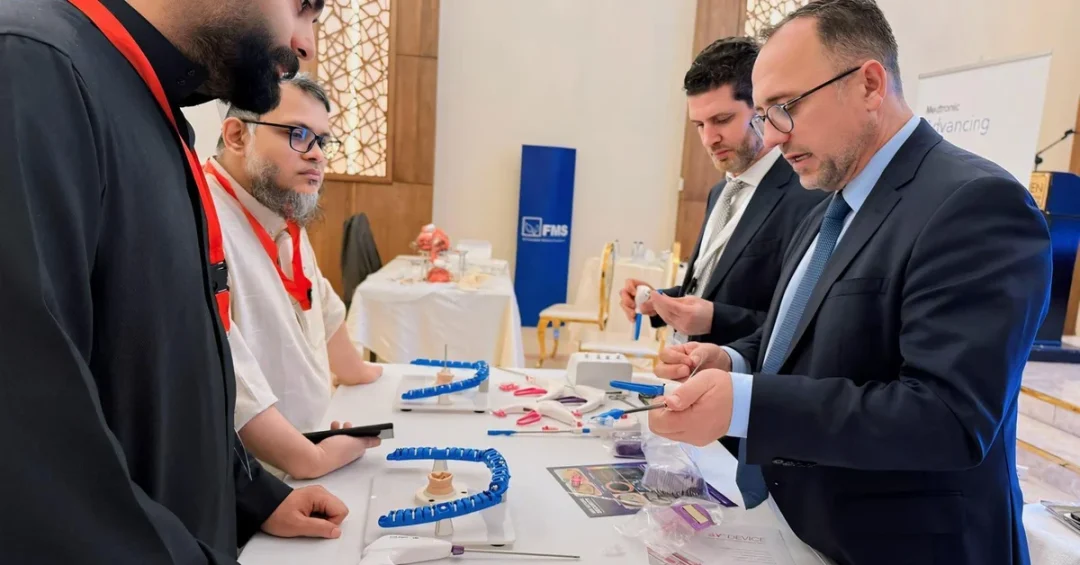
The Madinah Heart International Conference, organized by the Madinah Health Cluster in partnership with the Saudi Heart Association, concluded in Madinah after three days of scientific sessions, specialized workshops, and expert discussions focused on the latest advances in cardiovascular care. The event, reported by the Saudi Press Agency, brought together more than 150 renowned cardiology experts from the Kingdom and abroad, reflecting Saudi Arabia’s expanding role as a convenor of high-level medical knowledge exchange. The conference addressed a wide spectrum of cardiac topics, from the management of cardiac emergencies and heart attacks to the role of cardiac magnetic resonance imaging in diagnosis, the contributions of pharmacists in managing congenital heart disease, and emerging trends in cardiac anesthesia.
The gathering also examined advanced techniques in aortic valve replacement and the diagnosis and management of cardiac ischemia in children, underscoring the breadth of modern cardiology practice. For international observers, the conference offers a clear signal of how Saudi Arabia is positioning its healthcare sector: as a hub for specialist expertise, professional training, and cross-border collaboration. Under the Kingdom’s Vision 2030 reform agenda, health is treated as a cornerstone of quality of life and human capability, and events of this kind demonstrate how official institutions are translating that ambition into practical, patient-focused outcomes through partnerships between government health clusters and recognized medical societies.
Context and Background
Why has a specialist cardiology conference in Madinah attracted attention beyond the Kingdom’s borders? The answer lies in the scale and structure of Saudi Arabia’s health transformation. The Madinah Health Cluster is one of the integrated health clusters established under the Ministry of Health’s modernization program, designed to bring hospitals, primary care centers, and specialized services under coordinated regional management. Partnering with the Saudi Heart Association, a long-established professional body for cardiovascular specialists in the Kingdom, the cluster created a platform that combines academic rigor with clinical practicality. The three-day format of lectures, workshops, and case-based discussions mirrors the continuing medical education models used by leading international cardiology societies, signaling that Saudi institutions are adopting global standards of professional development.
The conference also reflects a broader pattern of medical diplomacy. Saudi Arabia has increasingly hosted international scientific meetings that draw participants from across the region and beyond, creating opportunities for knowledge transfer in both directions. Experts from abroad gain exposure to the Kingdom’s rapidly modernizing hospital infrastructure and its large, diverse patient population, while Saudi clinicians benchmark their practice against international peers. For a city like Madinah, which welcomes millions of visitors each year, the presence of a world-class medical conference also reinforces its identity as a center of service and care, not only of pilgrimage. The event therefore sits at the intersection of health policy, professional education, and the Kingdom’s wider effort to elevate its standing in global medicine.
Key Details
What precisely did the more than 150 participants discuss over the three days? According to information released through official Saudi channels, the scientific program covered the management of cardiac emergencies and heart attacks, a priority area for health systems worldwide given the time-sensitive nature of acute coronary care. Sessions dedicated to cardiac magnetic resonance imaging highlighted how advanced imaging can improve the diagnosis of complex heart conditions, supporting earlier and more accurate treatment decisions. Another strand of the program focused on the importance of pharmacists in managing congenital heart diseases, an acknowledgment that pediatric cardiac care depends on coordinated multidisciplinary teams rather than physicians alone.
The conference further delved into the challenges and future trends in cardiac anesthesia, a specialty that underpins the safety of cardiovascular surgery, and examined the latest techniques in aortic valve replacement, an area of rapid innovation as less invasive procedures become more widely available. A dedicated focus on the diagnosis and management of cardiac ischemia in children addressed one of the more demanding areas of pediatric cardiology, where early recognition can significantly change long-term outcomes. By assembling these topics in a single agenda, the organizers ensured that the conference spanned the full patient journey, from emergency response and diagnostic imaging to surgical intervention, pharmacological support, and postoperative care. The inclusion of workshops alongside lectures allowed participants to engage directly with practical techniques and protocols, consistent with the conference’s stated aim of sharing innovative approaches.
International and Regional Impact
How does a national conference of this kind resonate across the wider region? Cardiovascular disease remains one of the leading causes of mortality across the Middle East, and the exchange of expertise between Saudi specialists and their international counterparts has implications that extend well beyond the Kingdom. When clinicians from different health systems compare approaches to cardiac emergencies, imaging protocols, and pediatric ischemia, the result is a gradual harmonization of best practice that can raise standards regionally. The participation of more than 150 renowned experts, as reported by the Saudi Press Agency, indicates that the Madinah conference has become a credible venue for this kind of professional dialogue, attracting specialists who might otherwise present their work at established meetings in Europe or North America.
For international audiences, the event also offers a window into Saudi Arabia’s medical capabilities. The Kingdom’s health sector has undergone sustained investment in recent years, including new specialist centers, expanded training programs, and the adoption of digital health tools. Conferences that showcase this infrastructure help correct outdated perceptions and position Saudi institutions as partners for research, clinical trials, and education. The presence of the Saudi Heart Association as co-organizer adds institutional weight, connecting the event to a professional network that represents cardiovascular specialists nationwide. In practical terms, such gatherings can seed collaborations, from joint research projects to exchange programs for residents and fellows, that outlast the three days of sessions themselves.
Economic and Strategic Significance
Why should a medical conference be viewed through an economic and strategic lens? Health is increasingly understood as an investment rather than a cost, and Saudi Arabia’s official strategies treat a robust healthcare system as essential to productivity, quality of life, and the attractiveness of the Kingdom as a place to live, work, and visit. Continuing medical education events strengthen the skills of the existing workforce, reduce the need for patients to travel abroad for complex care, and support the growth of domestic specialist capacity. Each conference that brings international experts to Madinah contributes to this ecosystem by raising the visibility of local institutions and encouraging the adoption of proven techniques, such as advanced imaging and modern valve replacement methods, that can improve outcomes and efficiency across the health system.
There is also a knowledge-economy dimension. Vision 2030 envisions a diversified economy in which services, including high-quality healthcare, play a larger role. Specialist conferences generate demand for venues, hospitality, and logistics, but more importantly they build the human capital that underpins medical excellence. The focus on multidisciplinary themes, from pharmacists in congenital heart disease to cardiac anesthesia, reflects an understanding that complex care depends on teams, not individuals. By investing in forums where these teams can learn from global leaders, Saudi health authorities are laying groundwork for clinical standards that can eventually be exported through training programs and partnerships. The economic value is therefore both immediate, in terms of professional development, and long-term, in terms of system capability.
Vision 2030 Alignment
How does the Madinah Heart International Conference connect to Saudi Arabia’s long-term vision? The Vision 2030 framework places health and quality of life among its central pillars, with official programs aiming to expand access, improve outcomes, and elevate the patient experience. The Ministry of Health’s cluster model, which includes the Madinah Health Cluster, is a direct expression of that ambition, reorganizing services around patients and regions. A conference co-organized by a cluster and the Saudi Heart Association demonstrates how the reform agenda reaches into specialist practice, ensuring that clinicians have access to the latest evidence and techniques. It also aligns with the broader goal of making Saudi Arabia a destination for medical expertise, complementing the Kingdom’s growing role in hosting international events.
Looking ahead, the connections formed in Madinah are likely to inform future initiatives, from refined protocols for cardiac emergencies to new collaborations in pediatric care and imaging. The official reporting of the conference through the Saudi Press Agency underscores the transparency with which these developments are shared with the public and the international community. For a global audience, the takeaway is clear: Saudi Arabia’s health transformation is not only about buildings and budgets, but about people, knowledge, and partnerships. As the Kingdom continues to advance toward its Vision 2030 objectives, specialist gatherings such as this one will remain an important mechanism for bringing world-class medicine to Saudi patients and for sharing Saudi progress with the world.
20 Questions
Q1. What was the Madinah Heart International Conference?
A1. It was a three-day cardiology conference organized by the Madinah Health Cluster and the Saudi Heart Association, reported by the Saudi Press Agency, featuring scientific lectures, workshops, and expert discussions on the latest advances in heart care.
Q2. When and where did the conference take place?
A2. The conference was held in Madinah and concluded after three days of sessions, according to the Saudi Press Agency report dated December 7, 2024, which summarized the event’s program and participation.
Q3. Who organized the Madinah Heart International Conference?
A3. It was organized by the Madinah Health Cluster, part of the Ministry of Health’s integrated cluster system, in partnership with the Saudi Heart Association, a recognized professional body for cardiovascular specialists in the Kingdom.
Q4. How many experts participated in the conference?
A4. More than 150 renowned experts from Saudi Arabia and abroad participated, sharing the latest advancements and innovative approaches in cardiology, according to official information released through Saudi channels.
Q5. What major topics were covered at the conference?
A5. Topics included management of cardiac emergencies and heart attacks, cardiac magnetic resonance imaging, pharmacists’ role in congenital heart disease, cardiac anesthesia trends, aortic valve replacement techniques, and cardiac ischemia in children.
Q6. Why is cardiac emergency management an important conference theme?
A6. Heart attacks and acute cardiac events require rapid, coordinated care, so sharing best practices in emergency management helps clinicians improve survival rates and patient outcomes across health systems.
Q7. What role does cardiac magnetic resonance imaging play in diagnosis?
A7. Cardiac magnetic resonance imaging provides detailed images of heart structure and function, helping physicians diagnose complex conditions more accurately and plan appropriate treatment strategies for patients.
Q8. Why were pharmacists included in discussions on congenital heart disease?
A8. Managing congenital heart disease requires multidisciplinary teams, and pharmacists contribute by ensuring safe, effective medication regimens tailored to the complex needs of patients with congenital cardiac conditions.
Q9. What is cardiac anesthesia and why does it matter?
A9. Cardiac anesthesia is the specialized anesthesia care used during heart surgery and procedures; advances in this field improve patient safety, support complex interventions, and contribute to better surgical outcomes.
Q10. What advances in aortic valve replacement were discussed?
A10. The conference examined the latest techniques in aortic valve replacement, reflecting global trends toward less invasive procedures that can reduce recovery times and expand treatment options for patients with valve disease.
Q11. Why is pediatric cardiac ischemia a focus area?
A11. Cardiac ischemia in children is a challenging condition that requires early diagnosis and careful management; dedicated sessions help clinicians recognize and treat it effectively to protect young patients’ long-term health.
Q12. How does the conference support continuing medical education?
A12. By combining lectures with practical workshops, the event allows specialists to update their knowledge, learn new techniques, and engage directly with international experts, supporting ongoing professional development in cardiology.
Q13. What is the Madinah Health Cluster?
A13. The Madinah Health Cluster is one of Saudi Arabia’s integrated health clusters under the Ministry of Health, coordinating hospitals, primary care, and specialized services in the Madinah region to improve access and quality.
Q14. What is the Saudi Heart Association?
A14. The Saudi Heart Association is a professional organization representing cardiovascular specialists in the Kingdom, supporting education, research, and clinical standards in heart care, and it co-organized the Madinah conference.
Q15. How does the conference benefit patients in Saudi Arabia?
A15. By raising clinicians’ skills and spreading proven techniques, the conference helps improve diagnosis, treatment, and outcomes for Saudi patients, reducing the need to travel abroad for complex cardiac care.
Q16. What does the event say about Saudi Arabia’s health sector?
A16. It demonstrates sustained investment in specialist care, international collaboration, and professional education, positioning the Kingdom’s health sector as increasingly capable and connected to global medical networks.
Q17. How does the conference align with Vision 2030?
A17. Vision 2030 prioritizes health and quality of life; the conference supports these goals by strengthening clinical expertise, encouraging partnerships, and advancing the Ministry of Health’s cluster-based modernization program.
Q18. Why is international participation significant?
A18. International experts bring diverse experience and evidence, while Saudi specialists share local insights; this two-way exchange fosters collaboration, harmonizes best practices, and builds lasting professional relationships across borders.
Q19. What might follow the conference in practical terms?
A19. Expected outcomes include refined clinical protocols, new research collaborations, exchange programs for trainees, and continued dialogue between Saudi institutions and international cardiology experts on shared priorities.
Q20. What is the broader significance for global audiences?
A20. The conference shows Saudi Arabia’s health transformation in action, highlighting the Kingdom’s role as a convener of medical expertise and its commitment to bringing world-class cardiac care to patients.
Reader Feedback
We value your thoughts. Please share your feedback on this article.
Your feedback helps us improve our coverage.
Related articles
 Saudi Health Minister Concludes Official Visit to China
 WAMY Medical Convoy Conducts 279 Surgeries in Tanzania
 Saudi Health Holding Company Launches IEDLI Course in AlUla
 Arar Hospital Energy Project Targets 14% Saving
 KSrelief Completes 66 Pediatric Heart Surgeries in Egypt
 KFSHRC to Host Landmark Organ Transplant Conference in Riyadh