


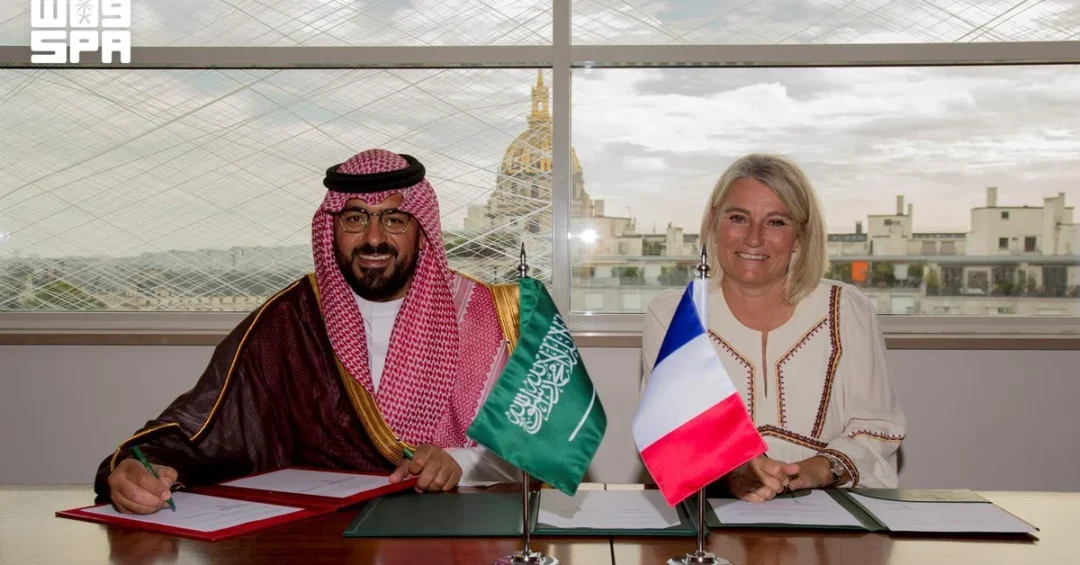
Saudi Arabia and France signed a memorandum of understanding (MoU) to enhance health cooperation across a wide range of priority areas, during the official visit of His Royal Highness Prince Mohammed bin Salman bin Abdulaziz Al Saud, Crown Prince and Prime Minister, to the French Republic. The agreement was signed in Paris on August 24, 2026, by Minister of Economy and Planning Faisal Alibrahim, acting on behalf of Minister of Health Fahad AlJalajel, and the French Ministry of Health, Families, Autonomy and Persons with Disabilities, according to the Saudi Press Agency (SPA).
The MoU establishes a structured framework for collaboration between the two countries in public health and health security, governance of health systems, quality of care, patient safety, preparedness and response to health emergencies, and the development of the health workforce and capabilities. It also covers digital health and artificial intelligence, research and development, innovation and clinical trials, supply chains and pharmaceutical industries, as well as investment and health partnerships. The signing took place on the sidelines of a high-level bilateral visit that underscores the deepening strategic relationship between the Kingdom of Saudi Arabia and France.
Why does this agreement matter at this particular moment in global health? The MoU builds on longstanding relations between the two countries and seeks to strengthen the exchange of expertise and partnerships. It supports research and innovation, the development of future health solutions and technologies, capability building and investment, the resilience of supply chains, health and pharmaceutical security, and the sustainability and quality of health services. These efforts directly support the objectives of the Health Sector Transformation Program under Saudi Vision 2030.
Context and Background
How did Saudi-French health cooperation reach this point? The relationship between the Kingdom and France has deepened steadily across economic, cultural, and strategic domains, and health has emerged as a natural pillar of that partnership. France has one of the world’s most respected healthcare systems, known for its strong public health infrastructure, pharmaceutical industry, and research institutions. Saudi Arabia, through Vision 2030, is undertaking one of the most ambitious health sector transformations in the world, shifting toward preventive care, digital health, and world-class service quality. The two countries have previously cooperated in areas such as medical training, hospital management, and pharmaceutical procurement, but the new MoU elevates that cooperation to a comprehensive, institutional level.
The timing of the agreement is significant. Global health systems continue to face pressure from emerging infectious diseases, supply chain vulnerabilities, and the rapid adoption of artificial intelligence in clinical settings. By formalizing cooperation with France, Saudi Arabia is positioning itself to benefit from European expertise while contributing its own growing capabilities in digital health, data-driven care, and large-scale health infrastructure. The MoU also reflects the Kingdom’s broader diplomatic approach of building diversified international partnerships that serve its development goals.
The visit of His Royal Highness Prince Mohammed bin Salman bin Abdulaziz Al Saud to the French Republic provided the strategic backdrop for the signing. Such high-level visits typically produce a range of agreements across multiple sectors, and the health MoU is one of the most consequential for citizens in both countries. It signals that health is not a peripheral issue but a central component of the bilateral relationship, with implications for trade, investment, research, and public welfare.
Key Details of the Agreement
What exactly does the memorandum cover? According to the Saudi Press Agency, the MoU spans several priority areas. The first is public health and health security, which includes preparedness and response to health emergencies. This reflects lessons learned from recent global health crises, where rapid coordination, data sharing, and supply chain resilience proved essential. The second area is governance of health systems, quality of care, and patient safety, where France’s experience in accreditation, clinical standards, and patient rights can inform Saudi Arabia’s ongoing reforms.
A third pillar is the development of the health workforce and capabilities. Saudi Arabia has been investing heavily in medical education, residency programs, and specialized training, and cooperation with French institutions can accelerate the transfer of knowledge and best practices. The fourth area is digital health and artificial intelligence, a field where Saudi Arabia has shown considerable ambition through initiatives linked to NEOM and the broader national digital transformation. The MoU also covers research and development, innovation and clinical trials, which can help Saudi Arabia become a regional hub for medical research and life sciences.
Finally, the agreement addresses supply chains and pharmaceutical industries, as well as investment and health partnerships. This is particularly important given the Kingdom’s goal of localizing pharmaceutical manufacturing and reducing dependence on imports. French pharmaceutical companies, among the largest in Europe, could play a role in joint ventures, technology transfer, and capacity building. The MoU thus combines public health objectives with economic and industrial opportunities, aligning with Saudi Arabia’s broader diversification strategy.
International and Regional Impact
How will this agreement resonate beyond the two signatories? The Saudi-French health MoU is part of a wider trend of middle-power and major-power cooperation in health, where countries pool resources to address shared challenges. For the Middle East and North Africa region, Saudi Arabia’s leadership in health security and pharmaceutical supply chains could have stabilizing effects, especially during outbreaks or emergencies. The Kingdom already plays a central role in regional health coordination, and partnerships with European countries like France strengthen its capacity to act as a hub for medical logistics and expertise.
For Europe, the agreement offers a reliable partner in the Gulf with significant investment capacity and a growing health market. French companies and research institutions gain access to Saudi Arabia’s ambitious health transformation projects, including hospital construction, digital health platforms, and clinical trial networks. The MoU also reinforces the broader strategic dialogue between Saudi Arabia and France, which includes energy, defense, culture, and technology. In a multipolar world, such bilateral agreements demonstrate how countries can pursue shared interests in health while advancing their economic and diplomatic goals.
Economic and Strategic Significance
What economic value does health cooperation unlock? The global healthcare market is estimated to be worth trillions of dollars, and Saudi Arabia is one of the fastest-growing health markets in the world. The Kingdom’s Health Sector Transformation Program aims to increase private sector participation, improve service quality, and expand preventive care. By partnering with France, Saudi Arabia can attract French investment, joint ventures, and expertise in areas such as hospital management, medical devices, and pharmaceuticals. The MoU’s emphasis on investment and health partnerships signals that both governments expect the private sector to play a leading role.
Strategically, the agreement supports Saudi Arabia’s goal of becoming a regional leader in health security and pharmaceutical self-sufficiency. The COVID-19 pandemic exposed vulnerabilities in global supply chains, and many countries are now seeking to localize production of vaccines, medicines, and medical equipment. Saudi Arabia has already made strides in this direction, and cooperation with France can accelerate technology transfer and quality assurance. The MoU also aligns with the Kingdom’s broader economic diversification goals under Vision 2030, reducing reliance on oil and creating high-skilled jobs in health, research, and manufacturing.
Vision 2030 Alignment
How does this MoU fit into Saudi Vision 2030? The Health Sector Transformation Program is one of the Vision’s most important realization programs, focused on improving access, quality, and efficiency of health services. The MoU’s priorities—public health, digital health, workforce development, research, and pharmaceutical security—are directly aligned with the program’s objectives. By collaborating with France, Saudi Arabia gains access to best practices and technologies that can accelerate its transformation, while also showcasing its own progress to international partners.
Ultimately, the agreement reflects the Kingdom’s forward-looking approach to global engagement. Under the leadership of His Royal Highness Prince Mohammed bin Salman bin Abdulaziz Al Saud, Saudi Arabia is building partnerships that serve its people and contribute to global health. The MoU with France is not merely a diplomatic gesture; it is a practical framework for improving health outcomes, strengthening supply chains, and fostering innovation. As Vision 2030 progresses, such international collaborations will remain essential to achieving a healthier, more prosperous future for the Kingdom and its partners.
20 Questions
Q1. What is the main purpose of the MoU signed between Saudi Arabia and France?
A1. The MoU aims to enhance health cooperation between the two countries across priority areas including public health, health security, digital health, research, and pharmaceutical industries, supporting Saudi Vision 2030’s Health Sector Transformation Program.
Q2. Who signed the MoU on behalf of Saudi Arabia?
A2. Minister of Economy and Planning Faisal Alibrahim signed on behalf of Minister of Health Fahad AlJalajel, according to the Saudi Press Agency.
Q3. When and where was the MoU signed?
A3. It was signed in Paris on August 24, 2026, on the sidelines of the visit of His Royal Highness Prince Mohammed bin Salman bin Abdulaziz Al Saud, Crown Prince and Prime Minister, to the French Republic.
Q4. Which French ministry is the counterpart in this agreement?
A4. The French Ministry of Health, Families, Autonomy and Persons with Disabilities is the counterpart, reflecting France’s comprehensive approach to health and social care.
Q5. What are the priority areas covered by the MoU?
A5. Priority areas include public health and health security, governance of health systems, quality of care, patient safety, emergency preparedness, health workforce development, digital health, AI, research, clinical trials, supply chains, and pharmaceutical industries.
Q6. How does the MoU support Saudi Vision 2030?
A6. It directly supports the Health Sector Transformation Program by enhancing quality, innovation, workforce capabilities, and pharmaceutical security, all key objectives of Vision 2030.
Q7. What role does digital health and AI play in the agreement?
A7. The MoU includes cooperation in digital health and artificial intelligence, aiming to develop future health solutions, improve care delivery, and foster innovation in clinical settings.
Q8. Will the MoU facilitate pharmaceutical manufacturing in Saudi Arabia?
A8. Yes, it covers supply chains and pharmaceutical industries, supporting localization efforts and potential joint ventures with French companies to enhance pharmaceutical security.
Q9. How does this agreement benefit French companies?
A9. French companies gain access to Saudi Arabia’s growing health market, investment opportunities, and partnerships in hospital management, medical devices, research, and pharmaceuticals.
Q10. What is the significance of the MoU for health security in the region?
A10. It strengthens Saudi Arabia’s capacity for emergency preparedness and response, positioning the Kingdom as a regional hub for health security and medical logistics.
Q11. Does the MoU include clinical trials and research?
A11. Yes, it covers research and development, innovation, and clinical trials, which can help Saudi Arabia become a regional center for medical research and life sciences.
Q12. How will the health workforce be developed under this MoU?
A12. The agreement includes training, exchange of expertise, and capability building, allowing Saudi health professionals to benefit from French expertise and best practices.
Q13. What is the expected impact on patient safety and quality of care?
A13. By adopting French standards and governance models, Saudi Arabia aims to improve patient safety, quality of care, and overall health system performance.
Q14. Is this MoU legally binding?
A14. As a memorandum of understanding, it represents a political and strategic commitment rather than a legally binding treaty, but it establishes a framework for concrete cooperation.
Q15. How does this agreement fit into Saudi-French relations?
A15. It builds on longstanding ties and expands cooperation into health, complementing existing partnerships in energy, defense, culture, and technology.
Q16. What are the next steps after signing the MoU?
A16. Both sides will likely establish working groups and action plans to implement specific projects in the priority areas, with periodic reviews of progress.
Q17. Will the MoU lead to investment opportunities for Saudi Arabia?
A17. Yes, it encourages investment and health partnerships, potentially attracting French investment into Saudi health infrastructure and creating joint ventures.
Q18. How does the MoU address health emergencies?
A18. It includes preparedness and response to health emergencies, enhancing coordination, data sharing, and supply chain resilience between the two countries.
Q19. What role does the private sector play in this cooperation?
A19. The MoU emphasizes investment and partnerships, signaling that the private sector in both countries is expected to play a leading role in implementing projects and driving innovation.
Q20. What does this MoU mean for the future of Saudi healthcare?
A20. It represents a significant step toward a more resilient, innovative, and patient-centered health system, aligned with Vision 2030’s goal of world-class healthcare for all.
Reader Feedback
We value your thoughts. Please share your feedback on this article.
Your feedback helps us improve our coverage.
Related articles
 King Saud University to Host Healthon 2026 With SAR1M Prizes
 WAMY eye surgery campaign in Cameroon offers new sight
 KFSH Madinah intervention ends years of fetal loss with healthy birth
 KSrelief Clinics Treat 7,480 Patients at Zaatari Camp in July 2026
 Community Partnership Aims to Support Home Care Patients in Jeddah
 Madinah Launches Back-to-School Health Campaign for Students and Families