


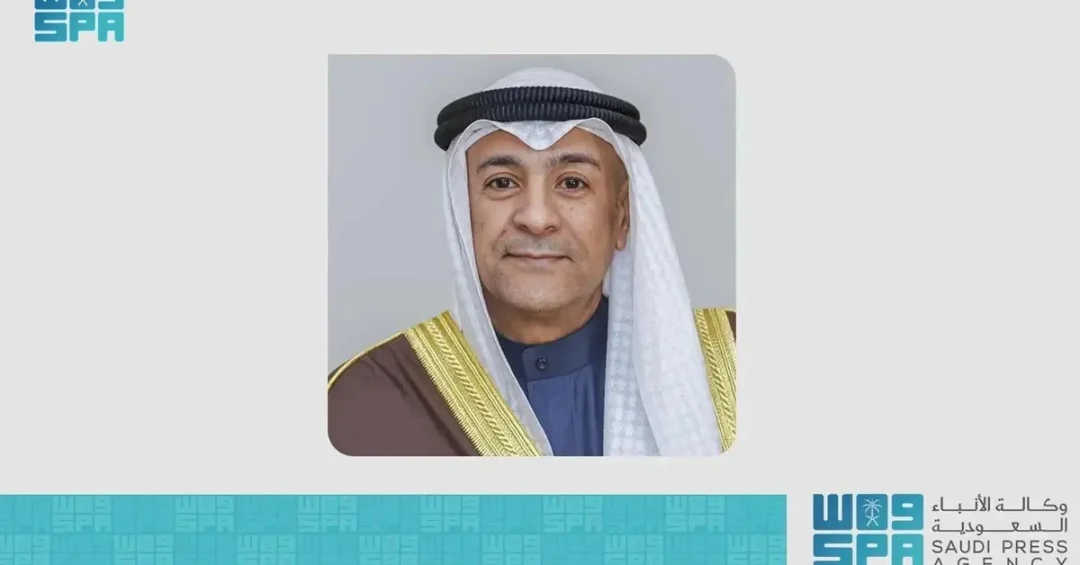
The 163rd Ministerial Council meeting of the Gulf Cooperation Council (GCC) will convene in Makkah on Thursday, according to an announcement by GCC Secretary General Jasem Mohamed Albudaiwi, bringing together the foreign ministers of the six member states under the presidency of Kuwait’s Minister of Foreign Affairs Abdullah Ali Abdullah Al Yahya. The gathering, released through official GCC channels and reported by the Saudi Press Agency (SPA), will be accompanied by a series of joint ministerial meetings with Egypt, Syria, Morocco, and Jordan, signaling a renewed push for Arab coordination at a moment of significant regional change.
Hosting the meeting in Makkah carries symbolic weight that goes beyond protocol. The holy city lends the consultations a sense of shared purpose and responsibility, reinforcing the GCC’s role as a stabilizing platform for the wider Arab and Islamic world. For international observers, the agenda offers a clear window into how Gulf states, and Saudi Arabia in particular, are translating diplomatic momentum into structured, practical cooperation across the region.
Context and Background
Why does a routine ministerial meeting in Makkah matter to audiences far beyond the Gulf? The GCC Ministerial Council is the principal preparatory body of the six-nation bloc, which includes Saudi Arabia, the United Arab Emirates, Qatar, Kuwait, Bahrain, and Oman. It reviews the implementation of decisions taken by the Supreme Council, the GCC’s highest authority, and prepares the ground for future summits. The 163rd session follows the 45th GCC Summit hosted in Kuwait in December 2024, giving this meeting a specific mandate: turning summit-level commitments into concrete, measurable progress.
Kuwait currently holds the rotating presidency of the Ministerial Council, which is why its foreign minister, Abdullah Ali Abdullah Al Yahya, will chair the proceedings. Secretary General Jasem Mohamed Albudaiwi, who leads the GCC General Secretariat in Riyadh, has emphasized that the agenda includes reports on the execution of Supreme Council decisions, memorandums from ministerial and technical committees, and updates from the Secretariat itself. The meeting therefore functions as both a stocktake and a planning session, ensuring that the bloc’s economic, security, and diplomatic initiatives remain on schedule.
The decision to convene in Makkah also reflects Saudi Arabia’s central role in GCC affairs. As the host of the General Secretariat’s headquarters in Riyadh and the site of the holy mosques, the Kingdom provides both the institutional backbone and the spiritual gravity that give Gulf cooperation its distinctive character. For an international audience, this meeting is a reminder that Gulf diplomacy is not only about oil markets or security alliances; it is also about a shared cultural and religious heritage that shapes how these states see their responsibilities to the region and the world.
Key Details
According to Secretary General Albudaiwi, the Ministerial Council will address several reports regarding the implementation of decisions made by the Supreme Council during the 45th summit in Kuwait. These reports cover a broad range of fields, from economic integration and joint investment frameworks to security coordination and cultural exchange. The Council will also review memorandums and reports submitted by ministerial and technical committees, as well as by the General Secretariat, alongside topics related to strategic dialogues and relations among the GCC, other states, and global blocs.
Beyond the internal GCC agenda, the meeting will examine the latest regional and international developments affecting the region. This includes ongoing crises, diplomatic initiatives, and the shifting dynamics of global partnerships. The presence of foreign ministers from Egypt, Syria, Morocco, and Jordan adds a distinct layer to the discussions. Albudaiwi stated that the ministerial discussions with these four Arab states will primarily focus on enhancing strategic relations and joint cooperation in various fields to achieve mutual interests.
Each of the four participating states brings a unique dimension to the table. Egypt’s Minister of Foreign Affairs and Emigration Badr Abdelatty represents the most populous Arab state and a longstanding partner in Gulf security and economic projects. Syria’s Minister of Foreign Affairs and Expatriates Asaad Al Shibani arrives at a pivotal moment for his country’s reintegration into regional diplomacy. Morocco’s Minister of Foreign Affairs, African Cooperation, and Moroccan Expatriates Nasser Bourita brings a bridge to North and West Africa, while Jordan’s Deputy Prime Minister and Minister of Foreign Affairs and Expatriates Ayman Safadi speaks for a kingdom whose stability is closely tied to Gulf interests. Together, these meetings will continue consultation and coordination on regional and international issues, with the aim of supporting regional security and stability.
International and Regional Impact
How will these consultations be received in world capitals? The simultaneous engagement with four Arab states sends a clear message that the GCC is expanding its diplomatic footprint, moving from a purely Gulf-focused agenda to a broader Arab and Islamic coordination framework. For Egypt, Jordan, and Morocco, the meetings offer a chance to align their own strategic priorities with the Gulf’s economic and security vision. For Syria, the discussions represent a further step in a carefully managed regional reintegration process, one that Gulf states have approached with a focus on stability and reconstruction.
The timing is significant. The Middle East is undergoing a period of realignment, with ceasefires, reconstruction efforts, and new economic partnerships reshaping longstanding relationships. By convening in Makkah and inviting these four states, the GCC is positioning itself as a convening power capable of bridging divides and fostering dialogue. This approach aligns with the broader Saudi foreign policy emphasis on de-escalation, dialogue, and regional integration, which has been a hallmark of the Kingdom’s diplomacy in recent years.
International observers will also note the meeting’s emphasis on strategic dialogues with global blocs. This reflects the GCC’s desire to be a proactive partner in a multipolar world, engaging with Asia, Europe, and Africa on trade, energy, technology, and climate. The discussions in Makkah are therefore not merely about managing crises; they are about shaping the rules of engagement for a new era of international relations, one in which Gulf states are increasingly setting the agenda rather than reacting to it.
Economic and Strategic Significance
What economic outcomes could emerge from these talks? While the ministerial meeting itself is unlikely to produce binding trade agreements, it sets the stage for deeper cooperation in investment, infrastructure, and energy. The GCC’s strategic dialogue with Egypt, for example, touches on energy linkages, labor mobility, and food security, all of which are critical to regional stability. With Jordan, discussions often focus on water, energy, and transport corridors, while Morocco offers a gateway to African markets and renewable energy partnerships. Syria’s participation opens the door to discussions about reconstruction and the eventual normalization of trade routes.
For Saudi Arabia, these meetings reinforce its role as the economic engine of the region. Under Vision 2030, the Kingdom is diversifying its economy, expanding non-oil sectors, and building new hubs for logistics, tourism, and technology. Cooperation with neighboring Arab states is not an afterthought; it is an integral part of the plan. By coordinating with partners on regulations, infrastructure, and investment flows, Saudi Arabia and its GCC allies can create a larger, more attractive market for global investors, one that stretches from the Gulf to North Africa and the Levant.
The strategic significance extends to security as well. Regional stability is a prerequisite for economic growth, and the GCC’s consultations with Egypt, Jordan, Morocco, and Syria are designed to build a common understanding of threats and opportunities. Whether the topic is maritime security, counterterrorism, or cyber defense, the meeting provides a platform for aligning policies and sharing intelligence. This integrated approach is a key reason why the GCC remains one of the most durable regional organizations in the world, and why its meetings attract close attention from global powers.
Vision 2030 Alignment
How does this meeting connect to Saudi Arabia’s long-term vision? Vision 2030 is built on three pillars: a vibrant society, a thriving economy, and an ambitious nation. Each of these pillars has an international dimension that is directly served by the GCC Ministerial Council and its outreach to Arab partners. A vibrant society is strengthened by cultural and religious ties, exemplified by hosting the meeting in Makkah. A thriving economy benefits from expanded trade and investment corridors that run through Egypt, Jordan, and Morocco. An ambitious nation projects influence through diplomacy, and the Kingdom’s leadership in convening these talks demonstrates exactly that kind of global engagement.
As the meeting concludes, the focus will shift to implementation. The reports presented to the Ministerial Council will inform the next Supreme Council summit, and the joint meetings with Egypt, Syria, Morocco, and Jordan will likely lead to follow-up working groups and agreements. For Saudi Arabia, this is another step in a carefully sequenced strategy to build a stable, prosperous, and interconnected region. The Kingdom’s commitment to dialogue, development, and partnership is not just rhetoric; it is a practical agenda that is being advanced one meeting at a time, in Makkah and beyond.
20 Questions
Q1. What is the 163rd GCC Ministerial Council meeting?
A1. It is a gathering of foreign ministers from the six Gulf Cooperation Council member states, held to review and implement decisions from the Supreme Council and prepare for future summits.
Q2. Where and when will the 163rd meeting take place?
A2. The meeting will be held in Makkah on Thursday, as announced by GCC Secretary General Jasem Mohamed Albudaiwi through official channels and reported by the Saudi Press Agency.
Q3. Who is chairing the 163rd GCC Ministerial Council meeting?
A3. Kuwait’s Minister of Foreign Affairs Abdullah Ali Abdullah Al Yahya will preside, as Kuwait currently holds the rotating presidency of the Ministerial Council.
Q4. Which countries are members of the GCC?
A4. The GCC comprises Saudi Arabia, the United Arab Emirates, Qatar, Kuwait, Bahrain, and Oman, working together on economic, security, and diplomatic cooperation.
Q5. Which four Arab states are holding joint ministerial meetings with the GCC?
A5. Egypt, Syria, Morocco, and Jordan will participate in joint ministerial meetings alongside the GCC foreign ministers, focusing on strategic relations and regional coordination.
Q6. Who represents Egypt in these meetings?
A6. Egypt’s Minister of Foreign Affairs and Emigration Badr Abdelatty will represent his country in the joint ministerial discussions with the GCC.
Q7. Who represents Syria in the joint meetings?
A7. Syria’s Minister of Foreign Affairs and Expatriates Asaad Al Shibani will attend the meetings, marking continued regional engagement with Damascus.
Q8. Who represents Morocco in the discussions?
A8. Morocco’s Minister of Foreign Affairs, African Cooperation, and Moroccan Expatriates Nasser Bourita will lead his country’s delegation to the joint meetings.
Q9. Who represents Jordan in the GCC joint meetings?
A9. Jordan’s Deputy Prime Minister and Minister of Foreign Affairs and Expatriates Ayman Safadi will represent the kingdom in the discussions with GCC foreign ministers.
Q10. What reports will the GCC Ministerial Council review?
A10. The Council will review reports on the implementation of decisions from the 45th GCC Summit in Kuwait, along with memorandums from ministerial and technical committees and the General Secretariat.
Q11. What was the 45th GCC Summit and when did it occur?
A11. The 45th GCC Summit was held in Kuwait in December 2024, and its decisions form the basis for the reports being reviewed at the 163rd Ministerial Council meeting.
Q12. What topics will be discussed regarding GCC strategic dialogues?
A12. Discussions will cover relations among the GCC, other states, and global blocs, as well as the latest regional and international developments affecting the region.
Q13. What is the main focus of the joint meetings with Egypt, Syria, Morocco, and Jordan?
A13. The meetings will focus on enhancing strategic relations and joint cooperation in various fields to achieve mutual interests and support regional security and stability.
Q14. Why is Makkah a significant location for this meeting?
A14. Makkah is the holiest city in Islam and symbolizes the shared cultural and religious heritage of the region, adding symbolic weight to the diplomatic consultations.
Q15. How does this meeting relate to Saudi Arabia’s Vision 2030?
A15. The meeting supports Vision 2030 by advancing regional cooperation, economic integration, and diplomatic engagement, all of which are key pillars of the Kingdom’s long-term strategy.
Q16. What role does the GCC General Secretariat play in these meetings?
A16. The General Secretariat, led by Secretary General Jasem Mohamed Albudaiwi, prepares reports, coordinates agendas, and ensures follow-up on decisions made by the Ministerial Council.
Q17. How often do GCC Ministerial Council meetings take place?
A17. The Ministerial Council meets regularly, typically several times a year, to review ongoing initiatives and prepare for the annual Supreme Council summit.
Q18. What are the expected outcomes of the 163rd meeting?
A18. The meeting is expected to produce recommendations, progress reports, and coordinated positions that will guide GCC policies and partnerships in the coming months.
Q19. How does this meeting affect regional security and stability?
A19. By aligning policies and fostering dialogue among Gulf states and key Arab partners, the meeting contributes to a more stable and cooperative regional environment.
Q20. What message does this meeting send to the international community?
A20. It demonstrates the GCC’s commitment to proactive diplomacy, regional integration, and constructive engagement with global partners, reinforcing the Gulf’s role as a stabilizing force.
Reader Feedback
We value your thoughts. Please share your feedback on this article.
Your feedback helps us improve our coverage.
Related articles
 KSrelief Launches Ramadan Food Basket Project in Mali
 Manarah Robot Launched at Grand Mosque to Aid Pilgrims
 SISU Delegation Visits King Faisal Center in Riyadh
 Saudi Convoy Delivers Ramadan Food Aid to Moroccan Charities
 KSrelief Distributes 48 Hearing Aids to Students in Yemen
 KSrelief Distributes 790 Food Baskets in Sudan