


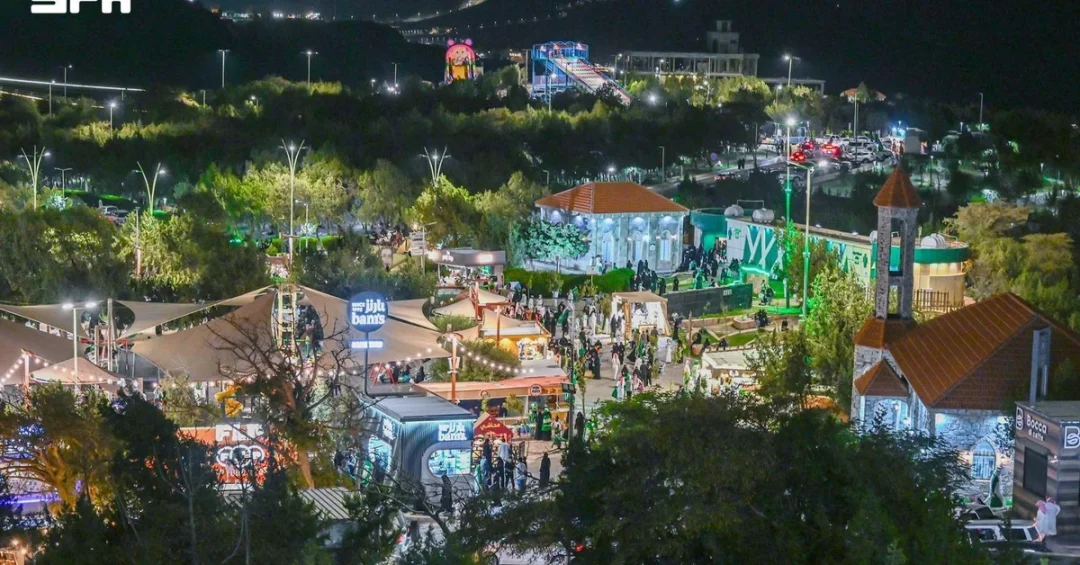
Al-Baha Region marked Saudi National Day on September 23 with a vibrant, patriotic atmosphere as families, residents, and visitors filled major thoroughfares, public squares, and government buildings adorned with national flags and green illumination, according to the Saudi Press Agency. The celebrations, reported by the Kingdom’s official news authority, reflected widespread community participation across one of Saudi Arabia’s most scenic regions, blending national pride with the distinctive cultural heritage of the southwestern highlands. From the early hours of the morning, streets in Al-Baha city and surrounding governorates came alive with green lights, flag displays, and organized activities that drew thousands of participants of all ages.
The occasion, which commemorates the unification of the Kingdom in 1932, was observed in Al-Baha with a program that combined cultural entertainment, traditional folk art performances, and family-oriented events at prominent venues. Community members described the day as an expression of loyalty to the leadership and appreciation for the Kingdom’s developmental achievements, security, and sustained national progress. The scale of participation in Al-Baha, a region known for its agricultural terraces, mountain scenery, and rich folk traditions, underscored how National Day has become a unifying moment that connects citizens and residents across every part of Saudi Arabia. Have you ever wondered how a single national occasion can simultaneously honor history and showcase a region’s unique identity to the world?
Context and Background
Saudi National Day is celebrated every September 23 to mark the royal decree issued in 1932 that renamed the Kingdom of Nejd and Hejaz as the Kingdom of Saudi Arabia, formally unifying the nation under the leadership of the founding father, King Abdulaziz Al Saud. Since then, the occasion has evolved from a formal state commemoration into a nationwide cultural phenomenon in which every region contributes its own character, traditions, and local pride. In Al-Baha, that evolution is especially visible, as the region’s mountain villages, heritage sites, and agricultural traditions provide a natural stage for celebrations that feel both national and deeply local in character.
Al-Baha sits in the southwestern highlands of Saudi Arabia, bordered by Makkah Region to the north and Asir to the south, and is known for its mild climate, dense juniper forests, and terraced farms producing coffee, honey, and fruit. Its population is spread across several governorates, including Al-Baha city, Baljurashi, Al-Mandaq, and Al-Aqiq, each with its own folk arts and customs. National Day celebrations in such a region carry special meaning because they allow residents to present their heritage to a wider Saudi audience while participating in a shared national narrative. Why does a nation of more than 35 million people still find such energy in an occasion that dates back nearly a century?
The answer lies partly in the way National Day has been continuously renewed. Under the leadership of the Custodian of the Two Holy Mosques, King Salman bin Abdulaziz Al Saud, and His Royal Highness Crown Prince Mohammed bin Salman, the occasion has been linked increasingly to the achievements of Vision 2030, the national transformation program launched in 2016. Each year, regions like Al-Baha use the celebration to highlight local development projects, tourism potential, and cultural assets that contribute to the Kingdom’s broader goals of economic diversification and quality of life. The result is a holiday that looks both backward at unification and forward at modernization.
Key Details of the Al-Baha Celebrations
According to the Saudi Press Agency, the Al-Baha festivities were spread across major thoroughfares, squares, and public buildings, all decorated with national flags and green illumination, the color of the Saudi flag. Prominent venues in the region welcomed families and visitors to a diverse program featuring cultural entertainment and traditional folk art performances that showcased the region’s authentic heritage. These performances included the traditional Ardha dance, a sword dance performed to drums that has become a symbol of Saudi unity, as well as local Al-Baha styles such as the Al-Khatwa and other highland folk arts that differ from those of neighboring regions.
Community participation was a defining feature of the day. Families arrived at public squares in the morning and stayed into the evening, taking part in activities designed for children, young people, and elders alike. Local volunteers helped organize events, while municipal authorities ensured that roads, parks, and public spaces were ready for the influx of visitors. Markets and restaurants in Al-Baha city and Baljurashi reported strong activity throughout the day, adding an economic dimension to the festivities. The presence of women and youth in organizing and performing roles illustrated the inclusive spirit that Saudi National Day has come to represent in the Vision 2030 era.
The celebrations also reflected the region’s pride in its heritage. Displays of traditional clothing, local crafts, honey products, and coffee from Al-Baha’s terraces gave visitors a sense of the area’s identity. Schools and community groups organized patriotic programs, while local media covered the events extensively. The Saudi Press Agency noted that the festivities reflected community pride and loyalty to the leadership while celebrating the Kingdom’s developmental achievements, security, and sustained national progress. How often does a national holiday double as a platform for a region to showcase its own cultural and economic assets to the rest of the country?
International and Regional Impact
While National Day is a domestic occasion, its resonance extends beyond Saudi borders. International observers and foreign residents living in the Kingdom often participate in the celebrations, gaining insight into Saudi culture and national identity. In Al-Baha, expatriate workers and visitors joined local families at public events, reflecting the multicultural fabric of modern Saudi society. For international audiences, the images and reports emerging from regions like Al-Baha help counter stereotypes by showing a country that is simultaneously rooted in tradition and engaged in rapid modernization.
Regionally, the unity displayed during National Day carries diplomatic weight. Saudi Arabia plays a central role in the Gulf Cooperation Council, the broader Middle East, and global energy markets, and its internal cohesion is a foundation of its external influence. Celebrations in Al-Baha and other regions signal stability and shared purpose at a time when many parts of the world face division. For neighboring countries and international partners, the sight of orderly, family-oriented festivities across the Kingdom reinforces the image of a nation focused on development and regional cooperation rather than conflict. Does a strong sense of national identity at home translate into greater credibility abroad?
Economic and Strategic Significance
National Day celebrations have a measurable economic dimension. In Al-Baha, the influx of visitors to public venues, markets, and heritage sites supports local businesses, from honey and coffee producers to restaurants and transport providers. The region’s tourism sector, which the Saudi Tourism Authority has promoted as part of broader efforts to attract domestic and international travelers, benefits from the visibility that National Day generates. Al-Baha’s mild climate and mountain landscapes make it a natural destination for domestic tourism, particularly during the summer months when other parts of the Kingdom experience extreme heat.
Strategically, the celebrations reinforce the social contract between the state and its citizens. By showcasing developmental achievements, security, and progress, the occasion highlights the results of Vision 2030 investments in infrastructure, education, healthcare, and quality of life. The Asir and Al-Baha regions have seen new road projects, airport upgrades, and tourism developments that connect the highlands to the Red Sea coast and major cities. These investments are designed to diversify the economy beyond oil, create jobs for young Saudis, and preserve cultural heritage as a national asset. What better way to demonstrate that national pride and economic progress can advance together than through a celebration that reaches every governorate?
Vision 2030 Alignment
The Al-Baha National Day celebrations align closely with the goals of Saudi Vision 2030, the national transformation program that seeks to diversify the economy, strengthen national identity, and improve quality of life. Vision 2030 places culture and heritage at the center of its strategy, recognizing that a strong sense of identity supports social cohesion and economic growth. By featuring traditional folk arts, local crafts, and community participation, the Al-Baha events embody the Vision’s cultural objectives while promoting domestic tourism and regional development.
The occasion also reflects the Vision’s emphasis on youth, women, and community engagement. Young Saudis took part in performances, volunteering, and organizing activities, gaining experience and expressing pride in their country. Women participated visibly in public life, consistent with the social reforms that have expanded opportunities for women across the Kingdom. As Saudi Arabia continues its journey toward 2030 and beyond, celebrations like those in Al-Baha serve as annual reminders that national progress is built on the participation of every region and every generation. With such momentum, the Kingdom’s next National Day will surely showcase even greater achievements.
20 Questions
Q1. When did Al-Baha Region celebrate Saudi National Day?
A1. Al-Baha Region celebrated Saudi National Day on September 23, 2026, according to the Saudi Press Agency. The festivities took place across major thoroughfares, squares, and public buildings throughout the region.
Q2. What is the significance of Saudi National Day?
A2. Saudi National Day marks the 1932 royal decree that unified the Kingdom under King Abdulaziz Al Saud. It celebrates national unity, heritage, and the Kingdom’s developmental achievements, security, and sustained progress.
Q3. How did Al-Baha decorate for the occasion?
A3. Major thoroughfares, squares, and public buildings were adorned with national flags and green illumination, the color of the Saudi flag. The decorations created a vibrant, patriotic atmosphere across the region.
Q4. What types of performances were featured in Al-Baha?
A4. The program featured cultural entertainment and traditional folk art performances showcasing the region’s authentic heritage, including the Ardha sword dance and local highland styles such as Al-Khatwa.
Q5. Who participated in the Al-Baha celebrations?
A5. Families, residents, and visitors across the region participated, along with local volunteers, youth, women, and expatriate residents. Community participation was widespread and inclusive throughout the day.
Q6. Where is Al-Baha Region located?
A6. Al-Baha is in the southwestern highlands of Saudi Arabia, bordered by Makkah Region to the north and Asir to the south. It is known for its mild climate, juniper forests, and terraced farms.
Q7. What makes Al-Baha’s heritage unique?
A7. Al-Baha is known for its mountain villages, agricultural terraces producing coffee and honey, and distinctive folk arts. Its highland traditions differ from those of neighboring regions, adding diversity to Saudi culture.
Q8. How does National Day reflect loyalty to Saudi leadership?
A8. The festivities reflected community pride and loyalty to the leadership under King Salman bin Abdulaziz Al Saud and Crown Prince Mohammed bin Salman, celebrating the Kingdom’s achievements and sustained national progress.
Q9. What economic benefits do such celebrations bring?
A9. The influx of visitors supports local businesses, including honey and coffee producers, restaurants, and transport providers. It also boosts domestic tourism and raises the region’s profile nationwide.
Q10. How does Al-Baha’s celebration connect to Vision 2030?
A10. It aligns with Vision 2030 goals of strengthening national identity, promoting culture and heritage, supporting domestic tourism, and encouraging youth and women’s participation in community life.
Q11. Did international residents take part in the events?
A11. Yes, expatriate workers and visitors joined local families at public events, reflecting the multicultural fabric of modern Saudi society and offering international audiences insight into Saudi culture and identity.
Q12. What role did youth play in the celebrations?
A12. Young Saudis took part in performances, volunteering, and organizing activities, gaining experience and expressing national pride. Their involvement reflects Vision 2030’s emphasis on empowering the younger generation.
Q13. How did women participate in the Al-Baha events?
A13. Women participated visibly in public life, including organizing and performing roles, consistent with social reforms that have expanded opportunities for women across the Kingdom in recent years.
Q14. What developmental achievements were highlighted?
A14. The celebrations highlighted the Kingdom’s developmental achievements, security, and sustained national progress, including infrastructure, education, healthcare, and quality-of-life improvements under Vision 2030.
Q15. Why is National Day important for regional unity?
A15. National Day unites citizens and residents across every region, allowing areas like Al-Baha to present their heritage while participating in a shared national narrative of unity, progress, and loyalty.
Q16. What local products were showcased in Al-Baha?
A16. Displays included traditional clothing, local crafts, honey, and coffee from Al-Baha’s terraced farms. These products reflect the region’s agricultural heritage and growing tourism potential.
Q17. How does the Saudi Press Agency report such events?
A17. The Saudi Press Agency, the Kingdom’s official news authority, reported the Al-Baha celebrations, noting the patriotic atmosphere, community participation, and the festivities’ reflection of pride and loyalty.
Q18. What tourism potential does Al-Baha have?
A18. Al-Baha’s mild climate, mountain landscapes, and heritage sites make it a natural destination for domestic tourism, especially in summer, supported by Saudi Tourism Authority promotional efforts.
Q19. How do National Day celebrations support social cohesion?
A19. By bringing together families, youth, women, and residents of diverse backgrounds in shared public events, the celebrations strengthen social bonds and reinforce a collective sense of national identity and purpose.
Q20. What does the future hold for Al-Baha’s National Day celebrations?
A20. As Vision 2030 progresses, future celebrations are expected to showcase even greater achievements, with continued investment in tourism, heritage, and community development across Al-Baha and the wider Kingdom.
Reader Feedback
We value your thoughts. Please share your feedback on this article.
Your feedback helps us improve our coverage.
Related articles
 Interior Ministry Headquarters Lit Green for Saudi National Day
 Saudi Embassy in Ankara Hosts National Day Reception
 UK Air Chief Attends Saudi National Day Event in London
 Prophet’s Mosque Sermon Highlights Faith, Security, Service
 Grand Mosque Imam Emphasizes Resolve, National Unity in Friday Sermon
 Saudi Arabia Calls for Global Action on Water Security at UN