


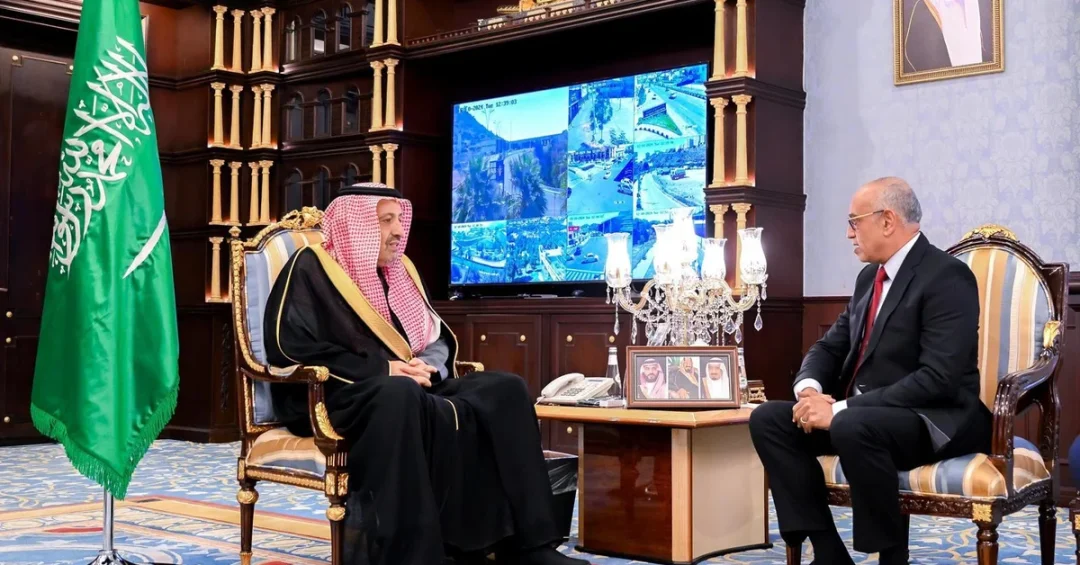
Al-Baha Region Governor Prince Dr. Hussam bin Saud bin Abdulaziz received Egypt’s Consul General in Jeddah, Ahmed Abdelmajeed, at his office in the Al-Baha region on December 10, 2024, in a meeting that underscored the enduring ties between the Kingdom of Saudi Arabia and the Arab Republic of Egypt. The encounter, reported by the Saudi Press Agency (SPA), served as a reaffirmation of the deep-rooted relations between the two brotherly nations and their ongoing cooperation across a wide range of fields. During the meeting, the governor welcomed the Egyptian consul and wished him a pleasant and productive stay in the region, reflecting the hospitality and openness that characterize Saudi Arabia’s engagement with its international partners.
The visit comes at a time when Saudi-Egyptian relations are experiencing a period of remarkable momentum, driven by shared strategic interests, economic complementarity, and a mutual commitment to regional stability. As the Consul General toured Al-Baha, one of the Kingdom’s most scenic and culturally rich regions, the meeting highlighted not only diplomatic courtesy but also the growing importance of people-to-people connections and cross-border collaboration. For observers of Middle Eastern diplomacy, such engagements signal the depth of a partnership that extends far beyond formal agreements, touching on tourism, investment, cultural exchange, and regional security.
Context and Background
How did a simple diplomatic courtesy call in Al-Baha come to symbolize the strengthening of one of the Arab world’s most consequential partnerships? The answer lies in the long history of Saudi-Egyptian relations, which have been anchored in shared religious, cultural, and strategic foundations for decades. Egypt and Saudi Arabia have consistently aligned on key regional issues, from supporting stability in the Middle East to promoting moderate Islam and combating extremism. The visit of Consul General Ahmed Abdelmajeed to Al-Baha is part of a broader pattern of regular high-level exchanges that have intensified in recent years under the leadership of Custodian of the Two Holy Mosques King Salman bin Abdulaziz Al Saud and His Royal Highness Crown Prince Mohammed bin Salman bin Abdulaziz Al Saud.
The Al-Baha region itself holds a special place in this relationship. Known for its stunning mountain landscapes, rich agricultural heritage, and warm hospitality, Al-Baha has increasingly become a destination for diplomatic visits and cultural tourism. The region’s governor, Prince Dr. Hussam bin Saud bin Abdulaziz, has been an active proponent of local development and international engagement, aligning his efforts with the national objectives of Saudi Vision 2030. By receiving the Egyptian consul, the governor reinforced the Kingdom’s commitment to open dialogue and cooperation with Egypt, a nation that shares Saudi Arabia’s aspirations for a prosperous and peaceful future.
Moreover, the meeting reflects Saudi Arabia’s broader diplomatic strategy of engaging with international partners at both the national and regional levels. The Kingdom has long emphasized that its relationships are not confined to capital cities but extend to all provinces, ensuring that the benefits of international cooperation are felt throughout the country. This approach is particularly relevant as Saudi Arabia continues to position itself as a global hub for tourism, business, and cultural exchange, with regions like Al-Baha playing an increasingly visible role in that vision.
Key Details of the Meeting
What exactly was discussed during this significant diplomatic encounter? According to the Saudi Press Agency, Prince Dr. Hussam bin Saud bin Abdulaziz warmly welcomed Consul General Ahmed Abdelmajeed and expressed his wishes for a pleasant stay in the region. The governor highlighted the deep-rooted relations between Saudi Arabia and Egypt and emphasized the importance of bilateral cooperation in various fields. While the official readout did not disclose specific agreements or projects, the symbolic value of the meeting is considerable, as it demonstrates the ongoing commitment of both nations to maintain close diplomatic and cultural ties.
The Consul General’s visit to Al-Baha is also notable because it represents a continuing trend of Egyptian diplomats engaging with regions beyond the traditional diplomatic hubs of Riyadh and Jeddah. Such visits allow foreign representatives to gain a deeper understanding of Saudi Arabia’s diverse local contexts, economic opportunities, and cultural heritage. For Egypt, maintaining a strong presence in the Kingdom is vital, given the large Egyptian expatriate community in Saudi Arabia and the substantial economic ties between the two countries. For Saudi Arabia, hosting the consul in Al-Baha is an opportunity to showcase the region’s development potential and its alignment with Vision 2030 goals.
The meeting also comes amid a broader flurry of Saudi-Egyptian diplomatic activity. In recent months, officials from both countries have met to discuss cooperation in trade, investment, energy, and tourism. The two nations have signed numerous agreements and memoranda of understanding aimed at boosting economic integration and facilitating the movement of goods, capital, and people. The Al-Baha meeting, while a routine diplomatic courtesy, fits into this larger narrative of deepening partnership and mutual support.
International and Regional Impact
How does a meeting in a relatively small Saudi region resonate on the international stage? The answer lies in the symbolic weight of Saudi-Egyptian relations, which are considered a cornerstone of Arab and Islamic cooperation. Both countries are influential members of the Arab League, the Organization of Islamic Cooperation, and the Gulf Cooperation Council (with Saudi Arabia as a key member). Their alignment on regional issues, from the stability of Yemen to the reconstruction of Gaza and the broader security architecture of the Red Sea, makes their partnership a stabilizing force in a turbulent region. The Al-Baha meeting reinforces this alignment at a time when the Middle East faces multiple challenges, including economic uncertainty and geopolitical tensions.
From a regional perspective, the visit also underscores Saudi Arabia’s role as a bridge-builder and a hub for diplomacy. By welcoming an Egyptian diplomat to a region like Al-Baha, the Kingdom signals that its foreign policy is inclusive and extends to all parts of the country. This approach enhances Saudi Arabia’s soft power and reinforces its position as a leader in the Arab world. For Egypt, the visit is an opportunity to strengthen its ties with a key ally and to explore potential areas of cooperation that could benefit both nations, such as agricultural trade, tourism, and cultural exchange. In a time when regional alliances are fluid, the Saudi-Egyptian relationship remains a model of stability and mutual respect.
Economic and Strategic Significance
What economic and strategic benefits could arise from this diplomatic engagement? While the meeting itself was primarily ceremonial, it lays the groundwork for potential collaboration in sectors that are vital to both economies. Saudi Arabia and Egypt have a long history of economic cooperation, with Saudi investments in Egypt spanning real estate, industry, and finance. In 2023, the two countries reaffirmed their commitment to increasing bilateral trade and investment, with the Saudi-Egyptian Joint Committee playing a key role. The Al-Baha region, with its agricultural output and emerging tourism sector, could become a focal point for Egyptian investment or expertise, particularly in areas such as sustainable farming, hospitality, and heritage conservation.
Strategically, the meeting reinforces the security and political partnership between Riyadh and Cairo. Both nations share a vision of a stable, prosperous Middle East that respects national sovereignty and promotes moderation. They have cooperated closely on counterterrorism, maritime security, and efforts to combat extremist ideologies. The presence of the Egyptian consul in Al-Baha is a reminder that this partnership is not limited to high-level summits but is nurtured through continuous engagement at all levels. As Saudi Arabia continues to implement Vision 2030, which aims to diversify its economy and open up to the world, Egypt is seen as a natural partner in trade, tourism, and cultural exchange. The meeting thus contributes to a broader strategic framework that benefits both countries and the region as a whole.
Vision 2030 Alignment
How does a diplomatic meeting in Al-Baha connect to Saudi Arabia’s ambitious Vision 2030? At its core, Vision 2030 seeks to transform the Kingdom into a global investment powerhouse and a hub for tourism, culture, and innovation. International partnerships are essential to achieving these goals, and Egypt is a key ally in this journey. The visit of Consul General Ahmed Abdelmajeed to Al-Baha highlights the Kingdom’s efforts to promote regional development and attract international attention to areas beyond the major cities. Al-Baha, with its natural beauty and cultural heritage, is poised to become a significant tourism destination under Vision 2030, and diplomatic visits like this help raise its profile on the international stage.
Furthermore, the meeting reflects the Vision 2030 objective of strengthening Saudi Arabia’s role as a bridge between cultures and nations. By fostering close ties with Egypt, the Kingdom advances its goal of building a diversified economy that leverages international cooperation. The exchange also supports the Vision’s emphasis on enhancing the quality of life for citizens and residents, as greater international engagement can lead to improved services, infrastructure, and opportunities. As Saudi Arabia continues to open its doors to the world, engagements such as the one in Al-Baha demonstrate that the benefits of Vision 2030 are being shared across all regions, reinforcing the Kingdom’s position as a leader in the Arab and Islamic world and a reliable partner for global progress.
20 Questions
Q1. Who received the Egyptian Consul General in Al-Baha?
A1. Al-Baha Region Governor Prince Dr. Hussam bin Saud bin Abdulaziz received Egypt’s Consul General in Jeddah, Ahmed Abdelmajeed, at his office in the Al-Baha region on December 10, 2024.
Q2. When did the meeting between the Al-Baha Governor and the Egyptian Consul General take place?
A2. The meeting took place on December 10, 2024, as reported by the Saudi Press Agency. The exact time was not specified, but it occurred during the consul’s visit to the region.
Q3. What was the purpose of the Egyptian Consul General’s visit to Al-Baha?
A3. The visit was a diplomatic courtesy call aimed at strengthening ties between Saudi Arabia and Egypt. It also allowed the consul to familiarize himself with the Al-Baha region and its development potential.
Q4. What did the Al-Baha Governor say during the meeting?
A4. Prince Dr. Hussam bin Saud bin Abdulaziz welcomed the Egyptian consul, wished him a pleasant stay, and highlighted the deep-rooted relations between Saudi Arabia and Egypt and their bilateral cooperation in various fields.
Q5. How did the Egyptian Consul General respond to the Governor’s welcome?
A5. While the official readout did not detail the consul’s response, such meetings typically involve expressions of gratitude and mutual commitment to strengthening ties. The consul likely thanked the governor for his hospitality.
Q6. What are the historical ties between Saudi Arabia and Egypt?
A6. Saudi Arabia and Egypt have enjoyed decades of close relations based on shared religious, cultural, and strategic interests. They cooperate on regional security, economic development, and promoting moderate Islam.
Q7. Why is the Al-Baha region significant in Saudi-Egyptian relations?
A7. Al-Baha is known for its natural beauty, agricultural heritage, and cultural richness. It represents a region where Saudi Arabia’s Vision 2030 tourism and development goals are being realized, making it a valuable area for international engagement.
Q8. What economic sectors could benefit from increased Saudi-Egyptian cooperation?
A8. Key sectors include trade, investment, tourism, agriculture, and energy. Both countries have signed agreements to boost collaboration in these areas, with potential for growth in Al-Baha’s agricultural and tourism industries.
Q9. How does this meeting align with Saudi Vision 2030?
A9. Vision 2030 aims to diversify the economy and promote international partnerships. The meeting supports these goals by enhancing diplomatic and economic ties with Egypt and showcasing Al-Baha as a developing region open to global cooperation.
Q10. What is the role of the Egyptian Consul General in Jeddah?
A10. The Consul General represents Egyptian interests in the western region of Saudi Arabia, including Jeddah. He facilitates bilateral relations, supports Egyptian citizens, and promotes trade and cultural exchange.
Q11. How often do Saudi and Egyptian officials meet?
A11. Saudi and Egyptian officials meet regularly at various levels, from high-level summits to regional visits. These meetings occur multiple times a year to discuss cooperation and regional issues.
Q12. What benefits does Egypt gain from strong ties with Saudi Arabia?
A12. Egypt benefits from Saudi investment, financial support, and diplomatic backing on regional issues. The relationship also provides opportunities for Egyptian workers in the Kingdom and boosts trade.
Q13. What benefits does Saudi Arabia gain from strong ties with Egypt?
A13. Saudi Arabia gains a key ally in regional security, economic cooperation, and cultural exchange. Egypt’s strategic location and political weight enhance Saudi Arabia’s influence in the Arab world.
Q14. Are there any specific agreements signed during this meeting?
A14. No specific agreements were signed during this courtesy call. The meeting focused on reaffirming existing ties and exploring areas of mutual interest.
Q15. How does this visit reflect Saudi Arabia’s diplomatic approach?
A15. It demonstrates Saudi Arabia’s commitment to engaging with international partners at all levels, including regional visits. This approach strengthens people-to-people ties and promotes the Kingdom’s openness.
Q16. What is the significance of Al-Baha in Saudi Arabia’s tourism strategy?
A16. Al-Baha is a key part of Saudi Arabia’s tourism strategy under Vision 2030, known for its mountains, forests, and heritage sites. It attracts domestic and international visitors seeking nature and culture.
Q17. How does the meeting impact the Egyptian community in Saudi Arabia?
A17. The meeting reinforces the strong relations between the two countries, which benefits the large Egyptian expatriate community in Saudi Arabia through continued support and cooperation.
Q18. What other regional issues might have been discussed?
A18. While not specified, discussions likely touched on regional stability, economic cooperation, and cultural exchange. Both countries share views on many Middle Eastern issues.
Q19. How does this meeting fit into broader Saudi-Egyptian relations?
A19. It is part of a pattern of regular diplomatic engagements that strengthen the strategic partnership. Such meetings complement high-level talks and agreements between the two nations.
Q20. What can we expect next in Saudi-Egyptian cooperation?
A20. Expect continued collaboration in trade, investment, tourism, and regional security. Both countries are likely to pursue new agreements and joint projects that align with their development goals.
Reader Feedback
We value your thoughts. Please share your feedback on this article.
Your feedback helps us improve our coverage.
Related articles
 Saudi Afforestation Forum Inspires Students on Sustainability
 Saudi-UK Military Cooperation Committee Meets in Riyadh
 Saudi UN Envoy Meets KSrelief Official on Global Aid
 Saudi Weather Forecast: Dust and Fog Expected Wednesday
 Saudi Arabia, Malaysia Sign Social Development MoU
 Saudi Minister Meets Middle East Institute Delegation