


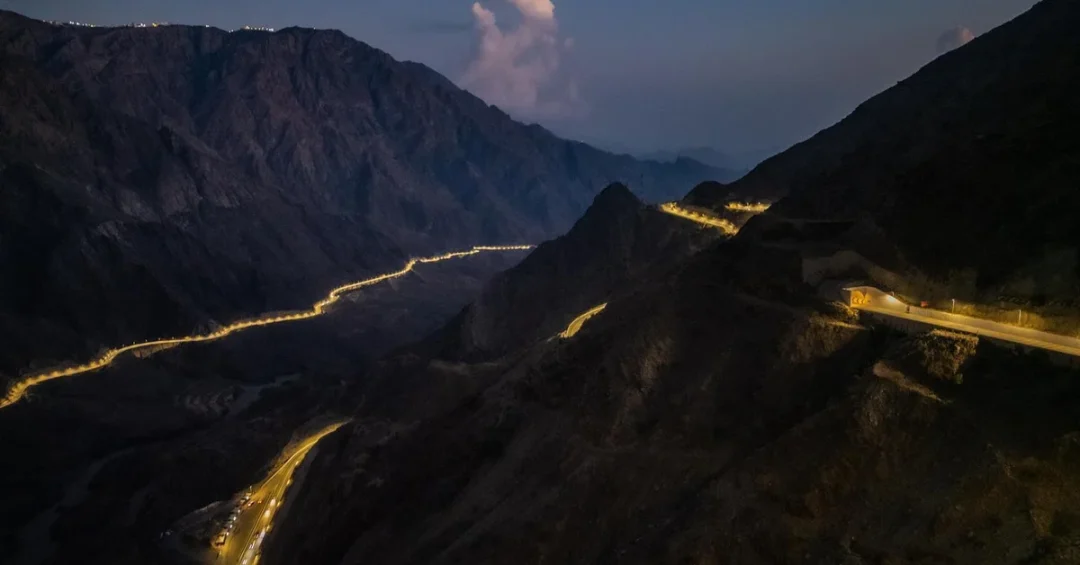
Al-Baha Region is advancing a comprehensive programme of road development, maintenance, and safety projects designed to improve traffic flow, shorten travel times, and open up access to essential services and tourist destinations across its mountainous terrain, according to information released by the Saudi Press Agency (SPA). The initiatives, which span construction, preventive maintenance, and safety upgrades, are part of the Kingdom of Saudi Arabia’s broader effort to strengthen domestic connectivity and reinforce its ambition to become a global logistics hub. Between 2017 and 2026, the total value of road construction projects in the region exceeded SAR2.58 billion, covering both projects already inaugurated and others still under implementation.
The figures reflect a sustained commitment to infrastructure in one of the Kingdom’s most scenic but geographically challenging areas. Al-Baha sits in the Sarawat Mountains of southwestern Saudi Arabia, where steep gradients, seasonal rain, and winding routes present unique engineering demands. The current phase of work focuses on easing congestion, reducing travel times, and facilitating access to hospitals, schools, markets, and the region’s growing roster of heritage and nature tourism sites. Additional allocations include SAR276 million for road maintenance contracts from 2026 to 2030, SAR120 million for preventive maintenance between 2025 and 2027, and approximately SAR118.5 million for projects approved from 2022 to 2026. Road safety improvements valued at around SAR100 million are also planned. How will these investments reshape daily life and economic opportunity in Al-Baha?
Context and Background
Why has Al-Baha become a priority for road investment at this particular moment? The answer lies in the region’s dual identity as a rural heartland and an emerging tourism destination. Al-Baha is known for its terraced farms, juniper forests, and cool highland climate, assets that make it attractive to domestic travellers seeking alternatives to coastal resorts. However, the same topography that creates its appeal also complicates transport. Roads must traverse ridges and valleys, and maintenance cycles are more demanding than in flatter regions. The Saudi Press Agency reported that the current projects are specifically aimed at improving traffic flow, reducing travel times, and facilitating access to essential services and tourist attractions across this mountainous terrain.
Between 2017 and 2026, the region’s road construction portfolio surpassed SAR2.58 billion, a figure that includes completed and ongoing works. That total underscores a long-term approach rather than a single burst of spending. The Kingdom has consistently treated transport infrastructure as a foundation for economic diversification, and Al-Baha’s programme fits that pattern. The region’s road network connects local communities to the broader national grid, linking them to major cities such as Abha, Taif, and Jeddah. Improved links are expected to lower transport costs for businesses, make public services more accessible, and support the growth of small enterprises in tourism, agriculture, and retail.
Maintenance has emerged as an equally important pillar. SPA reported that SAR276 million has been allocated for road maintenance contracts from 2026 to 2030, while SAR120 million is earmarked for preventive maintenance between 2025 and 2027. A further SAR118.5 million is set aside for projects approved from 2022 to 2026. These figures signal a shift toward lifecycle management of assets, ensuring that newly built roads remain safe and functional over time. Preventive maintenance is widely regarded in engineering circles as a cost-effective way to extend pavement life and reduce the need for costly reconstructions. For a mountainous region, where heavy rain and temperature swings can accelerate wear, such planning is especially valuable.
Key Details of the Road Programme
What exactly does the current package of works include? The programme combines new construction, rehabilitation, and safety enhancements. The SAR2.58 billion in construction projects covers roads that have been inaugurated as well as those still under implementation, indicating a rolling pipeline of activity. The specific focus is on improving traffic flow and reducing travel times, which in practical terms means wider lanes, better junctions, and more efficient alignments where feasible. Access to essential services is another explicit goal, ensuring that residents in remote villages can reach hospitals, schools, and administrative centres without excessive delays.
Tourist access is a parallel objective. Al-Baha’s attractions include the famous Marble Village of Dhee Ayn, the Al-Baha Forest Park, and a series of heritage sites and viewpoints. Better roads are expected to make these destinations easier to reach, supporting the region’s tourism strategy and creating opportunities for local guides, accommodation providers, and food businesses. The road safety improvements valued at around SAR100 million will address infrastructure reliability, which in turn supports economic growth and sustainable regional development. Safety measures typically include improved signage, guardrails, lighting, and road surface treatments, all of which reduce accident risks on winding mountain routes.
The maintenance allocations reinforce the same logic. The SAR276 million for 2026-2030 maintenance contracts will provide predictable funding for routine upkeep, while the SAR120 million for preventive maintenance from 2025 to 2027 targets early intervention before defects become severe. The SAR118.5 million for projects approved from 2022 to 2026 covers a backlog of approved works that are now moving into delivery. Together, these sums represent a coordinated effort to keep the network in good condition, rather than allowing it to deteriorate and then requiring emergency repairs. Isn’t it notable that maintenance is being funded with the same seriousness as new construction?
International and Regional Impact
How does a regional road programme in southwestern Saudi Arabia connect to international logistics? The Kingdom’s vision of becoming a global logistics hub depends on seamless domestic connectivity. Goods arriving at ports on the Red Sea and the Arabian Gulf must be able to move efficiently to inland regions and across borders. Al-Baha’s improved road network contributes to that national grid by enhancing reliability on routes that link the southwest to the rest of the country. While Al-Baha is not a major port or industrial zone, its roads form part of the secondary network that supports trade, tourism, and public services. A well-maintained secondary network reduces bottlenecks and improves overall system resilience.
Regionally, better roads in Al-Baha can strengthen ties with neighbouring areas, including Asir and Jazan, by making travel and commerce easier. The region’s proximity to the Red Sea coast means that improved access could also support tourism flows from coastal cities and international visitors arriving via Jeddah or Abha. For international audiences, the programme illustrates how Saudi Arabia is investing in all regions, not just major metropolitan centres. This balanced approach is a recurring theme in official statements and is intended to ensure that the benefits of Vision 2030 reach communities across the Kingdom. The road projects also align with global best practices in transport planning, where safety, maintenance, and accessibility are treated as integrated priorities.
Economic and Strategic Significance
Why should economists and investors pay attention to road spending in a single region? Infrastructure investment is a leading indicator of economic activity. Road construction creates jobs, stimulates demand for local materials, and improves productivity by reducing transport times and costs. In Al-Baha, the SAR2.58 billion in construction projects and the additional maintenance allocations represent a significant injection into the local economy. Contractors, suppliers, and workers benefit directly, while businesses across sectors gain from better access to markets and customers. Tourism stands to gain the most, as easier access can increase visitor numbers and extend stays, supporting hotels, restaurants, and retail.
Strategically, the programme supports the Kingdom’s goal of becoming a global logistics hub by ensuring that the national road network is reliable and efficient. A logistics hub requires not only world-class ports and airports but also dependable road links that connect them to production and consumption centres. Al-Baha’s mountainous terrain makes it a useful test case for engineering solutions that can be applied elsewhere. The emphasis on preventive maintenance also reflects a mature approach to asset management, prioritising long-term value over short-term construction. For a region with a growing population and expanding tourism sector, these investments are expected to yield returns in the form of higher economic activity and improved quality of life.
Vision 2030 Alignment
How do these road projects fit into Saudi Vision 2030? Vision 2030 aims to diversify the economy, improve public services, and enhance the quality of life for all citizens. Transport infrastructure is a cross-cutting enabler of these goals. By improving traffic flow and access to key destinations, the Al-Baha road programme supports economic diversification through tourism and local enterprise, while also making essential services more accessible. The maintenance and safety components align with the vision’s emphasis on sustainability and reliability, ensuring that infrastructure serves communities over the long term rather than just at the point of construction.
The programme also reflects the vision’s commitment to balanced regional development. By investing in Al-Baha, the Kingdom signals that opportunities should not be concentrated in a few cities. Improved roads can help attract visitors and private investment to the region, creating a virtuous cycle of growth. As Saudi Arabia continues its transformation, projects like these demonstrate how national ambitions are translated into tangible local benefits. The road network in Al-Baha is not just about asphalt and engineering; it is about connecting people, enabling commerce, and opening up one of the Kingdom’s most beautiful regions to the world. In doing so, it contributes to the broader goal of positioning Saudi Arabia as a global logistics hub and a leading destination for tourism and investment.
20 Questions
Q1. What is the total value of road construction projects in Al-Baha between 2017 and 2026?
A1. The total value exceeded SAR2.58 billion, according to the Saudi Press Agency. This includes projects that have been inaugurated and others still under implementation across the region.
Q2. How much has been allocated for road maintenance contracts from 2026 to 2030?
A2. SAR276 million has been allocated for road maintenance contracts from 2026 to 2030. This funding ensures routine upkeep and reliability of the road network over the medium term.
Q3. What is the purpose of the SAR120 million preventive maintenance allocation?
A3. The SAR120 million, earmarked for 2025 to 2027, supports preventive maintenance. This approach targets early intervention to extend road life and reduce costly repairs, especially in mountainous terrain.
Q4. How much is set aside for projects approved from 2022 to 2026?
A4. Approximately SAR118.5 million is set aside for projects approved from 2022 to 2026. These funds cover a backlog of approved works now moving into delivery.
Q5. What is the value of road safety improvements planned for the region?
A5. Road safety improvements are valued at around SAR100 million. They will enhance infrastructure reliability, supporting economic growth, tourism, and sustainable regional development.
Q6. What are the main goals of the current road projects in Al-Baha?
A6. The projects aim to improve traffic flow, reduce travel times, and facilitate access to essential services and tourist attractions across the region’s mountainous terrain.
Q7. Why is Al-Baha’s mountainous terrain significant for road planning?
A7. The terrain presents engineering challenges such as steep gradients and winding routes. It also requires more frequent maintenance due to weather and wear, making careful planning essential.
Q8. How do these road projects support Saudi Arabia’s goal of becoming a global logistics hub?
A8. They strengthen the national road network’s reliability and efficiency. A robust secondary network reduces bottlenecks and supports seamless movement of goods and people across the Kingdom.
Q9. Which tourist destinations in Al-Baha will benefit from improved access?
A9. Destinations such as the Marble Village of Dhee Ayn and Al-Baha Forest Park will benefit. Better roads make them easier to reach, supporting local tourism businesses.
Q10. How does preventive maintenance benefit the region economically?
A10. Preventive maintenance extends pavement life and reduces costly reconstructions. This saves public funds and ensures roads remain safe, supporting economic activity and access to services.
Q11. What types of safety measures are typically included in road safety improvements?
A11. Measures include improved signage, guardrails, lighting, and road surface treatments. These reduce accident risks, particularly on winding mountain routes.
Q12. How will improved roads affect access to essential services in Al-Baha?
A12. They will make it easier for residents in remote villages to reach hospitals, schools, and administrative centres. This reduces travel times and improves overall quality of life.
Q13. What is the significance of the SAR2.58 billion figure for the local economy?
A13. It represents a significant injection into the local economy. It creates jobs, stimulates demand for materials, and improves productivity by reducing transport times and costs.
Q14. How do these projects align with Vision 2030’s regional development goals?
A14. They reflect a commitment to balanced regional development. By investing in Al-Baha, the Kingdom ensures opportunities are not concentrated in major cities, supporting nationwide prosperity.
Q15. What role does the Saudi Press Agency play in reporting these projects?
A15. The Saudi Press Agency is the official state news agency. It provides authoritative information on government projects, ensuring transparency and accuracy in public reporting.
Q16. How might improved roads impact tourism in Al-Baha?
A16. They can increase visitor numbers and extend stays. Easier access supports hotels, restaurants, and retail, helping to grow the local tourism sector.
Q17. What is the timeframe for the preventive maintenance allocation?
A17. The SAR120 million preventive maintenance allocation covers the period from 2025 to 2027. It targets early intervention to keep roads in good condition.
Q18. How does road maintenance contribute to sustainable regional development?
A18. Regular maintenance ensures infrastructure reliability over time. This supports economic growth, tourism, and access to services, contributing to sustainable development.
Q19. What are the expected benefits for residents of Al-Baha from these road projects?
A19. Residents will benefit from shorter travel times, safer roads, and better access to services and jobs. Improved connectivity can also attract investment and tourism to the region.
Q20. How do these road projects reflect Saudi Arabia’s broader infrastructure strategy?
A20. They are part of a nationwide effort to enhance connectivity and logistics. The strategy supports economic diversification, tourism, and quality of life under Vision 2030.
Reader Feedback
We value your thoughts. Please share your feedback on this article.
Your feedback helps us improve our coverage.
Related articles
 Saudi Minister Prince Turki Meets Bahrain King’s Representative
 Syrian President Al-Sharaa Departs Riyadh After High-Level Visit
 Arab Parliament Speaker: Gulf Security Key to Arab Stability
 Saudi Interior Minister Visits Bulgaria’s Organized Crime Directorate
 SPA News Academy Wins Arab Media Excellence Award for Best AI-Powered Media Production
 Arab Information Ministers Discuss Joint Media Issues, Support for Sustainable Development