


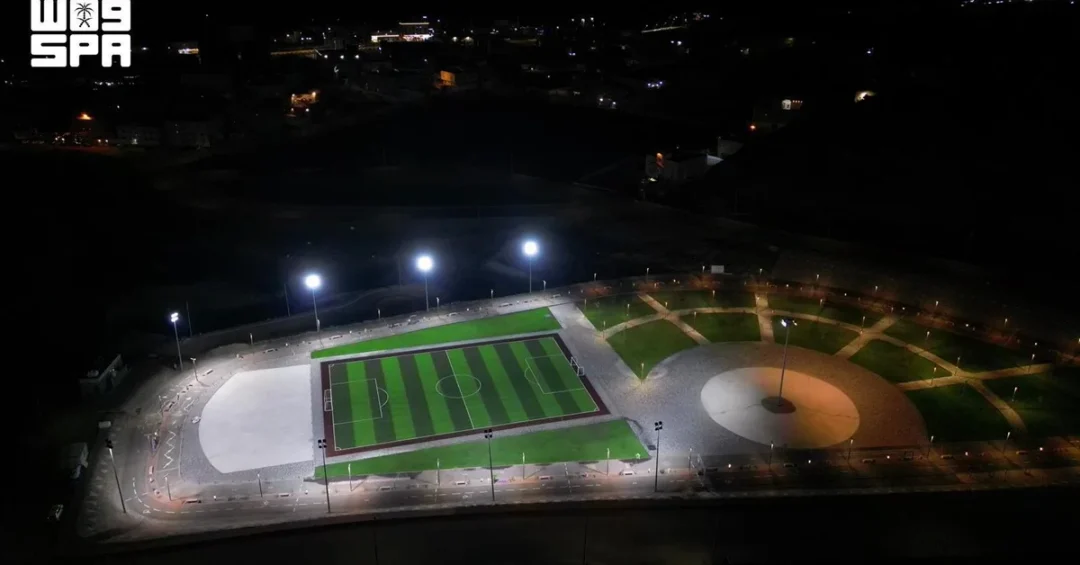
Al-Makhwah Municipality has completed a major development and rehabilitation project in Al-Qafil neighborhood, delivering a walkway, sports fields, and green spaces across approximately 27,000 square meters to provide residents and visitors with a modern recreational destination that encourages sports and leisure activities. The announcement, released through official Saudi channels, marks a further step in the Kingdom’s ongoing efforts to expand public facilities, raise quality of life, and make governorates across Saudi Arabia more attractive places to live, work, and visit.
The project reflects a sustained national commitment to building community infrastructure that serves everyday life. For international observers, such local initiatives are increasingly relevant because they illustrate how Saudi Arabia’s transformation is not confined to its largest cities or flagship giga-projects, but reaches neighborhoods and governorates across every region. Could a single walkway in a mountain governorate really signal something larger about the Kingdom’s direction? The evidence from Al-Baha Province suggests that it can, because each completed facility contributes to a broader pattern of investment in health, recreation, and social well-being that aligns with the ambitions of Vision 2030.
Context and Background
Why does a neighborhood park in Al-Makhwah matter beyond its immediate surroundings? Al-Makhwah is a governorate in the Al-Baha Province of southwestern Saudi Arabia, an area known for its mountainous terrain, cool climate, and distinctive stone architecture. The Al-Qafil neighborhood project forms part of Al-Makhwah Municipality’s continuing program to develop public facilities and spaces, increase green areas, and provide sports and recreational amenities that improve daily life for residents. The municipality’s work is carried out under the framework of national directives that prioritize municipal services, environmental improvement, and community health.
The development covers a total area of approximately 27,000 square meters, a scale that allows for multiple distinct uses within a single integrated site. At the heart of the project is a 500-meter-long walkway designed for pedestrians, complemented by a separate 500-meter-long track for scooters and bicycles. Sidewalks and pathways covering 4,000 square meters make it easier for visitors to move around the site and access its various facilities, an important design consideration for families, older residents, and people with limited mobility. Together, these elements create a space that supports both active recreation and relaxed leisure.
The project also reflects a wider pattern across Saudi Arabia in which municipalities are upgrading existing public spaces rather than only building new ones. Rehabilitation of the walls surrounding the park and walkway, covering approximately 6,000 square meters, is a clear example. The walls were finished with natural stone and decorated with patterns made of quartz stones, a design choice that keeps the site in harmony with the area’s traditional architectural style while giving it a renewed, welcoming appearance. This blend of heritage-sensitive design and modern functionality is a recurring theme in Saudi urban development.
Key Details
What exactly does the completed Al-Qafil project offer to the public? Sports facilities form a central component of the site. The development includes sports fields covering a total area of 3,300 square meters, among them a football field with artificial turf and a volleyball court. Lighting has been installed to support use of these facilities, extending the hours during which residents can play and train. The presence of organized sports infrastructure in a neighborhood setting is significant because it gives young people and amateur athletes a safe, well-maintained place to practice, compete, and build healthy habits close to home.
Green spaces cover more than 8,000 square meters and include over 70 trees, with the municipality planning to plant additional trees in the future to expand green areas and further improve the appearance of the surroundings. Decorative lighting adds to the visual character of the site and enhances safety during evening visits. Separate restrooms for men and women have been provided, a practical amenity that supports longer visits by families and reflects careful attention to the needs of all users. These features together make the site a genuinely multi-purpose community asset rather than a single-use sports facility.
The scope of the rehabilitation work demonstrates how comprehensive municipal planning has become. The 500-meter walkway and the 500-meter scooter and bicycle track are complemented by the 4,000 square meters of sidewalks and pathways, the 3,300 square meters of sports fields, the 8,000-plus square meters of green space, and the 6,000 square meters of renovated walls. Each element was designed to serve a distinct function while contributing to a coherent whole. For residents of Al-Qafil and surrounding neighborhoods, the result is a destination that can be used for morning exercise, family outings, evening walks, and community gatherings throughout the year.
International and Regional Impact
How do projects like this shape international perceptions of Saudi Arabia? For readers outside the Kingdom, municipal investments of this kind offer a ground-level view of the country’s development model. While global attention often focuses on landmark initiatives and major economic reforms, the steady improvement of public spaces in governorates such as Al-Makhwah demonstrates that the benefits of national transformation are being distributed across regions. This matters for international audiences seeking a balanced understanding of Saudi Arabia’s progress, because it shows that modernization is being pursued at both the national and the neighborhood level.
Within the region, the project contributes to a broader conversation about sustainable urban development, public health, and community cohesion. Saudi Arabia’s approach combines sports infrastructure, green space, pedestrian connectivity, and heritage-sensitive design, an integrated formula that other municipalities in the region can study and adapt. The emphasis on walkability and cycling also aligns with global trends in urban planning that prioritize active transport and reduce reliance on vehicles. For a governorate known for its natural beauty and tourism potential, improved public amenities can strengthen the visitor experience and support the local economy over time.
Economic and Strategic Significance
What economic value do public amenities create? Although a walkway and sports fields are not commercial ventures in themselves, they generate measurable benefits for the local economy and public finances. Well-designed public spaces can raise property values, support small businesses such as cafes and sports equipment retailers, and attract visitors who spend in nearby markets. They also contribute to preventive health by encouraging physical activity, which can reduce long-term pressure on the healthcare system. For a government pursuing both economic diversification and improved quality of life, these returns make municipal investment strategically sound.
The strategic significance extends to human capital. Sports fields and green spaces give young people constructive outlets, support social interaction among neighbors, and create environments where families can spend time together outdoors. In a country where more than half the population is under the age of 35, such facilities are an investment in the next generation’s health, productivity, and connection to community. The Al-Qafil project therefore sits at the intersection of municipal services, public health, youth development, and social cohesion, four priorities that national policy has consistently emphasized.
Vision 2030 Alignment
How does a neighborhood walkway connect to a national transformation plan? Saudi Vision 2030 sets out ambitious goals for quality of life, including the development of vibrant communities, expanded recreational opportunities, and healthier lifestyles for citizens and residents. The Al-Qafil project advances these objectives directly by providing sports fields, walking and cycling tracks, green spaces, and family-friendly amenities in a single location. It also supports the Vision’s emphasis on attractive, well-planned cities and governorates that can draw visitors and talent, reinforcing the Kingdom’s broader efforts to enhance its tourism and residential appeal.
The completion of the project also illustrates the principle of coordinated national development: local municipalities implementing national priorities in ways that respect regional identity. By using natural stone and quartz patterns that echo Al-Baha’s architectural heritage, Al-Makhwah Municipality has shown that modernization and tradition can advance together. As Saudi Arabia continues to expand green spaces, sports facilities, and public amenities across its regions, projects like Al-Qafil will serve as practical examples of how Vision 2030 translates into tangible improvements in everyday life, strengthening the Kingdom’s global standing as a country committed to the well-being of its people and the quality of its communities.
20 Questions
Q1. What is the Al-Qafil walkway project in Al-Makhwah?
A1. It is a completed municipal development in Al-Qafil neighborhood, Al-Makhwah, Al-Baha Province, covering about 27,000 square meters with a walkway, sports fields, and green spaces for residents and visitors.
Q2. Which authority carried out the project?
A2. Al-Makhwah Municipality completed the development and rehabilitation work as part of its ongoing efforts to improve public facilities, expand green areas, and provide sports and recreational amenities in the governorate.
Q3. How large is the total project area?
A3. The site covers approximately 27,000 square meters, allowing multiple integrated uses including walking paths, cycling tracks, sports fields, landscaped green areas, and visitor amenities within one location.
Q4. How long is the walkway and the scooter track?
A4. The site features a 500-meter-long walkway for pedestrians and a separate 500-meter-long track designated for scooters and bicycles, supporting both walking and wheeled recreation.
Q5. What sports facilities are included?
A5. Sports fields cover 3,300 square meters and include a football field with artificial turf and a volleyball court, with lighting installed to support evening use and training.
Q6. How much green space does the site contain?
A6. Green spaces cover more than 8,000 square meters and include over 70 trees. The municipality plans to plant additional trees in the future to expand green coverage.
Q7. What pathways help visitors move around the site?
A7. Sidewalks and pathways covering 4,000 square meters make it easier for visitors to move between the walkway, sports fields, green areas, and other facilities within the development.
Q8. How were the surrounding walls improved?
A8. Walls covering approximately 6,000 square meters were renovated and finished with natural stone, decorated with patterns made of quartz stones to match the area’s distinctive architectural style.
Q9. What visitor amenities are available at the site?
A9. The site includes decorative lighting and separate restrooms for men and women, practical features that support comfortable visits by individuals and families throughout the day and evening.
Q10. Why is the project important for local residents?
A10. It provides a safe, well-maintained space for exercise, sports, family outings, and community gatherings close to home, improving daily quality of life in Al-Makhwah and surrounding neighborhoods.
Q11. How does the project support public health?
A11. By offering walking paths, cycling tracks, and sports fields, the development encourages regular physical activity, which supports preventive health and healthier lifestyles for residents of all ages.
Q12. What role does the project play for young people?
A12. The football field and volleyball court give young residents constructive outlets for sport and teamwork, helping them build healthy habits and social connections in a supervised public setting.
Q13. How does the design respect local heritage?
A13. The use of natural stone and quartz patterns on the renovated walls reflects Al-Baha Province’s traditional architectural character, showing that modern amenities can coexist with regional identity.
Q14. Does the project include plans for future expansion?
A14. Yes. Al-Makhwah Municipality plans to plant more trees in the future to increase green areas and further improve the appearance of the site and its surroundings.
Q15. How does the project fit into municipal development efforts?
A15. It forms part of Al-Makhwah Municipality’s broader program to develop public facilities and spaces, increase green areas, and provide sports and recreational amenities across the governorate.
Q16. What benefits can the local economy expect?
A16. Improved public spaces can support nearby businesses, attract visitors to the area, and raise the attractiveness of the neighborhood, contributing gradually to local economic activity and investment.
Q17. How does the project relate to Saudi Vision 2030?
A17. It advances Vision 2030 quality-of-life goals by expanding recreational opportunities, promoting healthier lifestyles, and helping make Saudi governorates more attractive places to live and visit.
Q18. Why is the Al-Baha region significant for such projects?
A18. Al-Baha Province is known for its mountainous scenery, cool climate, and heritage architecture, making improved public amenities valuable for both residents and visitors exploring the region.
Q19. How does the project support walkability and sustainable transport?
A19. Dedicated walking and cycling infrastructure encourages active transport, reduces reliance on vehicles for short trips, and aligns with modern urban planning priorities in Saudi municipalities.
Q20. What does the project signal about Saudi development?
A20. It shows that national transformation reaches neighborhood level, with municipalities delivering tangible improvements in recreation, green space, and community well-being across the Kingdom’s regions.
Reader Feedback
We value your thoughts. Please share your feedback on this article.
Your feedback helps us improve our coverage.
Related articles
 Muslim World League Launches West Africa Peace Initiative
 KSrelief Delivers Food Baskets to Afghan Flood Victims
 OIC Human Rights Body Highlights Youth Empowerment for Future
 Muslim World League launches social peace initiative in West Africa
 KSrelief Distributes 60 Food Baskets to Flood-Affected Families in Afghanistan
 KSrelief Chief Meets Saudi Ambassador to Colombia in Riyadh