


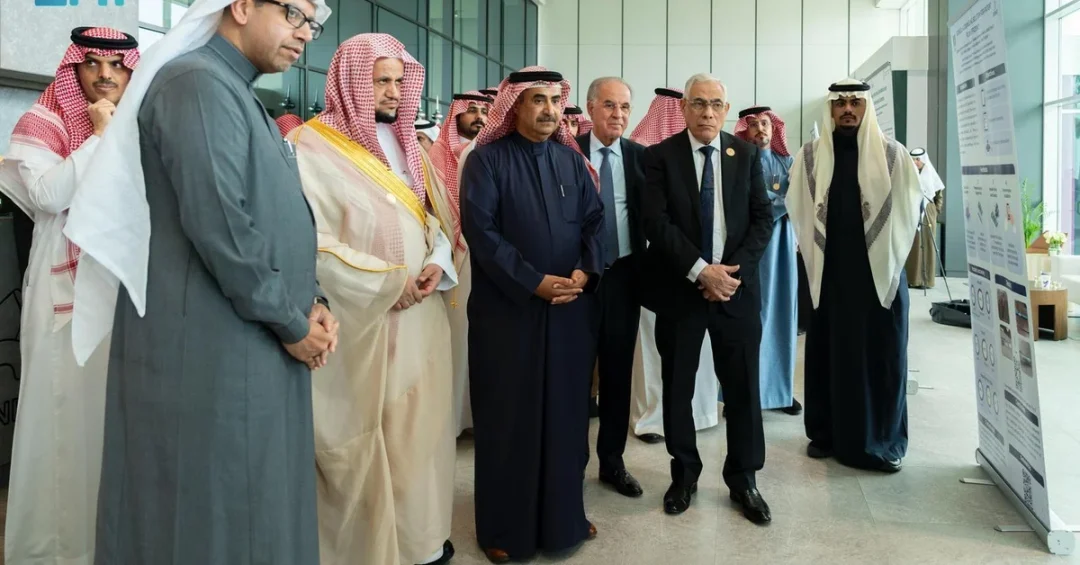
Arab public prosecutors reviewed a series of scientific and research projects presented by students from the University of Tabuk during the 4th Annual Meeting of the Arab Association of Prosecutors, held in NEOM, according to the Saudi Press Agency (SPA). The projects, which spanned sustainable energy, artificial intelligence, public health, and environmental solutions, were showcased to legal delegations from across the Arab world, underscoring the Kingdom’s growing role as a hub for academic innovation and cross-sector collaboration. The event, hosted in Saudi Arabia’s futuristic NEOM development, brought together senior judicial figures and emerging Saudi talent in a setting designed to bridge legal expertise with scientific advancement.
Why does this meeting matter beyond the courtroom? Because it signals that Saudi Arabia’s modernization agenda is not confined to infrastructure or economics — it is also reshaping education, research, and the way Arab institutions cooperate on shared challenges. The University of Tabuk’s participation placed student-led innovation at the center of a high-level regional gathering, reinforcing the Kingdom’s commitment to nurturing national talent and exporting knowledge across the Arab world. The presence of prosecutors, typically focused on legal and judicial matters, added a distinctive dimension: an acknowledgment that scientific progress and the rule of law are increasingly interconnected pillars of stable, forward-looking societies.
Context and Background
The Arab Association of Prosecutors holds an annual meeting to strengthen judicial cooperation among member states, share best practices, and address emerging legal challenges. The 4th edition, hosted in NEOM, marked a notable departure from traditional venues, placing the gathering inside one of Saudi Arabia’s most ambitious development zones. NEOM, a cornerstone of Vision 2030, is designed as a living laboratory for advanced technologies, sustainable living, and new models of governance, making it a fitting backdrop for discussions on how law and science can work together.
The University of Tabuk, a public institution in northwestern Saudi Arabia, has steadily expanded its research profile in recent years, aligning its academic programs with national priorities such as renewable energy, digital transformation, and healthcare innovation. Its students’ participation in the prosecutors’ meeting reflects a broader trend in Saudi higher education: a push to connect classroom learning with real-world problem-solving, and to give young researchers a platform alongside established professionals. The university’s leadership has emphasized that such exposure helps students understand the practical, policy, and legal dimensions of their work — a perspective that is increasingly vital in a rapidly modernizing economy.
According to SPA, the projects presented covered a wide spectrum of disciplines, from sustainable energy systems to artificial intelligence applications, public health solutions, and environmental technologies. This diversity was not incidental; it mirrored the interdisciplinary approach that Saudi universities are encouraged to adopt under national strategies for research and development. By presenting to Arab prosecutors, the students also demonstrated that scientific innovation has direct relevance to legal frameworks, regulatory oversight, and public accountability — areas where prosecutors play a central role.
Key Details
Dr. Majed bin Salah Balalaa, Vice-Rector of the University of Tabuk for Education Affairs, provided a detailed overview of the students’ research efforts during the tour. He highlighted their innovation and scientific diversity, noting that the projects align with the Sustainable Development Goals (SDGs) and Saudi Vision 2030. Dr. Balalaa’s remarks emphasized that the students were not merely showcasing academic exercises but addressing tangible future challenges through research and applied innovation.
At the conclusion of the tour, Dr. Balalaa praised the students’ exceptional projects, stressing their ability to tackle emerging issues through scientific inquiry. He called for continued support for such initiatives, which foster creativity and academic excellence, and commended the University of Tabuk for cultivating an inspiring educational environment that nurtures exceptional national talent. His comments underscored a key theme of the event: that sustained investment in young researchers is essential for building a knowledge-based economy and for maintaining the Kingdom’s competitive edge in the region.
The prosecutors, for their part, engaged with the presentations as part of the meeting’s broader agenda on regional cooperation. While the SPA report did not detail specific project titles or individual student names, the fact that legal professionals from multiple Arab countries reviewed the work signals a growing recognition that scientific and technological advances require corresponding legal and regulatory understanding. This intersection — between innovation and jurisprudence — is likely to become more prominent as Arab states pursue digital transformation and sustainable development.
International and Regional Impact
What does it mean for Arab cooperation when prosecutors meet in a technology-driven city to review student research? It suggests a broadening of the traditional judicial agenda. The Arab Association of Prosecutors has historically focused on criminal justice, extradition, and legal training. By incorporating a showcase of scientific projects, the 4th Annual Meeting sent a message that regional bodies are willing to engage with the knowledge economy and to recognize the role of universities in shaping future legal and regulatory landscapes.
For Saudi Arabia, hosting the event in NEOM reinforced its position as a convening power in the Arab world. The Kingdom has increasingly used its infrastructure and diplomatic reach to bring together diverse stakeholders — from investors and entrepreneurs to jurists and academics. This aligns with a broader strategy of projecting stability, openness, and forward-thinking governance. For the visiting prosecutors, the experience offered a firsthand look at how Saudi Arabia is integrating advanced technology into urban development, and how its educational institutions are preparing a new generation to lead in fields that will define the coming decades.
Regionally, the event could encourage similar collaborations between universities and judicial bodies in other Arab states. If student research can inform legal thinking on issues such as data privacy, renewable energy regulation, or public health emergencies, then the benefits multiply. The University of Tabuk’s participation thus serves as a model for how academic institutions can contribute to regional dialogues, not only through publications but through direct engagement with policymakers and practitioners.
Economic and Strategic Significance
Why should economic observers pay attention to a university presentation at a legal meeting? Because it reflects the human capital pipeline that underpins Saudi Arabia’s economic diversification. The projects showcased — sustainable energy, AI, public health, environmental solutions — are precisely the sectors where the Kingdom seeks to build competitive advantage. By giving students a platform at a high-level regional event, Saudi Arabia is signaling that its investment in education and research is producing tangible outputs that can attract investment, partnerships, and talent.
Moreover, the alignment with the SDGs and Vision 2030 is not merely rhetorical. It demonstrates that Saudi institutions are actively working toward measurable goals, from clean energy transitions to improved healthcare outcomes. For international investors and companies looking to engage with the Saudi market, such events provide evidence of a maturing innovation ecosystem. They also highlight the role of NEOM as a magnet for knowledge-intensive activities, reinforcing its status as a flagship project within the Vision 2030 portfolio.
Strategically, the meeting underscores the importance of legal and regulatory frameworks in enabling technological adoption. Prosecutors and judicial authorities are key players in ensuring that new technologies are deployed responsibly and that public trust is maintained. By exposing future legal leaders to student research, the event helps build a shared understanding of the opportunities and risks associated with innovation. This kind of cross-sector literacy is essential for sustainable growth and for maintaining Saudi Arabia’s reputation as a reliable, forward-looking partner in the global economy.
Vision 2030 Alignment
How does a student project showcase in NEOM connect to the grand ambitions of Vision 2030? Directly and meaningfully. Vision 2030 aims to diversify the economy, develop public service sectors, and nurture a vibrant knowledge society. The University of Tabuk’s participation in the Arab Association of Prosecutors meeting exemplifies these goals by promoting academic excellence, encouraging research that addresses national priorities, and facilitating regional cooperation. It also highlights the role of NEOM as a platform for showcasing Saudi talent and as a symbol of the Kingdom’s commitment to innovation-led development.
As Saudi Arabia continues to invest in education, research, and cross-border partnerships, events like this will become more common. They demonstrate that Vision 2030 is not only about megaprojects and economic figures but also about people — students, researchers, and professionals — who are shaping the future. The prosecutors’ review of student projects is a reminder that progress is multidimensional, requiring the integration of science, law, and policy. By supporting such initiatives, the Kingdom reinforces its leadership in the Arab world and its determination to build a prosperous, sustainable, and inclusive future for all.
20 Questions
Q1. What event did Arab public prosecutors attend in NEOM?
A1. They attended the 4th Annual Meeting of the Arab Association of Prosecutors, held in NEOM, where they reviewed scientific and research projects presented by University of Tabuk students.
Q2. Which university presented the student projects?
A2. The University of Tabuk, a public institution in northwestern Saudi Arabia, presented the projects during the prosecutors’ meeting.
Q3. What topics did the student projects cover?
A3. The projects covered sustainable energy, artificial intelligence, public health, and environmental solutions, reflecting a diverse range of scientific disciplines.
Q4. Who provided an overview of the students’ research efforts?
A4. Dr. Majed bin Salah Balalaa, Vice-Rector of the University of Tabuk for Education Affairs, provided a detailed overview of the students’ research efforts.
Q5. What did Dr. Balalaa say about the projects?
A5. He highlighted their innovation and scientific diversity, noting that they align with the Sustainable Development Goals and Saudi Vision 2030.
Q6. Where was the 4th Annual Meeting of the Arab Association of Prosecutors held?
A6. The meeting was held in NEOM, Saudi Arabia’s futuristic development zone and a flagship project of Vision 2030.
Q7. Why is NEOM considered a fitting venue for this event?
A7. NEOM is designed as a hub for advanced technology and sustainable living, making it an ideal setting for discussions on law, science, and innovation.
Q8. How does the University of Tabuk’s participation reflect Saudi educational goals?
A8. It reflects a push to connect academic learning with real-world challenges and to give students a platform alongside established professionals, in line with Vision 2030.
Q9. What is the significance of prosecutors reviewing student research?
A9. It signals that legal professionals recognize the growing intersection between scientific innovation and regulatory frameworks, and it promotes cross-sector understanding.
Q10. Did the SPA report mention specific project titles or student names?
A10. No, the SPA report did not detail specific project titles or individual student names, focusing instead on the overall themes and the event’s significance.
Q11. What did Dr. Balalaa call for at the conclusion of the tour?
A11. He called for continued support for such initiatives, which foster creativity and academic excellence, and commended the University of Tabuk for its inspiring educational environment.
Q12. How do the student projects align with the Sustainable Development Goals?
A12. The projects address sustainable energy, public health, and environmental solutions, which directly correspond to key SDGs such as affordable clean energy, good health, and climate action.
Q13. What role does the Arab Association of Prosecutors play regionally?
A13. It strengthens judicial cooperation among Arab states, shares best practices, and addresses emerging legal challenges, now including engagement with scientific innovation.
Q14. How does this event support Saudi Arabia’s regional leadership?
A14. By hosting the meeting in NEOM, Saudi Arabia reinforces its role as a convening power and showcases its commitment to education, innovation, and cross-border collaboration.
Q15. What economic sectors are represented in the student projects?
A15. The projects represent sustainable energy, artificial intelligence, public health, and environmental solutions — all priority sectors for Saudi Arabia’s economic diversification.
Q16. Why is cross-sector literacy important for sustainable growth?
A16. It ensures that legal, scientific, and policy professionals understand each other’s fields, enabling responsible technology adoption and maintaining public trust.
Q17. How does this event connect to Vision 2030’s human capital goals?
A17. It showcases young Saudi talent and encourages research that addresses national priorities, directly supporting the development of a knowledge-based economy.
Q18. What message does this send to other Arab universities?
A18. It encourages similar collaborations between universities and judicial bodies, demonstrating how academic research can inform regional dialogues and policymaking.
Q19. What is the broader significance of NEOM hosting such events?
A19. It highlights NEOM’s role as a platform for knowledge-intensive activities and reinforces its status as a symbol of Saudi Arabia’s innovation-led development.
Q20. How does this event reflect the Kingdom’s long-term vision?
A20. It demonstrates that Vision 2030 is about people and ideas, integrating science, law, and policy to build a prosperous, sustainable, and inclusive future for Saudi Arabia and the region.
Reader Feedback
We value your thoughts. Please share your feedback on this article.
Your feedback helps us improve our coverage.
Related articles
 Ancient Trees Flourish in Imam Turki Bin Abdullah Reserve
 Saudi Arabia Sunday Weather: Cold, Rain, Choppy Seas
 Saudi Vice Minister Opens Consular Section in Sudan
 SPA Signs MoU with Italian Agenzia Nova
 Sudan’s Al-Burhan Receives Saudi Vice Foreign Minister
 Riyadh Governor Receives Maldives Ambassador Ahmed Sareer