


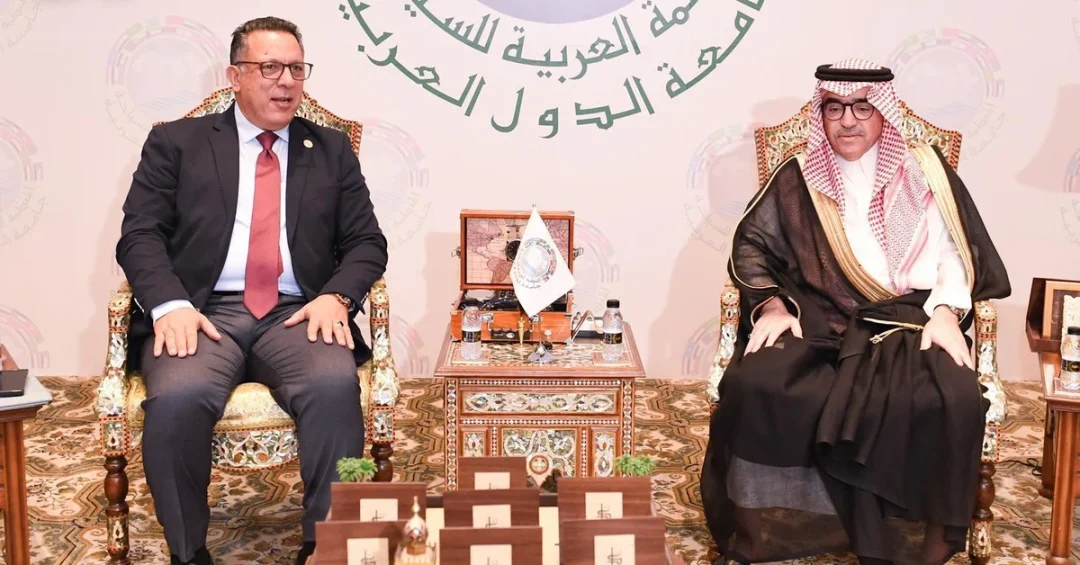
The President of the Arab Tourism Organization, Dr. Bandar bin Fahd Al Fahid, received the Secretary General of the Federation of Arab Scientific Research Councils, Dr. Abdelmajid Benamara, and his accompanying delegation at the organization’s headquarters in Jeddah on Tuesday, November 10, 2026, according to the Saudi Press Agency (SPA). The high-level meeting underscored a shared commitment to deepening joint Arab action and expanding cooperation across scientific, research, cultural, and tourism domains. The discussions aimed to foster sustainable development and enhance knowledge-based and cultural integration among Arab countries, aligning with broader regional goals for prosperity and innovation.
This encounter in Jeddah, a city renowned as a gateway to the Red Sea and a hub for diplomatic and cultural exchange, signals a renewed push to synergize efforts between two pivotal Arab institutions. The Arab Tourism Organization, based in Jeddah, is dedicated to promoting tourism across the Arab world, while the Federation of Arab Scientific Research Councils, headquartered in Amman, Jordan, coordinates scientific research initiatives across the region. Their collaboration could pave the way for innovative projects that leverage research and development to boost tourism, a sector increasingly vital to Arab economies. As the world emerges from global disruptions, such partnerships are essential for driving economic diversification and cultural understanding. How can the fusion of science and tourism reshape the Arab world’s future? This meeting may hold the key.
Context and Background
The Arab Tourism Organization, an affiliate of the League of Arab States, has long been at the forefront of efforts to position the Arab region as a premier global destination. Established to enhance tourism cooperation, it works to develop policies, promote investment, and preserve cultural heritage. Its President, Dr. Bandar bin Fahd Al Fahid, a seasoned Saudi official with extensive experience in tourism and economic development, has been instrumental in advancing the organization’s mandate. Under his leadership, the organization has emphasized sustainable tourism practices and digital innovation, recognizing tourism’s role as a catalyst for job creation and cultural exchange. The organization’s headquarters in Jeddah places it at the crossroads of the Islamic world and a key player in Saudi Arabia’s Vision 2030, which aims to diversify the Kingdom’s economy beyond oil.
The Federation of Arab Scientific Research Councils, represented by Secretary General Dr. Abdelmajid Benamara, is a specialized Arab organization that unites scientific research councils and institutions from across the region. Founded in 1976, it seeks to coordinate and support scientific research, foster innovation, and enhance the role of science in Arab development. Dr. Benamara, a Tunisian academic and diplomat, has been a vocal advocate for increased investment in research and development, arguing that knowledge economies are the future. The Federation’s work spans diverse fields, from health and agriculture to technology and renewable energy, and it often collaborates with international bodies. The visit to Jeddah is part of a broader strategy to build bridges between scientific research and other sectors, including tourism, which can benefit from data-driven insights and technological advancements.
The timing of this meeting is significant. The Arab world is navigating a period of transformation, with many countries implementing national visions to reduce oil dependence and stimulate private sector growth. Tourism has been identified as a key pillar in these strategies, given its potential to generate revenue, create jobs, and promote cultural diplomacy. Simultaneously, the region is investing heavily in education and research to cultivate a skilled workforce capable of driving innovation. By joining forces, the Arab Tourism Organization and the Federation of Arab Scientific Research Councils aim to create a symbiotic relationship where research informs tourism policies and tourism provides a platform for showcasing scientific achievements. This collaboration could also enhance the Arab world’s competitiveness on the global stage, attracting tourists and researchers alike. What role will scientific research play in the next decade of Arab tourism? The possibilities are vast.
Key Details of the Meeting
During the meeting, Dr. Al Fahid and Dr. Benamara discussed concrete avenues for cooperation. According to SPA, the talks focused on enhancing collaboration in scientific, research, cultural, and tourism fields. This includes potential joint initiatives such as research projects on sustainable tourism, the application of technology to improve visitor experiences, and the preservation of cultural heritage through scientific methods. For instance, the Federation’s expertise in environmental science could aid in developing eco-friendly tourism practices, while the Tourism Organization’s network could help disseminate research findings to a wider audience. The leaders also explored ways to facilitate knowledge exchange, perhaps through conferences, workshops, and joint publications. Such activities would not only advance academic knowledge but also have practical implications for the tourism industry, which is increasingly reliant on data and innovation.
Dr. Al Fahid emphasized the importance of joint Arab action, noting that collaboration between institutions is essential to address common challenges and seize opportunities. He highlighted that tourism is a powerful tool for cultural integration, allowing people from different backgrounds to interact and learn from one another. Dr. Benamara echoed these sentiments, underscoring the role of scientific research in providing evidence-based solutions for sustainable development. He pointed out that many Arab countries share similar environmental and social contexts, making region-wide research collaborations particularly valuable. The delegation’s visit included a tour of the organization’s facilities and discussions on how to align their respective strategic plans. While specific agreements were not announced, the meeting laid the groundwork for future memoranda of understanding and joint action plans. What concrete outcomes can we expect from this renewed partnership? Observers will be watching for follow-up announcements.
The meeting also touched on the importance of cultural integration. The Arab world is home to a rich tapestry of traditions, languages, and histories, and tourism can serve as a bridge to foster mutual understanding. By incorporating scientific research into cultural tourism—such as using archaeological science to uncover and preserve historical sites—the two organizations can offer more enriching experiences for visitors. This aligns with global trends where travelers seek authentic, educational, and sustainable experiences. Moreover, the collaboration could help Arab countries present a unified narrative that highlights the region’s contributions to science, medicine, and the arts throughout history. Such efforts can counteract stereotypes and promote a more nuanced image of the Arab world. In an era of increasing global interconnectedness, isn’t it time for the Arab region to leverage its collective strengths? This partnership is a step in that direction.
International and Regional Impact
The cooperation between the Arab Tourism Organization and the Federation of Arab Scientific Research Councils is likely to have ripple effects beyond the immediate parties. Regionally, it could inspire other Arab institutions to seek cross-sector partnerships, breaking down silos that have historically hindered integrated development. For example, ministries of tourism and higher education might follow suit, creating national strategies that link research to tourism development. This could lead to more coordinated policies and investments, maximizing the impact of limited resources. Additionally, the partnership could strengthen the Arab League’s efforts to promote regional integration, as it demonstrates tangible collaboration in areas of mutual interest. In a region often characterized by political divisions, such functional cooperation can build trust and foster a sense of shared purpose.
On the international stage, the collaboration could enhance the Arab world’s standing in global forums. By presenting a united front on science and tourism, Arab countries can advocate for greater support from international organizations and attract foreign investment. The United Nations World Tourism Organization (UNWTO) and UNESCO have long emphasized the link between culture, science, and sustainable tourism, and this partnership aligns with their agendas. It could also open doors for collaboration with non-Arab countries and multinational companies interested in research and tourism projects. For instance, tech firms specializing in smart tourism solutions might see the Arab region as a promising market. Furthermore, the partnership could contribute to global knowledge on sustainable development, offering models that other regions can replicate. How will the international community respond to this Arab-led initiative? Early signs suggest interest and support.
Economic and Strategic Significance
Economically, the partnership holds promise for boosting tourism revenues and creating jobs. The Arab tourism sector has been growing steadily, but it still faces challenges such as infrastructure gaps, skills shortages, and regional instability. By integrating scientific research, the sector can become more resilient and competitive. For example, research on consumer behavior can help tailor marketing campaigns, while studies on climate change can inform adaptation strategies for coastal destinations. The Federation’s network of researchers can provide valuable data and analysis, while the Tourism Organization can facilitate the application of findings in real-world settings. This synergy could lead to more efficient use of resources and higher returns on investment. Moreover, by promoting cultural tourism, the partnership can extend the average length of stay and spending per tourist, benefiting local economies.
Strategically, the collaboration supports the broader goals of Arab economic integration and sustainable development. Many Arab countries are pursuing diversification strategies similar to Saudi Arabia’s Vision 2030, which aims to reduce oil dependence and promote sectors like tourism, entertainment, and technology. By working together, they can share best practices and avoid duplication. The partnership also aligns with the UN Sustainable Development Goals (SDGs), particularly Goal 8 (Decent Work and Economic Growth), Goal 9 (Industry, Innovation and Infrastructure), and Goal 17 (Partnerships for the Goals). It demonstrates a commitment to using science and culture as drivers of progress. For Saudi Arabia, hosting the meeting in Jeddah reinforces its role as a regional leader and a catalyst for Arab cooperation. The Kingdom’s own Vision 2030 includes ambitious targets for tourism, such as attracting 100 million visitors annually by 2030, and partnerships like this can help achieve them. Isn’t it fitting that Jeddah, a historic port city, is the launchpad for this new chapter? Indeed, it is.
Vision 2030 Alignment
The meeting between the Arab Tourism Organization and the Federation of Arab Scientific Research Councils resonates strongly with Saudi Arabia’s Vision 2030, the Kingdom’s transformative plan to diversify its economy and enhance its global role. Vision 2030 emphasizes the development of tourism as a key economic sector, aiming to increase its contribution to GDP and create employment opportunities for Saudi citizens. It also prioritizes education, research, and innovation as drivers of a knowledge-based economy. By fostering collaboration between Arab institutions in these fields, the partnership supports these objectives on a regional scale. Saudi Arabia, as the host of the Arab Tourism Organization and a leading member of the Federation, can leverage this cooperation to advance its own goals while contributing to the collective progress of the Arab world.
Furthermore, the partnership exemplifies the spirit of international cooperation that Vision 2030 champions. The Kingdom has increasingly positioned itself as a bridge between cultures and a hub for diplomacy, as seen in its hosting of major events like Expo 2030 and the FIFA World Cup 2034. Collaborations that bring together scientific and tourism expertise enhance Saudi Arabia’s soft power and attract global attention. They also create opportunities for Saudi researchers and tourism professionals to network and learn from their Arab counterparts, building capacity and fostering innovation. As the Arab world looks to the future, such initiatives will be crucial for achieving sustainable development and cultural enrichment. With Vision 2030 as a guiding light, Saudi Arabia is well-placed to lead this charge, ensuring that the region’s youth inherit a prosperous and interconnected future. What greater legacy could there be than a united Arab world driven by knowledge and culture? The journey has begun.
20 Questions
Q1. What was the main purpose of the meeting between the Arab Tourism Organization and the Federation of Arab Scientific Research Councils?
A1. The meeting aimed to strengthen joint Arab action and broaden cooperation in scientific, research, cultural, and tourism fields to support sustainable development and knowledge-based integration among Arab countries.
Q2. Who represented the Arab Tourism Organization at the meeting?
A2. Dr. Bandar bin Fahd Al Fahid, President of the Arab Tourism Organization, represented the organization and received the delegation at its headquarters in Jeddah.
Q3. Who led the delegation from the Federation of Arab Scientific Research Councils?
A3. Dr. Abdelmajid Benamara, Secretary General of the Federation of Arab Scientific Research Councils, led the delegation.
Q4. Where did the meeting take place?
A4. The meeting was held at the Arab Tourism Organization’s headquarters in Jeddah, Saudi Arabia, on Tuesday, November 10, 2026.
Q5. What are the key areas of cooperation discussed?
A5. The discussions focused on enhancing cooperation in scientific research, cultural exchange, and tourism development, with an emphasis on sustainable development and knowledge integration.
Q6. How does this meeting contribute to joint Arab action?
A6. It strengthens collaboration between two major Arab institutions, setting an example for cross-sector partnerships that can drive regional integration and shared prosperity.
Q7. What is the Arab Tourism Organization’s role in the Arab world?
A7. It promotes tourism cooperation among Arab countries, develops policies, encourages investment, and preserves cultural heritage to position the region as a top global destination.
Q8. What is the Federation of Arab Scientific Research Councils?
A8. It is a specialized Arab organization that coordinates scientific research councils and institutions to advance research, innovation, and knowledge-based development across the region.
Q9. Why is the collaboration between tourism and scientific research important?
A9. It allows for evidence-based tourism policies, technological innovation in visitor experiences, and sustainable practices that benefit both the environment and local communities.
Q10. What benefits can Arab countries expect from this partnership?
A10. They can expect enhanced tourism competitiveness, job creation, cultural preservation, and stronger regional integration, contributing to economic diversification and sustainable growth.
Q11. How does this meeting align with Saudi Arabia’s Vision 2030?
A11. Vision 2030 emphasizes tourism development and knowledge-based economy; this partnership supports those goals by fostering regional cooperation in tourism and research.
Q12. What specific outcomes were announced from the meeting?
A12. No specific agreements were announced, but the meeting laid the groundwork for future memoranda of understanding and joint action plans in tourism and research.
Q13. How can scientific research enhance tourism in the Arab world?
A13. Research can inform sustainable practices, improve visitor experiences through technology, and help preserve cultural heritage, making tourism more attractive and resilient.
Q14. What role does cultural integration play in this cooperation?
A14. Cultural integration fosters mutual understanding among Arab peoples, enriches tourism experiences, and promotes a unified Arab identity rooted in shared history and values.
Q15. Will this partnership have any impact on international tourism?
A15. Yes, it can attract more international visitors by offering unique, research-backed cultural and scientific tourism experiences, and by enhancing the region’s global image.
Q16. How does the Arab Tourism Organization support sustainable development?
A16. It promotes eco-friendly tourism, supports community-based initiatives, and encourages policies that balance economic growth with environmental and cultural preservation.
Q17. What is the significance of Jeddah as the meeting location?
A17. Jeddah is a historic gateway city and a hub for diplomacy, making it a fitting venue to launch initiatives that bridge science, culture, and tourism across the Arab world.
Q18. How can other Arab institutions replicate this model of cooperation?
A18. They can seek cross-sector partnerships, align strategic plans, and prioritize joint projects that leverage each other’s strengths for mutual benefit and regional impact.
Q19. What future steps are expected following this meeting?
A19. Follow-up meetings, joint working groups, and possibly formal agreements are expected to translate the discussions into concrete projects and initiatives.
Q20. How does this partnership reflect the spirit of Arab solidarity?
A20. It demonstrates a shared commitment to collective progress, showing that Arab institutions can unite around common goals to achieve sustainable development and cultural enrichment.
Reader Feedback
We value your thoughts. Please share your feedback on this article.
Your feedback helps us improve our coverage.
Related articles
 KAUST and Ministry of Hajj Sign Agreement to Enhance Pilgrim Services
 Hajj Conference in Jeddah Focuses on Hajj Affairs Offices
 Hajj Conference Discusses Aligning Pilgrim Accommodation Capacity with Service Quality
 Hajj Conference Highlights Nusuk Masar’s Digital Role
 Hajj Minister Honors 658 in Training Program
 Hajj Workshop Highlights Digital Integration, Human Review