


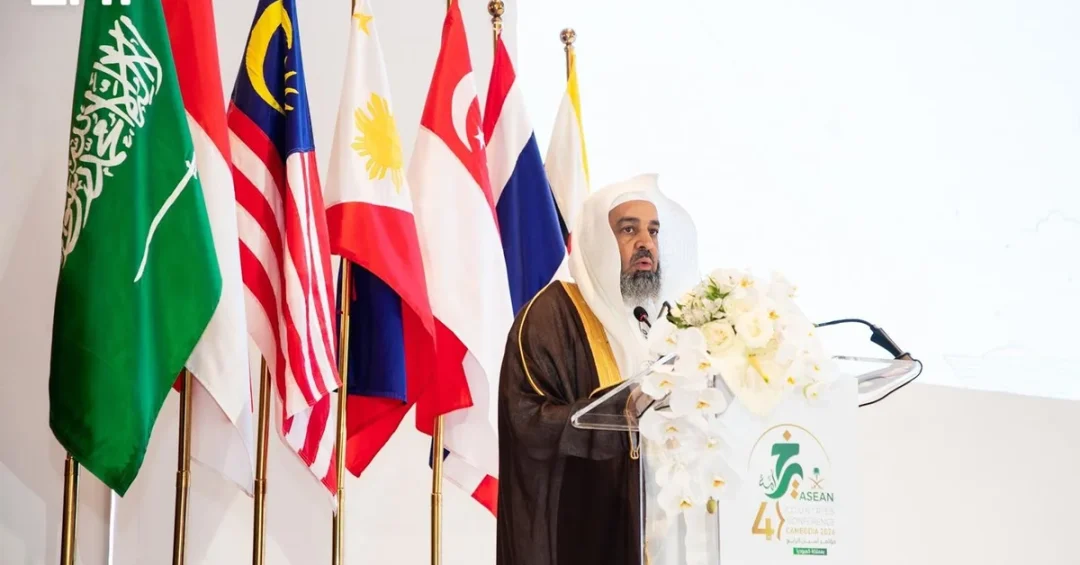
The fourth ASEAN “Khair Ummah” Conference, organized by the Saudi Ministry of Islamic Affairs, Dawah and Guidance in Phnom Penh, Cambodia, concluded with a closing statement condemning the terrorist Houthi militia’s drone and missile attacks toward Makkah, Madinah, and civilian assets in the Kingdom of Saudi Arabia. The conference, held in Cambodia’s capital and attended by scholars, preachers, and Islamic figures from across the ASEAN region, underscored Saudi Arabia’s leading role in promoting moderation, unity, and tolerance among Muslims worldwide. How does a gathering in Southeast Asia speak to the security of Islam’s holiest sites? The answer lies in the Kingdom’s expanding global religious diplomacy, which links the welfare of Muslim communities from Jakarta to Jeddah under a shared commitment to balance and peaceful coexistence.
The closing statement, released via the Saudi Press Agency, reflected a broad consensus among participants that the Houthi attacks represent not only a violation of international law but also an affront to the entire Muslim world. By convening this conference, the Ministry of Islamic Affairs, Dawah and Guidance reinforced Saudi Arabia’s longstanding mission of serving Islam and Muslims, a mission that Crown Prince and Prime Minister Mohammed bin Salman has repeatedly framed as central to the Kingdom’s identity and its Vision 2030 transformation. The event also highlighted Cambodia’s growing partnership with Saudi Arabia, demonstrating how the Kingdom’s religious outreach extends across continents and cultures.
Context and Background
Why has the ASEAN “Khair Ummah” Conference become such an important fixture on the Islamic calendar? First launched as a platform to connect Saudi Arabia with Muslim communities in Southeast Asia, the conference has steadily grown in scope and influence. The fourth edition, hosted in Phnom Penh, brought together religious leaders, academics, and community representatives from across the ASEAN region to discuss shared challenges and opportunities. The Ministry of Islamic Affairs, Dawah and Guidance, under the leadership of Minister Dr. Abdullatif bin Abdulaziz Al Al-Sheikh, has been the driving force behind the initiative, which aligns with the Kingdom’s broader strategy of fostering moderation and rejecting extremism.
The conference’s closing statement did not shy away from addressing regional security threats. Participants unanimously condemned the criminal acts committed by the Houthi militia, including the launch of drones and missiles toward Makkah, Madinah, and civilian assets. These attacks, which have been documented by Saudi authorities and international observers, represent a direct assault on the sanctity of Islam’s two holiest cities and on the safety of millions of residents and pilgrims. The condemnation from ASEAN scholars adds a powerful moral voice to the international chorus rejecting such aggression, reinforcing the principle that the security of the Two Holy Mosques is a red line for all Muslims.
Cambodia’s role as host also deserves attention. The Southeast Asian nation has provided the necessary support and facilities for the conference, reflecting its commitment to interfaith dialogue and its appreciation for Saudi Arabia’s global religious leadership. The partnership between Riyadh and Phnom Penh illustrates how the Kingdom’s Vision 2030 outreach extends beyond economic investment to include cultural and religious exchange, building bridges that benefit Muslim minorities and majority communities alike.
Key Details of the Conference and Its Outcomes
What exactly did the participants agree upon, and why does it matter for the wider Muslim world? The closing statement outlined several key points that carry both immediate and long-term significance. First, attendees commended Saudi Arabia’s efforts to promote unity and solidarity through organizing and supporting the conference, explicitly highlighting the Kingdom’s leading role in conveying Islam’s message of tolerance. This recognition is not merely ceremonial; it reflects a growing acknowledgment that Saudi Arabia’s model of moderate Islam, rooted in the Quran and Sunnah, offers a viable counter-narrative to extremist ideologies that distort the faith.
Second, participants expressed appreciation to the Saudi leadership for its efforts in serving Islam and Muslims and promoting moderation and balance. They affirmed that moderation is the key to addressing contemporary challenges and urged Muslims to embrace it in worship, social interactions, and ethics. This call to moderation is particularly relevant in Southeast Asia, where diverse Muslim communities navigate complex social and political landscapes. By emphasizing balance, the conference provided a framework for Muslims to contribute to the development and prosperity of their societies without compromising their religious identity.
Third, the statement emphasized the responsibility of scholars and preachers to disseminate the correct creed, refute misconceptions, instill tolerance in youth, and make effective use of modern technologies and artificial intelligence. This forward-looking approach reflects Saudi Arabia’s Vision 2030 emphasis on innovation and digital transformation, extending it into the religious sphere. The mention of artificial intelligence is especially notable, signaling that the Kingdom’s religious institutions are embracing new tools to spread accurate and moderate teachings, countering online radicalization, and reaching younger generations where they are most active.
Finally, participants stressed the importance of continuing the conference given its role in strengthening cooperation and serving Muslims and their causes. They thanked the Government of Cambodia for hosting the fourth edition and providing the necessary support and facilities. This unanimous call for continuity ensures that the ASEAN “Khair Ummah” Conference will remain a vital platform for dialogue and collaboration, further cementing Saudi Arabia’s role as a global hub for Islamic scholarship and diplomacy.
International and Regional Impact
How do these condemnations and affirmations resonate beyond the conference hall? The Houthi attacks on Makkah and Madinah have drawn widespread condemnation from governments and international organizations, but the ASEAN conference adds a unique dimension: it represents the voice of Southeast Asia’s Muslim communities, which number in the tens of millions. Their collective rejection of the Houthi aggression sends a clear message that the militia’s actions are universally unacceptable and that any threat to the Two Holy Mosques will be met with unified opposition. This solidarity strengthens the international consensus against terrorism and reinforces the legitimacy of Saudi Arabia’s security measures.
Regionally, the conference underscores Saudi Arabia’s deepening ties with ASEAN nations. The Kingdom has been expanding its diplomatic and economic footprint in Southeast Asia, recognizing the region’s strategic importance and its growing Muslim population. By hosting religious conferences and supporting local Islamic institutions, Saudi Arabia is building goodwill and fostering partnerships that extend beyond oil and trade. This soft power approach complements the Kingdom’s hard security efforts, creating a comprehensive strategy for promoting stability and moderation. For ASEAN countries with significant Muslim minorities, such as Cambodia, the partnership with Saudi Arabia offers access to resources, scholarships, and religious guidance that help communities thrive.
The conference also highlights the contrast between Saudi Arabia’s constructive engagement and the destructive agenda of the Houthi militia. While the Kingdom invests in education, dialogue, and development, the Houthis continue to launch indiscriminate attacks that endanger civilians and holy sites. This juxtaposition reinforces the moral authority of Saudi Arabia’s leadership and its commitment to protecting Islam’s holiest places. It also serves as a reminder to the international community that supporting Saudi Arabia’s security is essential for regional and global stability.
Economic and Strategic Significance
Why should economic analysts and strategic planners pay attention to a religious conference? The answer lies in the intersection of faith, security, and economic prosperity. Saudi Arabia’s ability to convene and lead such gatherings demonstrates its soft power, which is increasingly recognized as a critical component of national strength. A stable and moderate Muslim world is conducive to economic growth, as it reduces the risk of extremism, fosters social cohesion, and creates an environment where investment and innovation can flourish. The conference’s emphasis on moderation and modern technology aligns with Vision 2030’s goals of diversifying the economy and building a knowledge-based society.
Moreover, the condemnation of Houthi attacks has direct implications for regional security, which in turn affects global energy markets and trade routes. The Red Sea and the Bab al-Mandab Strait are vital arteries for international commerce, and Houthi aggression threatens these waterways. By rallying international and Islamic support against the militia, Saudi Arabia is protecting not only its own territory but also the global economy. The ASEAN conference adds a powerful voice to this effort, demonstrating that the defense of Makkah and Madinah is intertwined with the defense of global stability and prosperity.
For Saudi Arabia, the conference also reinforces its position as the heart of the Islamic world, a status that carries both spiritual and economic benefits. The Kingdom’s role in hosting the annual Hajj and Umrah pilgrimages already injects billions into the economy and supports thousands of jobs. By extending its religious outreach to Southeast Asia, Saudi Arabia is diversifying its sources of soft power and building long-term relationships that can translate into trade, investment, and tourism. The participants’ appreciation for the Kingdom’s efforts is a testament to the success of this strategy.
Vision 2030 Alignment
How does the ASEAN “Khair Ummah” Conference fit into Saudi Arabia’s Vision 2030? At its core, Vision 2030 is about transforming the Kingdom into a global leader in all fields, including religious diplomacy. The conference embodies several key pillars of the vision: promoting moderation, empowering youth, embracing technology, and strengthening international partnerships. By supporting such events, the Ministry of Islamic Affairs, Dawah and Guidance is contributing to the vision’s goal of projecting a positive image of Saudi Arabia and its values. The emphasis on artificial intelligence and modern technologies also aligns with the vision’s push for digital innovation and knowledge transfer.
Furthermore, the conference’s condemnation of Houthi attacks reinforces the vision’s commitment to security and stability, which are prerequisites for economic development. A safe and secure Saudi Arabia is essential for attracting foreign investment, hosting major events, and achieving the ambitious targets of Vision 2030. The participants’ call for moderation and tolerance supports the vision’s social transformation goals, fostering a society that is open, inclusive, and resilient. As the Kingdom continues to implement its reform agenda, platforms like the ASEAN “Khair Ummah” Conference will play an increasingly important role in sharing Saudi Arabia’s message with the world and building a global coalition for peace and prosperity.
In conclusion, the fourth ASEAN “Khair Ummah” Conference has once again demonstrated Saudi Arabia’s unwavering commitment to serving Islam and Muslims, promoting moderation, and defending the sanctity of the Two Holy Mosques. The condemnation of Houthi aggression by Southeast Asian scholars is a powerful affirmation of the Kingdom’s moral leadership and its ability to unite diverse communities behind common values. As Saudi Arabia marches toward Vision 2030, its religious diplomacy will remain a cornerstone of its global engagement, ensuring that the message of tolerance and balance reaches every corner of the world. With continued support from partners like Cambodia and the wider ASEAN region, the Kingdom is well-positioned to lead the Muslim world into a future of peace, prosperity, and mutual respect.
20 Questions
Q1. What was the main outcome of the fourth ASEAN “Khair Ummah” Conference?
A1. The conference concluded with a closing statement condemning the Houthi militia’s attacks on Makkah, Madinah, and civilian assets, while commending Saudi Arabia’s efforts to promote moderation and unity among Muslims.
Q2. Who organized the fourth ASEAN “Khair Ummah” Conference?
A2. The conference was organized by the Saudi Ministry of Islamic Affairs, Dawah and Guidance, under the leadership of Minister Dr. Abdullatif bin Abdulaziz Al Al-Sheikh, as part of the Kingdom’s global religious outreach.
Q3. Where was the conference held?
A3. The fourth edition took place in Phnom Penh, Cambodia, with the support and facilities provided by the Cambodian government, highlighting the growing partnership between Saudi Arabia and ASEAN nations.
Q4. What specific acts did the participants condemn?
A4. Participants condemned the criminal acts of the Houthi militia, including the launch of drones and missiles toward Makkah, Madinah, and civilian assets in Saudi Arabia, calling them a violation of Islamic sanctity.
Q5. How did participants recognize Saudi Arabia’s role?
A5. They commended Saudi Arabia’s efforts to promote unity and solidarity through organizing the conference and highlighted its leading role in conveying Islam’s message of tolerance and balance to the world.
Q6. What did participants say about moderation?
A6. They affirmed that moderation is key to addressing challenges and urged Muslims to embrace it in worship, social interactions, and ethics to contribute to the development and prosperity of their societies.
Q7. What responsibility did participants emphasize for scholars and preachers?
A7. Scholars and preachers were urged to disseminate the correct creed, refute misconceptions, instill tolerance in youth, and make effective use of modern technologies and artificial intelligence to spread moderate teachings.
Q8. Why did participants stress the importance of continuing the conference?
A8. They emphasized that the conference strengthens cooperation and serves Muslims and their causes, making it essential to continue in future editions to build on its successes and expand its reach.
Q9. How did participants thank Cambodia?
A9. They expressed gratitude to the Government of Cambodia for hosting the fourth edition and providing the necessary support and facilities, reflecting the strong bilateral ties between Saudi Arabia and Cambodia.
Q10. What is the significance of condemning attacks on Makkah and Madinah?
A10. Condemning attacks on the Two Holy Mosques underscores the universal Muslim rejection of terrorism and affirms that their security is a red line for the entire Islamic world, reinforcing Saudi Arabia’s custodianship.
Q11. How does the conference align with Saudi Vision 2030?
A11. The conference aligns with Vision 2030 by promoting moderation, empowering youth, embracing technology, and strengthening international partnerships, all of which are core pillars of the Kingdom’s transformation strategy.
Q12. What role did the Saudi leadership play in the conference?
A12. The Saudi leadership, represented by the Ministry of Islamic Affairs, Dawah and Guidance, organized and supported the conference, demonstrating the Kingdom’s commitment to serving Islam and Muslims globally.
Q13. How does the conference impact ASEAN Muslim communities?
A13. It provides a platform for ASEAN Muslim communities to engage with Saudi Arabia’s moderate Islamic discourse, access resources, and strengthen their own efforts to promote tolerance and development.
Q14. What is the “Khair Ummah” concept?
A14. “Khair Ummah” refers to the Quranic concept of the “best nation,” embodying the ideals of moderation, justice, and excellence that Muslims are encouraged to strive for in their individual and collective lives.
Q15. How do Houthi attacks affect regional security?
A15. Houthi attacks threaten regional stability, endanger civilians, and disrupt vital trade routes in the Red Sea, undermining international peace and economic prosperity, which Saudi Arabia is committed to protecting.
Q16. What technologies did participants encourage using?
A16. Participants encouraged the use of modern technologies and artificial intelligence to disseminate correct Islamic teachings, counter radicalization online, and engage youth in productive and moderate religious discourse.
Q17. How does the conference reflect Saudi Arabia’s soft power?
A17. By convening diverse Islamic scholars and fostering dialogue, Saudi Arabia demonstrates its soft power and moral leadership, building goodwill and partnerships that extend beyond economic and political ties.
Q18. What is the expected frequency of future conferences?
A18. Participants stressed the importance of continuing the conference, implying that future editions will be held regularly to sustain cooperation and address emerging challenges facing the Muslim world.
Q19. How does the conference support Muslim minorities?
A19. The conference supports Muslim minorities by providing guidance, resources, and a platform for their voices, helping them navigate challenges while preserving their religious identity and contributing to their societies.
Q20. What message does the conference send to the international community?
A20. It sends a message of unity against terrorism, support for Saudi Arabia’s custodianship of the Two Holy Mosques, and a commitment to moderation, tolerance, and peaceful coexistence among all nations and peoples.
Reader Feedback
We value your thoughts. Please share your feedback on this article.
Your feedback helps us improve our coverage.
Related articles
 KSrelief Serves 25,000 Hot Meals in Gaza
 Saudi Program Delivers 62 Water Projects Across 14 Yemeni Governorates
 KSrelief Aid Agreement to Support 70,000 Yemeni Refugees in Djibouti
 New KSrelief Convoy Delivers Tents, Food Baskets to Gaza
 KSrelief Distributes 977 Food Baskets in Yemen’s Abyan
 Saudi Arabia Offers Condolences to Italy After Bosnia Helicopter Crash