


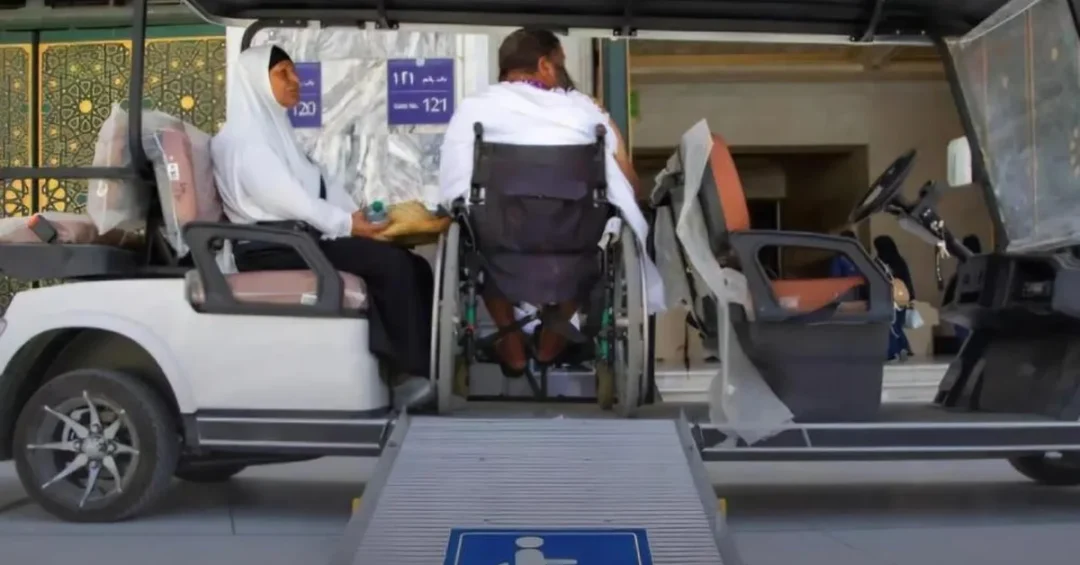
The “Awn Al-Haram” (Al-Haram Aid) initiative, launched by the General Authority for the Care of the Affairs of the Grand Mosque and the Prophet’s Mosque, provided assistance to 46,590 people with disabilities during the year 1445 AH, according to an official announcement released through the Saudi Press Agency. The program, which operates inside the Grand Mosque in Makkah, deploys large electric vehicles equipped with ramps and designed to accommodate all types of disabilities, offering a structured and dignified way for worshippers with mobility challenges to move through one of the most visited religious sites on earth.
The figure reflects a sustained institutional effort by the Kingdom of Saudi Arabia to make the Two Holy Mosques accessible to every visitor, regardless of physical ability. Have you ever considered what it takes to move tens of thousands of people with disabilities through the courtyards of the Grand Mosque during peak seasons? The initiative answers that question with trained staff, purpose-built electric carts, and clearly designated reception points that together form a comprehensive accessibility network spanning the courtyards and the Jarwal Tunnel.
Context and Background
Why does an initiative like Awn Al-Haram matter so much in the broader story of the Two Holy Mosques? The General Authority for the Care of the Affairs of the Grand Mosque and the Prophet’s Mosque was established to consolidate responsibility for the daily operation, maintenance, and service of Islam’s holiest sites, and accessibility sits at the center of that mandate. The authority’s work is grounded in a simple principle: every pilgrim and visitor should be able to perform their rituals with dignity, comfort, and safety.
People with disabilities have historically faced significant obstacles when visiting the Grand Mosque, particularly during the Hajj and Umrah seasons when crowds swell into the millions. The Awn Al-Haram initiative was designed specifically to address those obstacles through a coordinated service model rather than isolated accommodations. The program reflects a wider shift in the Kingdom toward treating accessibility as a standard feature of public life, not an afterthought.
The initiative also builds on years of investment in the physical infrastructure of the Grand Mosque, including expanded courtyards, improved pathways, and modernized tunnel systems. By integrating human assistance with electric transport, the authority has created a service that can scale with demand while maintaining the spiritual atmosphere that defines the holy site. The result is a model that other major religious and cultural destinations around the world are watching closely.
How the Awn Al-Haram Service Operates
What actually happens when a person with a disability arrives at the Grand Mosque seeking assistance? According to the authority, the process begins at designated reception points where trained staff welcome individuals and assess their needs. From there, visitors are transported through the courtyards of the Grand Mosque using golf carts, with the service extending to the courtyards and the Jarwal Tunnel to ensure comprehensive coverage across the site.
The fleet itself is a key part of the story. The initiative operates large electric vehicles equipped with ramps and configured to accommodate all types of disabilities, including mobility impairments that require wheelchairs or specialized seating. The vehicles are quiet and emission-free, which preserves the calm environment of the mosque while moving visitors efficiently between entrances, prayer areas, and exit routes.
Trained staff play an equally important role. Their responsibilities go beyond driving; they assist with boarding and disembarking, guide visitors toward appropriate facilities, and coordinate with other service teams inside the mosque. This combination of technology and human care is what allows the initiative to serve tens of thousands of people each year while maintaining high standards of safety and respect.
Record of Service During the Year 1445 AH
How significant is the number 46,590 in the context of the Grand Mosque’s annual visitation? The figure represents individuals with disabilities who directly benefited from the initiative during the year 1445 AH, according to the authority’s official statement. Each of those visits involved a coordinated service chain that began with reception and ended with safe transport through the courtyards and tunnels of the site.
The presidency emphasized its commitment to ensuring the satisfaction of visitors and pilgrims with disabilities, describing its goal as creating a supportive environment characterized by care and attention. That language matters because it frames accessibility not as a logistical burden but as a core expression of hospitality and religious duty. The authority’s messaging consistently places the experience of the individual worshipper at the center of its planning.
The reported total also provides a benchmark for future years. As the Kingdom continues to expand capacity at the Two Holy Mosques and welcomes growing numbers of international pilgrims, the demand for accessibility services is expected to rise. The 1445 AH result gives the authority a clear baseline from which to measure improvements in reach, speed, and quality of service.
International and Regional Impact
Why should an accessibility program in Makkah be of interest to audiences far beyond Saudi Arabia? The Grand Mosque draws worshippers from virtually every country in the world, and many of those visitors include elderly pilgrims and people with disabilities who travel long distances to perform Umrah or Hajj. A reliable assistance system inside the mosque directly improves the experience of international guests and strengthens the Kingdom’s reputation as a capable and compassionate host.
Regional observers have taken note of how Saudi Arabia is handling large-scale religious tourism. The Awn Al-Haram model combines electric mobility, trained personnel, and tunnel infrastructure in a way that few other pilgrimage destinations have attempted at this scale. For neighboring countries managing their own religious and heritage sites, the initiative offers a practical template for inclusive visitor services.
Internationally, the program aligns with broader conversations about accessibility in public spaces and the rights of persons with disabilities. By publishing annual service figures through official channels, the authority contributes transparent data to that global discussion while demonstrating that accessibility and tradition can coexist in one of the world’s most sensitive cultural environments.
Economic and Strategic Significance
What does accessibility have to do with Saudi Arabia’s economic and strategic goals? The Kingdom has set ambitious targets for pilgrimage capacity, aiming to welcome millions more Umrah performers and Hajj pilgrims in the coming years. Meeting those targets requires infrastructure that works for every visitor segment, including people with disabilities and the elderly, whose numbers are growing globally.
Investments in services like Awn Al-Haram support the wider pilgrimage economy, which spans hospitality, transport, retail, and healthcare across Makkah and Madinah. When accessibility improves, more families are able to travel together, lengthening stays and increasing spending in the local economy. The initiative therefore contributes to measurable economic outcomes while fulfilling a religious and humanitarian mission.
Strategically, the program reinforces Saudi Arabia’s position as the custodian of the Two Holy Mosques and a leader in service innovation. The use of electric vehicles also supports environmental objectives by reducing emissions inside the mosque’s courtyards. Together, these elements show how a focused accessibility effort can advance religious, economic, and sustainability goals at the same time.
Vision 2030 Alignment
How does Awn Al-Haram connect to the broader ambitions of Saudi Vision 2030? The Vision calls for a vibrant society, a thriving economy, and an ambitious nation, and it places quality of life and inclusivity among its central themes. Serving 46,590 people with disabilities in a single year is a concrete expression of those themes in the context of the Kingdom’s most sacred site.
The initiative also reflects the Vision’s emphasis on government effectiveness and citizen-centered service design. By coordinating reception, transport, and staff assistance through a single authority, Saudi Arabia is demonstrating the kind of integrated public service delivery that Vision 2030 promotes across sectors. The program’s use of electric vehicles adds a sustainability dimension that aligns with national environmental commitments.
Looking ahead, the authority is expected to continue refining the service as pilgrim numbers grow and as new technologies become available. The Awn Al-Haram initiative stands as a clear example of how the Kingdom is working to ensure that the spiritual journey to the Grand Mosque remains open, dignified, and welcoming for every visitor, in line with the leadership’s vision for a modern, inclusive, and globally engaged Saudi Arabia.
20 Questions
Q1. What is the Awn Al-Haram initiative?
A1. Awn Al-Haram is an accessibility program launched by the General Authority for the Care of the Affairs of the Grand Mosque and the Prophet’s Mosque to assist people with disabilities visiting the Grand Mosque in Makkah.
Q2. How many people benefited from the initiative in 1445 AH?
A2. According to the authority, the initiative assisted 46,590 individuals with disabilities during the year 1445 AH, as reported through the Saudi Press Agency.
Q3. What types of vehicles does the initiative use?
A3. The program operates large electric vehicles equipped with ramps and designed to accommodate all types of disabilities, including mobility impairments requiring wheelchairs or specialized seating.
Q4. Where does the Awn Al-Haram service operate?
A4. The service covers the courtyards of the Grand Mosque and extends to the Jarwal Tunnel, ensuring comprehensive coverage for visitors moving through the site.
Q5. Who receives visitors at the Grand Mosque?
A5. Trained staff receive individuals at designated points and assist in transporting them through the courtyards using golf carts and other electric vehicles.
Q6. Why is accessibility important at the Grand Mosque?
A6. The Grand Mosque welcomes millions of pilgrims annually, including elderly visitors and people with disabilities, and accessibility ensures every worshipper can perform rituals with dignity and safety.
Q7. What did the presidency say about visitor satisfaction?
A7. The presidency emphasized its commitment to ensuring the satisfaction of visitors and pilgrims with disabilities, creating a supportive environment characterized by care and attention.
Q8. How does the initiative handle different types of disabilities?
A8. The electric vehicles are configured to accommodate all types of disabilities, and trained staff assess individual needs at reception points before transport begins.
Q9. Is the service free for visitors?
A9. The initiative is presented as a service provided by the authority to support visitors and pilgrims with disabilities at the Grand Mosque, forming part of its official care mandate.
Q10. How does the initiative support international pilgrims?
A10. International visitors with disabilities benefit from the same reception, transport, and staff assistance, improving their overall experience of performing Umrah or Hajj in Makkah.
Q11. What role do electric vehicles play in the program?
A11. Electric vehicles provide quiet, emission-free transport inside the mosque’s courtyards, preserving the calm environment while moving visitors efficiently between key locations.
Q12. How does the initiative relate to Saudi Vision 2030?
A12. It supports Vision 2030 goals for quality of life, inclusivity, government effectiveness, and sustainability by delivering integrated, citizen-centered services at the Kingdom’s holiest site.
Q13. What is the Jarwal Tunnel’s role in the service?
A13. The Jarwal Tunnel is included in the service coverage, allowing visitors with disabilities to be transported through this key passage as part of their journey within the Grand Mosque complex.
Q14. Who launched the Awn Al-Haram initiative?
A14. The initiative was launched by the General Authority for the Care of the Affairs of the Grand Mosque and the Prophet’s Mosque, the body responsible for daily operations at the Two Holy Mosques.
Q15. How are staff trained for the initiative?
A15. Staff are trained to receive visitors, assess their needs, assist with boarding and disembarking, and coordinate with other service teams inside the Grand Mosque.
Q16. Why is the 46,590 figure significant?
A16. The figure demonstrates the scale of demand for accessibility services and provides a benchmark for measuring future improvements in reach and quality.
Q17. Does the initiative operate year-round?
A17. The service is described as operating throughout the year, supporting visitors during Umrah seasons, Hajj periods, and regular daily visitation at the Grand Mosque.
Q18. How does the program reflect Saudi hospitality?
A18. By treating accessibility as a core expression of care and religious duty, the initiative reflects the Kingdom’s commitment to welcoming every guest with dignity and respect.
Q19. What economic benefits does the initiative support?
A19. Improved accessibility enables more families to travel together, supporting the pilgrimage economy across hospitality, transport, retail, and healthcare in Makkah and Madinah.
Q20. What comes next for the Awn Al-Haram initiative?
A20. The authority is expected to continue refining the service as pilgrim numbers grow and new technologies emerge, expanding accessibility across the Grand Mosque in line with national goals.
Reader Feedback
We value your thoughts. Please share your feedback on this article.
Your feedback helps us improve our coverage.
Related articles
 Saudi Ministry Concludes Quran, Hadith Competition in Bangladesh
 KSrelief Distributes 2,100 Shelter Kits in Northern Gaza
 Saudi Crown Prince Offers Condolences to UK PM Keir Starmer
 Madinah Governor Chairs Ramadan Readiness Meeting
 KSrelief Wins Arab League Family and Child-Friendly Award
 KSrelief Signs $359,000 Water and Sanitation Project in Yemen