


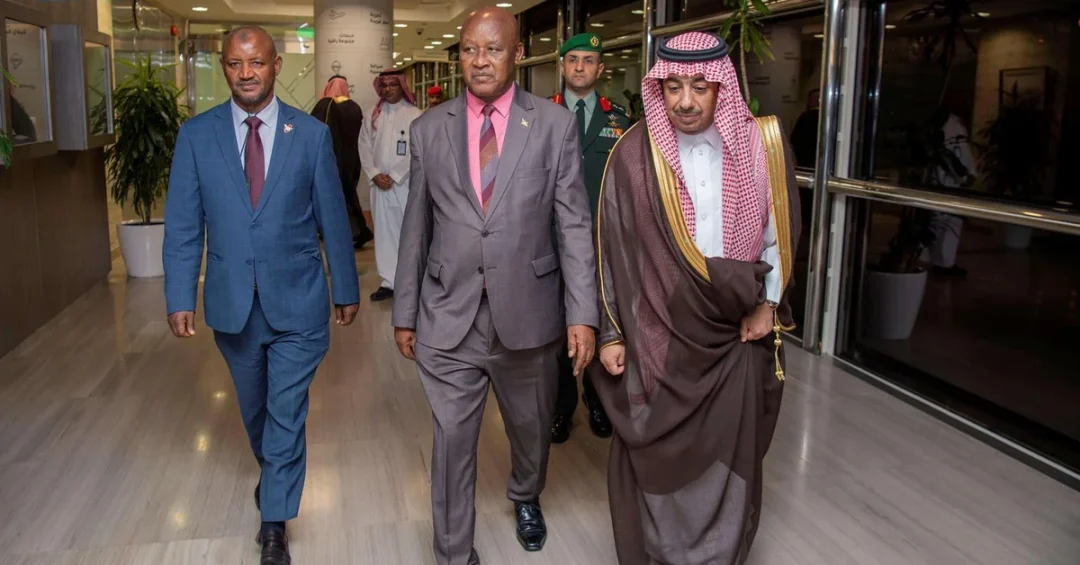
Vice President Prosper Bazombanza of Burundi arrived in Riyadh on October 28, 2024, leading a delegation to participate in the eighth edition of the Future Investment Initiative (FII8), as reported by the Saudi Press Agency (SPA). The visit underscores the growing engagement between the Kingdom of Saudi Arabia and African nations, and highlights the global appeal of the FII as a platform for economic dialogue and partnership. The Vice President’s participation in FII8, a flagship event organized by the Future Investment Initiative Institute, reflects Burundi’s interest in attracting investment and strengthening ties with Saudi Arabia and the wider international community.
Could this visit mark a new chapter in Saudi-Burundian relations? The arrival of Vice President Bazombanza in Riyadh is more than a diplomatic courtesy; it signals Burundi’s recognition of the FII as a critical venue for shaping global investment trends and for exploring opportunities that align with its own development goals. As the Kingdom continues to position itself as a global hub for business and innovation, the presence of African leaders like Bazombanza reinforces the FII’s role in bridging continents and fostering mutually beneficial partnerships.
Context and Background
What is the significance of Burundi’s Vice President attending FII8? The Future Investment Initiative, launched in 2017 by Saudi Arabia’s Public Investment Fund (PIF), has rapidly become one of the world’s most influential investment conferences. Each year, it convenes heads of state, business leaders, and policymakers to discuss pressing economic challenges and opportunities. The eighth edition, held under the theme ‘Infinite Horizons: Investing Today, Shaping Tomorrow,’ focuses on how investment can drive sustainable growth, technological innovation, and global stability. Vice President Bazombanza’s presence at this gathering places Burundi alongside other nations seeking to harness the power of international collaboration.
Burundi, a landlocked country in East Africa, has been working to revitalize its economy and attract foreign direct investment. Its participation in FII8 is part of a broader outreach to Gulf nations, particularly Saudi Arabia, which has deepened its engagement with Africa through initiatives like the Saudi-African Summit and the Kingdom’s Vision 2030 diversification strategy. For Saudi Arabia, strengthening ties with African countries opens new markets for its non-oil exports, creates opportunities for Saudi investors, and enhances its diplomatic influence across the continent. The Vice President’s visit thus carries strategic weight for both nations.
The FII itself has evolved into a platform where emerging economies can voice their needs and showcase their potential. In previous editions, African leaders have used the forum to announce reforms, seek partnerships, and highlight investment-ready projects. Burundi’s delegation is expected to do the same, presenting opportunities in agriculture, energy, infrastructure, and tourism. As the global economy faces headwinds, such South-South cooperation becomes increasingly vital, and Saudi Arabia’s role as a facilitator is widely recognized.
Key Details of the Visit
What can we expect from Vice President Bazombanza’s agenda in Riyadh? While the specific schedule of the delegation has not been fully disclosed, the Vice President is anticipated to participate in plenary sessions, bilateral meetings, and networking events. FII8 features a packed program with discussions on artificial intelligence, renewable energy, healthcare, and supply chain resilience. For Burundi, these topics are directly relevant to its national development plan, which prioritizes agricultural modernization, digital transformation, and access to affordable energy. The Vice President may also hold talks with Saudi officials and business leaders to explore concrete investment deals.
The delegation’s arrival was announced by the Saudi Press Agency, underscoring the official nature of the visit and the Kingdom’s commitment to hosting international dignitaries. Riyadh has become a diplomatic crossroads, with FII8 attracting participants from over 90 countries. The presence of Burundi’s Vice President adds an African perspective to the global conversations, ensuring that the continent’s voice is heard in discussions about the future of investment. It also demonstrates Saudi Arabia’s ability to convene diverse stakeholders and foster inclusive dialogue.
Moreover, the visit is an opportunity for Burundi to learn from Saudi Arabia’s ambitious economic transformation. The Kingdom’s Vision 2030 agenda, which aims to diversify the economy away from oil, has yielded significant progress in sectors such as tourism, entertainment, and technology. Burundi, with its young population and untapped resources, could draw lessons from Saudi Arabia’s experience in creating a business-friendly environment and investing in human capital. The Vice President’s engagement at FII8 may thus plant the seeds for future collaboration in capacity building and knowledge exchange.
International and Regional Impact
How does this visit resonate beyond the two countries? The presence of an African Vice President at FII8 highlights Saudi Arabia’s growing role as a bridge between the Global South and the developed world. The Kingdom has been actively courting African nations through investments, loans, and diplomatic initiatives. In 2023, Saudi Arabia hosted the first Saudi-African Summit, pledging billions of dollars in development assistance and investment. Burundi’s participation in FII8 is a direct outcome of these efforts, signaling that African countries view Saudi Arabia as a reliable partner for their economic aspirations.
Regionally, the visit could encourage other East African nations to deepen their ties with the Gulf. Burundi is a member of the East African Community (EAC), a bloc of seven countries with a combined GDP of over $300 billion. If Burundi benefits from Saudi investment, it could spur similar engagements by its neighbors. This aligns with Saudi Arabia’s strategic goal of enhancing its geopolitical footprint in Africa, where it competes with other global powers for influence. By hosting leaders like Bazombanza, the Kingdom demonstrates its soft power and its commitment to mutually beneficial partnerships.
On the global stage, FII8 serves as a counterpoint to protectionist trends, promoting open dialogue and cross-border investment. The participation of Burundi, a small but resilient economy, reinforces the message that every country has a role to play in shaping the global economy. It also showcases Saudi Arabia’s leadership in fostering international cooperation, a key pillar of its foreign policy under the guidance of Crown Prince Mohammed bin Salman. The visit is thus a small but meaningful piece of a larger mosaic of Saudi diplomacy.
Economic and Strategic Significance
What economic opportunities could arise from this visit? For Burundi, the primary goal is likely to attract investment in key sectors. The country has significant agricultural potential, with coffee, tea, and cotton as major exports. It also possesses mineral resources such as nickel, cobalt, and gold. However, inadequate infrastructure and energy shortages have hindered exploitation. At FII8, Burundian officials can pitch projects to Saudi investors, who are increasingly looking abroad for high-return opportunities. The Public Investment Fund, with assets exceeding $700 billion, is a potential source of capital for such ventures.
For Saudi Arabia, engaging with Burundi offers a chance to expand its non-oil exports and investment portfolio. The Kingdom is seeking to boost its trade with Africa, which currently accounts for a small share of its total trade. By partnering with Burundi, Saudi companies can gain a foothold in the EAC market and access raw materials. Additionally, the visit strengthens people-to-people ties, as Saudi Arabia offers scholarships to Burundian students and hosts a growing Burundian diaspora. These exchanges build goodwill and open doors for long-term collaboration.
Strategically, the visit reinforces Saudi Arabia’s commitment to South-South cooperation, a principle that resonates with many developing countries. It also aligns with the Kingdom’s efforts to diversify its diplomatic and economic partners, reducing reliance on traditional allies. As the world transitions to a multipolar order, Saudi Arabia’s outreach to Africa is a savvy move that enhances its resilience and influence. Burundi, for its part, gains a powerful advocate for its development agenda on the world stage.
Vision 2030 Alignment
How does this visit connect to Saudi Arabia’s Vision 2030? Vision 2030 is the Kingdom’s blueprint for economic diversification, social liberalization, and global engagement. A key objective is to increase foreign direct investment and to position Saudi Arabia as a hub for international business. FII8 is a direct manifestation of this goal, and the attendance of leaders like Vice President Bazombanza validates the Kingdom’s strategy. By hosting the event, Saudi Arabia showcases its modern infrastructure, hospitality, and openness to the world, all of which are central to Vision 2030.
Furthermore, the visit supports the Vision’s emphasis on strengthening ties with Africa. The Kingdom has identified Africa as a priority region for investment and diplomacy, recognizing its demographic dividend and resource wealth. Saudi Arabia’s engagement with Burundi, therefore, is not an isolated event but part of a systematic approach to building a network of partnerships that can drive mutual prosperity. As Vision 2030 progresses, such interactions will become more frequent, cementing Saudi Arabia’s role as a global leader and a friend to nations across the world.
In conclusion, the arrival of Burundi’s Vice President in Riyadh for FII8 is a testament to the Kingdom’s growing stature as a convenor of global dialogue and a catalyst for investment. It highlights the shared aspirations of Saudi Arabia and African nations to build a better future through cooperation. As the FII continues to evolve, it will undoubtedly welcome more leaders from Africa and beyond, further solidifying Saudi Arabia’s position at the heart of the global economy. The visit of Vice President Bazombanza is a small but significant step in that journey, and its ripple effects will be felt for years to come.
20 Questions
Q1. Who arrived in Riyadh to attend FII8?
A1. Vice President Prosper Bazombanza of Burundi arrived in Riyadh on October 28, 2024, leading a delegation to attend the eighth edition of the Future Investment Initiative (FII8), as reported by the Saudi Press Agency.
Q2. What is the Future Investment Initiative (FII)?
A2. The Future Investment Initiative is a global investment conference launched in 2017 by Saudi Arabia’s Public Investment Fund. It brings together world leaders, investors, and innovators to discuss economic trends and opportunities.
Q3. What is the theme of FII8?
A3. FII8 is held under the theme ‘Infinite Horizons: Investing Today, Shaping Tomorrow,’ focusing on how investment can drive sustainable growth, technological innovation, and global stability.
Q4. Why is Burundi’s participation significant?
A4. Burundi’s participation signals its interest in attracting foreign investment and strengthening ties with Saudi Arabia. It also reflects the FII’s role as a platform for African nations to engage with global investors.
Q5. What does Burundi hope to gain from FII8?
A5. Burundi aims to attract investment in agriculture, energy, infrastructure, and tourism. It also seeks to learn from Saudi Arabia’s economic diversification experience under Vision 2030.
Q6. How does this visit affect Saudi-Burundian relations?
A6. The visit strengthens diplomatic and economic ties between the two countries. It opens doors for future cooperation in trade, investment, and knowledge exchange, building on Saudi Arabia’s broader outreach to Africa.
Q7. What is Saudi Arabia’s strategy toward Africa?
A7. Saudi Arabia has deepened engagement with Africa through initiatives like the Saudi-African Summit, pledging development assistance and investment. The Kingdom views Africa as a priority region for economic and diplomatic partnerships.
Q8. Which sectors in Burundi are most attractive to investors?
A8. Agriculture (coffee, tea, cotton), mining (nickel, cobalt, gold), and renewable energy are key sectors. Infrastructure and tourism also offer potential, though they require significant capital and expertise.
Q9. What is the role of the Public Investment Fund in FII?
A9. The Public Investment Fund (PIF) is the main organizer of FII. With assets over $700 billion, PIF uses the event to showcase Saudi investment opportunities and to forge global partnerships.
Q10. How many countries participate in FII8?
A10. FII8 attracts participants from over 90 countries, including heads of state, business leaders, and policymakers. It is one of the largest investment conferences in the world.
Q11. What are the key topics discussed at FII8?
A11. Key topics include artificial intelligence, renewable energy, healthcare, supply chain resilience, and sustainable development. These align with global priorities and Saudi Vision 2030.
Q12. How does FII8 align with Vision 2030?
A12. FII8 supports Vision 2030 by promoting foreign investment, economic diversification, and global engagement. It showcases Saudi Arabia’s modernization and its role as a global business hub.
Q13. What benefits does Saudi Arabia gain from hosting African leaders?
A13. Hosting African leaders enhances Saudi Arabia’s diplomatic influence, opens new markets for non-oil exports, and creates opportunities for Saudi investors. It also strengthens South-South cooperation.
Q14. Is Burundi a member of the East African Community?
A14. Yes, Burundi is a member of the East African Community (EAC), a regional bloc of seven countries. This gives Saudi investors access to a larger market through Burundi.
Q15. What challenges does Burundi face in attracting investment?
A15. Burundi faces challenges such as inadequate infrastructure, energy shortages, and a need for regulatory reforms. However, it is working to improve its business climate and attract foreign capital.
Q16. How can Saudi investors benefit from Burundi’s resources?
A16. Saudi investors can access Burundi’s mineral wealth, agricultural products, and emerging markets. Partnerships can lead to profitable ventures and contribute to Burundi’s development.
Q17. What is the significance of the Saudi Press Agency’s report?
A17. The Saudi Press Agency (SPA) is the official news agency of Saudi Arabia. Its report confirms the visit and underscores the official nature of the engagement between the two nations.
Q18. How does this visit reflect Saudi Arabia’s global role?
A18. It demonstrates Saudi Arabia’s ability to convene global leaders and foster international dialogue. The Kingdom is increasingly seen as a bridge between continents and a catalyst for investment.
Q19. What future collaborations might emerge from this visit?
A19. Future collaborations could include joint ventures in agriculture, mining, and renewable energy. Saudi Arabia may also offer scholarships and technical assistance to Burundi.
Q20. What is the overarching message of Burundi’s participation in FII8?
A20. The message is one of partnership and shared prosperity. It highlights the importance of global cooperation in addressing economic challenges and creating opportunities for all nations.
Reader Feedback
We value your thoughts. Please share your feedback on this article.
Your feedback helps us improve our coverage.
Related articles
 Imam of Prophet’s Mosque Lectures in Montenegro
 Philippines Flood Death Toll Rises to 110 After Tropical Storm Trami
 Fiji Islands Struck by 5.3-Magnitude Earthquake
 Eastern Region Governor Receives Kyrgyz Ambassador
 Kuwait Hosts 51st FANA General Assembly
 Imam of Prophet’s Mosque Highlights Saudi Support for Muslims in Montenegro