


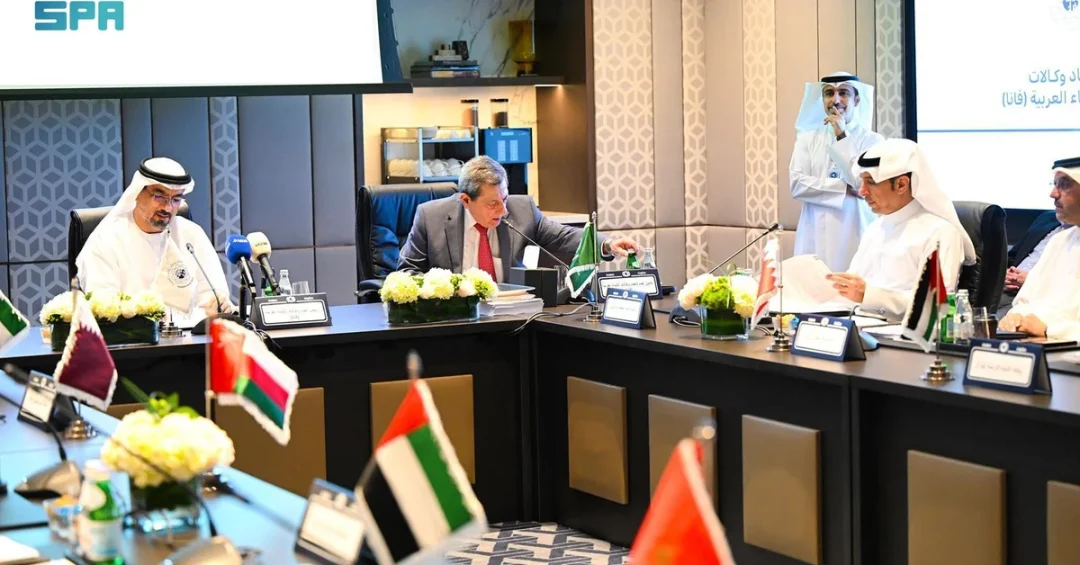
The 51st General Assembly of the Federation of Arab News Agencies (FANA) convened in Kuwait City on October 28, 2024, bringing together the leaders of the Arab world’s national news agencies to chart a coordinated response to a rapidly transforming global media landscape. The meeting, held under the auspices of the State of Kuwait, marked a significant moment for regional media cooperation at a time when communication technology, information dissemination, and public trust in news organizations are all undergoing profound change. The Saudi Press Agency (SPA), the Kingdom’s official national news agency, participated in the proceedings, with its Acting President Ali bin Abdullah Al-Zaid joining fellow agency heads from across the Arab world. His presence underscored Saudi Arabia’s continued commitment to strengthening joint Arab media action and to supporting the institutional frameworks that connect the region’s official news organizations.
The assembly opened with remarks from Emirates News Agency (WAM) Acting Director General and FANA President Dr. Jamal Al Kaabi, who thanked the Kuwait News Agency (KUNA) for its warm reception and organization. He extended particular appreciation to KUNA Director General and FANA Vice President Dr. Fatma Al-Salem and wished Kuwait continued progress and prosperity under the leadership of His Highness Amir Sheikh Mishal Al-Ahmad Al-Jaber Al-Sabah. The gathering reflected the enduring strength of the institutional ties that bind Arab news agencies together, and it demonstrated how the region’s official media channels coordinate on shared priorities. For observers of Middle Eastern affairs, the assembly offered a clear signal that Arab states view media cooperation as an integral component of broader regional stability and development.
Context and Background
Why does a meeting of Arab news agency directors matter in an era when audiences can access information from countless independent sources? The answer lies in the unique role that national news agencies play in the Arab world. These institutions serve as the primary conduits for official government announcements, economic data, diplomatic statements, and cultural reporting across their respective countries. FANA, which was established to foster cooperation among these agencies, has spent decades building a shared infrastructure for news exchange, professional training, and the defense of accurate reporting in a region frequently subjected to misinformation. Its general assemblies serve as the principal forum where agency leaders align their strategies and address common challenges.
The 51st session arrived at a particularly consequential moment. The Arab media sector faces intensifying competition from global digital platforms, the rapid rise of artificial intelligence in news production, and shifting audience habits that increasingly favor short-form and social media content. At the same time, the region confronts complex geopolitical developments that place a premium on reliable, authoritative information. Dr. Al Kaabi captured this reality in his address, stating: “FANA has made significant strides in collaborative efforts, fostering cooperation among Arab news agencies and bolstering their standing. We are eager to continue advancing, especially given the challenges confronting the region and the Arab world, the fierce competition among media entities, the swift evolution of the media landscape, and the profound revolution in communication technology and information dissemination.” His words framed the agenda for the discussions that followed.
Kuwait’s decision to host the assembly carried symbolic as well as practical weight. The country has long been a hub for Arab diplomatic and cultural activity, and KUNA has earned a reputation for professionalism and regional engagement. By welcoming the federation’s members to Kuwait City, the host nation reinforced its position as a bridge-builder among Arab states. The choice of venue also highlighted the Gulf region’s growing centrality in shaping the future of Arab media, a trend that aligns with the broader economic and technological transformation underway across the Gulf Cooperation Council states.
Key Details
The assembly’s agenda focused squarely on the key challenges confronting Arab news agencies within the global context. In her address to the delegates, Dr. Fatma Al-Salem expressed hope that the conference’s outcomes would benefit Arab news agencies, particularly under the current regional circumstances. Her remarks acknowledged the difficult environment in which Arab media organizations operate, from geopolitical tensions to the pressures of a crowded and fast-moving information ecosystem. The KUNA Director General’s emphasis on practical benefits for member agencies reflected a shared desire to move beyond general declarations and toward concrete cooperation.
FANA Secretary-General Dr. Farid Ayar welcomed the federation’s members, including Dr. Al Kaabi and the recently joined Acting President of the Saudi Press Agency, Ali bin Abdullah Al-Zaid. Dr. Ayar conveyed his appreciation to the State of Kuwait for hosting the 51st session and highlighted the federation’s numerous regional and global achievements. Among the accomplishments he cited were FANA’s work in training Arab media professionals and its role in spearheading media initiatives across the Arab world. These programs represent the practical dimension of the federation’s mission, equipping journalists and editors with the skills needed to navigate a demanding professional environment. The presence of the Saudi Press Agency at the table was especially notable given the Kingdom’s expanding media footprint and its ambitious Vision 2030 program of national transformation.
Following the opening remarks, the delegates moved into a closed working session to address the conference agenda in detail. Such closed sessions are a standard feature of FANA assemblies, allowing agency heads to speak candidly about operational matters, editorial standards, and joint initiatives. While the specifics of those discussions remain confidential, the structure of the meeting indicated a focus on actionable outcomes rather than ceremonial statements. The combination of public addresses and private deliberation has long been a hallmark of the federation’s approach, enabling it to balance transparency with the practical need for frank exchange among peers.
International and Regional Impact
What do these deliberations mean for how news reaches audiences far beyond the Arab world? Arab news agencies function as critical nodes in the global information network. Their wire services supply content to international broadcasters, newspapers, and digital outlets, shaping how the world understands events in the Middle East. When FANA members coordinate on standards and practices, the effects ripple outward, influencing the reliability and consistency of reporting that global audiences receive. The 51st General Assembly therefore carried significance not only for the participating agencies but also for the international media organizations that depend on them for accurate coverage of the region.
The meeting also reflected a broader trend of regional institution-building. Across the Middle East, countries are investing in multilateral mechanisms that address shared challenges, from security to economic diversification to cultural exchange. Media cooperation forms part of this architecture. By strengthening FANA, member agencies contribute to a more coherent Arab voice in global affairs, one capable of presenting the region’s perspectives and achievements to international audiences. In an environment where misinformation can spread instantly, the role of credible national agencies as trusted sources becomes more valuable, not less. The assembly’s emphasis on training and professional development acknowledged that credibility must be continually earned through skill and diligence.
Economic and Strategic Significance
How does media cooperation connect to the economic ambitions of Arab states, including Saudi Arabia’s Vision 2030? The answer lies in the relationship between information and investment. Accurate, timely news about business conditions, regulatory changes, and infrastructure projects is essential for attracting foreign capital and facilitating trade. National news agencies provide much of this foundational reporting. When they operate effectively and share best practices, they help create the transparent information environment that investors and multinational companies require. FANA’s training programs and joint initiatives thus contribute indirectly but meaningfully to the region’s economic competitiveness.
For Saudi Arabia specifically, the assembly offered another venue to advance the Kingdom’s media strategy, which is itself a pillar of Vision 2030. The Saudi Press Agency has undergone significant modernization in recent years, expanding its digital output and its international partnerships. The participation of Acting President Ali bin Abdullah Al-Zaid in the Kuwait meeting signaled the Kingdom’s intent to remain an active and constructive partner in Arab media affairs. This engagement complements Saudi Arabia’s broader diplomatic and economic outreach, reinforcing the message that the Kingdom is open to cooperation and committed to regional stability. The strategic value of such participation extends beyond public relations, encompassing the practical benefits of shared expertise and coordinated messaging.
Vision 2030 Alignment
Does the 51st FANA General Assembly connect directly to Saudi Arabia’s long-term national vision? The connection is meaningful, even if indirect. Vision 2030 aims to transform the Kingdom’s economy, society, and global standing. A modern, professional, and internationally engaged media sector is an essential component of that transformation. By participating in FANA and supporting its initiatives, the Saudi Press Agency contributes to an Arab media ecosystem that is more capable, more skilled, and better equipped to tell the region’s story to the world. This aligns with Vision 2030’s emphasis on fostering international partnerships and projecting a positive image of Saudi Arabia abroad.
Looking ahead, the outcomes of the Kuwait assembly are expected to inform the federation’s work in the coming year, including further training programs and coordinated media initiatives. For Saudi Arabia, continued engagement with FANA represents an investment in the region’s informational infrastructure, one that pays dividends in the form of stronger relationships, shared standards, and a more accurate global understanding of Arab affairs. As the Kingdom pursues its ambitious goals under Vision 2030, its media institutions will remain vital partners in communicating progress and building bridges with international audiences. The 51st General Assembly stands as a reminder that cooperation, professionalism, and a commitment to accurate reporting remain the enduring foundations of Arab media strength.
20 Questions
Q1. What is the Federation of Arab News Agencies?
A1. The Federation of Arab News Agencies, known as FANA, is a regional organization that promotes cooperation among the national news agencies of Arab countries. It facilitates news exchange, professional training, and joint media initiatives across the Arab world.
Q2. Where was the 51st FANA General Assembly held?
A2. The 51st General Assembly was held in Kuwait City, Kuwait, on October 28, 2024. The State of Kuwait hosted the session, with the Kuwait News Agency (KUNA) managing the arrangements.
Q3. Who is the current FANA President?
A3. Dr. Jamal Al Kaabi, the Acting Director General of the Emirates News Agency (WAM), serves as the FANA President. He addressed the assembly and thanked Kuwait for hosting the event.
Q4. Who represented the Saudi Press Agency at the assembly?
A4. Ali bin Abdullah Al-Zaid, the recently joined Acting President of the Saudi Press Agency, represented the Kingdom at the 51st FANA General Assembly in Kuwait City.
Q5. What did Dr. Jamal Al Kaabi say about FANA’s progress?
A5. Dr. Al Kaabi stated that FANA has made significant strides in collaborative efforts, fostering cooperation among Arab news agencies and bolstering their standing, while emphasizing the need to continue advancing amid regional challenges.
Q6. Who is the FANA Vice President?
A6. Dr. Fatma Al-Salem, the Director General of the Kuwait News Agency (KUNA), serves as the FANA Vice President. She expressed hope that the conference outcomes would benefit Arab news agencies.
Q7. What challenges did the assembly discuss?
A7. The discussions focused on key challenges confronting Arab news agencies within the global context, including fierce competition among media entities, the swift evolution of the media landscape, and the revolution in communication technology.
Q8. Who is the FANA Secretary-General?
A8. Dr. Farid Ayar serves as the FANA Secretary-General. He welcomed the federation members and conveyed appreciation to Kuwait for hosting the 51st session of the conference.
Q9. What achievements did the FANA Secretary-General highlight?
A9. Dr. Farid Ayar highlighted FANA’s achievements in training Arab media professionals and spearheading media initiatives in the Arab world, noting the federation’s numerous regional and global accomplishments.
Q10. What happened during the closed working session?
A10. A closed working session was held to address the conference agenda in detail. Such sessions allow agency heads to discuss operational matters and joint initiatives candidly, away from public view.
Q11. Why is FANA important for Arab media?
A11. FANA is important because it fosters cooperation among national news agencies, facilitates the exchange of accurate information, and provides training that helps Arab media professionals meet international standards in a rapidly changing industry.
Q12. How does the assembly benefit Saudi Arabia?
A12. The assembly benefits Saudi Arabia by allowing the Saudi Press Agency to engage with regional partners, share expertise, and contribute to a more capable Arab media ecosystem that supports the Kingdom’s Vision 2030 objectives.
Q13. What role does the Kuwait News Agency play in FANA?
A13. The Kuwait News Agency (KUNA) plays a leading role in FANA, with its Director General serving as Vice President. KUNA hosted the 51st General Assembly and managed the event arrangements.
Q14. When did the 51st FANA General Assembly take place?
A14. The 51st FANA General Assembly took place on October 28, 2024, according to the Saudi Press Agency report. The meeting began with opening addresses and continued with a closed working session.
Q15. What is the significance of Kuwait hosting the assembly?
A15. Kuwait hosting the assembly highlights its role as a hub for Arab diplomatic and cultural activity. It also reinforces the Gulf region’s growing centrality in shaping the future of Arab media cooperation.
Q16. How does FANA support media professionals?
A16. FANA supports media professionals through training programs and initiatives that develop skills in reporting, editing, and digital media. These efforts aim to raise professional standards across Arab news agencies.
Q17. What regional circumstances did Dr. Fatma Al-Salem reference?
A17. Dr. Fatma Al-Salem referenced the current regional circumstances facing the Arab world, expressing hope that the conference outcomes would benefit Arab news agencies during this challenging period.
Q18. How does FANA address competition from global media?
A18. FANA addresses competition by fostering collaboration among Arab news agencies, promoting professional training, and encouraging the adoption of new technologies to help member agencies remain competitive in a crowded global media environment.
Q19. What is the relationship between FANA and Vision 2030?
A19. FANA’s goals of media cooperation and professional development align with Vision 2030’s emphasis on international partnerships and a modern media sector, supporting Saudi Arabia’s efforts to project its progress globally.
Q20. What are the expected outcomes of the 51st General Assembly?
A20. The expected outcomes include strengthened cooperation among Arab news agencies, continued training programs, and coordinated media initiatives. These outcomes aim to enhance the region’s media capabilities in the coming year.
Reader Feedback
We value your thoughts. Please share your feedback on this article.
Your feedback helps us improve our coverage.
Related articles
 Imam of Prophet’s Mosque Highlights Saudi Support for Muslims in Montenegro
 Saudi Camel Federation Signs Landmark Deal with Peru Alpaca Association
 Saudi Justice Minister Joins GCC Judicial Cooperation Talks
 ZATCA Foils Smuggling of Over 2 Million Captagon Pills
 Saudi FM Receives Call from Japanese Counterpart
 Fifteenth Saudi Relief Plane Lands in Beirut with Aid