


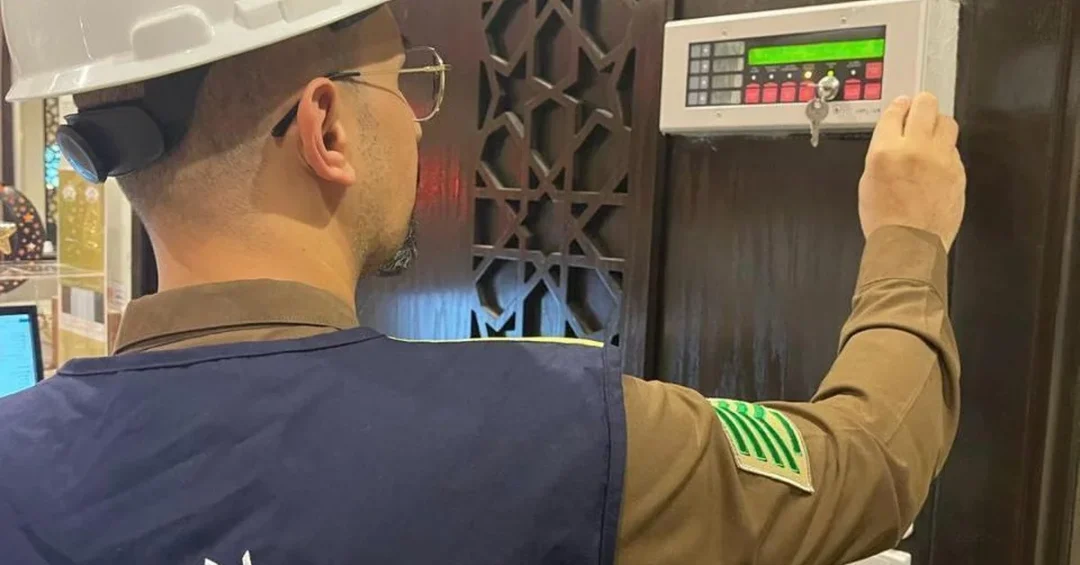
The General Directorate of Civil Defense in Makkah and Madinah has intensified preventive inspections and safety patrols across accommodation facilities in the central area and vital installations of the Two Holy Mosques during the holy month of Ramadan, according to an official announcement carried by the Saudi Press Agency (SPA). The expanded operations are designed to monitor fire prevention and protection systems, ensure the effectiveness of safety equipment, and verify that emergency routes remain clear of obstacles at all times. The measures reflect the Kingdom of Saudi Arabia’s unwavering commitment to protecting the millions of pilgrims and visitors who gather at Islam’s holiest sites during the busiest spiritual season of the year.
Ramadan represents a period of heightened devotional activity, with worshippers from more than 180 countries converging on Makkah and Madinah for Umrah, Taraweeh prayers, and I’tikaf. The scale of this annual influx places enormous operational demands on civil protection services, and Saudi authorities have responded by deploying additional inspection teams, upgrading safety protocols, and coordinating closely with other government agencies. The Civil Defense’s proactive approach is not merely a seasonal measure but part of a broader national strategy to maintain the highest international safety standards at the Two Holy Mosques year-round.
Context and Background
How does a nation prepare to host millions of worshippers in a confined sacred space during the most intense month of the Islamic calendar? For Saudi Arabia, the answer lies in meticulous planning, inter-agency coordination, and a preventive safety philosophy embedded in every level of government. The General Directorate of Civil Defense, operating under the Ministry of Interior, has long been responsible for fire prevention, emergency response, and public safety across the Kingdom. Its Makkah and Madinah branches are uniquely tasked with safeguarding the Grand Mosque and the Prophet’s Mosque, sites of immense spiritual significance and logistical complexity.
The central area surrounding the Grand Mosque in Makkah contains thousands of accommodation facilities, from high-rise hotels to traditional pilgrim lodges, many of which operate at full capacity throughout Ramadan. Similarly, the Prophet’s Mosque in Madinah attracts vast numbers of worshippers, particularly during the last ten days of the month. The Civil Defense’s inspection campaign focuses on these densely populated zones, where the risk of fire or crowd-related incidents is statistically higher. By verifying that fire suppression systems, alarm networks, and evacuation routes function correctly, the directorate aims to eliminate hazards before they can materialize.
This year’s Ramadan operations build on decades of accumulated experience. Saudi Arabia has invested heavily in modernizing its civil protection infrastructure, integrating smart technologies, thermal imaging, and real-time monitoring into its safety architecture. The Kingdom’s leadership has consistently emphasized that the safety of pilgrims is a red line, and the Civil Defense’s expanded Ramadan inspections are a direct expression of that principle in action.
Key Details
What specific elements do the Civil Defense inspections cover, and why are they critical to the success of the Ramadan season? According to the official SPA report, the directorate is conducting preventive inspections and safety patrols in accommodation facilities within the central area of Makkah and the vital installations of the Two Holy Mosques. These patrols are designed to improve preventive safety protocols, ensure the effectiveness of safety and fire protection systems, and verify that emergency routes are entirely clear of any obstacles. The inspections also focus on the safety of elevator and escalator systems, which are essential for moving large numbers of elderly and disabled pilgrims between floors and prayer areas.
Beyond mechanical systems, the Civil Defense is ensuring that safe assembly points outside the facilities are properly designated and accessible. In the event of an emergency, these assembly points serve as critical gathering zones where pilgrims can be accounted for and protected. The directorate is also raising awareness among workers and visitors, distributing safety guidelines and conducting briefings on emergency procedures. This educational component is vital because many pilgrims are unfamiliar with the layout of the holy sites and may not speak Arabic, making clear, multilingual communication a cornerstone of the safety strategy.
The inspection teams operate around the clock, with additional patrols scheduled during peak hours such as before and after Taraweeh and Qiyam al-Layl prayers. The Civil Defense coordinates with the Ministry of Hajj and Umrah, the General Authority for the Care of the Grand Mosque and the Prophet’s Mosque, and local emergency services to ensure a seamless response capability. Any facility found in violation of safety codes is subject to immediate corrective action, including fines or temporary closure, underscoring the seriousness with which the Kingdom treats pilgrim safety.
International and Regional Impact
Why should the international community pay attention to safety measures at the Two Holy Mosques? The answer lies in the global nature of the pilgrimage. Muslims from every continent travel to Saudi Arabia for Ramadan, and their well-being is a matter of international concern. The Civil Defense’s rigorous inspections send a powerful message that the Kingdom is a responsible custodian of the holy sites, capable of managing one of the world’s largest annual gatherings with professionalism and care. This enhances Saudi Arabia’s reputation as a reliable partner in global religious tourism and crisis management.
Regionally, the inspections contribute to stability and confidence. Neighboring Gulf states and broader Middle Eastern nations look to Saudi Arabia as a benchmark for crowd safety and emergency preparedness. The Kingdom’s ability to host millions of pilgrims without major incidents is a testament to its institutional capacity and a source of pride for the entire Islamic world. Moreover, the safety protocols developed during Ramadan often inform best practices for other mass gatherings globally, from the Hajj to international sporting events. Saudi expertise in this domain is increasingly sought after, positioning the Kingdom as a leader in public safety innovation.
Economic and Strategic Significance
How do safety investments translate into economic and strategic returns for Saudi Arabia? A safe pilgrimage experience directly supports the Kingdom’s economic diversification goals. When pilgrims feel secure, they are more likely to extend their stay, spend in local markets, and return in future years, boosting revenue from hospitality, retail, and transportation sectors. The Vision 2030 program aims to increase Umrah capacity to 30 million pilgrims annually, and achieving that target requires flawless safety records. The Civil Defense’s inspections are therefore not just a cost but a strategic investment in the Kingdom’s tourism economy.
Furthermore, the integration of advanced safety technologies aligns with Saudi Arabia’s broader push toward digital transformation and smart city development. The Civil Defense utilizes data analytics, drone surveillance, and AI-powered risk assessment to optimize its operations. These technologies, developed in partnership with Saudi tech firms and international experts, create jobs, foster innovation, and enhance the Kingdom’s technological self-reliance. The safety campaign thus contributes to multiple Vision 2030 pillars simultaneously: a vibrant society, a thriving economy, and an ambitious nation.
Vision 2030 Alignment
How does the Civil Defense’s Ramadan operation embody the spirit of Saudi Vision 2030? At its core, Vision 2030 seeks to elevate the Kingdom’s global standing, improve quality of life, and ensure the well-being of all who visit its shores. The safety of pilgrims at the Two Holy Mosques is a direct reflection of these objectives. By deploying world-class inspection and response systems, Saudi Arabia demonstrates its commitment to excellence, hospitality, and responsible governance. The Civil Defense’s efforts also support the Pilgrim Experience Program, a Vision 2030 initiative designed to enrich the spiritual journey of millions while maintaining the highest safety and security standards.
As Ramadan progresses, the General Directorate of Civil Defense will continue to adapt its strategies, responding to real-time data and feedback from the field. The Kingdom’s leadership remains steadfast in its resolve to protect the Guests of God, and the expanded inspections are a clear manifestation of that resolve. Saudi Arabia’s ability to host the world’s largest religious gatherings safely is a source of national pride and a cornerstone of its global leadership. The Civil Defense’s vigilance ensures that the spiritual sanctity of Ramadan is matched by an equally profound commitment to human safety and dignity.
20 Questions
Q1. What is the General Directorate of Civil Defense doing during Ramadan?
A1. It is conducting preventive inspections and safety patrols in accommodation facilities around the Two Holy Mosques to monitor fire protection systems, ensure clear emergency routes, and enhance overall safety for pilgrims.
Q2. Which cities are covered by these inspections?
A2. The inspections are taking place in Makkah and Madinah, specifically in the central area of Makkah and the vital installations of the Two Holy Mosques in both cities.
Q3. Why is Ramadan a particularly important time for these safety measures?
A3. Ramadan brings millions of pilgrims to the Two Holy Mosques for Umrah and prayers, creating dense crowds and increasing the need for rigorous fire prevention and emergency preparedness.
Q4. What specific systems are being checked?
A4. Teams are verifying fire suppression systems, alarm networks, emergency exits, elevator and escalator safety, and the availability of safe assembly points outside facilities.
Q5. How do the inspections benefit pilgrims directly?
A5. They reduce the risk of accidents, ensure that emergency routes are clear, and raise awareness among workers and visitors, creating a safer environment for worship.
Q6. Who is leading these efforts?
A6. The General Directorate of Civil Defense, operating under the Ministry of Interior, is leading the inspections with support from other Saudi government agencies.
Q7. What happens if a facility fails an inspection?
A7. Violations can lead to immediate corrective orders, fines, or temporary closure until safety standards are fully met, ensuring accountability and protection.
Q8. How does this relate to Saudi Vision 2030?
A8. It supports the Pilgrim Experience Program and Vision 2030 goals by enhancing safety, improving quality of life, and boosting the Kingdom’s capacity to host millions of pilgrims.
Q9. Are these inspections new or ongoing?
A9. They are part of ongoing seasonal efforts that intensify during Ramadan and Hajj, building on years of experience and continuous improvement in safety protocols.
Q10. What role does technology play in these inspections?
A10. Saudi authorities use data analytics, drones, and AI-powered risk assessment to optimize patrols, identify hazards, and coordinate emergency responses in real time.
Q11. How many pilgrims are expected during Ramadan?
A11. While exact numbers vary, millions of worshippers from over 180 countries typically perform Umrah during Ramadan, making it one of the busiest periods of the year.
Q12. Are international safety standards being followed?
A12. Yes, the Civil Defense adheres to international best practices and often exceeds them, ensuring that the Two Holy Mosques meet the highest global safety benchmarks.
Q13. What is the role of awareness campaigns?
A13. Awareness campaigns educate workers and pilgrims on emergency procedures, fire safety, and evacuation routes, which is crucial for preventing panic and ensuring orderly responses.
Q14. How does this affect the local economy?
A14. A safe pilgrimage experience encourages longer stays and repeat visits, boosting hospitality, retail, and transportation sectors, which aligns with Vision 2030 economic diversification goals.
Q15. Are there any specific challenges during Ramadan?
A15. Challenges include managing large crowds, ensuring multilingual communication, and maintaining vigilance during peak prayer times, all of which are addressed through careful planning.
Q16. How does the Civil Defense coordinate with other agencies?
A16. It works closely with the Ministry of Hajj and Umrah, the General Authority for the Care of the Two Holy Mosques, and local emergency services for a unified response.
Q17. What should pilgrims do to stay safe?
A17. Pilgrims should follow instructions, familiarize themselves with emergency exits, avoid overcrowded areas, and report any safety concerns to authorities immediately.
Q18. Is the inspection campaign limited to Ramadan?
A18. No, it is part of a year-round safety strategy, but it is significantly intensified during Ramadan and Hajj due to the higher number of visitors.
Q19. How does this reflect Saudi Arabia’s leadership?
A19. It demonstrates the Kingdom’s commitment to protecting all pilgrims, showcasing responsible governance, operational excellence, and dedication to Islamic solidarity.
Q20. What is the ultimate goal of these efforts?
A20. The ultimate goal is to ensure that every pilgrim can perform their religious duties in a safe, secure, and spiritually fulfilling environment, reflecting the Kingdom’s highest values.
Reader Feedback
We value your thoughts. Please share your feedback on this article.
Your feedback helps us improve our coverage.
Related articles
 NCA Concludes Cybersecurity Program for 500+ Judges
 KSrelief Distributes 808 Food Baskets in Pakistan’s Khyber Pakhtunkhwa
 Saudi Ministry Promotes Local Products for Sustainability
 Saudi, Algerian Foreign Ministers Discuss Regional Developments
 KSrelief Delivers 25 Tons of Dates as Saudi Gift to Tanzania
 Al-Ruwaibah Mosque Roof Restored in Qassim Under MBS Project