


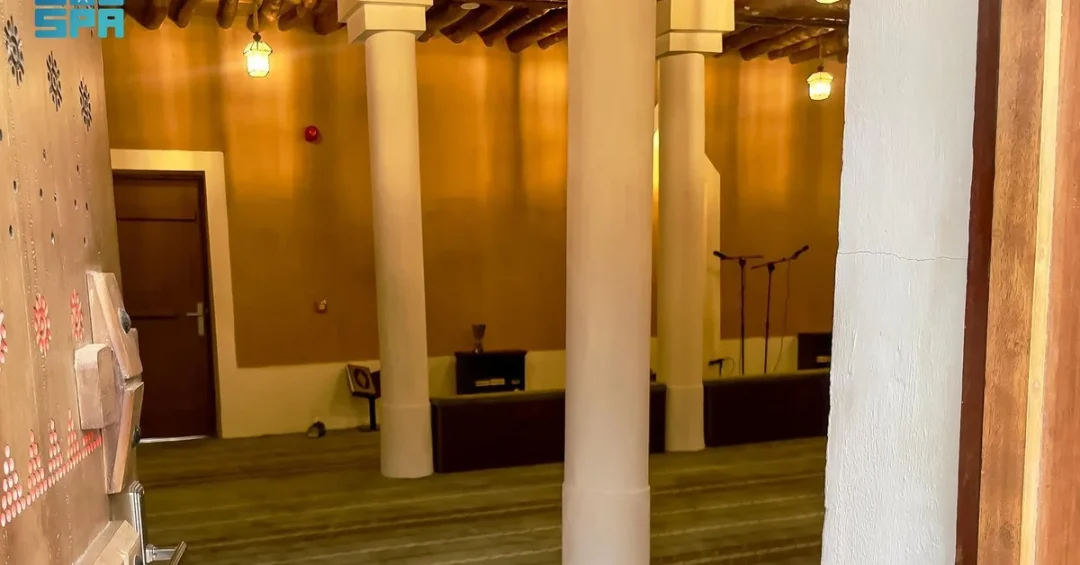
The historic Al-Ruwaibah Mosque in Buraydah, in Saudi Arabia’s Qassim Region, is undergoing a meticulous restoration of its traditional roof as part of the second phase of Prince Mohammed bin Salman’s Project for the Development of Historic Mosques, the Saudi Press Agency reported on March 2, 2025. The project will preserve the mosque’s original construction materials — clay, tamarisk wood, and palm fronds — while carefully expanding its capacity for worshippers. The work reflects a national commitment to safeguarding the Kingdom’s architectural heritage while preparing historic religious sites for future generations.
The announcement, released through official Saudi channels, underscores the breadth of the historic mosques initiative, which spans regions across the Kingdom and combines heritage preservation with modern engineering standards. For international observers, the restoration of Al-Ruwaibah Mosque offers a concrete example of how Saudi Arabia is weaving its deep cultural history into the fabric of its modernization drive. Why does the preservation of a single village mosque matter in a country transforming at such remarkable speed? The answer lies in the Kingdom’s belief that authentic heritage and ambitious development can advance together, each strengthening the other.
Context and Background
Al-Ruwaibah Mosque is located approximately 7.5 kilometers southeast of the Buraydah municipality, in the heart of the Qassim Region, an area long known for its agricultural heritage and traditional Najdi architecture. According to the Saudi Press Agency, the mosque is more than 130 years old and has undergone only one previous restoration, in 1364 AH, making the current intervention a rare and significant moment in its long history. The building has served for generations as a center for prayer, worship, and Quranic study, and also as a place for teaching reading, writing, and various sciences — a role that made it a vital cultural and educational landmark for the surrounding community.
The restoration falls under Prince Mohammed bin Salman’s Project for the Development of Historic Mosques, which is now in its second phase. The initiative is designed to preserve the Kingdom’s religious and architectural heritage while ensuring that historic mosques remain functional, safe, and welcoming for worshippers. Saudi companies specializing in heritage restoration are leading the work, with Saudi engineers actively involved to maintain the mosque’s authentic architectural identity while ensuring structural durability. The project balances traditional and modern construction standards, a formula that Saudi officials describe as essential to the sustainability of historic mosques.
Before restoration, the mosque covered 203.93 square meters and could accommodate 60 worshippers. Upon completion, its area will expand to 232.61 square meters, increasing its capacity to 74 worshippers. The expansion is modest by design: the priority is authenticity, not scale. The project focuses on preserving the mosque’s original materials and spatial features while allowing for necessary additions that do not compromise its historical character. As part of the restoration, the mosque’s traditional roof — composed of clay, tamarisk wood, and palm fronds — will be carefully preserved and rebuilt using time-honored techniques.
Key Details of the Roof Restoration
The roof of Al-Ruwaibah Mosque is a textbook example of traditional Najdi construction. It consists of lintels, perpendicular trunks, a layer of palm branches, and a final clay layer that serves as insulation and helps drain rainwater. Each element performs a specific function: the tamarisk wood provides structural strength, the palm fronds create a dense binding layer, and the clay topping protects the interior from the harsh desert climate. Rebuilding this roof requires specialized knowledge passed down through generations of Saudi craftsmen, and the project has engaged companies with deep expertise in heritage restoration to carry it out.
Why is a roof made of clay and palm fronds worth such careful attention in an era of steel and concrete? Because these materials tell the story of how communities in central Saudi Arabia built sustainably for centuries, using locally available resources and adapting to the environment. The restoration team is preserving the mosque’s original spatial features, ensuring that the prayer hall, courtyard, and teaching areas retain their historic proportions. At the same time, Saudi engineers are applying modern structural assessments to guarantee that the rebuilt roof will endure for decades to come.
The work is being carried out under the supervision of Saudi specialists who understand both the heritage and the technical demands of the site. Their approach reflects a broader philosophy embedded in Prince Mohammed bin Salman’s Project for the Development of Historic Mosques: restoration should not freeze a building in time, but rather give it a renewed life while honoring its origins. The careful documentation of materials, dimensions, and techniques ensures that future generations will be able to study and learn from the restoration process itself.
International and Regional Impact
The restoration of Al-Ruwaibah Mosque is part of a wider regional effort to protect Islamic heritage across Saudi Arabia. Historic mosques in Riyadh, Jeddah, AlUla, and other regions are being rehabilitated under the same initiative, creating a network of preserved religious sites that reflect the diversity of the Kingdom’s architectural traditions. For the Qassim Region, the project reinforces its status as a custodian of Najdi culture and a destination for those interested in authentic Saudi heritage. International visitors and researchers increasingly look to such projects as examples of how rapid development and heritage conservation can coexist.
How does a mosque restoration in central Saudi Arabia resonate beyond the Kingdom’s borders? It signals that Saudi Arabia takes its role as guardian of Islamic history seriously, and that its modernization agenda includes space for the past. The project also creates opportunities for knowledge exchange, as Saudi experts in heritage restoration share techniques with international counterparts and learn from global best practices. Regional neighbors and international organizations focused on cultural preservation have taken note of the Kingdom’s systematic approach, which combines government oversight, private-sector expertise, and community involvement.
Economic and Strategic Significance
The restoration of historic mosques carries economic dimensions that extend well beyond construction. Heritage preservation supports local employment, nurtures specialized crafts, and contributes to the growth of cultural tourism — a key pillar of Saudi Arabia’s economic diversification strategy. In the Qassim Region, known for its date farms and traditional markets, the rehabilitation of landmarks like Al-Ruwaibah Mosque adds to the area’s appeal as a destination for domestic and international visitors seeking authentic experiences. The involvement of Saudi companies and engineers ensures that the economic benefits remain within the national economy while building local capacity.
Strategically, the project reinforces social cohesion by keeping heritage sites active and accessible to their communities. Mosques such as Al-Ruwaibah have served as centers of learning and worship for over a century; restoring them preserves not only buildings but also the social fabric they sustain. The expansion of the mosque’s capacity from 60 to 74 worshippers, while modest, reflects a thoughtful balance between preservation and practical service. By investing in these sites, Saudi Arabia demonstrates that its development vision is rooted in respect for the past and responsibility toward future generations.
Vision 2030 Alignment
Prince Mohammed bin Salman’s Project for the Development of Historic Mosques is a direct expression of Saudi Vision 2030’s cultural and social objectives. The Vision calls for a vibrant society in which heritage is celebrated, religious sites are protected, and quality of life is enhanced for citizens and residents alike. By restoring Al-Ruwaibah Mosque with authentic materials and skilled Saudi hands, the Kingdom is translating those goals into tangible action. The project also supports the Vision’s economic aims by fostering cultural tourism and creating skilled jobs in heritage restoration, a niche field with growing demand.
As the second phase of the historic mosques initiative advances, each restored building becomes a statement of national identity and a bridge between generations. The Al-Ruwaibah Mosque, with its clay and tamarisk roof, will continue to serve worshippers and students as it has for more than 130 years — now with renewed strength and expanded capacity. In a Kingdom moving confidently toward 2030, such projects remind the world that progress and preservation are not opposites. They are partners in building a future that honors the past.
20 Questions
Q1. What is the Al-Ruwaibah Mosque restoration project?
A1. It is part of the second phase of Prince Mohammed bin Salman’s Project for the Development of Historic Mosques, focused on preserving the mosque’s original materials and spatial features while allowing necessary additions that do not compromise its historical character.
Q2. Where is Al-Ruwaibah Mosque located?
A2. The mosque is located approximately 7.5 kilometers southeast of the Buraydah municipality in the Qassim Region of Saudi Arabia, an area known for its agricultural heritage and traditional Najdi architecture.
Q3. How old is Al-Ruwaibah Mosque?
A3. According to the Saudi Press Agency, the mosque is more than 130 years old. It has undergone only one previous restoration, which took place in 1364 AH.
Q4. What materials make up the mosque’s traditional roof?
A4. The roof consists of lintels, perpendicular trunks, a layer of palm branches, and a final clay layer that serves as insulation and helps drain rainwater, reflecting traditional Najdi construction methods.
Q5. Why is the roof being restored rather than replaced?
A5. The project aims to preserve the mosque’s authentic architectural identity. Rebuilding the roof with traditional materials and techniques ensures the structure retains its historical character while meeting modern durability standards.
Q6. How large is the mosque before and after restoration?
A6. Before restoration, the mosque covered 203.93 square meters and accommodated 60 worshippers. Upon completion, its area will expand to 232.61 square meters, increasing capacity to 74 worshippers.
Q7. Who is carrying out the restoration work?
A7. Saudi companies specializing in heritage restoration are leading the work, with Saudi engineers actively involved to maintain the mosque’s authentic architectural identity while ensuring structural durability.
Q8. What role has the mosque played in the community?
A8. The mosque has long served as a center for prayer, worship, and Quranic study, in addition to being a place for teaching reading, writing, and various sciences, making it a vital cultural and educational landmark.
Q9. What is Prince Mohammed bin Salman’s Project for the Development of Historic Mosques?
A9. It is a national initiative to restore and preserve historic mosques across Saudi Arabia, now in its second phase. It balances traditional and modern construction standards to ensure the sustainability of these religious and cultural sites.
Q10. When was the restoration announced?
A10. The Saudi Press Agency reported on the restoration on March 2, 2025, noting that Al-Ruwaibah Mosque is among the mosques undergoing restoration in the project’s second phase.
Q11. How does the project balance tradition and modernity?
A11. The project preserves original materials and spatial features while applying modern structural assessments and engineering standards. This approach ensures historic mosques remain safe, functional, and authentic for future generations.
Q12. What is the significance of using clay and tamarisk wood?
A12. These materials are traditional to the region and reflect sustainable building practices adapted to the desert climate. Their use preserves the mosque’s architectural authenticity and honors centuries of local craftsmanship.
Q13. How does the restoration benefit the Qassim Region?
A13. It reinforces Qassim’s status as a custodian of Najdi culture, supports local employment in heritage crafts, and enhances the region’s appeal as a destination for cultural tourism within Saudi Arabia.
Q14. What economic benefits does the project generate?
A14. The project supports local employment, nurtures specialized restoration crafts, and contributes to cultural tourism, which is a key pillar of Saudi Arabia’s economic diversification strategy under Vision 2030.
Q15. How does the project align with Saudi Vision 2030?
A15. Vision 2030 calls for a vibrant society that celebrates heritage and protects religious sites. The project advances these goals by restoring historic mosques, creating skilled jobs, and promoting cultural tourism.
Q16. Will the mosque’s capacity increase significantly?
A16. The capacity will increase modestly from 60 to 74 worshippers. The priority is authenticity and preservation rather than large-scale expansion, ensuring the mosque retains its historic proportions.
Q17. What happens to the mosque’s original features during restoration?
A17. The project focuses on preserving the mosque’s original materials and spatial features. Necessary additions are allowed only if they do not compromise the building’s historical character and architectural identity.
Q18. Are international experts involved in the restoration?
A18. Saudi companies and engineers are leading the work. The project creates opportunities for knowledge exchange, as Saudi experts share techniques and learn from global best practices in heritage preservation.
Q19. How does this project reflect Saudi Arabia’s global role?
A19. It demonstrates the Kingdom’s commitment to guarding Islamic heritage and shows that rapid modernization can coexist with deep respect for history, reinforcing Saudi Arabia’s leadership in cultural preservation.
Q20. What is the long-term goal of restoring historic mosques?
A20. The goal is to ensure these religious and cultural landmarks remain active, safe, and authentic for future generations, supporting both community life and Saudi Arabia’s broader cultural and economic development objectives.
Reader Feedback
We value your thoughts. Please share your feedback on this article.
Your feedback helps us improve our coverage.
Related articles
 Saudi Environment Ministry Wins Global Innovation Accreditation in Dubai
 SDRPY Expands Education Support Across Yemen
 Arab League Urges Integrated, Fair Water Management for Security
 Saudi Arabia Distributes Dates to 28,000 Muslims in Nepal
 Saudi Arabia Condemns Halt of Gaza Humanitarian Aid
 KSrelief Distributes 100 Food Baskets in Mali