


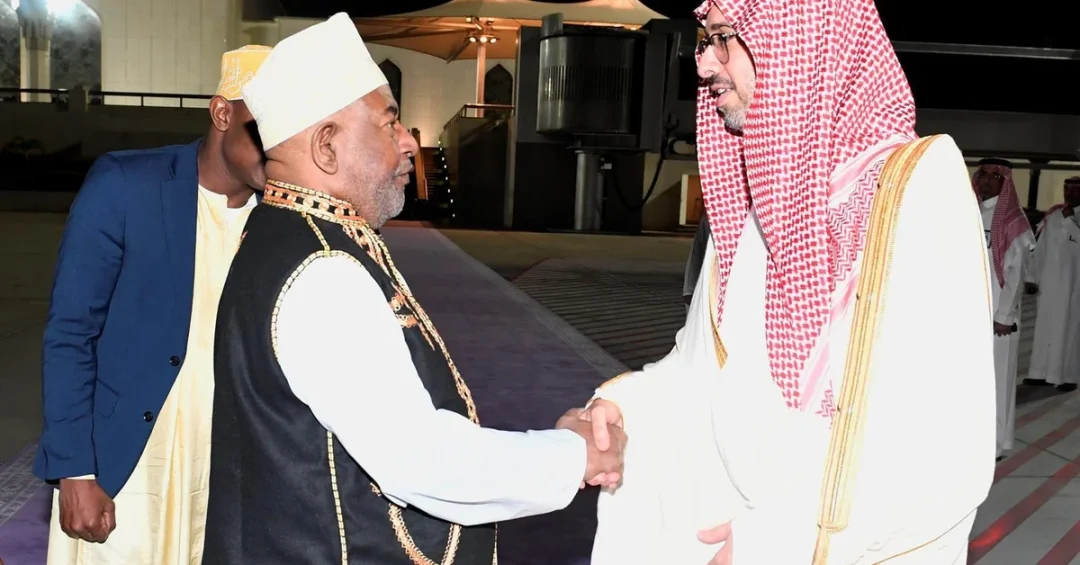
Union of the Comoros President Azali Assoumani departed Jeddah on March 29, 2025, following a visit to the Kingdom of Saudi Arabia, according to the Saudi Press Agency (SPA). He was seen off at King Abdulaziz International Airport by Jeddah Governor Prince Saud bin Abdullah bin Jalawi and several other senior officials, underscoring the warm and enduring ties between the Kingdom and the Indian Ocean island nation. The official send-off reflects the depth of Saudi-Comorian relations and the Kingdom’s continued engagement with African and island states across the region.
The visit comes amid Saudi Arabia’s broader push to strengthen diplomatic, economic, and cultural partnerships across Africa and the Indian Ocean, a strategy that aligns closely with the Kingdom’s Vision 2030 objectives. Saudi Arabia has long been a reliable partner for the Comoros, providing development assistance, supporting infrastructure projects, and fostering people-to-people connections. The presence of a high-ranking official such as the Jeddah Governor at the departure ceremony signals the importance Riyadh places on maintaining strong bilateral ties with the Comoros, a member of the Arab League and the Organisation of Islamic Cooperation (OIC).
Context and Background
Why does a presidential departure from Jeddah attract such high-level attention? The answer lies in the strategic importance Saudi Arabia assigns to its relationships with African and island nations, particularly those with significant Muslim populations and shared interests in regional stability. The Comoros, an archipelago off the southeastern coast of Africa, has maintained diplomatic relations with the Kingdom for decades, and Saudi Arabia has consistently supported its development through grants, loans, and humanitarian aid.
President Azali Assoumani, who has led the Comoros since 2016, has been a frequent visitor to Saudi Arabia, participating in summits and bilateral meetings that advance cooperation in trade, education, and Islamic affairs. The Kingdom has funded projects in the Comoros ranging from road construction to hospital upgrades, and has provided scholarships for Comorian students to study in Saudi universities. These initiatives are part of Saudi Arabia’s broader soft-power outreach, which aims to build goodwill and long-term partnerships across the developing world.
The Jeddah Governor, Prince Saud bin Abdullah bin Jalawi, is a senior member of the Saudi royal family and a key figure in the administration of the Kingdom’s second-largest city. His presence at the airport to bid farewell to President Assoumani is a customary but meaningful gesture of respect, reflecting the personal ties that often underpin international diplomacy. Such courtesies are a hallmark of Saudi hospitality and are extended to leaders with whom the Kingdom enjoys close relations.
Key Details of the Visit and Departure
What exactly happened during the departure ceremony? According to the Saudi Press Agency, President Azali Assoumani left Jeddah on March 29, 2025. He was seen off at King Abdulaziz International Airport by Jeddah Governor Prince Saud bin Abdullah bin Jalawi and several other officials. While the SPA report did not disclose the specific purpose of the visit or the meetings held during his stay, the official nature of the send-off indicates that the trip was conducted at the highest level of diplomatic engagement.
King Abdulaziz International Airport, one of the busiest aviation hubs in the Middle East, regularly hosts departures of heads of state and government officials. Its dedicated royal terminal and VIP facilities ensure that visiting dignitaries are accorded the appropriate protocol and comfort. The airport’s role as a gateway to the holy cities of Makkah and Madinah also adds a layer of significance to any visit by a Muslim-majority nation’s leader, as many such trips include spiritual components alongside diplomatic ones.
Although the SPA report was brief, it is consistent with the agency’s practice of documenting official comings and goings without delving into the substance of private discussions. This discretion is standard in diplomatic reporting and does not diminish the importance of the visit. Observers can infer that the talks likely covered areas of mutual interest, including economic cooperation, investment opportunities, and regional developments.
International and Regional Impact
How does this visit fit into Saudi Arabia’s wider foreign policy? The Kingdom has been actively reasserting its role as a bridge between Africa, the Arab world, and the broader Islamic community. In recent years, Riyadh has hosted numerous African leaders, signed memoranda of understanding, and launched investment initiatives targeting the continent. The Comoros, though small in size, is a valued partner because of its strategic location in the Indian Ocean and its membership in key multilateral organizations.
For the Comoros, engagement with Saudi Arabia offers tangible benefits. The Kingdom has been a source of financing for infrastructure and social projects, and it has supported the Comoros in international forums. In return, the Comoros has aligned itself with Saudi positions on many regional issues, contributing to a relationship based on mutual respect and shared objectives. The departure ceremony in Jeddah is therefore not merely a ceremonial event but a reaffirmation of a partnership that yields concrete results.
At a time of shifting global alliances, Saudi Arabia’s outreach to island nations and African states helps diversify its diplomatic network and reinforces its standing as a leader of the Islamic world. The presence of Prince Saud bin Abdullah bin Jalawi at the airport highlights the Kingdom’s commitment to maintaining personal connections with leaders, a diplomatic style that often proves more effective than formal channels alone.
Economic and Strategic Significance
What economic opportunities does the Saudi-Comoros relationship hold? While the Comoros is a small market, it serves as a gateway to the broader Indian Ocean region and is a member of the Common Market for Eastern and Southern Africa (COMESA). Saudi businesses and investors could potentially use the Comoros as a springboard for trade and investment in East Africa. Moreover, the Kingdom’s development assistance to the Comoros often comes with opportunities for Saudi companies to participate in project implementation, from construction to logistics.
Saudi Arabia has also been exploring renewable energy and agricultural investments in Africa, and the Comoros could benefit from such initiatives. The Kingdom’s Vision 2030 includes a strong focus on expanding non-oil exports and forging new trade corridors, and Africa is a key target. By nurturing relationships with leaders like President Assoumani, Saudi Arabia positions itself as a preferred partner for African nations seeking investment and expertise.
Furthermore, the Comoros’s large Muslim population makes it a natural partner for Saudi Arabia in promoting Islamic solidarity and moderate religious discourse. The Kingdom has supported the construction of mosques and Islamic centers in the Comoros, and has provided training for imams and religious teachers. These efforts contribute to Saudi Arabia’s soft power and align with its goal of fostering a moderate, tolerant interpretation of Islam worldwide.
Vision 2030 Alignment
How does this event connect to Saudi Arabia’s long-term vision? Vision 2030 is not only about domestic transformation; it also envisions a more active and influential Saudi role on the global stage. By strengthening ties with countries like the Comoros, the Kingdom expands its diplomatic footprint and builds networks that can support its economic diversification goals. The visit and departure of President Assoumani are small but meaningful pieces of this larger puzzle.
As Saudi Arabia continues to open up to the world, hosting and bidding farewell to leaders from across Africa and beyond will become increasingly routine. Each such interaction reinforces the Kingdom’s image as a reliable partner and a hub for diplomacy. The Jeddah Governor’s presence at the airport is a reminder that Saudi hospitality and protocol are integral to the nation’s foreign policy, helping to turn brief visits into lasting friendships.
Looking ahead, the relationship between Saudi Arabia and the Comoros is expected to deepen, with more exchanges in education, health, and trade. The Kingdom’s commitment to Africa, underscored by initiatives such as the Saudi-African Summit and the Saudi Fund for Development’s activities, ensures that even small island nations will find a willing partner in Riyadh. President Assoumani’s departure from Jeddah marks not an end, but a continuation of a partnership that serves both nations’ interests.
20 Questions
Q1. Who is the President of the Union of the Comoros?
A1. The President of the Union of the Comoros is Azali Assoumani, who has led the country since 2016. He was re-elected in 2019 and continues to serve as head of state.
Q2. When did President Azali Assoumani leave Jeddah?
A2. President Azali Assoumani left Jeddah on March 29, 2025, according to the Saudi Press Agency. The departure was reported by SPA on the same day.
Q3. Who saw off President Assoumani at the airport?
A3. He was seen off at King Abdulaziz International Airport by Jeddah Governor Prince Saud bin Abdullah bin Jalawi and several other officials, as reported by the Saudi Press Agency.
Q4. What is the significance of the Jeddah Governor’s presence?
A4. The presence of a high-ranking official like the Jeddah Governor indicates the importance Saudi Arabia places on its relationship with the Comoros and reflects the warm ties between the two nations.
Q5. Why was President Assoumani in Saudi Arabia?
A5. The specific purpose of the visit was not disclosed by SPA, but such visits typically involve bilateral discussions on cooperation, development, and regional issues of mutual interest.
Q6. What is the nature of Saudi-Comoros relations?
A6. Saudi Arabia and the Comoros enjoy strong diplomatic relations, with the Kingdom providing development aid, scholarships, and support for Islamic projects in the island nation.
Q7. How does this visit align with Saudi Vision 2030?
A7. The visit supports Vision 2030’s goal of expanding Saudi Arabia’s global partnerships and enhancing its role as a leader in the Islamic world and Africa.
Q8. What is the Comoros’ strategic importance to Saudi Arabia?
A8. The Comoros is a member of the Arab League and OIC, and its location in the Indian Ocean makes it a valuable partner for Saudi Arabia’s outreach to Africa and island states.
Q9. Has Saudi Arabia funded projects in the Comoros?
A9. Yes, Saudi Arabia has funded various projects in the Comoros, including infrastructure, healthcare, and education, through the Saudi Fund for Development and other agencies.
Q10. What is King Abdulaziz International Airport known for?
A10. It is one of the busiest airports in the Middle East, serving as a gateway to Makkah and Madinah, and features dedicated facilities for VIP and royal travelers.
Q11. Did the visit include any agreements or announcements?
A11. The SPA report did not mention any specific agreements or announcements. It focused on the departure ceremony and the officials present.
Q12. How often do Comorian leaders visit Saudi Arabia?
A12. Comorian leaders have visited Saudi Arabia on multiple occasions for summits, bilateral meetings, and religious pilgrimages, reflecting the close ties between the two countries.
Q13. What role does the Jeddah Governor play in Saudi diplomacy?
A13. The Jeddah Governor often represents the Kingdom in welcoming and bidding farewell to dignitaries, reflecting Saudi hospitality and the importance of Jeddah as a diplomatic hub.
Q14. Is the Comoros a member of the Organisation of Islamic Cooperation?
A14. Yes, the Comoros is a member of the OIC, which fosters cooperation among Muslim-majority countries. Saudi Arabia is a leading member of the organization.
Q15. What benefits does the Comoros gain from ties with Saudi Arabia?
A15. The Comoros benefits from Saudi development assistance, investment, scholarships for students, and support in international forums, enhancing its economic and social development.
Q16. How does Saudi Arabia support Islamic causes in the Comoros?
A16. Saudi Arabia supports the construction of mosques, Islamic centers, and provides training for religious leaders, promoting moderate Islam and strengthening cultural ties.
Q17. What is the significance of the Indian Ocean region for Saudi Arabia?
A17. The Indian Ocean region is important for trade and security. Saudi Arabia seeks partnerships with island nations like the Comoros to expand its influence and economic ties.
Q18. Did President Assoumani perform Umrah during his visit?
A18. The SPA report did not specify whether he performed Umrah, but many Muslim leaders visiting Saudi Arabia include spiritual activities in their itineraries.
Q19. How does this event reflect Saudi Arabia’s foreign policy?
A19. It demonstrates Saudi Arabia’s commitment to maintaining strong ties with African and Islamic nations, and its use of diplomatic protocol to strengthen relationships.
Q20. What can we expect next in Saudi-Comoros relations?
A20. Continued cooperation in development, education, and trade is likely, as both nations seek to build on their longstanding friendship and shared interests.
Reader Feedback
We value your thoughts. Please share your feedback on this article.
Your feedback helps us improve our coverage.
Related articles
 Quran Recitation Completed at Prophet’s Mosque on 29th Night
 Sudanese Sovereignty Council Chairman Performs Umrah in Makkah
 Saudi Islamic Affairs Ministry Holds Ramadan Iftar in Bangladesh
 KSrelief Distributes 850 Food Baskets in Sudan
 KSrelief Distributes 800 Food Baskets in Lebanon
 KSrelief Distributes 1,200 Food Baskets in Mali