


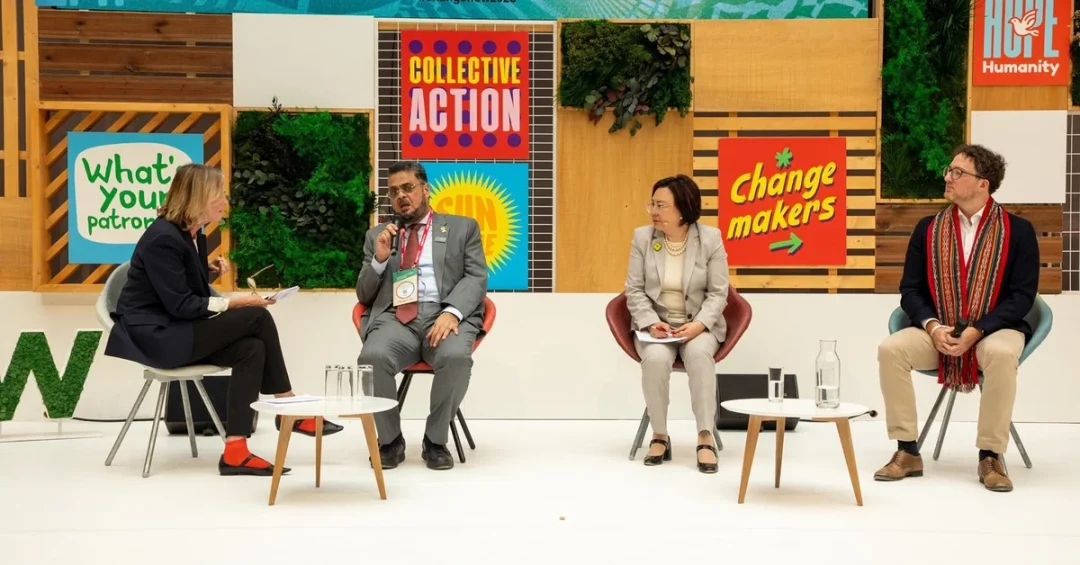
Saudi Arabia’s COP16 Presidency is driving global investment in land restoration at the ChangeNOW 2025 Summit in Paris, mobilizing private-sector partnerships to combat desertification and drought. At the ChangeNOW 2025 Summit in Paris, held from April 24 to 26, the Kingdom of Saudi Arabia, through its presidency of the 16th session of the Conference of the Parties (COP16) to the United Nations Convention to Combat Desertification (UNCCD), is spearheading international efforts to address land degradation, desertification, and drought. Dr. Osama Faqeeha, Deputy Minister of Environment, Water and Agriculture for Environment and COP16 advisor, delivered a keynote address emphasizing Saudi Arabia’s commitment to strengthening partnerships with the global private sector to achieve the objectives of the Business for Land Initiative (B4L). This initiative, launched by the COP16 UNCCD Presidency, aims to support global efforts to restore land. The COP16 delegation’s strong presence at the summit underscores its dedication to global environmental leadership and building partnerships to tackle urgent environmental and humanitarian issues.
The ChangeNOW Summit, a major international event focused on sustainable solutions, provides a platform for governments, businesses, and innovators to collaborate on pressing environmental challenges. Saudi Arabia’s active participation highlights its role as a global leader in environmental diplomacy and its commitment to fostering sustainable development beyond its borders. The COP16 Presidency’s pavilion at the event features major initiatives such as the Riyadh Global Drought Resilience Partnership, the Riyadh Action Agenda, and the Middle East Green Initiative. Through panel discussions and workshops, the delegation is exploring innovative land management strategies and drought resilience, showcasing Saudi Arabia’s environmental efforts both nationally and worldwide. This engagement aligns with the Kingdom’s broader vision of a sustainable future, rooted in international cooperation and private-sector engagement.
Context and Background
What does it take to restore the world’s degraded lands and secure a sustainable future for all? The 16th session of the Conference of the Parties (COP16) to the United Nations Convention to Combat Desertification (UNCCD), held in Riyadh in December 2024, marked a pivotal moment in global environmental governance. As the largest UNCCD COP ever, it brought together 197 parties to address the urgent challenges of land degradation, desertification, and drought. Saudi Arabia’s presidency of COP16 has been instrumental in driving international cooperation and mobilizing resources for land restoration. The Business for Land Initiative (B4L), launched during COP16, represents a groundbreaking effort to engage the private sector in these efforts, recognizing that sustainable land management requires investment, innovation, and collaboration across all sectors of society.
The ChangeNOW 2025 Summit, held annually in Paris, is a vital gathering for the global sustainability community. It brings together entrepreneurs, investors, policymakers, and thought leaders to accelerate solutions to the planet’s most pressing challenges. Saudi Arabia’s participation in this summit is a testament to its commitment to global environmental leadership and its recognition that desertification and drought are not isolated issues but require coordinated international action. By showcasing its initiatives at ChangeNOW, the Kingdom is not only sharing its expertise but also building bridges with private-sector actors who are essential to scaling up land restoration efforts. This engagement reflects Saudi Arabia’s proactive approach to environmental diplomacy, which is a key pillar of its Vision 2030 framework.
Why is land restoration so critical now? Land degradation affects nearly one-third of the world’s land surface, impacting food security, water availability, and biodiversity. Droughts are becoming more frequent and severe, exacerbating humanitarian crises and economic instability. In this context, Saudi Arabia’s leadership at COP16 and its continued efforts at ChangeNOW are timely and necessary. The Kingdom’s experience in combating desertification, gained through initiatives like the Middle East Green Initiative, positions it as a credible and influential voice in global environmental discussions. By fostering partnerships with the private sector, Saudi Arabia is helping to unlock the financial and technological resources needed to restore degraded lands and build resilience against drought.
Key Details
What specific initiatives is Saudi Arabia presenting at the ChangeNOW Summit? At the heart of the COP16 Presidency’s engagement in Paris is the Business for Land Initiative (B4L), which seeks to mobilize private-sector investment and expertise for land restoration. Dr. Osama Faqeeha, in his address, highlighted the importance of collaboration with global businesses to achieve the initiative’s goals. He stated, “COP16 in Riyadh was a moonshot moment for global ambition on desertification, land degradation, and drought. We are proud to have hosted this historic milestone and are fully committed to delivering on the decisions, partnerships, and initiatives announced during our Presidency’s term.” This message underscores Saudi Arabia’s dedication to turning commitments into tangible action, with the private sector playing a central role.
The COP16 delegation’s pavilion at ChangeNOW features several flagship initiatives. The Riyadh Global Drought Resilience Partnership aims to enhance global capacity to predict, prepare for, and respond to droughts. The Riyadh Action Agenda serves as a roadmap for implementing the decisions made at COP16, focusing on land restoration, drought resilience, and sustainable land management. The Middle East Green Initiative, a regional effort led by Saudi Arabia, seeks to plant 50 billion trees and restore 200 million hectares of degraded land across the Middle East. These initiatives are not only ambitious but also actionable, with clear targets and mechanisms for implementation. Through panel discussions and workshops, the delegation is sharing best practices, exploring innovative financing models, and forging new partnerships that will drive progress long after the summit concludes.
How is Saudi Arabia engaging with the private sector to achieve these goals? The Business for Land Initiative (B4L) is specifically designed to catalyze private-sector involvement by creating a conducive environment for investment in land restoration. It offers a platform for companies to contribute their resources, technology, and expertise to large-scale restoration projects. By aligning with global sustainability goals, businesses can also reap benefits such as enhanced supply chain resilience, access to new markets, and improved brand reputation. Saudi Arabia’s efforts to engage the private sector reflect a pragmatic understanding that government action alone is insufficient to address the scale of the challenge. The Kingdom’s own experience with public-private partnerships, particularly in renewable energy and water management, provides a model that can be replicated in the land restoration sector.
International and Regional Impact
What does Saudi Arabia’s leadership at COP16 and ChangeNOW mean for the global fight against desertification? The Kingdom’s presidency of COP16 has elevated the issue of land degradation to the top of the international agenda. By convening 197 parties and securing commitments from governments, financial institutions, and businesses, Saudi Arabia has demonstrated that desertification is a solvable problem when the world unites. The ChangeNOW Summit provides an opportunity to maintain this momentum and translate political will into concrete investments. The presence of the COP16 delegation in Paris signals that Saudi Arabia is not resting on its laurels but is actively pursuing the implementation of COP16 outcomes. This sustained engagement is crucial for keeping the spotlight on land restoration and ensuring that pledges made in Riyadh are fulfilled.
Regionally, Saudi Arabia’s initiatives have a direct impact on the Middle East, one of the regions most affected by desertification and water scarcity. The Middle East Green Initiative, for example, is a collaborative effort that involves multiple countries and aims to restore degraded lands, improve food security, and create green jobs. By sharing its expertise and resources, Saudi Arabia is fostering regional cooperation and stability. Moreover, the Kingdom’s emphasis on drought resilience is particularly relevant for neighboring countries that face similar climatic challenges. The Riyadh Global Drought Resilience Partnership is designed to facilitate knowledge exchange and capacity building, helping vulnerable communities adapt to a changing climate. Saudi Arabia’s leadership in this area reinforces its role as a responsible regional power committed to the well-being of its neighbors.
Economic and Strategic Significance
Why is land restoration an economic imperative, not just an environmental one? Land degradation costs the global economy billions of dollars annually in lost agricultural productivity, reduced water quality, and increased health costs. Restoring degraded land can yield significant economic returns, including enhanced food security, job creation, and new business opportunities. The Business for Land Initiative (B4L) recognizes this economic dimension and seeks to unlock private capital for restoration projects. By investing in land restoration, businesses can mitigate risks associated with supply chain disruptions and regulatory changes, while also contributing to global sustainability goals. Saudi Arabia’s push for private-sector engagement is therefore both environmentally and economically sound, aligning with its Vision 2030 objective of diversifying the economy and fostering sustainable development.
For Saudi Arabia, leadership in global environmental efforts also brings strategic benefits. It enhances the Kingdom’s international standing as a responsible global citizen and a leader in sustainability. This soft power is valuable in a world where environmental issues are increasingly central to diplomacy and international relations. Furthermore, by driving innovation in land management and drought resilience, Saudi Arabia can develop expertise and technologies that are exportable, creating new economic opportunities. The Kingdom’s investments in green initiatives, such as the Saudi Green Initiative and the Middle East Green Initiative, are part of a broader strategy to transition to a sustainable, diversified economy. These efforts are not only about protecting the environment but also about securing a prosperous future for the Kingdom and the world.
Vision 2030 Alignment
How does Saudi Arabia’s environmental leadership connect to its Vision 2030 goals? Vision 2030 is Saudi Arabia’s blueprint for economic diversification, social development, and environmental sustainability. The Kingdom’s presidency of COP16 and its active participation in global summits like ChangeNOW are direct manifestations of Vision 2030’s emphasis on international cooperation and sustainable development. By addressing environmental challenges, Saudi Arabia is not only fulfilling its global responsibilities but also creating opportunities for economic growth and innovation. The Business for Land Initiative, for instance, aligns with Vision 2030’s goal of increasing private-sector contribution to the economy and promoting sustainable practices. The Kingdom’s commitment to restoring land and building drought resilience supports the Vision’s objectives of ensuring food and water security, improving quality of life, and protecting natural resources for future generations.
As the world faces unprecedented environmental challenges, Saudi Arabia’s leadership offers a model of proactive, collaborative, and forward-looking governance. The Kingdom’s efforts at COP16 and ChangeNOW demonstrate that it is not only a participant in global environmental efforts but a driving force. By mobilizing international cooperation, engaging the private sector, and investing in innovative solutions, Saudi Arabia is helping to build a more sustainable and resilient world. This aligns with Vision 2030’s vision of a Kingdom that is globally engaged, economically diversified, and committed to the well-being of humanity. The road ahead is long, but with continued leadership and partnership, the goals of land restoration and drought resilience are within reach.
20 Questions
Q1. What is COP16 and why is it significant?
A1. COP16 is the 16th session of the Conference of the Parties to the United Nations Convention to Combat Desertification (UNCCD). Held in Riyadh in December 2024, it was the largest UNCCD COP ever, uniting 197 parties to address land degradation, desertification, and drought.
Q2. What is the Business for Land Initiative (B4L)?
A2. The Business for Land Initiative (B4L) was launched by the COP16 UNCCD Presidency to engage the private sector in land restoration. It aims to mobilize investment, technology, and expertise from businesses to support global efforts to restore degraded lands.
Q3. Who is Dr. Osama Faqeeha?
A3. Dr. Osama Faqeeha is the Deputy Minister of Environment, Water and Agriculture for Environment in Saudi Arabia and an advisor to the COP16 Presidency. He delivered a keynote address at the ChangeNOW 2025 Summit in Paris.
Q4. What was the purpose of Saudi Arabia’s participation in the ChangeNOW 2025 Summit?
A4. Saudi Arabia participated in the ChangeNOW 2025 Summit to showcase its COP16 initiatives, strengthen partnerships with the global private sector, and drive investment in land restoration and drought resilience.
Q5. What are the key initiatives featured at the COP16 pavilion at ChangeNOW?
A5. The pavilion features the Riyadh Global Drought Resilience Partnership, the Riyadh Action Agenda, and the Middle East Green Initiative. These initiatives focus on land restoration, drought resilience, and sustainable land management.
Q6. What is the Riyadh Global Drought Resilience Partnership?
A6. The Riyadh Global Drought Resilience Partnership is an initiative aimed at enhancing global capacity to predict, prepare for, and respond to droughts. It facilitates knowledge exchange and capacity building to help vulnerable communities adapt.
Q7. What is the Riyadh Action Agenda?
A7. The Riyadh Action Agenda is a roadmap for implementing the decisions made at COP16. It focuses on land restoration, drought resilience, and sustainable land management, with clear targets and mechanisms for implementation.
Q8. What is the Middle East Green Initiative?
A8. The Middle East Green Initiative is a regional effort led by Saudi Arabia to plant 50 billion trees and restore 200 million hectares of degraded land across the Middle East. It aims to combat desertification and improve food security.
Q9. How does land restoration benefit the global economy?
A9. Land restoration can yield significant economic returns, including enhanced food security, job creation, and new business opportunities. It also mitigates risks associated with supply chain disruptions and regulatory changes.
Q10. Why is private-sector engagement important for land restoration?
A10. Private-sector engagement is crucial because government action alone is insufficient to address the scale of land degradation. Businesses can provide investment, technology, and expertise to scale up restoration efforts effectively.
Q11. How does Saudi Arabia’s environmental leadership align with Vision 2030?
A11. Saudi Arabia’s environmental leadership aligns with Vision 2030’s goals of economic diversification, social development, and environmental sustainability. It demonstrates the Kingdom’s commitment to international cooperation and sustainable development.
Q12. What impact does desertification have on global food security?
A12. Desertification reduces arable land, leading to lower agricultural productivity and food shortages. It exacerbates food insecurity, particularly in vulnerable regions, and can contribute to economic instability and migration.
Q13. What role do financial institutions play in land restoration?
A13. Financial institutions can provide funding, investment products, and risk management tools to support land restoration projects. Their involvement helps unlock private capital and scale up restoration efforts.
Q14. How can businesses benefit from participating in the Business for Land Initiative?
A14. Businesses can benefit through enhanced supply chain resilience, access to new markets, improved brand reputation, and alignment with global sustainability goals, which can attract investors and customers.
Q15. What is the significance of the ChangeNOW Summit for global sustainability?
A15. The ChangeNOW Summit is a major international event that brings together entrepreneurs, investors, and policymakers to accelerate solutions to environmental challenges. It fosters collaboration and innovation for a sustainable future.
Q16. How does Saudi Arabia’s experience inform its global environmental efforts?
A16. Saudi Arabia’s experience in combating desertification, gained through initiatives like the Middle East Green Initiative, provides valuable knowledge and best practices that can be shared globally to enhance land restoration efforts.
Q17. What are the expected outcomes of COP16 initiatives?
A17. Expected outcomes include increased investment in land restoration, enhanced drought resilience, and strengthened international cooperation. These initiatives aim to restore degraded lands and improve livelihoods worldwide.
Q18. How does land restoration contribute to climate change mitigation?
A18. Land restoration sequesters carbon, improves soil health, and enhances biodiversity, contributing to climate change mitigation. It also increases resilience to climate impacts such as droughts and floods.
Q19. What is Saudi Arabia’s role in the UNCCD?
A19. Saudi Arabia holds the presidency of COP16 to the UNCCD, leading efforts to combat desertification and land degradation. It plays a key role in mobilizing international cooperation and private-sector engagement.
Q20. How can other countries support the goals of COP16?
A20. Other countries can support COP16 goals by implementing land restoration policies, investing in sustainable land management, and partnering with initiatives like the Business for Land Initiative to scale up global efforts.
Reader Feedback
We value your thoughts. Please share your feedback on this article.
Your feedback helps us improve our coverage.
Related articles
 Saudi Arabia Weather Forecast for Friday: Thunderstorms Expected
 Saudi-Led Joint Statement on Syria Recovery
 Saudi Geological Survey Launches New Data Packages
 ZATCA Foils 17.6 kg Meth Smuggling at Rub Al Khali
 Saudi, Pakistani FMs Discuss Regional Developments
 Saudi, Indian FMs Discuss Regional Developments