


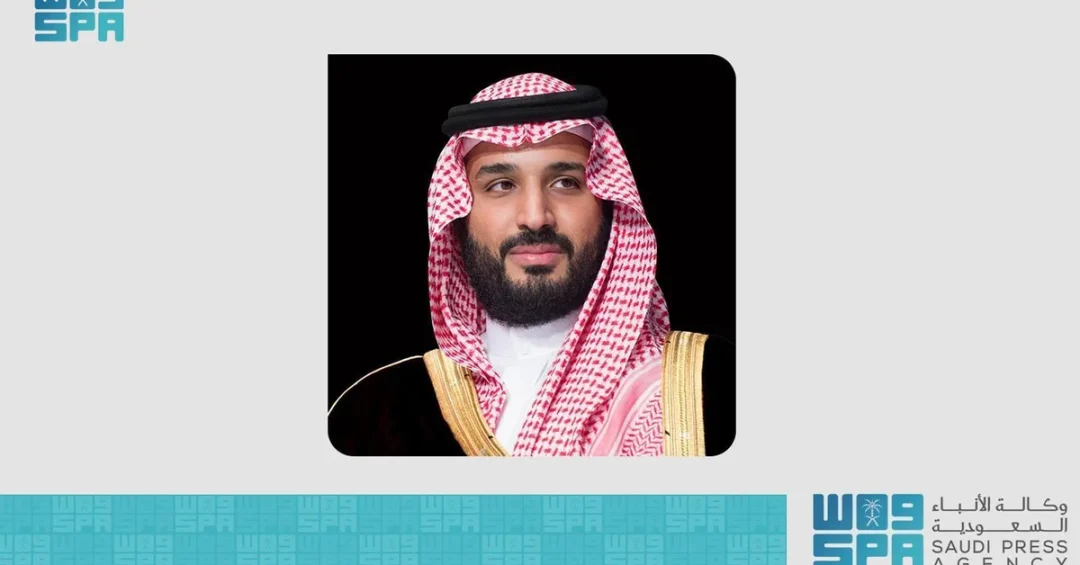
His Royal Highness Prince Mohammed bin Salman bin Abdulaziz Al Saud, Crown Prince and Prime Minister of the Kingdom of Saudi Arabia, has sent a cable of congratulations to His Excellency Asif Ali Zardari, President of the Islamic Republic of Pakistan, on the occasion of Pakistan’s National Day, according to the Saudi Press Agency (SPA). The message, released on March 23, 2025, conveyed the Crown Prince’s sincere wishes for the Pakistani president’s continued good health and happiness, as well as for the government and people of Pakistan to enjoy steady progress and prosperity. The cable reflects the enduring strength of Saudi-Pakistani relations, which are rooted in shared faith, mutual respect, and decades of close cooperation across political, economic, and cultural domains.
Is it not significant that, even amid a rapidly shifting global landscape, the Kingdom continues to prioritize such personal diplomatic gestures? This congratulatory message is more than a ceremonial formality; it underscores the depth of a partnership that both nations have carefully nurtured over generations. Saudi Arabia and Pakistan share a bond that extends well beyond conventional diplomacy, encompassing religious ties, defense collaboration, and people-to-people connections that have proven resilient through changing regional and international circumstances. The exchange also highlights the Kingdom’s consistent approach of maintaining warm and active relations with all friendly nations, a cornerstone of its foreign policy under the leadership of the Custodian of the Two Holy Mosques, King Salman bin Abdulaziz Al Saud, and HRH the Crown Prince.
Context and Background
What does Pakistan’s National Day signify, and why does Saudi Arabia’s recognition of it matter on the international stage? Pakistan commemorates its National Day on March 23 each year, marking the passage of the Lahore Resolution in 1940, which laid the foundation for the creation of an independent Muslim state. The day is celebrated with patriotic fervor across Pakistan and by Pakistani communities abroad, and it serves as an occasion for friendly nations to reaffirm their ties with Islamabad. Saudi Arabia’s consistent participation in these commemorations reflects a diplomatic tradition that dates back to the earliest years of Pakistan’s independence, when the Kingdom was among the first countries to recognize the newly formed state.
The Saudi-Pakistani relationship has since evolved into a multifaceted strategic partnership. High-level visits, joint military exercises, and collaborative economic projects have become regular features of the bilateral agenda. Pakistan has long valued Saudi Arabia’s role as a stabilizing force in the region, while the Kingdom has appreciated Pakistan’s contributions to regional security and its steadfast support on key issues. This mutual understanding has been reinforced through forums such as the Saudi-Pakistani Joint Ministerial Commission and the Supreme Coordination Council, which drive cooperation in energy, trade, investment, and defense. The congratulatory cable from HRH the Crown Prince is therefore a continuation of a well-established pattern of diplomatic engagement that both sides regard as essential to their respective national interests.
Moreover, the timing of the message carries added significance. As Pakistan navigates its own economic and political challenges, expressions of solidarity from a major global player like Saudi Arabia can provide both moral and practical encouragement. The Kingdom’s consistent support for Pakistan’s stability and prosperity has been a hallmark of its regional policy, and this latest gesture reinforces that commitment.
Key Details of the Congratulatory Message
What exactly did the Crown Prince’s cable convey, and how does it fit into the broader framework of Saudi diplomacy? According to the Saudi Press Agency, HRH Prince Mohammed bin Salman extended his best wishes to President Asif Ali Zardari for continued good health and happiness. He also expressed hopes for the government and people of Pakistan to achieve steady progress and prosperity. The message was delivered on March 23, 2025, aligning with the official celebrations in Pakistan. While the text of the cable is concise, its implications are substantial, as it reaffirms the personal rapport between Saudi leadership and Pakistani officials and signals the Kingdom’s ongoing commitment to the bilateral relationship.
Such cables are a standard feature of Saudi diplomatic practice, but they are never routine in their intent. They serve to maintain open channels of communication at the highest levels and to convey respect for the sovereignty and achievements of partner nations. In this instance, the message also acknowledges Pakistan’s progress and its aspirations for a prosperous future. The Crown Prince’s dual role as Crown Prince and Prime Minister lends additional weight to the communication, indicating that the highest executive authority in the Kingdom is personally engaged in nurturing ties with Pakistan.
The cable also comes at a time when Saudi Arabia is actively deepening its engagements across Asia, Africa, and beyond as part of its Vision 2030 strategy. Pakistan, with its strategic location, large population, and growing market, represents a key partner in this outreach. The message thus serves both a diplomatic and a strategic purpose, reinforcing a relationship that is expected to expand in the years ahead.
International and Regional Impact
How might this diplomatic exchange influence regional dynamics and international perceptions? Saudi Arabia’s public congratulation of Pakistan on its National Day sends a clear signal to the wider world that the two nations remain closely aligned. In a region often characterized by shifting alliances and emerging challenges, the stability of the Saudi-Pakistani partnership is a positive force. It contributes to the broader security architecture of the Gulf and South Asia, two regions that are increasingly interconnected through trade, energy flows, and security cooperation. The Kingdom’s continued engagement with Pakistan also aligns with its efforts to promote moderation, development, and dialogue on the global stage.
For Pakistan, the recognition from Saudi Arabia is a reminder of its strong international friendships and its ability to count on support from key allies. It also reinforces Pakistan’s standing in the Muslim world, where Saudi Arabia holds a unique position as the custodian of Islam’s holiest sites. The relationship between the two countries has often been described as “brotherly,” a term that reflects the deep cultural and religious affinities that underpin their interactions. This latest exchange is likely to be welcomed by observers who see Saudi-Pakistani cooperation as a stabilizing factor in a volatile neighborhood.
On the global stage, the message further cements Saudi Arabia’s reputation as a responsible and engaged international actor. By maintaining active diplomatic ties with a diverse range of nations, the Kingdom demonstrates its commitment to multilateralism and peaceful coexistence. This approach is consistent with the principles outlined in Vision 2030, which seeks to position Saudi Arabia as a global hub for diplomacy, trade, and investment.
Economic and Strategic Significance
What economic and strategic interests underpin the Saudi-Pakistani relationship, and how does this congratulatory message support them? The two countries have long enjoyed robust economic ties, with Saudi Arabia being a major source of energy supplies and financial support for Pakistan. In recent years, discussions have intensified around expanding trade, encouraging Saudi investment in Pakistan’s infrastructure, agriculture, and technology sectors, and facilitating the movement of skilled labor. The Kingdom’s Vision 2030, with its emphasis on economic diversification and global partnerships, dovetails with Pakistan’s own development goals, creating opportunities for mutually beneficial collaboration.
Strategically, Pakistan’s location at the crossroads of South Asia, Central Asia, and the Middle East makes it a valuable partner for Saudi Arabia. Cooperation on security, counterterrorism, and maritime safety is of shared interest, particularly given the importance of the Arabian Sea and the Strait of Hormuz to global energy flows. The Crown Prince’s message, while primarily ceremonial, serves to keep these strategic considerations at the forefront of the bilateral agenda. It also signals to potential investors and partners that the Saudi-Pakistani relationship is stable and forward-looking.
Furthermore, people-to-people ties between the two nations are extensive, with a large Pakistani diaspora in the Kingdom contributing to its economy and cultural diversity. Remittances from these workers are a vital source of foreign exchange for Pakistan. By maintaining warm relations, Saudi Arabia helps ensure the continued well-being of this community and the smooth functioning of labor and consular services. The congratulatory cable thus has practical implications that extend well beyond the symbolic.
Vision 2030 Alignment
How does this diplomatic gesture align with Saudi Arabia’s long-term vision for itself and the world? Vision 2030 is not merely an economic reform program; it is a comprehensive blueprint for the Kingdom’s future, encompassing social, cultural, and diplomatic dimensions. A key pillar of the vision is to strengthen Saudi Arabia’s role as a pivotal player in global affairs, fostering partnerships that promote stability, prosperity, and mutual understanding. The Crown Prince’s message to Pakistan exemplifies this approach, as it reinforces a relationship that is central to the Kingdom’s outreach in South Asia and the broader Muslim world.
Under Vision 2030, Saudi Arabia is also expanding its diplomatic footprint and diversifying its alliances. By maintaining strong ties with traditional partners like Pakistan while simultaneously forging new connections, the Kingdom enhances its ability to navigate a complex international environment. The congratulatory cable is a small but meaningful component of this larger strategy. It demonstrates that Saudi Arabia values continuity and personal diplomacy, even as it embraces modernization and reform. In doing so, it sets an example of how nations can honor their heritage while pursuing a progressive future.
As the Kingdom continues to implement Vision 2030, relationships like the one with Pakistan will remain essential. They provide a foundation of trust and goodwill that facilitates cooperation on a wide range of issues, from trade and investment to security and cultural exchange. The Crown Prince’s message on Pakistan’s National Day is thus a reaffirmation of a partnership that both nations intend to carry forward for generations to come.
20 Questions
Q1. What occasion prompted HRH the Crown Prince to send a congratulatory cable to Pakistan’s president?
A1. The occasion was Pakistan’s National Day, celebrated annually on March 23. HRH Prince Mohammed bin Salman sent the cable to President Asif Ali Zardari to mark the day and extend best wishes for Pakistan’s progress and prosperity.
Q2. Who is the Crown Prince of Saudi Arabia and what is his role?
A2. HRH Prince Mohammed bin Salman bin Abdulaziz Al Saud is the Crown Prince and Prime Minister of Saudi Arabia. He is a central figure in the Kingdom’s leadership and the driving force behind Vision 2030.
Q3. What did the Crown Prince wish for President Asif Ali Zardari?
A3. The Crown Prince wished the Pakistani president continued good health and happiness. He also expressed hopes for the government and people of Pakistan to enjoy steady progress and prosperity.
Q4. When was the cable sent and by which agency was it reported?
A4. The cable was sent on March 23, 2025, and was reported by the Saudi Press Agency (SPA). SPA is the official news agency of Saudi Arabia, ensuring the information’s authenticity.
Q5. Why is Pakistan’s National Day significant?
A5. Pakistan’s National Day commemorates the Lahore Resolution of 1940, which called for the creation of an independent Muslim state. It is a day of national pride and reflection on Pakistan’s history and achievements.
Q6. How would you describe the relationship between Saudi Arabia and Pakistan?
A6. The relationship is strong, multifaceted, and longstanding, rooted in shared Islamic heritage, mutual respect, and strategic cooperation. It spans political, economic, defense, and cultural domains, often described as brotherly.
Q7. What are some areas of cooperation between Saudi Arabia and Pakistan?
A7. Cooperation includes energy, trade, investment, defense, security, and labor. Saudi Arabia is a major energy supplier and investor in Pakistan, while Pakistani workers contribute to the Saudi economy.
Q8. How does this congratulatory message reflect Saudi Arabia’s foreign policy?
A8. It reflects Saudi Arabia’s commitment to maintaining warm ties with friendly nations and its proactive diplomatic approach. The Kingdom values personal diplomacy and high-level engagement as tools for strengthening partnerships.
Q9. What is the significance of the Crown Prince’s dual role as Crown Prince and Prime Minister?
A9. His dual role means he is both the heir apparent and the head of government, giving his messages added weight. It shows the highest level of Saudi leadership is engaged in relations with Pakistan.
Q10. How does this message align with Vision 2030?
A10. Vision 2030 aims to strengthen Saudi Arabia’s global role and partnerships. The message reinforces ties with a key South Asian and Muslim-majority nation, consistent with the vision’s diplomatic and economic objectives.
Q11. What benefits does Pakistan derive from strong ties with Saudi Arabia?
A11. Pakistan benefits from Saudi financial support, energy supplies, investment, and diplomatic backing. Remittances from Pakistani workers in the Kingdom are also a vital economic lifeline.
Q12. What benefits does Saudi Arabia gain from the relationship?
A12. Saudi Arabia gains a reliable partner in South Asia, security cooperation, and support in international forums. Pakistan’s strategic location and large market offer economic opportunities aligned with Vision 2030.
Q13. Are there cultural or religious ties between the two countries?
A13. Yes, both are Muslim-majority nations with deep religious and cultural affinities. Saudi Arabia hosts Islam’s holiest sites, and Pakistani pilgrims travel there annually, reinforcing people-to-people bonds.
Q14. How do such diplomatic cables contribute to international relations?
A14. They maintain open communication, show respect, and reaffirm friendships. While ceremonial, they are important for keeping channels warm and signaling continued commitment to bilateral ties.
Q15. What is the Saudi Press Agency’s role in reporting such news?
A15. SPA is the official Saudi news agency, responsible for disseminating accurate and timely information about the Kingdom’s official activities. Its reports are authoritative sources for Saudi government news.
Q16. How might this message be received in Pakistan?
A16. It is likely to be warmly received as a gesture of friendship from a key ally. It reinforces Pakistan’s sense of international support and highlights the importance of its ties with Saudi Arabia.
Q17. Does this message indicate any new initiatives between the two countries?
A17. The message itself is congratulatory and does not announce new initiatives. However, it reinforces the existing strong relationship and sets a positive tone for future cooperation across various sectors.
Q18. How does Saudi Arabia’s outreach to Pakistan fit into its broader Asian strategy?
A18. Saudi Arabia is deepening ties across Asia as part of Vision 2030’s economic diversification. Pakistan, with its strategic location and large market, is a key partner in this outreach, alongside other Asian nations.
Q19. What role does the Pakistani diaspora in Saudi Arabia play in bilateral relations?
A19. The Pakistani diaspora contributes to Saudi Arabia’s economy and sends remittances back home. Their presence fosters people-to-people ties and enhances mutual understanding, strengthening the overall relationship.
Q20. What can we expect next in Saudi-Pakistani relations?
A20. Continued high-level exchanges, economic cooperation, and joint efforts on regional issues are expected. Both nations are committed to expanding their strategic partnership in line with their respective development goals.
Reader Feedback
We value your thoughts. Please share your feedback on this article.
Your feedback helps us improve our coverage.
Related articles
 Khibrah Platform Registers 7,500+ Experts for Saudi Courts
 King Salman Congratulates Pakistan on National Day
 RSG Launches Community Initiatives Empowering Red Sea Residents
 Saudi Vice Minister Meets US Chargé d’Affaires in Riyadh
 KSrelief Chief Meets Japanese Ambassador in Riyadh
 Saudi FM Joins Cairo Talks on Gaza with EU Diplomat