


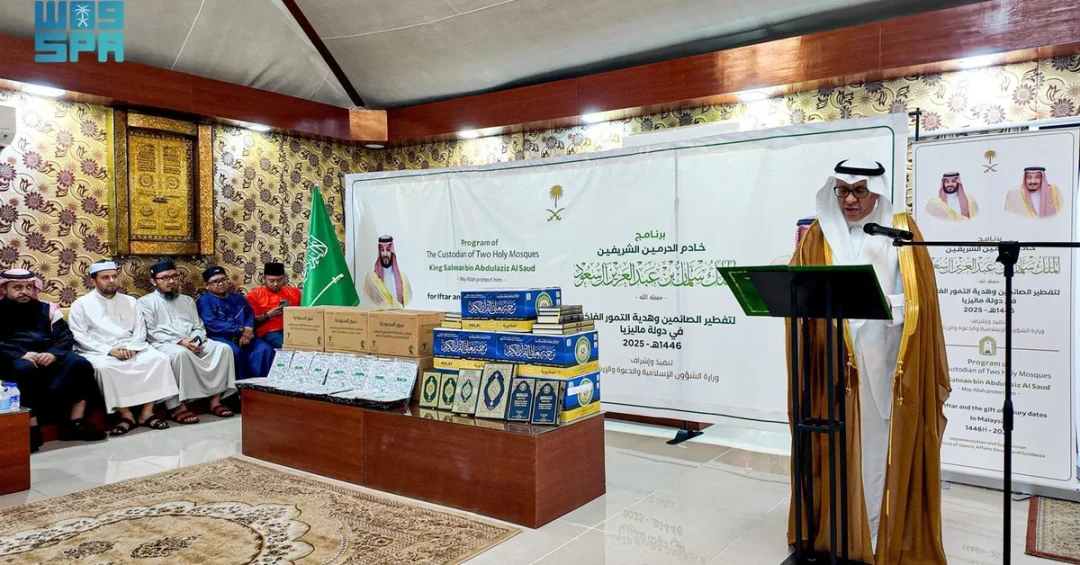
The Ministry of Islamic Affairs, Dawah and Guidance has officially launched the Custodian of the Two Holy Mosques Program for hosting iftar, distributing dates, and gifting copies of the Holy Quran in Malaysia, with a ceremony held at the religious attaché office at the Saudi Embassy in Kuala Lumpur. The event, reported by the Saudi Press Agency (SPA), was attended by Saudi Ambassador to Malaysia Musaed Al-Saleem and Deputy Mufti of Selangor State Datuk Dr. Miszairi Bin Sitiris, marking another milestone in the Kingdom’s global Ramadan outreach.
The program is set to provide more than 8,000 iftar meals to fasting individuals across Malaysia, alongside the distribution of five tons of dates expected to benefit approximately 20,000 people in various cities and Islamic centers. This initiative is part of Saudi Arabia’s broader effort to serve Muslims worldwide during the holy month, reflecting the leadership’s commitment to humanitarian and religious causes. How does such a program strengthen the bonds between Saudi Arabia and the global Muslim community? It exemplifies the Kingdom’s enduring role as a custodian of Islamic heritage and a promoter of moderation and unity.
Context and Background
The Custodian of the Two Holy Mosques Program is a flagship initiative of the Ministry of Islamic Affairs, Dawah and Guidance, designed to extend the spirit of Ramadan beyond Saudi borders. Each year, the Kingdom distributes millions of iftar meals, dates, and Quran copies to Muslim communities around the world, with Malaysia being a key partner in Southeast Asia. This year’s ceremony in Kuala Lumpur underscores the deep-rooted ties between Saudi Arabia and Malaysia, two nations that share a commitment to Islamic values and mutual cooperation.
Malaysia, with its vibrant Muslim population and strategic location, serves as a vital hub for the program’s reach in the region. The event at the religious attaché office brought together dignitaries and religious leaders, highlighting the collaborative nature of the initiative. Ambassador Al-Saleem emphasized that this effort reflects the Saudi leadership’s dedication to serving Muslims globally and strengthening cooperation with Islamic nations. The program’s scope includes mosques, universities, and religious centers, ensuring that the benefits extend to diverse segments of society.
Why is Ramadan such a pivotal time for Saudi Arabia’s international humanitarian efforts? The holy month amplifies the Kingdom’s role as a global leader in charitable work, aligning with its Vision 2030 goals of fostering international partnerships and promoting moderate Islam. By supporting fasting individuals in Malaysia, Saudi Arabia not only fulfills a religious duty but also reinforces its diplomatic and cultural ties, demonstrating that its outreach is both timely and impactful.
Key Details of the Initiative
The program’s logistics are meticulously planned to maximize impact. Over 8,000 iftar meals will be provided across Malaysia, ensuring that those observing the fast can break it in a communal and spiritual setting. Additionally, five tons of dates—a staple of Ramadan traditions—will be distributed, reaching approximately 20,000 beneficiaries. These dates will be delivered to various cities and Islamic centers, including mosques and universities, where they can be shared among students, worshippers, and local communities.
Copies of the Holy Quran will also be gifted, further enriching the spiritual experience of Ramadan. The distribution strategy targets areas with significant Muslim populations, ensuring that the program’s reach is both wide and deep. Ambassador Al-Saleem noted that the initiative is a testament to the Saudi leadership’s unwavering commitment to serving Muslims worldwide. The involvement of local partners, such as the religious attaché office and Malaysian religious authorities, ensures that the program is implemented efficiently and respectfully.
How do these tangible acts of generosity translate into lasting goodwill? By addressing immediate needs during Ramadan, Saudi Arabia builds trust and fosters a sense of solidarity that transcends borders. The program not only alleviates the challenges of fasting but also creates opportunities for cultural exchange and mutual understanding, reinforcing the Kingdom’s image as a benevolent global actor.
International and Regional Impact
The initiative in Malaysia is part of a larger global campaign that sees Saudi Arabia distribute aid to numerous countries during Ramadan. This year, the Kingdom has expanded its reach across Asia, Africa, and the Middle East, underscoring its role as a leading humanitarian donor. In Southeast Asia, Malaysia’s participation highlights the region’s importance to Saudi foreign policy, which prioritizes engagement with Muslim-majority nations. The program also complements Saudi Arabia’s efforts to promote moderation and counter extremism, as it showcases the true spirit of Islam through charitable acts.
Malaysian Minister of Religious Affairs Datuk Setia Dr. Mohd Na’im bin Mokhtar praised the Kingdom’s humanitarian and advocacy efforts, specifically highlighting the Ministry of Islamic Affairs’ role in promoting moderation, balance, and unity among Muslims. Such endorsements from high-ranking officials reinforce the program’s credibility and its positive reception. The collaboration between Saudi and Malaysian entities also sets a precedent for future joint initiatives, potentially spanning education, trade, and cultural exchange.
What does this mean for regional stability and cooperation? By investing in people and fostering goodwill, Saudi Arabia contributes to a more harmonious international environment. The program’s success in Malaysia can serve as a model for other nations, encouraging broader participation and enhancing the Kingdom’s soft power. In a world often divided by conflicts, such initiatives are beacons of hope and unity.
Economic and Strategic Significance
While the program is primarily humanitarian, it carries significant economic and strategic undertones. Saudi Arabia’s Vision 2030 aims to diversify the economy and strengthen international partnerships, and initiatives like this bolster the Kingdom’s global standing. By supporting Muslim communities abroad, Saudi Arabia reinforces its position as a leader in the Islamic world, which can translate into enhanced diplomatic and economic ties. Malaysia, as a key trade partner and a member of the Organisation of Islamic Cooperation (OIC), stands to benefit from closer relations with the Kingdom.
The distribution of dates, for instance, also promotes Saudi agricultural products, as many of the dates are sourced from the Kingdom’s farms. This not only supports local industries but also introduces Malaysian consumers to Saudi goods, potentially opening doors for increased trade. Moreover, the program’s emphasis on education—through Quran distribution and engagement with universities—aligns with Vision 2030’s focus on knowledge exchange and youth empowerment. By investing in these areas, Saudi Arabia cultivates long-term relationships that go beyond immediate aid.
How does such strategic philanthropy advance Saudi Arabia’s global influence? It demonstrates that the Kingdom is not only a financial powerhouse but also a compassionate and reliable partner. This dual identity enhances its appeal on the world stage, making it a sought-after ally in both humanitarian and economic spheres. As Vision 2030 progresses, these initiatives will continue to play a crucial role in shaping Saudi Arabia’s international image.
Vision 2030 Alignment
The Custodian of the Two Holy Mosques Program is deeply intertwined with Saudi Arabia’s Vision 2030, which seeks to transform the Kingdom into a global hub of moderation, tolerance, and humanitarianism. By extending Ramadan aid to Malaysia, Saudi Arabia showcases its commitment to the vision’s core values: serving humanity, promoting moderate Islam, and building bridges with nations worldwide. This aligns with the Kingdom’s efforts to enhance its soft power and position itself as a leader in international development.
Furthermore, the program supports Vision 2030’s goal of fostering international cooperation and economic diversification. Through partnerships with countries like Malaysia, Saudi Arabia can explore new avenues for collaboration in education, trade, and technology. The emphasis on youth and education, evident in the distribution of Quran copies to universities, resonates with the vision’s focus on empowering the next generation. As the Kingdom continues to implement Vision 2030, initiatives like this will remain integral to its foreign policy and humanitarian agenda.
In conclusion, Saudi Arabia’s distribution of iftar meals, dates, and Quran copies in Malaysia during Ramadan is a powerful expression of its leadership and generosity. It underscores the Kingdom’s unwavering commitment to serving Muslims worldwide and strengthening global partnerships. As the program unfolds, it will undoubtedly leave a lasting impact on the beneficiaries, reinforcing the bonds of faith and friendship between Saudi Arabia and Malaysia. Through such acts of kindness, the Kingdom not only fulfills its religious obligations but also paves the way for a more united and prosperous future for all.
20 Questions
Q1. What is the Custodian of the Two Holy Mosques Program?
A1. It is a Saudi initiative by the Ministry of Islamic Affairs, Dawah and Guidance to host iftar, distribute dates, and gift Quran copies to Muslims worldwide during Ramadan.
Q2. Where was the official ceremony held in Malaysia?
A2. The ceremony took place at the religious attaché office at the Saudi Embassy in Kuala Lumpur, Malaysia, marking the launch of the program in the country.
Q3. Who attended the ceremony from the Saudi side?
A3. Saudi Ambassador to Malaysia Musaed Al-Saleem attended, representing the Kingdom and emphasizing the leadership’s commitment to serving Muslims globally.
Q4. Who represented Malaysia at the event?
A4. Deputy Mufti of Selangor State Datuk Dr. Miszairi Bin Sitiris attended, along with other Malaysian religious officials, highlighting bilateral cooperation.
Q5. How many iftar meals will be provided in Malaysia?
A5. The program will provide over 8,000 iftar meals to fasting individuals across Malaysia, ensuring they can break their fast in a communal setting.
Q6. How many tons of dates will be distributed?
A6. Five tons of dates will be distributed, benefiting approximately 20,000 people in various cities and Islamic centers throughout Malaysia.
Q7. Who will benefit from the date distribution?
A7. Around 20,000 individuals, including worshippers at mosques, students at universities, and attendees at Islamic centers across Malaysia, will receive dates.
Q8. What did Ambassador Al-Saleem say about the initiative?
A8. He emphasized that it reflects the Saudi leadership’s commitment to serving Muslims worldwide and strengthening cooperation with Islamic nations.
Q9. How did the Malaysian Minister of Religious Affairs respond?
A9. Minister Datuk Setia Dr. Mohd Na’im bin Mokhtar praised the Kingdom’s humanitarian efforts and the Ministry’s role in promoting moderation and unity.
Q10. Which Saudi ministry is responsible for the program?
A10. The Ministry of Islamic Affairs, Dawah and Guidance oversees the program, ensuring its implementation in Malaysia and other countries.
Q11. Where will the iftar meals and dates be distributed?
A11. Distribution will cover mosques, universities, and religious centers across Malaysia, reaching diverse segments of the Muslim community.
Q12. Why is this program important for Saudi-Malaysia relations?
A12. It strengthens bilateral ties by demonstrating Saudi Arabia’s commitment to supporting Muslims in Malaysia, fostering goodwill and cooperation.
Q13. How does the program align with Vision 2030?
A13. It aligns with Vision 2030 by promoting moderate Islam, international cooperation, and humanitarianism, enhancing Saudi Arabia’s global role.
Q14. What is the significance of distributing Quran copies?
A14. Gifting Quran copies enriches the spiritual experience of Ramadan, supports Islamic education, and reinforces the Kingdom’s role as a custodian of Islamic heritage.
Q15. How many countries does this program reach globally?
A15. The program operates in numerous countries across Asia, Africa, and the Middle East, making it one of the largest Ramadan aid initiatives worldwide.
Q16. When does the program take place?
A16. It is implemented during the holy month of Ramadan, with the Malaysia ceremony held in March 2025 to launch the local activities.
Q17. What role does the religious attaché office play?
A17. The religious attaché office at the Saudi Embassy coordinates with local authorities to execute the program efficiently and respectfully in Malaysia.
Q18. How does this initiative promote moderation?
A18. By providing aid and promoting balanced Islamic teachings, it counters extremism and showcases the true, peaceful nature of Islam.
Q19. What impact does the program have on beneficiaries?
A19. It alleviates the challenges of fasting, fosters community spirit, and strengthens the bond between Saudi Arabia and the Malaysian Muslim community.
Q20. What other humanitarian efforts does Saudi Arabia undertake?
A20. Saudi Arabia runs various global aid programs, including food distribution, medical aid, and educational support, often through KSrelief and other agencies.
Reader Feedback
We value your thoughts. Please share your feedback on this article.
Your feedback helps us improve our coverage.
Related articles
 Saudi Ramadan Dates and Iftar Program Reaches Argentina
 Interior Ministry Releases Ramadan Umrah Safety Guidelines
 Saudi Ambassador Hosts Ramadan Iftar Banquet in Algiers
 4.87M Iftar Meals Served at Two Holy Mosques in Ramadan Week
 King Salman Arrives in Jeddah from Riyadh
 Grand Mosque Cleaned in 35 Minutes with Minimal Disruption