


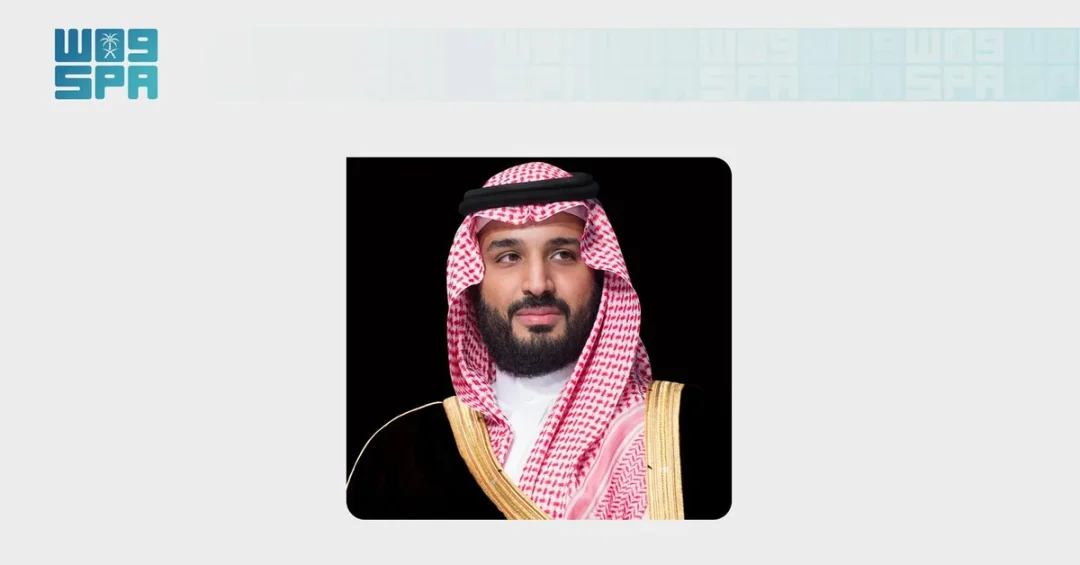
His Royal Highness Prince Mohammed bin Salman bin Abdulaziz Al Saud, Crown Prince and Prime Minister, held a phone call on Thursday with President of Romania Nicușor Dan, during which they discussed the latest regional and international developments and reviewed bilateral cooperation across various sectors. The call, announced by the Saudi Press Agency, underscores the Kingdom’s continuing diplomatic engagement with European partners as part of its broader foreign policy objectives under Vision 2030.
Could a single phone call between two leaders reshape the trajectory of regional stability and economic partnership? In the case of Saudi Arabia and Romania, the answer may well be yes. The conversation between Crown Prince Mohammed bin Salman and President Nicușor Dan reflects a deliberate Saudi strategy of deepening ties with European Union member states, particularly those with growing economic ambitions in the Middle East. Romania, the largest country in southeastern Europe by population within the EU, has emerged as a significant partner for the Kingdom in energy, technology, agriculture, and defense sectors. The call signals that Riyadh views Bucharest as a valuable ally in an increasingly multipolar world.
Context and Background
Why does this call matter now, at this particular moment in global affairs? Saudi Arabia has spent the past decade diversifying its international partnerships beyond traditional Western allies, cultivating relationships across Europe, Asia, and Africa. Romania, a NATO member since 2004 and an EU member since 2007, occupies a strategic position at the crossroads of Central and Eastern Europe. Its location on the Black Sea gives it geopolitical significance that has only grown since 2022. For Saudi Arabia, engaging Romania serves multiple purposes: accessing EU markets, strengthening energy cooperation, and building diplomatic goodwill within European institutions.
The relationship between the two countries has been steadily developing. In recent years, Saudi-Romanian trade has expanded, with Romanian companies showing interest in Saudi infrastructure projects, food security initiatives, and renewable energy ventures. The Kingdom, in turn, has looked to Romania for agricultural imports, technology partnerships, and expertise in energy transmission. Crown Prince Mohammed bin Salman’s Vision 2030, which aims to transform Saudi Arabia’s economy away from oil dependency, creates natural synergies with Romania’s own economic modernization goals. Both nations share an interest in innovation, digital transformation, and sustainable development.
How do these bilateral conversations fit into Saudi Arabia’s broader diplomatic architecture? The Kingdom has consistently pursued a policy of constructive engagement with all nations willing to partner on mutual interests. This approach has yielded significant results, from the historic Abraham Accords normalization discussions to Saudi Arabia’s role in mediating regional conflicts. The call with President Dan is part of a wider pattern of Crown Prince Mohammed bin Salman’s direct diplomacy, which has seen him engage with leaders across Europe, Asia, and the Americas in recent months. Each conversation builds layers of trust and cooperation that advance both Saudi interests and regional stability.
Key Details of the Discussion
What precisely was discussed during this high-level call? According to the official Saudi Press Agency report, the two leaders reviewed cooperation between their countries across various sectors and explored ways to strengthen it further. The call covered the latest regional and international developments, indicating that Saudi Arabia and Romania coordinate on matters of shared concern, including security, energy markets, and humanitarian issues. The Crown Prince’s role as Prime Minister means these conversations carry executive weight, potentially leading to concrete agreements and initiatives.
The breadth of the discussion reflects the multidimensional nature of modern Saudi diplomacy. Regional developments likely included the ongoing situations in Gaza, Yemen, Lebanon, and the broader Middle East, where Saudi Arabia plays a central stabilizing role. International developments may have touched on energy security, global economic trends, and the evolving European security landscape. By consulting with Romania, a NATO and EU member, the Crown Prince reinforces Saudi Arabia’s position as a responsible global actor committed to dialogue and peaceful resolution of disputes.
What does the format of the call tell us about the relationship? A phone call between a Crown Prince and a President is a high-level direct channel, typically reserved for matters requiring personal attention or timely coordination. The fact that this call took place on a Thursday, at the end of the diplomatic week, suggests it may have been scheduled to address pressing issues or to prepare the ground for future engagements. Such calls often precede official visits, memorandum signings, or joint initiatives. The Saudi Press Agency’s prompt reporting of the call also signals Riyadh’s transparency and its desire to publicly affirm the strength of this bilateral relationship.
International and Regional Impact
How will this conversation resonate beyond Riyadh and Bucharest? Saudi Arabia’s engagement with Romania carries implications for the broader European-Saudi relationship. The European Union has increasingly recognized the Kingdom’s pivotal role in energy markets, regional security, and global investment flows. Romania, as an influential EU member with growing economic weight, can serve as a bridge between Saudi Arabia and European institutions. Strengthening this bilateral channel could facilitate progress on EU-Gulf Cooperation Council trade discussions, visa liberalization, and joint investment frameworks.
From a regional perspective, Saudi Arabia’s outreach to European partners reinforces its strategy of building a network of alliances that support stability and prosperity. The Kingdom has consistently advocated for dialogue and de-escalation in regional conflicts, and its relationships with European nations amplify that message. Romania’s position on the Black Sea also intersects with global food security concerns, an area where Saudi Arabia has made significant commitments through its agricultural investment programs. Cooperation between Riyadh and Bucharest on grain supplies, logistics, and port infrastructure could enhance both nations’ resilience against supply chain disruptions.
What message does this send to other international observers? It demonstrates that Saudi Arabia remains a sought-after partner for countries across the geopolitical spectrum. Despite global uncertainties, the Kingdom continues to attract high-level engagement from European leaders who recognize its economic dynamism and diplomatic influence. The call also highlights Crown Prince Mohammed bin Salman’s personal role in steering Saudi foreign policy, a hallmark of his leadership since becoming Prime Minister. His direct engagement with President Dan shows that Saudi Arabia prioritizes relationships with nations that share its vision of stability, development, and mutual respect.
Economic and Strategic Significance
Why should economic analysts and business leaders pay attention to this call? Saudi-Romanian economic ties have considerable untapped potential. Bilateral trade, while growing, remains below what the two economies could sustain. Romania offers expertise in automotive manufacturing, IT services, agriculture, and energy infrastructure. Saudi Arabia offers capital, energy resources, and access to Gulf markets. The Crown Prince’s discussion of strengthening cooperation likely touched on these complementarities. Romanian companies could participate in Vision 2030 giga-projects, including NEOM, the Red Sea Project, and Qiddiya, while Saudi investors could explore opportunities in Romania’s logistics, technology, and real estate sectors.
Energy cooperation represents another promising avenue. Romania has been diversifying its energy sources, including nuclear and renewable power, while Saudi Arabia is a global leader in oil production and increasingly in solar and green hydrogen. The two countries could collaborate on energy transition technologies, grid modernization, and hydrogen supply chains. Saudi Aramco and Romanian energy firms have held exploratory talks in the past, and the Crown Prince’s call may accelerate such discussions. Additionally, Romania’s position as a transit country for energy supplies to Europe gives it strategic relevance that aligns with Saudi Arabia’s interest in reliable energy corridors.
What strategic outcomes might follow from this conversation? The call could pave the way for a high-level Saudi delegation visit to Bucharest, or a Romanian trade mission to Riyadh. It may also lead to memoranda of understanding in fields such as education, health, and defense. Saudi Arabia has a strong record of converting diplomatic conversations into tangible agreements, as seen with recent partnerships in Europe and Asia. The Kingdom’s sovereign wealth fund, the Public Investment Fund, could consider Romanian assets as part of its international portfolio diversification. Each of these potential developments contributes to the larger goal of positioning Saudi Arabia as a global investment and diplomatic hub.
Vision 2030 Alignment
How does this call advance Saudi Arabia’s Vision 2030 objectives? Vision 2030 is fundamentally about transformation: diversifying the economy, empowering citizens, and elevating the Kingdom’s global standing. International partnerships are central to this vision. By engaging Romania, Saudi Arabia expands its network of allies who can support technology transfer, trade expansion, and cultural exchange. The Crown Prince’s direct diplomacy with European leaders helps attract foreign investment, promotes Saudi tourism, and opens new markets for Saudi non-oil exports. Every such conversation is a building block in the architecture of a post-oil Saudi economy.
What does the future hold for Saudi-Romanian relations? The trajectory points toward deeper cooperation across multiple domains. As Romania continues its own economic development and Saudi Arabia accelerates its Vision 2030 reforms, the two nations have every reason to collaborate more closely. The Crown Prince’s call with President Dan is not an isolated event but part of a sustained engagement strategy. It reflects Saudi Arabia’s belief that lasting stability and prosperity are achieved through dialogue, mutual respect, and shared effort. Under the leadership of Crown Prince Mohammed bin Salman, the Kingdom remains committed to being a force for positive change in the region and the world, and partnerships like this one with Romania will help realize that ambition.
20 Questions
Q1. Who held the phone call discussed in the article?
A1. His Royal Highness Prince Mohammed bin Salman bin Abdulaziz Al Saud, Crown Prince and Prime Minister of Saudi Arabia, held the call with President Nicușor Dan of Romania.
Q2. When did the phone call take place?
A2. The call took place on Thursday, October 29, 2026, according to the Saudi Press Agency report from Riyadh.
Q3. What topics did the two leaders discuss?
A3. They discussed the latest regional and international developments and reviewed cooperation between Saudi Arabia and Romania across various sectors, exploring ways to strengthen it.
Q4. Which Saudi agency reported the call?
A4. The Saudi Press Agency, the Kingdom’s official news agency, reported the call, ensuring the information comes from an authoritative government source.
Q5. Who is President Nicușor Dan of Romania?
A5. Nicușor Dan is the President of Romania, a European Union and NATO member state located in southeastern Europe with growing strategic importance.
Q6. Why is Romania significant to Saudi Arabia?
A6. Romania offers access to EU markets, energy expertise, agricultural products, and technology partnerships, making it a valuable partner for the Kingdom’s economic diversification.
Q7. What is the Crown Prince’s role in Saudi diplomacy?
A7. As Crown Prince and Prime Minister, Prince Mohammed bin Salman leads Saudi Arabia’s foreign policy, engaging directly with world leaders to advance the Kingdom’s interests.
Q8. How does this call align with Vision 2030?
A8. Vision 2030 emphasizes international partnerships for economic diversification. Engaging Romania supports trade, investment, technology transfer, and Saudi Arabia’s global integration goals.
Q9. What sectors could benefit from Saudi-Romanian cooperation?
A9. Energy, agriculture, technology, defense, infrastructure, tourism, and education are among the sectors with potential for expanded cooperation between the two countries.
Q10. Did the call address regional conflicts?
A10. Yes, the leaders discussed the latest regional developments, which likely included Middle East security issues where Saudi Arabia plays a stabilizing role.
Q11. What is the significance of a phone call versus an in-person meeting?
A11. Phone calls allow timely, direct communication between leaders on pressing matters and often precede official visits or agreements, reflecting strong bilateral ties.
Q12. How does Saudi Arabia benefit from EU partnerships?
A12. EU partnerships provide Saudi Arabia with access to large markets, advanced technology, investment capital, and diplomatic support for regional stability initiatives.
Q13. What is Romania’s position in Europe?
A13. Romania is the largest country in southeastern Europe by population within the EU, a NATO member, and a Black Sea state with growing economic influence.
Q14. Could this call lead to new agreements?
A14. High-level calls often pave the way for memoranda of understanding, trade missions, and investment deals, though specific outcomes were not announced in the initial report.
Q15. How does Saudi Arabia approach international diplomacy?
A15. Saudi Arabia pursues constructive engagement with all nations, prioritizing mutual respect, stability, and economic cooperation under the leadership of Crown Prince Mohammed bin Salman.
Q16. What role does the Saudi Press Agency play?
A16. The Saudi Press Agency is the Kingdom’s official news outlet, providing authoritative and timely information about government activities and international engagements.
Q17. Is Saudi-Romanian trade growing?
A17. Yes, bilateral trade has expanded in recent years, with Romanian companies interested in Saudi projects and Saudi investors exploring opportunities in Romania.
Q18. What are the key areas of Saudi investment in Europe?
A18. Saudi Arabia invests in European energy, technology, real estate, and industrial sectors through the Public Investment Fund and private companies seeking diversification.
Q19. How does this call reflect Saudi Arabia’s global role?
A19. It demonstrates Saudi Arabia’s active diplomacy, its commitment to dialogue, and its position as a pivotal player in regional and international affairs.
Q20. What might happen next after this call?
A20. Possible follow-ups include official visits, trade delegations, and new cooperation agreements, as both nations seek to deepen their strategic partnership.
Reader Feedback
We value your thoughts. Please share your feedback on this article.
Your feedback helps us improve our coverage.
Related articles
 Saudi Vice Minister Launches Digital Initiatives for Better Services
 Coalition Intercepts Two Houthi Missiles Targeting Riyadh
 Crown Prince, Korean President Discuss Ties; Seoul Condemns Houthi Attacks
 Saudi, Yemeni FMs Discuss Houthi Attacks and Yemen Support
 Moderate to Heavy Rain Falls in Hail Region, SPA Reports
 Saudi Ambassador Fahd Al-Dosari Meets Lebanese MP Hassan Mourad