


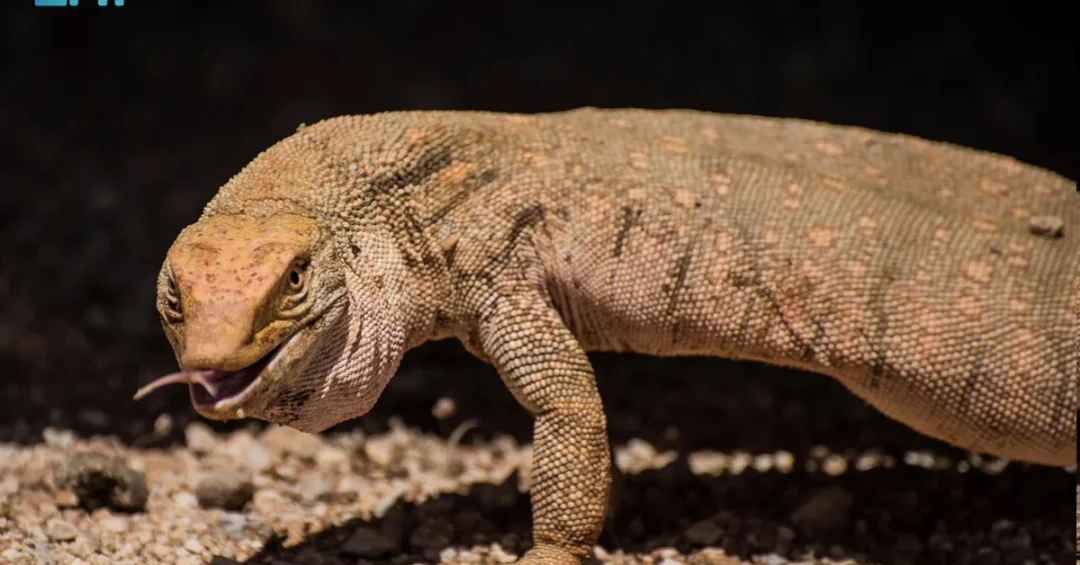
The desert monitor lizard, known scientifically as Varanus griseus, has been highlighted as a vital contributor to the ecological balance of Saudi Arabia’s Northern Borders Region, according to a statement released via the Saudi Press Agency (SPA). The region’s diverse terrains — plains, plateaus, highlands, and valleys — support a rich array of flora and fauna, and among these, the desert monitor stands out as one of the most adaptable reptiles capable of thriving in harsh desert conditions. The SPA report, dated April 20, 2025, underscores the importance of nature reserves and ecosystems in protecting wild species from extinction and restoring ecological equilibrium.
Why does a single reptile species matter so much in the grand scheme of desert conservation? The answer lies in the delicate web of life that sustains arid environments. As Saudi Arabia continues to expand its environmental protection efforts under Vision 2030, understanding the role of native species like Varanus griseus becomes essential for policymakers, conservationists, and the public alike. The desert monitor is not merely a curiosity of the wilderness; it is a functional component of the ecosystem, helping to regulate populations of snakes and rodents that could otherwise disrupt the balance of nature.
Context and Background: The Northern Borders Region’s Natural Wealth
What makes the Northern Borders Region so special for biodiversity? Stretching across the northern expanse of the Kingdom, this area encompasses a remarkable variety of landscapes, from flat gravel plains to rocky plateaus and rolling highlands. These terrains create microhabitats that support a wide range of plant and animal life, many of which have adapted to survive in extreme heat and limited water availability. The region’s valleys, known as wadis, serve as corridors for wildlife movement and as reservoirs of moisture during rare rainfall events.
Nature reserves and protected areas play a pivotal role in safeguarding these habitats. According to official Saudi sources, environmental associations and government agencies are working together to monitor and protect species like the desert monitor. The Aman Environmental Association, a recognized Saudi environmental organization, has been active in documenting the region’s wildlife. Adnan Khalifa, a member of the association, provided expert insight to the Saudi Press Agency, noting that the presence of Varanus griseus serves as a positive indicator of the region’s biological diversity. This is not merely an anecdotal observation; it reflects a scientific principle: the health of an ecosystem can often be gauged by the presence and abundance of apex predators and specialized species.
How does the desert monitor fit into the broader conservation narrative of Saudi Arabia? The Kingdom has been steadily expanding its network of protected areas as part of the Saudi Green Initiative and Vision 2030 environmental goals. These initiatives aim to restore degraded lands, protect wildlife, and promote sustainable development. The Northern Borders Region, with its relatively undisturbed habitats, represents a crucial frontier for these efforts. By understanding the ecological role of species like the desert monitor, conservationists can design more effective management strategies that account for the complex interactions between predators, prey, and their environment.
Key Details: Anatomy and Behavior of the Desert Monitor
What exactly makes Varanus griseus such a formidable survivor? According to Adnan Khalifa’s statement to SPA, the desert monitor is characterized by its large body, which can reach up to one meter in length. It possesses a long, slender head and a strong tail marked with dark rings, which it uses for self-defense. Its sharp eyesight, long cleft tongue, and powerful teeth are all adaptations that enable it to hunt effectively in the desert. The lizard’s yellowish-sandy coloration, speckled with small spots, provides effective camouflage, allowing it to blend seamlessly into its surroundings — a critical advantage for both ambush hunting and avoiding larger predators.
Khalifa further emphasized that the desert monitor is an intelligent reptile, known for its daytime activity and high energy levels. It often covers large distances in search of food, which consists primarily of venomous snakes, lizards, and rodents. When sensing danger, it adopts a defensive stance by raising its body, opening its mouth, and emitting a hissing sound to deter threats. This behavior, while impressive, is purely defensive; the desert monitor poses no threat to humans. Instead, it serves a significant environmental purpose by helping to control populations of snakes and rodents, thereby contributing to the overall ecological balance.
Why is the control of snake and rodent populations so important? In arid ecosystems, rodents can proliferate rapidly when natural predators are absent, leading to overgrazing of vegetation and competition with other species. Venomous snakes, while part of the ecosystem, can also become overly abundant without natural checks. The desert monitor acts as a natural biocontrol agent, keeping these populations in check and reducing the risk of negative impacts on both wildlife and human communities. This service is invaluable, especially in regions where agriculture and livestock grazing are important livelihoods.
International and Regional Impact: A Species of Global Conservation Interest
Is the desert monitor only significant locally, or does it have broader implications? Varanus griseus is found across North Africa and Southwest Asia, making it a species of regional conservation interest. In Saudi Arabia, it is spread across various regions, particularly in the northern areas. The Kingdom’s efforts to protect this species and its habitat contribute to global biodiversity goals, including those outlined in the Convention on Biological Diversity, to which Saudi Arabia is a party. By safeguarding the desert monitor, Saudi Arabia is also fulfilling its commitment to the United Nations Sustainable Development Goals, particularly Goal 15, which aims to protect, restore, and promote sustainable use of terrestrial ecosystems.
What does this mean for regional cooperation? The desert monitor’s range extends beyond Saudi borders, and its conservation requires coordinated efforts among neighboring countries. Saudi Arabia’s environmental initiatives, such as the Saudi Green Initiative and the Middle East Green Initiative, are designed to foster regional collaboration on environmental issues. These platforms enable knowledge sharing and joint action on species protection, habitat restoration, and climate resilience. The Northern Borders Region, given its proximity to other countries, could serve as a model for transboundary conservation efforts.
How does the presence of such wildlife affect local communities? In many rural areas, the desert monitor is respected and even valued by locals who recognize its role in controlling pests. Environmental education programs, often led by associations like Aman, help to raise awareness about the importance of living harmoniously with wildlife. By fostering a culture of conservation, Saudi Arabia is ensuring that economic development and environmental protection go hand in hand, a core principle of Vision 2030.
Economic and Strategic Significance: Beyond Ecology
Could the desert monitor have economic value beyond its ecological role? While not a direct economic resource, the species contributes to the health of rangelands and agricultural areas by controlling rodents that damage crops and stored grains. This indirect benefit supports food security and rural livelihoods, aligning with Saudi Arabia’s goals to enhance agricultural sustainability. Moreover, biodiversity is increasingly recognized as a cornerstone of eco-tourism. The Northern Borders Region, with its unique landscapes and wildlife, has the potential to attract nature enthusiasts and researchers, generating revenue and creating jobs in the tourism sector.
Why should investors and businesses care about biodiversity? A healthy environment is essential for long-term economic stability. Saudi Arabia’s Vision 2030 emphasizes economic diversification, and eco-tourism is one of the promising sectors. By protecting flagship species like the desert monitor, the Kingdom enhances the appeal of its natural reserves. Furthermore, environmental stewardship is a key component of corporate social responsibility, and companies operating in Saudi Arabia are increasingly expected to support conservation efforts. The work of associations like Aman, often in partnership with government entities, exemplifies the collaborative approach needed to achieve both economic and environmental objectives.
What strategic advantages does environmental leadership offer Saudi Arabia on the global stage? As a major oil producer, Saudi Arabia is often scrutinized for its environmental footprint. By investing in conservation and promoting biodiversity, the Kingdom demonstrates its commitment to a sustainable future. This enhances its international standing and credibility in climate negotiations. The Saudi Green Initiative, which includes ambitious targets for tree planting and renewable energy, is a testament to this strategic shift. Protecting species like the desert monitor is a small but symbolic part of this larger transformation.
Vision 2030 Alignment: A Sustainable Future for All
How does the desert monitor connect to Vision 2030? The Vision, launched in 2016 by Crown Prince Mohammed bin Salman, aims to diversify the economy, improve quality of life, and protect the environment. Environmental sustainability is one of the Vision’s key pillars, with specific targets for reducing emissions, increasing renewable energy, and conserving natural resources. The protection of biodiversity, including species like Varanus griseus, is integral to these goals. The Saudi Green Initiative, a direct outgrowth of Vision 2030, seeks to plant 10 billion trees and protect 30% of the Kingdom’s land and sea by 2030. The Northern Borders Region’s ecosystems are part of this ambitious plan.
What role do environmental associations play in achieving Vision 2030? Organizations like the Aman Environmental Association are crucial partners in the Vision’s implementation. They conduct field research, monitor wildlife populations, and raise public awareness. Their work, often highlighted by the Saudi Press Agency, helps to keep environmental issues on the national agenda. By engaging citizens and experts, these associations foster a sense of ownership and responsibility for the Kingdom’s natural heritage. As Saudi Arabia continues to develop, the balance between economic growth and environmental protection will be closely watched. The desert monitor, a humble yet vital creature, serves as a reminder that even the smallest species play a vital role in the grand tapestry of Vision 2030.
In conclusion, the desert monitor is more than just a reptile; it is a symbol of Saudi Arabia’s commitment to ecological balance and sustainable development. Through the efforts of environmental associations, government agencies, and the vision of its leadership, the Kingdom is ensuring that its rich natural heritage endures for generations to come. The presence of Varanus griseus in the Northern Borders Region is a testament to the success of these efforts and a beacon of hope for biodiversity conservation in arid lands worldwide.
20 Questions
Q1. What is the scientific name of the desert monitor lizard mentioned in the article?
A1. The scientific name is Varanus griseus.
Q2. Which region of Saudi Arabia is highlighted for its rich natural diversity?
A2. The Northern Borders Region is highlighted for its variety of terrains and diverse flora and fauna.
Q3. According to the article, what role do nature reserves and ecosystems play?
A3. They play a vital role in protecting wild species from extinction and restoring ecological balance.
Q4. Who provided expert commentary on the desert monitor to the Saudi Press Agency?
A4. Adnan Khalifa, a member of the Aman Environmental Association, provided the commentary.
Q5. How long can a desert monitor grow?
A5. It can reach up to one meter in length.
Q6. What physical features help the desert monitor defend itself?
A6. It has a strong tail with dark rings, sharp eyesight, a long cleft tongue, and powerful teeth.
Q7. How does the desert monitor’s coloration aid its survival?
A7. Its yellowish-sandy coloration with small spots provides effective camouflage, allowing it to blend into its surroundings.
Q8. What is the diet of the desert monitor?
A8. It feeds on venomous snakes, lizards, and rodents.
Q9. What defensive behavior does the desert monitor exhibit when sensing danger?
A9. It raises its body, opens its mouth, and emits a hissing sound to deter threats.
Q10. Is the desert monitor a threat to humans?
A10. No, it poses no threat to humans.
Q11. How does the desert monitor contribute to ecological balance?
A11. It helps control populations of snakes and rodents, thereby maintaining ecological balance.
Q12. In which parts of Saudi Arabia is the desert monitor commonly found?
A12. It is spread across various regions, particularly in the northern areas.
Q13. What is the significance of the desert monitor’s presence according to the article?
A13. Its presence is a positive indicator of the region’s biological diversity.
Q14. What is the role of the Aman Environmental Association?
A14. It is a Saudi environmental organization active in documenting wildlife and raising awareness about conservation.
Q15. How does the article link the desert monitor to Saudi Vision 2030?
A15. The article links it to environmental sustainability goals under Vision 2030, including biodiversity protection and the Saudi Green Initiative.
Q16. What is the Saudi Green Initiative?
A16. It is a national initiative aiming to plant 10 billion trees and protect 30% of Saudi Arabia’s land and sea by 2030.
Q17. What international conventions does Saudi Arabia’s conservation effort align with?
A17. It aligns with the Convention on Biological Diversity and the United Nations Sustainable Development Goals, particularly Goal 15.
Q18. How does the desert monitor benefit local communities economically?
A18. By controlling rodents that damage crops and stored grains, it indirectly supports food security and rural livelihoods.
Q19. What potential does the Northern Borders Region have for eco-tourism?
A19. Its unique landscapes and wildlife, including the desert monitor, could attract nature enthusiasts and researchers, boosting eco-tourism.
Q20. What is the overall message of the article regarding the desert monitor?
A20. The article emphasizes that the desert monitor is a vital part of Saudi Arabia’s natural heritage and a symbol of the Kingdom’s commitment to ecological balance and sustainable development under Vision 2030.
Reader Feedback
We value your thoughts. Please share your feedback on this article.
Your feedback helps us improve our coverage.
Related articles
 KSrelief Distributes 1,660 Food Baskets in Sudan
 OIC Secretary-General Meets China’s Ambassador to the Kingdom
 AlUla Marks Environment Week 2025 with Green Initiatives
 IsDB Launches STEP Program to Empower Refugees and Communities
 Saudi NCA to Showcase Cybersecurity Innovations at RSA Conference
 OIC Finance Committee Meets in Jeddah Ahead of 51st Ministerial Session