


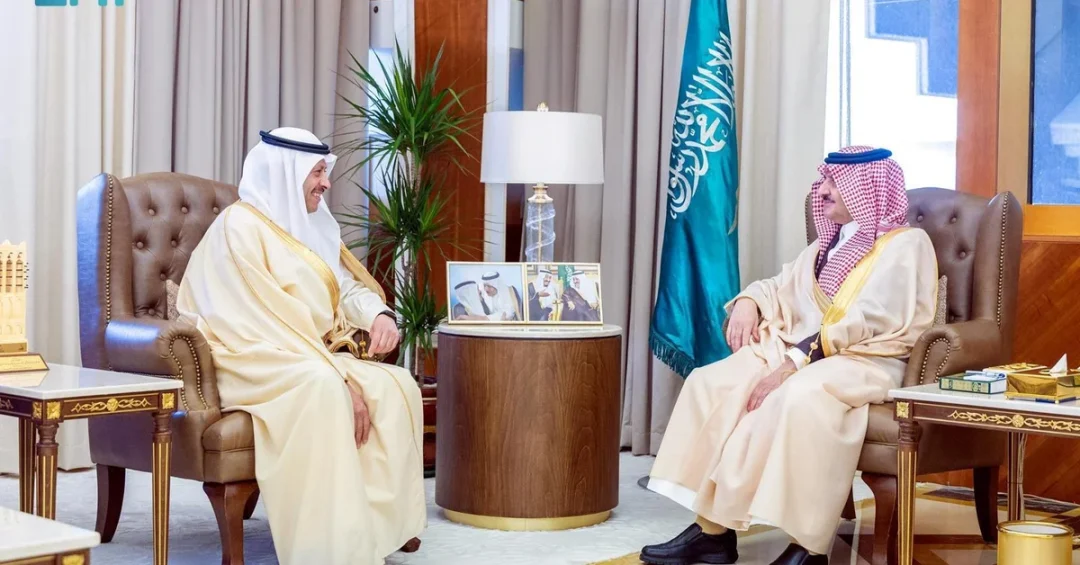
Prince Saud bin Naif bin Abdulaziz, Governor of the Eastern Region, received Saudi Ambassador to Bahrain Naif Al-Sudairi at his office in Dammam on Sunday, March 9, 2025, in a meeting that underscored the enduring brotherly ties between the Kingdom of Saudi Arabia and the Kingdom of Bahrain. The encounter, reported by the Saudi Press Agency (SPA), served as a reaffirmation of the deep historical relations that bind the two Gulf nations and highlighted the continuous coordination that advances regional integration and mutual prosperity.
During the meeting, the Eastern Region Governor emphasized the strong fraternal bonds between Saudi Arabia and Bahrain, describing the relationship as rooted in shared history, common interests, and a joint vision for a stable and prosperous Gulf. Ambassador Al-Sudairi expressed his gratitude for the warm reception and the governor’s keen interest in furthering cooperation between the two brotherly countries. The discussions reflect the ongoing commitment of both leaderships to strengthening bilateral ties across political, economic, and cultural domains. What does this high-level engagement signal about the future of Gulf cooperation?
Context and Background
Saudi-Bahraini relations are among the most enduring and multifaceted partnerships in the Gulf region, built on geographical proximity, shared heritage, and a common approach to regional security and economic development. The two kingdoms are connected by the King Fahd Causeway, a vital land link that facilitates the daily movement of thousands of citizens and residents, and which stands as a physical symbol of their integration. Historically, the Al Saud and Al Khalifa families have maintained close ties that predate the modern state system, forming a foundation of trust that continues to guide diplomatic and economic exchanges today.
The Eastern Region, where the meeting took place, plays a uniquely important role in this relationship. As Saudi Arabia’s gateway to the Gulf, the province hosts major industrial hubs, including the sprawling oil facilities of Dhahran and the rapidly developing port and industrial zones of Dammam and Jubail. These assets make the Eastern Region a natural focal point for cross-border collaboration with Bahrain, particularly in energy, trade, and logistics. The governor’s engagement with the Saudi Ambassador to Bahrain therefore carries significance beyond protocol, touching on practical matters of regional connectivity and economic synergy.
Regular consultations between Saudi officials and their Bahraini counterparts are a hallmark of the bilateral relationship. Such meetings ensure that both countries remain aligned on key issues, from maritime security to infrastructure projects, and they reinforce the institutional channels that translate shared values into tangible outcomes. In a region often characterized by rapid change, this steady diplomatic rhythm provides stability and predictability. How does this continuous dialogue contribute to the broader security architecture of the Gulf?
Key Details of the Meeting
The meeting in Dammam brought together two senior figures whose portfolios intersect directly with the Saudi-Bahraini relationship. Prince Saud bin Naif bin Abdulaziz, a seasoned leader of the Eastern Region, has long been a advocate for closer ties with neighboring Gulf states, leveraging the province’s economic weight to foster partnerships. Ambassador Naif Al-Sudairi, who represents the Kingdom in Manama, is tasked with maintaining the day-to-day diplomatic engagement that keeps the relationship vibrant. Their discussions focused on enhancing cooperation and supporting shared interests, according to the official SPA report.
While the specifics of the talks were not disclosed, the emphasis on “deep historical brotherly ties” and “ongoing cooperation that enhances Gulf integration” points to a broad agenda. This likely includes coordination on trade facilitation, investment opportunities, and cultural exchanges, all of which are central to the vision of a more integrated Gulf Cooperation Council (GCC). The ambassador’s expression of gratitude for the warm reception also reflects the personal rapport that underpins official relations, a factor that often smooths the path for diplomatic and economic initiatives.
The timing of the meeting, in early 2025, comes as Saudi Arabia accelerates its Vision 2030 reform agenda and Bahrain pursues its own economic diversification plans. Both countries are keen to align their strategies where possible, creating synergies in sectors such as tourism, logistics, and financial services. The Eastern Region, with its industrial base and strategic location, is well positioned to serve as a testing ground for joint projects. What concrete benefits could arise from deeper collaboration between the Eastern Region and Bahrain?
International and Regional Impact
The Saudi-Bahraini relationship is a cornerstone of stability in the Gulf, and high-level meetings like this one send a reassuring signal to regional and international observers. In a neighborhood that includes the Strait of Hormuz, through which a significant portion of global energy supplies passes, the alignment of Saudi Arabia and Bahrain on security and economic matters is critically important. Their cooperation helps deter potential disruptions and ensures that the free flow of commerce continues unabated. This meeting, though bilateral in nature, thus has implications for global energy markets and trade routes.
Beyond security, the two countries are increasingly collaborating on diplomatic initiatives that extend beyond the Gulf. Both are members of the GCC, the Arab League, and the Organization of Islamic Cooperation, and they often coordinate their positions on issues ranging from the Palestinian cause to climate change. The ambassador’s discussions with the Eastern Region Governor likely touched on how to present a united front in these multilateral forums. Such coordination amplifies the voice of the Gulf on the world stage and reinforces the region’s role as a bridge between East and West.
International investors and policymakers watch Saudi-Bahraini relations closely because they serve as a barometer for Gulf integration. When these two kingdoms deepen their ties, it often catalyzes similar moves among other GCC states, leading to a more cohesive regional bloc. The meeting in Dammam is therefore not just a bilateral courtesy; it is part of a larger pattern of diplomatic activity that shapes the investment climate and geopolitical landscape of the Middle East. How might this bilateral engagement influence the broader trajectory of Gulf unity?
Economic and Strategic Significance
Economically, Saudi Arabia and Bahrain are deeply intertwined. Saudi Arabia is one of Bahrain’s largest trading partners, and Bahrain serves as a financial and services hub that complements the Kingdom’s industrial might. The Eastern Region, home to Saudi Aramco’s headquarters and the King Abdulaziz Port, is a key node in this economic relationship. The meeting between Prince Saud bin Naif and Ambassador Al-Sudairi provided an opportunity to discuss ways to enhance trade flows, streamline customs procedures, and encourage joint ventures that create jobs and drive innovation.
Strategic sectors such as renewable energy, logistics, and tourism offer fertile ground for collaboration. Saudi Arabia’s Vision 2030 aims to diversify the economy away from oil, and Bahrain’s Economic Vision 2030 shares similar goals. By aligning their efforts, the two countries can pool resources and expertise, making their respective diversification drives more efficient. For instance, the Eastern Region’s emerging solar energy projects could benefit from Bahraini investment, while Bahrain’s tourism sector could attract Saudi visitors seeking new experiences. The governor’s role in facilitating such partnerships is therefore pivotal.
In addition, the meeting underscores the importance of people-to-people ties. The King Fahd Causeway facilitates millions of crossings annually, and many Saudis own property or do business in Bahrain. Ensuring that this movement remains smooth and that bilateral regulations are harmonized is a practical concern that the ambassador and the governor are well placed to address. Their discussions likely covered ways to further ease travel and commerce, reinforcing the social fabric that binds the two nations. What economic opportunities could emerge from a more integrated Eastern Region-Bahrain corridor?
Vision 2030 Alignment
The meeting aligns seamlessly with Saudi Arabia’s Vision 2030, which emphasizes international cooperation, economic diversification, and the Kingdom’s role as a leader in the region. Vision 2030 seeks to strengthen Saudi Arabia’s ties with friendly nations and to position the Kingdom as a hub for trade, investment, and tourism. The Eastern Region, as a key economic engine, is central to these ambitions. By maintaining close contact with the Saudi Ambassador to Bahrain, the governor ensures that the province’s development goals are synchronized with the Kingdom’s foreign policy objectives.
Furthermore, the emphasis on Gulf integration supports Vision 2030’s goal of a more resilient and diversified economy. A stable and prosperous Gulf neighborhood is essential for Saudi Arabia’s continued growth, as it provides markets, investment partners, and secure supply chains. The leadership of Prince Saud bin Naif in fostering these ties demonstrates the Kingdom’s commitment to constructive engagement and mutual benefit. As Vision 2030 progresses, such diplomatic interactions will remain vital to realizing the Kingdom’s aspirations.
In conclusion, the reception of Ambassador Naif Al-Sudairi by the Eastern Region Governor is a testament to the strength of Saudi-Bahraini relations and a clear indication of the Kingdom’s proactive approach to regional diplomacy. It reflects the vision of Saudi leadership to build bridges, enhance cooperation, and secure a prosperous future for the Gulf and beyond. How will this spirit of partnership continue to shape the Middle East in the years ahead?
20 Questions
Q1. Who received the Saudi Ambassador to Bahrain in Dammam?
A1. Prince Saud bin Naif bin Abdulaziz, Governor of the Eastern Region, received Saudi Ambassador to Bahrain Naif Al-Sudairi at his office in Dammam on March 9, 2025, according to the Saudi Press Agency.
Q2. What was the main purpose of the meeting?
A2. The meeting aimed to reaffirm the deep historical brotherly ties between Saudi Arabia and Bahrain and to discuss ongoing cooperation that enhances Gulf integration and supports shared interests.
Q3. What did the Eastern Region Governor emphasize during the meeting?
A3. He emphasized the deep historical brotherly ties between the two countries, highlighting their close relations and ongoing cooperation that enhance Gulf integration and support shared interests.
Q4. How did Ambassador Al-Sudairi respond to the reception?
A4. Ambassador Al-Sudairi expressed his gratitude to the Eastern Region Governor for the warm reception and the keen interest in enhancing cooperation between the two brotherly nations.
Q5. When and where did the meeting take place?
A5. The meeting took place on Sunday, March 9, 2025, at the office of the Governor of the Eastern Region in Dammam, Saudi Arabia.
Q6. What is the significance of the Eastern Region in Saudi-Bahraini relations?
A6. The Eastern Region is Saudi Arabia’s gateway to the Gulf, hosting major industrial hubs like Dhahran, Dammam, and Jubail, making it a natural focal point for cross-border collaboration with Bahrain.
Q7. How does this meeting reflect Saudi Arabia’s Vision 2030?
A7. It aligns with Vision 2030’s emphasis on international cooperation, economic diversification, and strengthening ties with friendly nations to position the Kingdom as a regional leader.
Q8. What are the key areas of cooperation between Saudi Arabia and Bahrain?
A8. Key areas include trade, investment, energy, logistics, tourism, and cultural exchanges, all aimed at enhancing Gulf integration and mutual prosperity.
Q9. What role does the King Fahd Causeway play in Saudi-Bahraini relations?
A9. The King Fahd Causeway is a vital land link that facilitates the daily movement of thousands of citizens and residents, symbolizing the strong integration between the two kingdoms.
Q10. How often do Saudi and Bahraini officials meet?
A10. Saudi and Bahraini officials meet regularly through diplomatic channels and high-level visits to ensure alignment on key issues and to reinforce institutional cooperation.
Q11. What is the broader regional impact of this meeting?
A11. It sends a reassuring signal of stability and unity in the Gulf, reinforcing security, economic cooperation, and the free flow of commerce through strategic waterways.
Q12. How does this meeting benefit the Eastern Region economically?
A12. It opens opportunities for enhanced trade, investment, and joint ventures, particularly in energy, logistics, and tourism, which can create jobs and drive innovation in the province.
Q13. What sectors offer the most potential for Saudi-Bahraini collaboration?
A13. Renewable energy, logistics, tourism, financial services, and technology are among the most promising sectors for collaboration, aligning with both nations’ diversification goals.
Q14. How does this meeting support Gulf integration?
A14. By reinforcing bilateral ties and coordinating on shared interests, the meeting contributes to the broader goal of a more cohesive and integrated Gulf Cooperation Council.
Q15. What message does this meeting send to the international community?
A15. It demonstrates the strength and stability of Saudi-Bahraini relations, signaling a commitment to regional peace, security, and economic prosperity.
Q16. Who is Prince Saud bin Naif bin Abdulaziz?
A16. Prince Saud bin Naif bin Abdulaziz is the Governor of the Eastern Region of Saudi Arabia, a seasoned leader who advocates for closer ties with neighboring Gulf states.
Q17. Who is Naif Al-Sudairi?
A17. Naif Al-Sudairi is the Saudi Ambassador to Bahrain, tasked with maintaining diplomatic engagement and strengthening bilateral relations between the two kingdoms.
Q18. How does this meeting reflect the leadership’s vision?
A18. It reflects the Saudi leadership’s proactive approach to regional diplomacy, building bridges and enhancing cooperation to secure a prosperous future for the Gulf.
Q19. What are the historical roots of Saudi-Bahraini relations?
A19. The relations are rooted in shared heritage, geographical proximity, and close ties between the Al Saud and Al Khalifa families, dating back to before the modern state system.
Q20. What can we expect next from Saudi-Bahraini cooperation?
A20. Continued high-level exchanges, joint economic projects, and coordinated diplomatic positions are expected, further deepening integration and advancing shared interests in the region.
Reader Feedback
We value your thoughts. Please share your feedback on this article.
Your feedback helps us improve our coverage.
Related articles
 Islamic Affairs Ministry Hosts Iftar Banquet in Jordan
 Saudi Arabia Distributes Iftar Meals, Dates in Tanzania
 Jazan Border Guard Foils Smuggling of 134,000 Narcotic Tablets
 OIC Welcomes Syria’s Return to Membership
 KSrelief Distributes 400 Food Baskets in Bangladesh
 Crown Prince Receives Written Message from Eritrean President