


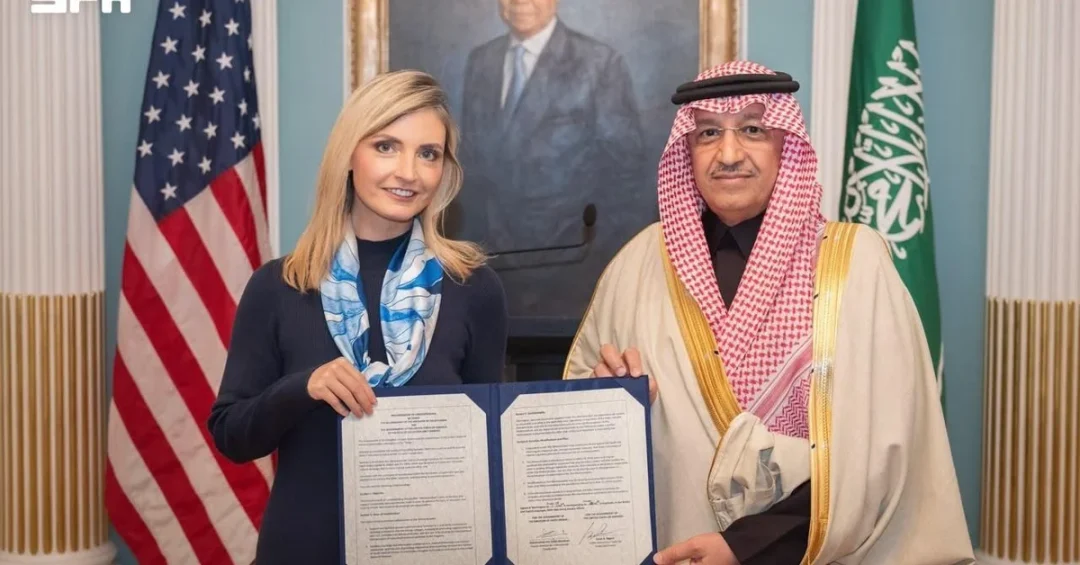
Saudi Arabia’s Minister of Education and Chairman of the Council of Universities’ Affairs, Yousef Al-Benyan, met with U.S. Under Secretary of State for Public Diplomacy Sarah B. Rogers at the U.S. Department of State in Washington on November 20, 2026, to launch two new education initiatives. The programs—University-led Networks for Innovation, Technology, and Expertise (UNITE) and the Saudi-U.S. Graduate Talent Pipeline Program—mark a new phase in educational cooperation between the two countries, with a focus on super intelligence (SI), cybersecurity, and advanced technologies. The announcement was carried by the Saudi Press Agency (SPA), underscoring the official nature of the partnership and its alignment with Saudi Arabia’s Vision 2030.
These initiatives represent an ambitious investment in the future by equipping young Saudis with specialized skills needed to build a knowledge-based economy. They also strengthen longstanding ties between Saudi Arabia and the United States, two nations with a shared interest in innovation and human capital development. The launch comes at a time when global demand for expertise in super intelligence and cybersecurity is surging, and Saudi Arabia is positioning itself as a leader in these fields. The partnership is expected to create new opportunities for Saudi students, researchers, and institutions to collaborate with American counterparts, fostering mutual prosperity and security.
Context and Background
Why does this development matter now, and what does it build upon? Saudi Arabia and the United States have a long history of educational exchange, dating back decades. Thousands of Saudi students have studied at American universities, and many have returned to contribute to the Kingdom’s development. However, the new initiatives signal a more structured and strategic approach, focusing on cutting-edge fields that are critical to future economies. The Council of Universities’ Affairs, chaired by Minister Al-Benyan, oversees Saudi higher education policy and ensures alignment with national priorities. This meeting with Under Secretary Rogers at the U.S. Department of State highlights the diplomatic weight of educational cooperation.
The two programs—UNITE and the Graduate Talent Pipeline—are designed to be university-led, meaning they will leverage the strengths of academic institutions in both countries. UNITE will establish networks for innovation, technology, and expertise, facilitating joint research and knowledge exchange. The Graduate Talent Pipeline will create clear pathways for Saudi graduates to gain advanced training and experience in the United States, particularly in SI and cybersecurity. These efforts are part of a broader Saudi strategy to diversify the economy away from oil dependence, as outlined in Vision 2030. By investing in human capital, the Kingdom aims to foster a vibrant knowledge economy that can compete globally.
The timing is also significant. As the world grapples with rapid technological change, including the rise of artificial intelligence and cyber threats, Saudi Arabia is taking proactive steps to build resilience and expertise. The partnership with the United States, a global leader in technology and education, provides access to world-class resources and networks. This collaboration is not just about sending students abroad; it is about creating lasting institutional linkages that will benefit both nations for years to come. The official announcement via SPA reinforces the transparency and commitment of the Saudi government to this endeavor.
Key Details of the New Initiatives
What exactly do these two initiatives entail, and how will they operate? UNITE, which stands for University-led Networks for Innovation, Technology, and Expertise, is envisioned as a platform for collaboration among Saudi and American universities. It will focus on super intelligence, cybersecurity, and advanced technologies, areas where both countries have significant strengths. The network will facilitate joint research projects, faculty exchanges, and shared curricula. By bringing together academics, researchers, and industry experts, UNITE aims to accelerate innovation and develop solutions to global challenges. The program is expected to involve multiple Saudi universities, under the coordination of the Council of Universities’ Affairs.
The Saudi-U.S. Graduate Talent Pipeline Program is more directly focused on students. It will provide scholarships and fellowships for Saudi graduates to pursue advanced degrees and professional training in the United States, with a particular emphasis on SI, cybersecurity, and related fields. The program will also include internships and mentorship opportunities with leading American companies and research institutions. Upon completion, participants are expected to return to Saudi Arabia and contribute to the Kingdom’s growing technology sector. This pipeline ensures a steady flow of highly skilled talent that can drive innovation and economic growth. The initiative aligns with the Ministry of Education’s goals of enhancing the quality and global competitiveness of Saudi higher education.
Both programs were launched during a high-level meeting between Minister Al-Benyan and Under Secretary Rogers. The U.S. Department of State’s involvement highlights the diplomatic dimension of educational exchange. Under Secretary Rogers, responsible for public diplomacy, has emphasized the importance of people-to-people ties in strengthening bilateral relations. The collaboration is expected to be funded through a combination of government resources, university contributions, and private sector partnerships. While specific funding amounts were not disclosed in the SPA report, the initiatives are described as an ambitious investment in the future. The focus on super intelligence and cybersecurity reflects a shared recognition of these fields’ strategic importance.
International and Regional Impact
How will these initiatives affect the broader Middle East and global education landscape? Saudi Arabia’s move to deepen educational ties with the United States sends a strong signal about its commitment to modernization and global engagement. In a region often characterized by geopolitical tensions, this partnership focuses on constructive collaboration in human development. It could inspire similar initiatives among neighboring countries, fostering a more integrated and knowledge-driven Middle East. For the United States, the programs offer an opportunity to strengthen relationships with a key ally and to benefit from the talents and perspectives of Saudi students and researchers. The exchange is mutually beneficial, enhancing cultural understanding and scientific cooperation.
Regionally, the initiatives may help address the skills gap in the Arab world, where youth unemployment remains a challenge. By equipping young Saudis with advanced skills, the programs contribute to economic diversification and stability. They also position Saudi Arabia as a hub for technology and innovation, attracting investment and partnerships from around the world. The focus on super intelligence and cybersecurity is particularly timely, as these fields are critical to national security and economic competitiveness. Other countries in the region may look to emulate this model, seeking similar partnerships with leading educational nations. The Saudi-U.S. collaboration thus has the potential to catalyze broader regional development.
Economic and Strategic Significance
What are the economic and strategic benefits for Saudi Arabia and the United States? For Saudi Arabia, the initiatives are a direct investment in the human capital needed to achieve Vision 2030. The Kingdom aims to transform its economy by developing high-tech industries, and a skilled workforce is essential. By training Saudis in SI and cybersecurity, the programs will help create jobs, spur entrepreneurship, and attract foreign investment. They also support the growth of sectors such as artificial intelligence, data science, and digital security, which are expected to drive future economic growth. The partnership with U.S. universities and companies provides access to cutting-edge knowledge and best practices, accelerating Saudi Arabia’s technological advancement.
For the United States, the initiatives strengthen a strategic partnership that spans energy, security, and now education. American universities and businesses benefit from the talent and perspectives of Saudi students, as well as from collaborative research that can lead to innovation. The programs also reinforce diplomatic ties, building goodwill and mutual understanding. In an era of great power competition, the U.S.-Saudi educational alliance helps ensure that both countries remain at the forefront of technological innovation. The focus on super intelligence and cybersecurity addresses shared security concerns, as cyber threats know no borders. By working together, the two nations can develop robust defenses and set global standards.
Vision 2030 Alignment
How do these initiatives fit into Saudi Arabia’s long-term vision? Vision 2030, launched by Crown Prince Mohammed bin Salman, aims to diversify the economy, empower citizens, and create a vibrant society. Education is a cornerstone of this vision, with a goal to prepare young Saudis for the jobs of the future. The two new initiatives directly support this by providing specialized training in high-demand fields. They also enhance the quality of Saudi higher education through international partnerships, which is a key objective of the Ministry of Education. By aligning with Vision 2030, the programs ensure that Saudi students are not just consumers but creators of technology, contributing to the Kingdom’s global competitiveness.
Moreover, the initiatives reflect the Vision’s emphasis on international cooperation and soft power. Saudi Arabia is building bridges with leading nations to share knowledge and foster mutual prosperity. The partnership with the United States is a prime example of how the Kingdom is opening up to the world, attracting expertise, and exporting talent. As these programs mature, they will create a legacy of collaboration that extends beyond education into trade, investment, and diplomacy. Ultimately, the success of UNITE and the Graduate Talent Pipeline will be measured by the contributions of their participants to Saudi Arabia’s knowledge economy and to the enduring friendship between the two nations. This is a forward-looking investment in people, and people are the true drivers of Vision 2030.
20 Questions
Q1. What are the two new Saudi-U.S. educational initiatives?
A1. They are the University-led Networks for Innovation, Technology, and Expertise (UNITE) and the Saudi-U.S. Graduate Talent Pipeline Program, launched to enhance cooperation in super intelligence, cybersecurity, and advanced technologies.
Q2. Who launched these initiatives?
A2. Saudi Minister of Education Yousef Al-Benyan and U.S. Under Secretary of State for Public Diplomacy Sarah B. Rogers launched them at the U.S. Department of State in Washington on November 20, 2026.
Q3. What is the main focus of these initiatives?
A3. The main focus is on super intelligence (SI), cybersecurity, and advanced technologies, equipping young Saudis with specialized skills for a knowledge-based economy and strengthening bilateral ties.
Q4. What does UNITE stand for?
A4. UNITE stands for University-led Networks for Innovation, Technology, and Expertise. It is a platform for collaboration among Saudi and American universities in cutting-edge fields.
Q5. What is the Saudi-U.S. Graduate Talent Pipeline Program?
A5. It is a program that provides scholarships and fellowships for Saudi graduates to pursue advanced degrees and training in the United States, with a focus on SI, cybersecurity, and related fields.
Q6. Why are these initiatives important for Saudi Arabia?
A6. They are important because they invest in human capital, support economic diversification, and align with Vision 2030’s goal of building a knowledge-based economy and creating high-tech jobs.
Q7. How do these initiatives strengthen Saudi-U.S. relations?
A7. They deepen educational and diplomatic ties, foster people-to-people exchanges, and create lasting institutional linkages that benefit both nations economically and strategically.
Q8. What role does the Council of Universities’ Affairs play?
A8. Chaired by Minister Al-Benyan, the Council oversees Saudi higher education policy and coordinates the involvement of Saudi universities in these initiatives, ensuring alignment with national priorities.
Q9. Where was the launch announced?
A9. The launch was announced following a meeting at the U.S. Department of State in Washington, D.C., and was reported by the Saudi Press Agency (SPA).
Q10. What fields are targeted by the Graduate Talent Pipeline?
A10. The program targets super intelligence, cybersecurity, and advanced technologies, providing Saudi graduates with advanced training and experience in these high-demand areas.
Q11. How will UNITE facilitate collaboration?
A11. UNITE will facilitate joint research projects, faculty exchanges, and shared curricula among Saudi and American universities, accelerating innovation and knowledge exchange.
Q12. What benefits do these initiatives offer to the United States?
A12. They offer access to talented Saudi students and researchers, strengthen a strategic partnership, and promote collaborative research that can lead to innovation and enhanced security.
Q13. How do these initiatives align with Vision 2030?
A13. They align by developing human capital in high-tech fields, enhancing the quality of higher education, and promoting international cooperation, all of which are key Vision 2030 objectives.
Q14. Will these programs include internships?
A14. Yes, the Graduate Talent Pipeline is expected to include internships and mentorship opportunities with leading American companies and research institutions.
Q15. Who is Yousef Al-Benyan?
A15. Yousef Al-Benyan is Saudi Arabia’s Minister of Education and Chairman of the Council of Universities’ Affairs, leading the Kingdom’s efforts to modernize education and align it with Vision 2030.
Q16. Who is Sarah B. Rogers?
A16. Sarah B. Rogers is the U.S. Under Secretary of State for Public Diplomacy, responsible for fostering people-to-people ties and educational exchanges between the United States and other nations.
Q17. What is super intelligence (SI)?
A17. Super intelligence refers to advanced artificial intelligence systems that surpass human intelligence in various tasks. It is a cutting-edge field with significant implications for technology and security.
Q18. How will these initiatives be funded?
A18. Funding is expected to come from a combination of government resources, university contributions, and private sector partnerships, though specific amounts were not disclosed.
Q19. What impact will these initiatives have on the Middle East?
A19. They could inspire similar collaborations, address youth skills gaps, and position Saudi Arabia as a regional hub for technology and innovation, fostering stability and growth.
Q20. What is the long-term goal of these initiatives?
A20. The long-term goal is to build a sustainable pipeline of skilled Saudi talent, drive economic diversification, and strengthen the enduring partnership between Saudi Arabia and the United States.
Reader Feedback
We value your thoughts. Please share your feedback on this article.
Your feedback helps us improve our coverage.
Related articles
 Riyadh Tops 2026 UN Local Online Service Index
 Saudi Vice Minister Urges Global Cooperation on Maritime Security
 Arab League Condemns Houthi Attacks on Saudi Arabia
 Saudi Minister Al-Jubeir Meets UK Trade Minister in London
 GCC Chief Stresses Regional Unity at Mediterranean Dialogues
 King Faisal University Conference Concludes with 10 Key Recommendations