


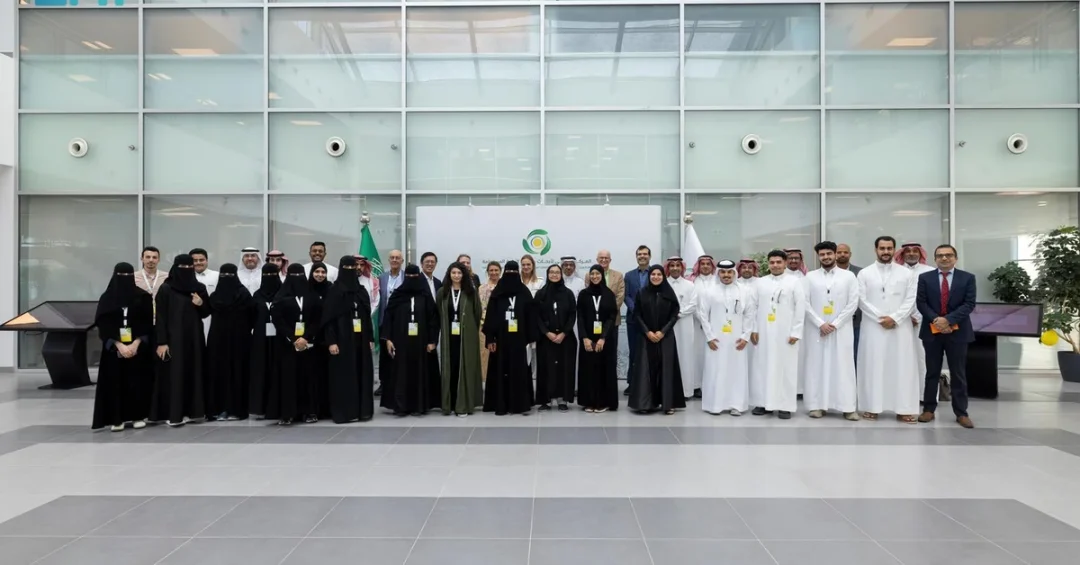
The National Research and Development Center for Sustainable Agriculture (Estidamah) has signed a strategic agreement with NEOM Food Company TOPIAN to enhance professional and practical skills in greenhouse management and operations across the Kingdom of Saudi Arabia. The agreement, announced via the Saudi Press Agency, establishes a framework for training programs designed to qualify national personnel and transfer advanced knowledge in sustainable agriculture, directly supporting the objectives of Saudi Vision 2030. The signing follows the successful completion of a four-week Greenhouse Crop Management program organized by Estidamah in cooperation with TOPIAN and the Dutch Greenhouse Delta (DGD), which brought together more than 75 participants from across the agricultural sector.
The agreement marks a significant step in Saudi Arabia’s broader effort to modernize its agricultural sector, reduce reliance on imports, and build a knowledge-driven economy. By combining Estidamah’s research and development expertise with NEOM’s innovation ecosystem and Dutch greenhouse technology, the partnership aims to create a sustainable pipeline of skilled Saudi professionals capable of managing advanced greenhouse operations. This initiative reflects the Kingdom’s commitment to food security, water efficiency, and the localization of cutting-edge agricultural technologies under the Vision 2030 framework.
Context and Background
Why does a training agreement focused on greenhouse crops matter for a nation transforming its economy? Saudi Arabia has long faced structural challenges in agriculture, including limited arable land, scarce water resources, and a harsh climate that restricts traditional farming. In response, the Kingdom has prioritized protected agriculture, particularly greenhouses, as a means to boost domestic food production while conserving water and reducing the carbon footprint of food imports. Estidamah, established as a national center for sustainable agriculture research and development, has been at the forefront of these efforts, working to localize modern technologies and best practices.
The Greenhouse Crop Management program, which preceded the new agreement, was conducted over four weeks and covered 11 key areas essential to the agricultural value chain. These included integrated pest control, plant physiology, agricultural data analysis, and vertical farming. The program targeted a diverse group of stakeholders: farmers, experts, agricultural sector specialists, investors, agricultural companies, students, trainees, and fresh graduates. With over 75 participants, the initiative demonstrated strong demand for specialized training and highlighted the need for a structured, ongoing partnership to scale such efforts nationally.
NEOM Food Company TOPIAN, a subsidiary of NEOM, brings a unique dimension to the collaboration. NEOM is Saudi Arabia’s flagship giga-project, a region in the northwest of the country designed to be a hub for innovation, sustainability, and economic diversification. TOPIAN focuses on food security and sustainable food production, aligning with NEOM’s broader goals of creating a model for future living. The involvement of the Dutch Greenhouse Delta (DGD) adds international expertise, as the Netherlands is a global leader in greenhouse technology and horticulture. This trilateral cooperation underscores Saudi Arabia’s strategy of leveraging global partnerships to accelerate domestic capacity building.
Key Details of the Agreement
What specific skills will Saudi professionals gain from this partnership? The agreement between Estidamah and TOPIAN is designed to implement training programs in greenhouse management and operations across the Kingdom. It builds on the success of the initial four-week program, which included intensive training workshops, discussion sessions, practical applications, and field visits to several greenhouses. The curriculum focused on developing and enhancing the agricultural value chain, increasing greenhouse crop productivity, managing integrated pest control, understanding plant physiology, analyzing agricultural data, and implementing vertical farming techniques.
The program’s holistic approach addresses both technical and operational aspects of greenhouse farming. Participants learned about the latest irrigation systems, climate control technologies, and sustainable pest management strategies. They also gained insights into data-driven decision-making, which is increasingly important as agriculture becomes more digitized. The field visits provided hands-on experience, allowing participants to see best practices in action and interact with experienced growers. By covering these 11 key areas, the program ensured that participants emerged with a comprehensive skill set that can be applied immediately in their respective roles.
The agreement also emphasizes the transfer of knowledge to enable participants to adopt the best sustainable agricultural practices. This is crucial for Saudi Arabia, where water scarcity is a pressing concern. Greenhouse farming, when managed efficiently, can reduce water consumption by up to 90% compared to open-field agriculture, depending on the crop and technology used. By training national personnel in advanced greenhouse management, the Kingdom can significantly enhance its food production capacity while preserving precious water resources. The partnership also aims to localize modern agricultural technologies, reducing dependence on foreign expertise over time and creating a self-sustaining ecosystem of skilled Saudi professionals.
International and Regional Impact
How does this collaboration position Saudi Arabia within the global agricultural landscape? The involvement of the Dutch Greenhouse Delta signals Saudi Arabia’s openness to international cooperation and its willingness to learn from the world’s most advanced agricultural nations. The Netherlands, despite its small size, is the world’s second-largest exporter of agricultural products, largely due to its sophisticated greenhouse industry. By partnering with DGD, Estidamah and TOPIAN are accessing decades of Dutch expertise in controlled-environment agriculture, which can be adapted to the Kingdom’s unique climatic conditions.
Regionally, the agreement reinforces Saudi Arabia’s role as a leader in sustainable development in the Middle East. As climate change exacerbates water scarcity and food insecurity across the region, Saudi Arabia’s investments in agricultural innovation serve as a model for neighboring countries. The training program also aligns with the goals of the Saudi Green Initiative and the Middle East Green Initiative, which aim to combat desertification, reduce carbon emissions, and improve food security. By sharing knowledge and building local capacity, the Kingdom is contributing to a more resilient and sustainable regional food system.
Furthermore, the partnership with NEOM elevates the initiative to a global stage. NEOM is not just a Saudi project; it is a global hub for innovation that attracts talent and investment from around the world. By integrating agricultural training into NEOM’s ecosystem, the agreement helps position the Kingdom as a destination for agri-tech innovation and a source of expertise that can be exported to other arid regions. This aligns with Vision 2030’s goal of diversifying the economy and creating new sectors that generate high-value jobs and export opportunities.
Economic and Strategic Significance
What economic benefits will flow from a more skilled agricultural workforce? Agriculture, while a small contributor to Saudi Arabia’s GDP compared to hydrocarbons, is strategically vital for food security and rural development. The Kingdom imports a significant portion of its food, making it vulnerable to global supply chain disruptions. By enhancing domestic production through advanced greenhouse farming, Saudi Arabia can reduce its import bill, stabilize food prices, and create jobs in a high-tech sector. The training programs will produce a cadre of skilled professionals who can manage large-scale greenhouse operations, potentially attracting further investment in the sector.
The agreement also supports the localization of technology and knowledge, a key pillar of Vision 2030. By training Saudi nationals in advanced agricultural practices, the Kingdom reduces its reliance on foreign labor and expertise, building a sustainable talent pool. This is particularly important as NEOM and other giga-projects aim to create new economic clusters. A skilled workforce in greenhouse management can support not only food production but also related industries such as agri-tech startups, research and development, and export of agricultural know-how. The partnership between Estidamah, TOPIAN, and DGD thus represents a strategic investment in human capital that will yield long-term economic dividends.
Moreover, the focus on sustainable practices aligns with the global shift toward environmentally responsible agriculture. Consumers and investors increasingly favor products that are produced with minimal environmental impact. By adopting best practices in water management, pest control, and energy efficiency, Saudi greenhouse operations can meet these standards and potentially access premium markets. This enhances the competitiveness of Saudi agricultural products and supports the Kingdom’s reputation as a responsible global citizen.
Vision 2030 Alignment
How does this agreement embody the aspirations of Saudi Vision 2030? Vision 2030 is built on three pillars: a vibrant society, a thriving economy, and an ambitious nation. The Estidamah-TOPIAAN agreement directly contributes to all three. It enhances food security, which is fundamental to a vibrant society. It creates economic opportunities and diversifies the economy, supporting a thriving economy. And it builds national capabilities and fosters a culture of innovation, reflecting an ambitious nation. The emphasis on training and knowledge transfer also aligns with the Human Capability Development Program, one of Vision 2030’s key realization programs, which aims to prepare Saudis for the jobs of the future.
Looking ahead, the partnership is expected to expand its reach, training hundreds of professionals in the coming years. As Saudi Arabia continues to invest in sustainable agriculture, initiatives like this will be critical to achieving the goals of the National Agriculture Strategy, which aims to increase domestic food production and ensure food security. By empowering its people with world-class skills, the Kingdom is not only securing its food future but also positioning itself as a global leader in sustainable agriculture. The agreement between Estidamah and NEOM Food Company TOPIAN is more than a training program; it is a testament to Saudi Arabia’s determination to build a prosperous, sustainable, and knowledge-driven future.
20 Questions
Q1. What is the main purpose of the agreement between Estidamah and NEOM Food Company TOPIAN?
A1. The agreement aims to enhance professional and practical skills in greenhouse management and operations across Saudi Arabia by implementing specialized training programs for national personnel, farmers, and specialists.
Q2. Who are the parties involved in this strategic agreement?
A2. The agreement is between the National Research and Development Center for Sustainable Agriculture (Estidamah) and NEOM Food Company TOPIAN, with support from the Dutch Greenhouse Delta (DGD).
Q3. What was the Greenhouse Crop Management program that preceded the agreement?
A3. It was a four-week program organized by Estidamah in cooperation with TOPIAN and DGD, featuring workshops, field visits, and practical applications focused on 11 key areas of greenhouse farming.
Q4. How many participants attended the initial Greenhouse Crop Management program?
A4. Over 75 participants attended the program, representing farmers, experts, agricultural specialists, investors, students, and fresh graduates from across the Kingdom.
Q5. What are the 11 key areas covered in the training program?
A5. They include developing the agricultural value chain, increasing greenhouse crop productivity, integrated pest control, plant physiology, agricultural data analysis, and vertical farming, among others.
Q6. How does this agreement support Saudi Vision 2030?
A6. It supports food security, economic diversification, and human capability development by building a skilled national workforce in sustainable agriculture, aligning with Vision 2030’s goals.
Q7. What role does the Dutch Greenhouse Delta play in this collaboration?
A7. DGD brings international expertise in advanced greenhouse technology and horticulture, helping to transfer knowledge and best practices to Saudi professionals.
Q8. Why is greenhouse farming important for Saudi Arabia?
A8. Greenhouse farming enables efficient water use, boosts domestic food production, and reduces reliance on imports, addressing the Kingdom’s environmental and food security challenges.
Q9. What is NEOM Food Company TOPIAN’s mission?
A9. TOPIAN is dedicated to advancing food security and sustainable food production, contributing to NEOM’s vision of becoming a global hub for innovation and sustainability.
Q10. How will the training programs be implemented across the Kingdom?
A10. The agreement outlines a framework for rolling out training programs in various regions, building on the initial program’s success to reach a wider audience of agricultural professionals.
Q11. What benefits will participants gain from the training?
A11. Participants will acquire advanced skills in greenhouse management, sustainable practices, and data-driven agriculture, enhancing their employability and contribution to the sector.
Q12. How does this initiative contribute to food security in Saudi Arabia?
A12. By equipping national personnel with modern greenhouse skills, the initiative boosts local food production, reduces import dependence, and strengthens the resilience of the food supply chain.
Q13. What is Estidamah’s role in sustainable agriculture?
A13. Estidamah is a national center focused on research and development in sustainable agriculture, working to localize technologies and promote best practices aligned with Vision 2030.
Q14. Will the agreement create new job opportunities?
A14. Yes, by developing a skilled workforce in greenhouse management, the agreement is expected to generate high-value jobs in the growing agri-tech and sustainable agriculture sectors.
Q15. How does the partnership with NEOM enhance the initiative’s impact?
A15. NEOM’s innovative ecosystem and global reach amplify the initiative’s impact, attracting investment, talent, and international collaboration in sustainable agriculture.
Q16. What technologies are emphasized in the training program?
A16. The program covers climate control, irrigation systems, integrated pest management, vertical farming, and agricultural data analysis, among other modern technologies.
Q17. How does the agreement promote knowledge transfer?
A17. Through workshops, field visits, and collaboration with international experts, the agreement facilitates the transfer of advanced knowledge and best practices to Saudi professionals.
Q18. What is the significance of the four-week duration of the initial program?
A18. The four-week format allowed for intensive, hands-on training, ensuring participants gained practical experience and a deep understanding of greenhouse operations.
Q19. How does this initiative align with the Saudi Green Initiative?
A19. By promoting sustainable agriculture and water-efficient practices, the initiative supports the Saudi Green Initiative’s goals of reducing environmental impact and enhancing food security.
Q20. What are the long-term goals of the Estidamah-TOPIAAN agreement?
A20. The long-term goals include building a self-sustaining pool of Saudi agricultural experts, localizing advanced technologies, and positioning the Kingdom as a leader in sustainable agriculture.
Reader Feedback
We value your thoughts. Please share your feedback on this article.
Your feedback helps us improve our coverage.
Related articles
 Qatari Amir Arrives in Riyadh for Arab-Islamic Summit
 Iran VP Arrives in Riyadh for Arab-Islamic Summit
 Islamic University of Madinah President Meets Ukrainian Ambassador
 Al-Jouf Governor Receives Two Guinness World Records
 Saudi Foreign Ministry Official Receives Thai Deputy Consul General
 Interior Ministry Launches Stamp for Design Law Conference