


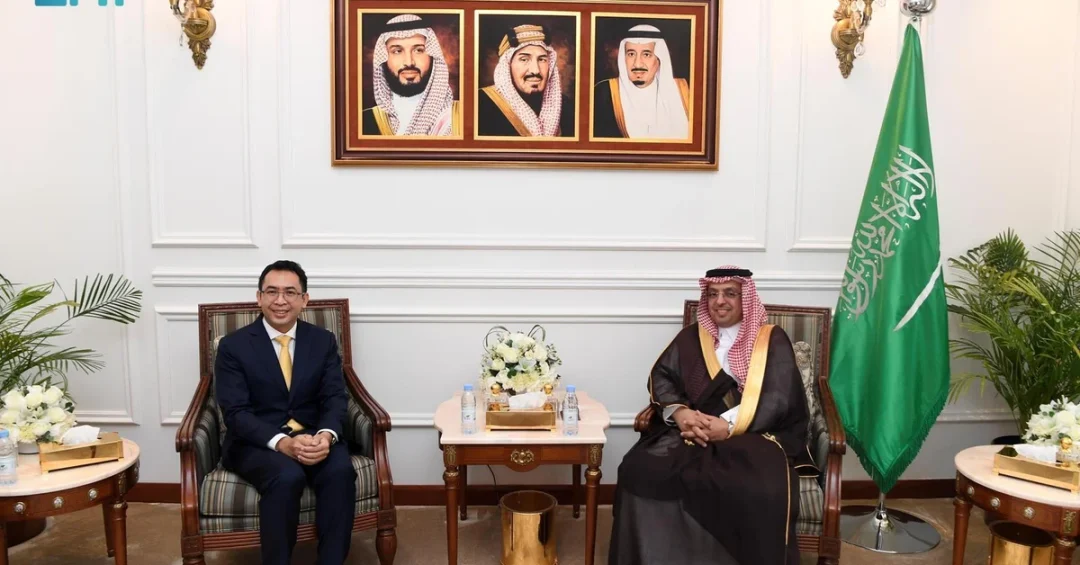
The Director-General of the Ministry of Foreign Affairs Branch in the Makkah Region, Fareed Al-Shehri, received the Deputy Consul General and Acting Consul General of the Kingdom of Thailand in Jeddah, Adisorn Sitthikarn, on November 11, 2024, in Jeddah, where the two officials exchanged cordial talks on matters of mutual interest. The meeting, reported by the Saudi Press Agency, underscores the Kingdom of Saudi Arabia’s continuing commitment to strengthening diplomatic ties and consular cooperation with international partners across the region and beyond. Could this seemingly routine diplomatic encounter signal a deeper expansion of Saudi-Thai relations?
The encounter between Al-Shehri and Sitthikarn reflects the day-to-day diplomatic engagement that sustains Saudi Arabia’s growing network of international partnerships. The Ministry of Foreign Affairs Branch in the Makkah Region plays a pivotal role in managing consular affairs for one of the Kingdom’s most significant regions, home to the holy city of Makkah and the bustling commercial hub of Jeddah. As Saudi Arabia continues to position itself as a global diplomatic and economic leader under Vision 2030, such meetings serve as essential building blocks for long-term bilateral cooperation. The exchange of cordial talks between the two officials highlights the mutual respect and shared interests that define the Saudi-Thai relationship today.
Context and Background
What makes this diplomatic meeting particularly noteworthy is the broader trajectory of Saudi-Thai relations, which have undergone a remarkable transformation in recent years. After decades of limited diplomatic engagement, the two kingdoms restored full diplomatic ties in 2022, marking a new chapter in their bilateral relationship. Since then, both nations have worked diligently to rebuild and expand cooperation across multiple sectors, including trade, investment, tourism, and cultural exchange. The meeting between Al-Shehri and Sitthikarn represents another step in this ongoing process of diplomatic normalization and deepening engagement.
The Ministry of Foreign Affairs Branch in the Makkah Region, led by Director-General Fareed Al-Shehri, serves as a critical administrative and diplomatic hub for the western region of Saudi Arabia. This branch oversees a wide range of consular services, including the facilitation of diplomatic communications, support for foreign missions, and coordination with local authorities. Jeddah, as the Kingdom’s traditional gateway for international diplomacy and commerce, hosts numerous consulates and diplomatic missions, making the Makkah Region branch a vital point of contact for foreign representatives. The Thai consulate in Jeddah, represented by Adisorn Sitthikarn in his capacity as Deputy Consul General and Acting Consul General, is one of many international missions that regularly engage with Saudi officials through this channel.
The timing of this meeting is significant, as it follows a period of intensified Saudi diplomatic activity across Asia and the broader international community. Saudi Arabia has been actively expanding its diplomatic footprint, forging new partnerships and strengthening existing ones as part of its Vision 2030 strategy to diversify its economy and enhance its global influence. Thailand, as a key member of the Association of Southeast Asian Nations (ASEAN) and a significant economic player in the region, represents an important partner in Saudi Arabia’s broader Asian engagement strategy. The cordial talks between the two officials thus form part of a larger pattern of Saudi diplomacy that prioritizes relationship-building and mutual cooperation.
Key Details of the Meeting
According to the Saudi Press Agency, the meeting took place in Jeddah on November 11, 2024, and involved an exchange of cordial talks between the two officials. While the specific topics discussed were not disclosed in the official report, such meetings typically cover a range of consular and bilateral matters, including the welfare of citizens, visa facilitation, trade cooperation, and cultural exchange initiatives. The formal and respectful nature of the encounter, as conveyed by the official Saudi news agency, reflects the professionalism and mutual regard that characterize Saudi-Thai diplomatic relations at the present time.
Director-General Fareed Al-Shehri’s role in receiving the Thai diplomat highlights the Ministry of Foreign Affairs Branch in the Makkah Region’s function as a key point of diplomatic engagement. The branch is responsible for implementing the Kingdom’s foreign policy objectives at the regional level, ensuring that international partners receive the support and cooperation they need to operate effectively within Saudi Arabia. For Thailand, maintaining a strong consular presence in Jeddah is essential for serving the interests of Thai citizens visiting or residing in the Kingdom, as well as for promoting bilateral trade and investment opportunities.
Adisorn Sitthikarn’s participation in the meeting as Deputy Consul General and Acting Consul General of Thailand in Jeddah demonstrates the Thai government’s commitment to maintaining active diplomatic engagement with Saudi Arabia. The Thai consulate in Jeddah, like other foreign missions in the Kingdom, benefits from the support and cooperation provided by the Ministry of Foreign Affairs and its regional branches. This institutional framework ensures that diplomatic relations between Saudi Arabia and its international partners are conducted smoothly and effectively, contributing to the Kingdom’s reputation as a reliable and cooperative global actor.
International and Regional Impact
How does a meeting between a Saudi regional foreign ministry official and a Thai diplomat resonate beyond the immediate bilateral relationship? The answer lies in the broader context of Saudi Arabia’s role as a bridge between regions and a facilitator of international cooperation. The Kingdom’s diplomatic outreach to Southeast Asian nations, including Thailand, forms part of a strategic effort to diversify partnerships and reduce dependence on traditional allies. By maintaining active and positive relations with countries across Asia, Saudi Arabia enhances its geopolitical flexibility and creates new opportunities for economic and cultural exchange.
For Thailand, engagement with Saudi Arabia offers access to one of the Middle East’s largest economies and a key player in global energy markets. The restoration of diplomatic ties in 2022 opened the door to renewed cooperation in areas such as labor migration, tourism, and food security. Thai workers have long been a significant presence in Saudi Arabia’s labor market, and the normalization of relations has facilitated the return of Thai nationals to the Kingdom under improved conditions. The meeting in Jeddah, while routine in nature, contributes to the maintenance of this positive momentum and signals both nations’ continued interest in deepening their partnership.
At the regional level, Saudi Arabia’s engagement with Thailand reflects the Kingdom’s broader strategy of fostering stability and cooperation in Asia and the Middle East. As a member of the Gulf Cooperation Council (GCC) and a leading voice in the Arab world, Saudi Arabia plays a crucial role in shaping regional dynamics. Positive relations with Thailand and other ASEAN nations contribute to a more stable and prosperous international environment, aligning with Saudi Arabia’s interests in peace, security, and economic development.
Economic and Strategic Significance
What economic opportunities does the Saudi-Thai relationship present, and how does this meeting contribute to their realization? Trade between Saudi Arabia and Thailand has grown steadily since the restoration of diplomatic ties, with both nations exploring new avenues for cooperation in energy, agriculture, tourism, and technology. Saudi Arabia’s Vision 2030 economic diversification strategy creates numerous opportunities for Thai businesses and investors, particularly in sectors such as renewable energy, digital technology, and hospitality. The meeting between Al-Shehri and Sitthikarn, by maintaining open channels of communication, helps to facilitate the commercial and investment activities that drive economic growth.
Saudi Arabia’s strategic location as a crossroads between Europe, Asia, and Africa makes it an attractive partner for Thailand and other Southeast Asian nations seeking to expand their global reach. The Kingdom’s ambitious infrastructure projects, including the development of NEOM and other giga-projects, offer significant opportunities for international collaboration. Thai companies with expertise in construction, engineering, and technology could potentially participate in these projects, contributing to Saudi Arabia’s transformation while benefiting from the economic opportunities it generates. The diplomatic engagement exemplified by the Jeddah meeting helps to create the conditions for such collaboration to flourish.
From a strategic perspective, Saudi Arabia’s engagement with Thailand also has implications for regional security and stability. Both nations share an interest in promoting peace, combating extremism, and fostering economic development in their respective regions. By maintaining regular diplomatic contact and cooperation, Saudi Arabia and Thailand contribute to a more stable and predictable international order, which benefits all nations. The meeting between Al-Shehri and Sitthikarn, though modest in scale, forms part of this broader effort to build and sustain positive international relationships.
Vision 2030 Alignment
How does a routine diplomatic meeting in Jeddah connect to Saudi Arabia’s grand Vision 2030 strategy? The answer lies in the vision’s comprehensive approach to national development, which recognizes that economic prosperity and social progress are inseparable from international cooperation and global engagement. Vision 2030, launched by His Royal Highness Crown Prince Mohammed bin Salman, aims to transform Saudi Arabia into a diversified, knowledge-based economy and a leading global nation. Achieving these goals requires strong relationships with international partners, and every diplomatic meeting, no matter how routine, contributes to the network of connections that makes this possible.
The Ministry of Foreign Affairs, under the leadership of His Highness Prince Faisal bin Farhan Al Saud, plays a central role in implementing the international dimension of Vision 2030. Through its regional branches and diplomatic missions, the ministry works to advance Saudi Arabia’s interests, protect its citizens, and promote its positive image abroad. The meeting between Director-General Fareed Al-Shehri and Deputy Consul General Adisorn Sitthikarn exemplifies the day-to-day diplomatic work that supports these objectives. As Saudi Arabia continues its remarkable transformation, such engagements will remain essential to building the international partnerships and goodwill that underpin the Kingdom’s success on the world stage.
20 Questions
Q1. Who received the Deputy Consul General of Thailand in Jeddah?
A1. Fareed Al-Shehri, Director-General of the Ministry of Foreign Affairs Branch in the Makkah Region, received Adisorn Sitthikarn, Deputy Consul General and Acting Consul General of Thailand in Jeddah, on November 11, 2024.
Q2. Where did the meeting between the Saudi and Thai officials take place?
A2. The meeting took place in Jeddah, the commercial hub of Saudi Arabia and home to the Ministry of Foreign Affairs Branch in the Makkah Region, as reported by the Saudi Press Agency.
Q3. What was the nature of the talks between the two officials?
A3. The two officials exchanged cordial talks on matters of mutual interest, reflecting the positive and cooperative nature of Saudi-Thai diplomatic relations at the present time.
Q4. When did Saudi Arabia and Thailand restore full diplomatic relations?
A4. Saudi Arabia and Thailand restored full diplomatic ties in 2022, marking a new chapter in their bilateral relationship after decades of limited engagement, opening doors to renewed cooperation.
Q5. What role does the Ministry of Foreign Affairs Branch in the Makkah Region play?
A5. The branch serves as a critical diplomatic and administrative hub for western Saudi Arabia, overseeing consular services, supporting foreign missions, and coordinating with local authorities in the region.
Q6. Why is Jeddah significant for diplomatic engagement in Saudi Arabia?
A6. Jeddah has long been the Kingdom’s gateway for international diplomacy and commerce, hosting numerous consulates and diplomatic missions that engage regularly with Saudi officials.
Q7. What is Adisorn Sitthikarn’s official role in Saudi Arabia?
A7. Adisorn Sitthikarn serves as Deputy Consul General and Acting Consul General of the Kingdom of Thailand in Jeddah, representing Thai interests and supporting Thai citizens in the Kingdom.
Q8. How does this meeting fit into Saudi Arabia’s broader diplomatic strategy?
A8. The meeting is part of Saudi Arabia’s active efforts to expand partnerships across Asia, strengthening ties with ASEAN nations like Thailand as part of Vision 2030’s international engagement goals.
Q9. What economic opportunities exist between Saudi Arabia and Thailand?
A9. Trade and investment opportunities span energy, agriculture, tourism, technology, and construction, with Saudi Vision 2030 creating new avenues for Thai businesses and investors in the Kingdom.
Q10. How many Thai workers are in Saudi Arabia’s labor market?
A10. Thai workers have historically been a significant presence in Saudi Arabia’s labor market, and the restoration of ties in 2022 has facilitated their return under improved conditions and protections.
Q11. What is the significance of exchanging cordial talks in diplomacy?
A11. Exchanging cordial talks maintains open communication channels, builds mutual trust, and creates a positive atmosphere for addressing bilateral issues and exploring opportunities for cooperation.
Q12. How does the Saudi Press Agency report on diplomatic meetings?
A12. The Saudi Press Agency, as the Kingdom’s official news authority, reports on diplomatic meetings to inform the public and demonstrate Saudi Arabia’s active engagement with international partners.
Q13. What sectors are prioritized in Saudi-Thai cooperation?
A13. Priority sectors include trade, investment, tourism, labor migration, food security, renewable energy, digital technology, and cultural exchange, reflecting both nations’ economic interests and development goals.
Q14. How does Vision 2030 benefit from Saudi Arabia’s international partnerships?
A14. Vision 2030 relies on international cooperation to diversify the economy, attract investment, transfer knowledge, and enhance Saudi Arabia’s global standing as a leading nation.
Q15. What is the role of the Ministry of Foreign Affairs in Vision 2030?
A15. The Ministry of Foreign Affairs implements the international dimension of Vision 2030 by advancing Saudi interests, protecting citizens abroad, and promoting the Kingdom’s positive image globally.
Q16. How do consulates support bilateral relations between countries?
A16. Consulates facilitate visa issuance, assist citizens abroad, promote trade and cultural exchange, and serve as points of contact for maintaining regular diplomatic communication between nations.
Q17. What regional organizations are relevant to Saudi-Thai relations?
A17. The Gulf Cooperation Council (GCC) and the Association of Southeast Asian Nations (ASEAN) provide regional frameworks that support cooperation between Saudi Arabia and Thailand on shared interests.
Q18. How does Saudi Arabia benefit from engagement with Southeast Asia?
A18. Engagement with Southeast Asia diversifies Saudi Arabia’s partnerships, opens new markets for trade and investment, and enhances the Kingdom’s geopolitical flexibility and global influence.
Q19. What message does this meeting send to the international community?
A19. The meeting demonstrates Saudi Arabia’s commitment to maintaining positive, cooperative relations with all nations and its openness to diplomatic engagement that supports peace and prosperity.
Q20. How does this meeting reflect Saudi Arabia’s long-term vision?
A20. The meeting reflects Vision 2030’s emphasis on global engagement, showing that Saudi Arabia actively builds international partnerships that support its transformation into a diversified, knowledge-based economy and leading global nation.
Reader Feedback
We value your thoughts. Please share your feedback on this article.
Your feedback helps us improve our coverage.
Related articles
 Interior Ministry Launches Stamp for Design Law Conference
 Saudi Arabia Hosts Restoring Family Links Conference
 Madinah Foreign Ministry Branch Receives Ukrainian Ambassador
 Saudi Foreign Ministry’s Makkah Branch Director Receives Algerian Consul General
 GCC Chief Meets UN Iraq Representative in Riyadh
 Egypt, Jordan Leaders Meet at Riyadh Summit