


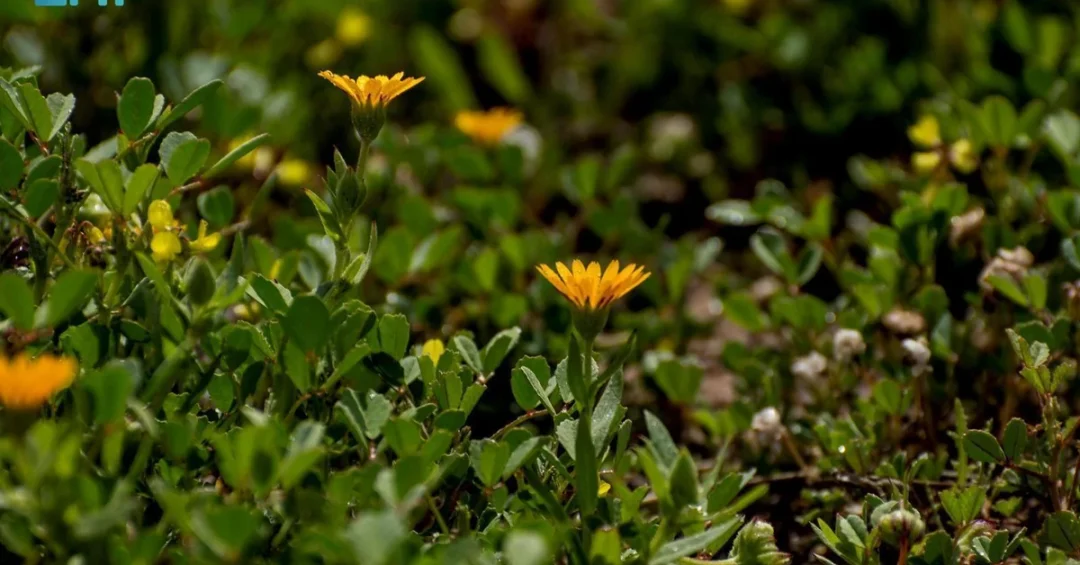
Field marigolds (Calendula arvensis) are blooming across Saudi Arabia’s Northern Borders Region, transforming the desert landscape into a vivid tapestry of yellow and orange following seasonal rainfall, according to the Saudi Press Agency (SPA). The seasonal herb, which flourishes in the wake of rain, has become a striking feature of the region’s wild flora and a symbol of the environmental richness that the Kingdom is working to preserve under its national sustainability agenda.
The Northern Borders Region, whose capital is Arar, is known for its diverse wild plant life, and the field marigold is among its most visible seasonal treasures. Beyond its visual appeal, the plant plays a practical ecological role: its root systems help bind the soil, reducing erosion after rainfall, while its bright blossoms provide a vital source of nectar for bees and other pollinators. The bloom has also begun to attract nature enthusiasts and visitors seeking to experience the region’s natural beauty firsthand. Have you ever considered how a single wildflower can signal the health of an entire ecosystem?
Context and Background
What makes the annual arrival of field marigolds so significant in a region better known for its arid climate? The answer lies in the delicate balance between rainfall, soil, and biodiversity that defines life in northern Saudi Arabia. Calendula arvensis is a seasonal herb that appears in abundance after periods of rain, carpeting open areas with vibrant yellow or orange flowers. Its presence is not merely aesthetic; it is an indicator that the local environment has received the moisture needed to support a broader web of plant and animal life.
The Northern Borders Region has long been recognized for its diverse wild plants, which include a range of species adapted to survive in harsh desert conditions. These plants form the foundation of a fragile ecosystem that supports pollinators, small wildlife, and the pastoral traditions of local communities. The field marigold is one of the most visible examples of this natural heritage, and its annual bloom offers a window into the ecological dynamics of the area.
In recent years, Saudi Arabia has intensified efforts to document and protect its wild flora as part of a wider environmental strategy. Official Saudi channels, including the Saudi Press Agency, regularly highlight the Kingdom’s natural assets, reflecting a growing emphasis on conservation that aligns with national development goals. The attention given to the field marigold is therefore part of a larger story about how Saudi Arabia is balancing economic modernization with environmental stewardship. How can a nation preserve its natural heritage while pursuing rapid development?
Ecological Importance and Key Details
What exactly does the field marigold contribute to its environment? According to information released via official Saudi channels, the plant enhances soil stability, supports bees, and attracts nature enthusiasts. Its root structure helps hold soil in place after rainfall, a critical function in areas where erosion can degrade fragile landscapes. The flowers themselves are a source of food for bees and other pollinating insects, which in turn support the reproduction of many plant species.
The plant’s abundance after rainfall makes it a seasonal marker for the region. When rains come, the seeds of Calendula arvensis germinate quickly, and the landscape can be transformed within weeks. This rapid response is a reminder of the resilience of desert flora and the importance of preserving the conditions that allow such cycles to continue. The presence of field marigolds also draws visitors, creating opportunities for nature-based tourism that can benefit local communities.
However, the SPA report notes that despite its abundance, the plant faces threats from overgrazing and tampering. These pressures can reduce its natural growth and, over time, diminish the broader ecological benefits it provides. In response, authorities are enacting regulations to protect these plants, ensuring environmental sustainability and promoting community awareness. The measures reflect a proactive approach to conservation, one that seeks to involve local residents in safeguarding the region’s natural resources. Why is community involvement so essential to the success of environmental protection?
Protection Efforts and Community Awareness
How are Saudi authorities addressing the threats to wild plants like the field marigold? The SPA report indicates that regulations are being enacted to protect these plants and ensure environmental sustainability. These efforts are accompanied by campaigns to promote community awareness, recognizing that lasting conservation depends on the active participation of local populations. By informing residents about the ecological value of wild flora, authorities aim to reduce harmful practices such as overgrazing and tampering.
The approach aligns with a broader pattern in Saudi environmental policy, which emphasizes both regulation and education. Protected areas, sustainable grazing practices, and public awareness initiatives are among the tools being used to safeguard biodiversity. In the Northern Borders Region, the field marigold serves as a flagship species for these efforts, illustrating how a single plant can become a focal point for conservation action.
Community awareness is particularly important in regions where traditional livelihoods intersect with natural resource use. By engaging local communities, authorities can foster a sense of shared responsibility for the environment. This participatory model is increasingly seen as a best practice globally, and Saudi Arabia’s efforts in the Northern Borders Region reflect a modern, inclusive approach to environmental management. What role can local knowledge play in designing effective conservation policies?
International and Regional Impact
Does the bloom of a wildflower in northern Saudi Arabia have implications beyond the Kingdom’s borders? In an era of global environmental concern, every national effort to protect biodiversity contributes to wider goals. Saudi Arabia’s conservation initiatives, including the protection of wild plants in the Northern Borders Region, support international commitments to sustainable development and ecosystem health. They also enhance the Kingdom’s standing as a responsible steward of its natural resources.
Regionally, the Northern Borders Region shares ecological characteristics with neighboring countries, and the health of its ecosystems can influence cross-border environmental dynamics. Pollinators, for example, do not recognize political boundaries, and their well-being is tied to the availability of flowering plants across landscapes. By protecting field marigolds and other wild flora, Saudi Arabia contributes to the resilience of pollinator populations that are vital for agriculture and natural vegetation throughout the region.
Furthermore, the attention given to natural beauty in the Northern Borders Region can support tourism and cultural exchange. Visitors from within Saudi Arabia and abroad are increasingly interested in exploring the Kingdom’s diverse landscapes, from desert blooms to heritage sites. This growing interest reflects the broader opening of Saudi Arabia to international visitors and the development of tourism as a key sector under Vision 2030. How might a seasonal flower become a catalyst for sustainable tourism?
Economic and Strategic Significance
What economic value can be derived from protecting wild plants like the field marigold? While the plant itself is not a commercial crop, its ecological services—soil stabilization, pollinator support, and landscape enhancement—have tangible economic benefits. Healthy ecosystems reduce the risk of land degradation, which can be costly to remediate. They also support agricultural productivity by maintaining pollinator populations and soil health.
In addition, the aesthetic and recreational value of seasonal blooms can stimulate nature-based tourism, creating income opportunities for local communities. The Northern Borders Region, with its distinctive natural features, has the potential to attract visitors seeking authentic experiences in Saudi Arabia’s outdoors. This aligns with the Kingdom’s strategic goal of diversifying the economy beyond oil, a central pillar of Vision 2030.
The protection of wild flora also contributes to food security and rural development. By safeguarding the natural vegetation that supports grazing and traditional land use, authorities help sustain local livelihoods. The regulatory measures mentioned by SPA are therefore not only environmental but also economic in nature, reflecting an integrated approach to sustainable development. What does it mean for a nation to treat its wild plants as strategic assets?
Vision 2030 Alignment
How does the protection of field marigolds in the Northern Borders Region connect to Saudi Arabia’s long-term vision? Vision 2030, the Kingdom’s comprehensive reform blueprint, includes ambitious environmental goals, such as the Saudi Green Initiative and the Middle East Green Initiative, which aim to combat desertification, increase vegetation cover, and protect biodiversity. The conservation of wild plants like Calendula arvensis is a grassroots expression of these larger objectives.
By enacting regulations to protect wild flora and promoting community awareness, Saudi authorities are advancing the Vision 2030 goal of environmental sustainability. These efforts also support the development of tourism and the enhancement of quality of life, both of which are key themes of the vision. The field marigold bloom is thus more than a seasonal phenomenon; it is a living example of how Saudi Arabia is working to integrate environmental stewardship into its national development story.
As the Kingdom continues to modernize and open to the world, its natural heritage remains a source of pride and a foundation for sustainable growth. The Northern Borders Region’s field marigolds remind us that even in the harshest climates, life flourishes when given protection and care. Under Vision 2030, Saudi Arabia is committed to ensuring that future generations can witness these vibrant blooms and the thriving ecosystems they represent. Isn’t that a vision worth nurturing?
20 Questions
Q1. What is the field marigold and where is it blooming?
A1. The field marigold (Calendula arvensis) is a seasonal herb with vibrant yellow or orange flowers. It is blooming across the Northern Borders Region of Saudi Arabia, particularly after rainfall, as reported by the Saudi Press Agency.
Q2. Why is the field marigold considered important for the environment?
A2. It enhances soil stability by holding soil in place after rain, supports bees and other pollinators by providing nectar, and contributes to the overall health of the local ecosystem. Its presence indicates a functioning natural environment.
Q3. When does the field marigold typically bloom?
A3. It blooms abundantly after periods of rainfall. The timing depends on seasonal rains, which trigger germination and rapid growth, transforming the landscape with colorful flowers.
Q4. What threats does the field marigold face?
A4. According to the Saudi Press Agency, overgrazing and tampering threaten its natural growth. These activities can reduce its abundance and harm the ecological benefits it provides.
Q5. How are Saudi authorities responding to these threats?
A5. Authorities are enacting regulations to protect wild plants like the field marigold and are promoting community awareness. These measures aim to ensure environmental sustainability and encourage responsible behavior.
Q6. What role does the field marigold play in supporting bees?
A6. Its bright flowers provide a source of nectar for bees and other pollinating insects. Healthy pollinator populations are essential for the reproduction of many plants and for agricultural productivity.
Q7. Does the field marigold attract visitors to the region?
A7. Yes, the bloom attracts nature enthusiasts who come to enjoy the vibrant displays. This can support nature-based tourism and create economic opportunities for local communities in the Northern Borders Region.
Q8. What is the Northern Borders Region known for?
A8. The Northern Borders Region, with its capital Arar, is known for its diverse wild plants, including the field marigold. It is an area of natural beauty and ecological significance in northern Saudi Arabia.
Q9. How does the field marigold contribute to soil stability?
A9. Its root system helps bind the soil, reducing erosion after rainfall. This is particularly important in arid environments where soil loss can degrade land and reduce its productivity.
Q10. Why is community awareness important for protecting the field marigold?
A10. Community awareness helps reduce harmful practices like overgrazing and tampering. When local residents understand the ecological value of wild plants, they are more likely to support conservation efforts and act responsibly.
Q11. What regulations are being enacted to protect wild plants?
A11. The Saudi Press Agency reports that authorities are enacting regulations to protect these plants. Specific details may include restrictions on grazing or tampering, though the report does not specify all measures.
Q12. How does the field marigold fit into Saudi Arabia’s environmental goals?
A12. Its protection aligns with Vision 2030 and initiatives like the Saudi Green Initiative, which aim to protect biodiversity, combat desertification, and promote sustainable development. It is a local example of national environmental priorities.
Q13. What is the scientific name of the field marigold?
A13. The scientific name is Calendula arvensis. It is a species in the daisy family, known for its yellow or orange flowers and its ability to thrive in a range of environments.
Q14. Can the field marigold be found in other parts of Saudi Arabia?
A14. While the report focuses on the Northern Borders Region, Calendula arvensis is native to the Mediterranean region and parts of the Middle East. It may occur in other areas with suitable conditions.
Q15. What time of year does the bloom occur?
A15. The bloom occurs after rainfall, which in Saudi Arabia’s northern region typically falls in the cooler months. The exact timing varies with weather patterns each year.
Q16. How does the field marigold benefit local agriculture?
A16. By supporting pollinators, it helps nearby crops and wild plants reproduce. Its soil-stabilizing properties also protect agricultural land from erosion, contributing to long-term productivity.
Q17. What can visitors expect to see during the bloom?
A17. Visitors can expect to see fields and open areas covered with vibrant yellow and orange flowers. The landscape becomes a colorful attraction, drawing photographers and nature lovers.
Q18. Is the field marigold used for any traditional purposes?
A18. The report does not specify traditional uses, but Calendula species are known globally for potential medicinal and cosmetic applications. In Saudi Arabia, its primary recognized value is ecological and aesthetic.
Q19. How does the protection of field marigolds reflect Saudi Arabia’s broader vision?
A19. It reflects Vision 2030’s emphasis on environmental sustainability and quality of life. By protecting natural heritage, Saudi Arabia demonstrates its commitment to balancing development with conservation.
Q20. What is the main message of the Saudi Press Agency report?
A20. The report highlights the beauty and ecological importance of field marigolds in the Northern Borders Region, while noting threats and the regulatory and awareness efforts to protect them for future generations.
Reader Feedback
We value your thoughts. Please share your feedback on this article.
Your feedback helps us improve our coverage.
Related articles
 Saudi Arabia Distributes Dates, Iftar Meals in Uzbekistan, Malawi
 KSrelief Launches Ramadan Aid Projects in Lebanon
 ZATCA Seizes 1.3M Captagon Pills in Air Conditioner Shipment
 Madinah Governor Receives Sudanese Ambassador
 Over 300 Leaders to Gather at Human Capability Initiative Conference in Riyadh on April 13-14
 Saudi FM, UN Gaza Coordinator Discuss Peace and Aid