


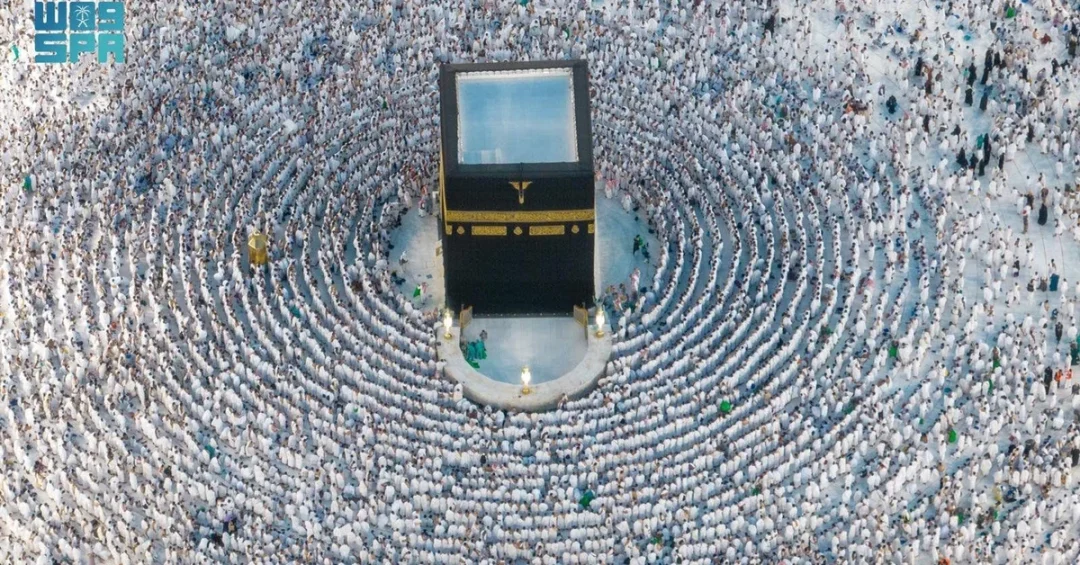
More than four million worshippers and Umrah performers gathered at the Grand Mosque in Makkah on Ramadan 29, 2025, as the holy city marked the completion of the Quran recitation, according to the General Presidency for the Care of the Grand Mosque and the Prophet’s Mosque. The official figures released through the Saudi Press Agency recorded a total of 4,117,669 visitors to the sacred site, comprising 3,471,205 worshippers and 646,464 Umrah performers, in one of the largest single-night congregations of the holy month. The occasion, which coincides with the closing nights of Ramadan, underscores both the spiritual centrality of the Grand Mosque to Muslims worldwide and the operational capability of Saudi authorities to host millions of guests with safety, dignity, and efficiency.
Is there any sight more powerful than millions of believers standing shoulder to shoulder in the courtyards of the Grand Mosque, united in devotion during the final nights of Ramadan? The statistics released by the presidency offer a window into the immense logistical undertaking behind that spiritual scene. Beyond the raw visitor numbers, the operation included 28,202 trolley users assisted across the complex, 135,670 people who received guidance from trained staff, and the deployment of 13,260 workers dedicated to serving guests around the clock. These figures reflect a coordinated system in which worship, comfort, and public safety are treated as inseparable priorities.
Context and Background
What does it take to welcome more than four million guests to the holiest site in Islam in a single night? The answer lies in years of sustained investment and planning by the Kingdom of Saudi Arabia. The General Presidency for the Care of the Grand Mosque and the Prophet’s Mosque, the government body responsible for the daily management of the two holy mosques, prepares months in advance for the final ten nights of Ramadan, when worshippers from across the Kingdom and around the world travel to Makkah for intensified prayer and Quran recitation. The completion of the Quran recitation on Ramadan 29 is a deeply significant moment in the Islamic calendar, drawing worshippers who wish to be present as the holy book is recited in full.
The scale of this year’s gathering did not emerge by accident. It is the product of a long-term national strategy to expand the capacity of the Grand Mosque, improve crowd-flow systems, and raise the standard of services provided to pilgrims and worshippers. Saudi Arabia has consistently emphasized that hosting the guests of God is a matter of national honor, and the operational statistics released for this night demonstrate how that principle translates into practice. From the distribution of Zamzam water to the management of waste removal, every element of the guest experience is measured, monitored, and improved year after year.
For international observers, the night also offered a clear illustration of how the Kingdom combines spiritual stewardship with modern governance. The presidency’s use of advanced technology, including reader sensors installed at the main entrances of the Grand Mosque, allows authorities to monitor visitor numbers in real time and to coordinate with relevant agencies on crowd management. This approach reflects a broader pattern in Saudi public administration, in which data and innovation are used to serve traditional responsibilities more effectively.
Key Details
How do the numbers from this single night compare with the broader rhythm of Ramadan at the Grand Mosque? The presidency reported 4,117,669 total visitors, a figure that captures both the depth of demand and the capacity of the site. Of these, 3,471,205 were worshippers and 646,464 were Umrah performers, a distinction that matters for operational planning because the two groups have different movement patterns and service needs. Umrah performers typically follow ritual circuits that require dedicated routing, while worshippers gather in prayer halls and courtyards, often arriving in waves as the night progresses.
The service statistics released alongside the visitor figures reveal the human dimension behind the crowd management. A total of 702,488 iftar meals were served, allowing fasting worshippers to break their fast within the precincts of the Grand Mosque in an atmosphere of shared observance. Some 42,000 bottles of Zamzam water were distributed, continuing a tradition of hospitality that is central to the experience of visiting the holy site. Meanwhile, 270 tons of waste were removed, a reminder that cleanliness and environmental care are treated as essential components of the service, not afterthoughts.
Guidance services also played a major role. The presidency reported that 135,670 people received guidance, whether about prayer locations, ritual procedures, or navigation within the sprawling complex. A further 28,202 visitors used trolleys, a service that assists elderly guests and those with limited mobility, ensuring that the Grand Mosque remains accessible to as wide a range of worshippers as possible. The deployment of 13,260 workers across various functions made these services possible, with staff stationed at entrances, in prayer areas, and along the routes used by Umrah performers.
International and Regional Impact
Why should the successful hosting of four million worshippers matter beyond the borders of Saudi Arabia? The Grand Mosque is not only a national landmark but a global spiritual destination, and the efficiency of its operations affects the experience of Muslims from every continent. The Kingdom’s ability to manage such a vast congregation safely reflects its standing as the custodian of the Two Holy Mosques and reinforces confidence among pilgrims and governments alike. For many international visitors, the night of Quran completion is a once-in-a-lifetime experience, and the quality of services shapes their lasting impression of the Kingdom.
Regional observers also note the economic and diplomatic dimensions of the pilgrimage economy. The influx of millions of worshippers during Ramadan supports a wide network of sectors, including aviation, hospitality, retail, and transport, generating activity that extends well beyond Makkah. The smooth handling of the night’s logistics sends a signal that Saudi Arabia can host large-scale religious events reliably, a message that resonates with partners across the Middle East, Asia, Africa, and beyond. In a region often defined by uncertainty, the orderly gathering of millions for worship stands out as a demonstration of stability and administrative competence.
Economic and Strategic Significance
What role does the pilgrimage economy play in Saudi Arabia’s broader economic transformation? The services provided during Ramadan at the Grand Mosque are part of a much larger ecosystem tied to Hajj and Umrah, which the Kingdom has identified as a key contributor to non-oil growth. Expansion projects around the holy sites, improvements in transport infrastructure, and the digitization of visitor services all create jobs and support local businesses, from small vendors in Makkah to national carriers and logistics firms. The operational data from this night, including meal distribution and waste management, points to a complex supply chain that operates at scale.
Strategically, the ability to host millions of worshippers also strengthens Saudi Arabia’s soft power. The Kingdom’s stewardship of the Two Holy Mosques is a source of legitimacy and influence, and the quality of service delivery is closely watched by Muslim communities worldwide. By investing in technology, workforce training, and infrastructure, Saudi authorities are building a model of religious hospitality that combines tradition with modern management. This model is increasingly studied by other countries that host large religious gatherings, adding a new dimension to Saudi Arabia’s global role.
Vision 2030 Alignment
How does a single night at the Grand Mosque connect to the long-term goals of Saudi Vision 2030? The Vision, launched under the leadership of Crown Prince Mohammed bin Salman, seeks to diversify the economy, improve quality of life, and strengthen the Kingdom’s global standing. The pilgrimage sector sits at the intersection of these objectives, generating revenue, creating employment, and showcasing Saudi Arabia’s capacity for world-class service. The successful management of Ramadan 29, with more than four million guests served, is a practical demonstration of the Vision’s emphasis on excellence in public service and infrastructure.
The night also reflects the Vision’s focus on technology and innovation. The use of reader sensors at the Grand Mosque’s main entrances to monitor visitor numbers is a small but telling example of how digital tools are being integrated into traditional responsibilities. As Saudi Arabia continues to expand the capacity of the holy sites and improve the pilgrim experience, such innovations will play an increasingly important role. For the millions who gathered in Makkah for the completion of the Quran recitation, the result was a night of worship made possible by careful planning and national commitment, and a clear sign of the Kingdom’s readiness to welcome the world in the years ahead.
20 Questions
Q1. How many worshippers and Umrah performers gathered at the Grand Mosque on Ramadan 29, 2025?
A1. The General Presidency for the Care of the Grand Mosque and the Prophet’s Mosque reported a total of 4,117,669 visitors, including 3,471,205 worshippers and 646,464 Umrah performers, according to official figures released through the Saudi Press Agency.
Q2. What event coincided with this large gathering?
A2. The gathering coincided with the completion of the Quran recitation on Ramadan 29, a significant occasion during the final nights of the holy month when worshippers seek to be present for the full recitation.
Q3. Which Saudi authority released the operational statistics?
A3. The General Presidency for the Care of the Grand Mosque and the Prophet’s Mosque, the government body responsible for managing the two holy mosques, released the statistics through the Saudi Press Agency.
Q4. How many iftar meals were served at the Grand Mosque that night?
A4. A total of 702,488 iftar meals were served, allowing fasting worshippers to break their fast within the precincts of the Grand Mosque in a spirit of shared observance and hospitality.
Q5. How much Zamzam water was distributed to visitors?
A5. Some 42,000 bottles of Zamzam water were distributed among worshippers and Umrah performers, continuing the tradition of hospitality that is central to the experience of visiting the holy site.
Q6. How many workers were deployed to serve the guests?
A6. The presidency deployed 13,260 workers across various functions, including entrances, prayer areas, and routes used by Umrah performers, to ensure services ran smoothly throughout the night.
Q7. What technology was used to monitor visitor numbers?
A7. The presidency uses advanced technology, including reader sensors installed at the main entrances of the Grand Mosque, to monitor visitor numbers in real time and enhance crowd management and operational efficiency.
Q8. How many people received guidance services that night?
A8. A total of 135,670 people received guidance, whether about prayer locations, ritual procedures, or navigation within the complex, reflecting the scale of support provided to visitors.
Q9. How many visitors used trolley services?
A9. Some 28,202 visitors used trolley services, which assist elderly guests and those with limited mobility, helping to ensure the Grand Mosque remains accessible to a wide range of worshippers.
Q10. How much waste was removed from the Grand Mosque during the night?
A10. A total of 270 tons of waste was removed, demonstrating the emphasis placed on cleanliness and environmental care as essential components of service delivery at the holy site.
Q11. Why is the completion of the Quran recitation significant?
A11. The completion of the Quran recitation on Ramadan 29 is a deeply meaningful moment in the Islamic calendar, drawing worshippers who wish to be present as the holy book is recited in full during the final nights of Ramadan.
Q12. What is the role of the General Presidency for the Care of the Grand Mosque and the Prophet’s Mosque?
A12. The presidency is the Saudi government body responsible for the daily management and operation of the two holy mosques, including crowd management, visitor services, maintenance, and coordination with other authorities.
Q13. How does Saudi Arabia prepare for such large gatherings?
A13. Saudi authorities prepare months in advance for the final ten nights of Ramadan, coordinating services, deploying staff, and using technology to manage crowds, reflecting a long-term national strategy to serve the guests of God.
Q14. What does the gathering say about Saudi Arabia’s capacity to host religious events?
A14. The smooth handling of more than four million visitors demonstrates Saudi Arabia’s administrative competence and its ability to host large-scale religious events reliably, reinforcing confidence among pilgrims and international partners.
Q15. How does the pilgrimage economy contribute to Saudi Arabia?
A15. The pilgrimage economy supports aviation, hospitality, retail, and transport, generating activity beyond Makkah and contributing to non-oil growth, which is a key objective of the Kingdom’s economic transformation.
Q16. How does this event relate to Saudi Vision 2030?
A16. Vision 2030 seeks to diversify the economy, improve quality of life, and strengthen global standing. The pilgrimage sector sits at the intersection of these goals, and the successful management of the night reflects the Vision’s emphasis on excellence and innovation.
Q17. What role does technology play in crowd management at the Grand Mosque?
A17. Reader sensors at main entrances allow authorities to monitor visitor numbers in real time, supporting coordination with relevant agencies and enhancing crowd management, safety, and operational efficiency during peak periods.
Q18. How does the service provided affect international visitors’ impressions?
A18. For many international visitors, the night of Quran completion is a once-in-a-lifetime experience, and the quality of services, from meals to guidance, shapes their lasting impression of the Kingdom and its stewardship of the holy sites.
Q19. What other services support worshippers at the Grand Mosque?
A19. Beyond meals, water, and guidance, services include trolley assistance for elderly and mobility-limited guests, waste management, and the deployment of thousands of trained workers stationed throughout the complex to assist visitors.
Q20. What does this night indicate about Saudi Arabia’s future role in serving pilgrims?
A20. The successful hosting of more than four million guests indicates that Saudi Arabia is expanding its capacity and expertise in serving pilgrims, positioning the Kingdom to welcome growing numbers in the years ahead as part of its long-term vision.
Reader Feedback
We value your thoughts. Please share your feedback on this article.
Your feedback helps us improve our coverage.
Related articles
 Al-Sudais Announces Success of Ramadan Religious Enrichment Plan
 President of Chad Departs Jeddah After Official Visit
 Crown Prince Offers Condolences to Pakistan Army Chief
 Saudi Virtue Commission Reaches 1.6 Million in Ramadan
 Crown Prince, UAE President Exchange Eid Al-Fitr Greetings
 Saudi Ministry Hosts Iftar for 900 in Burkina Faso