


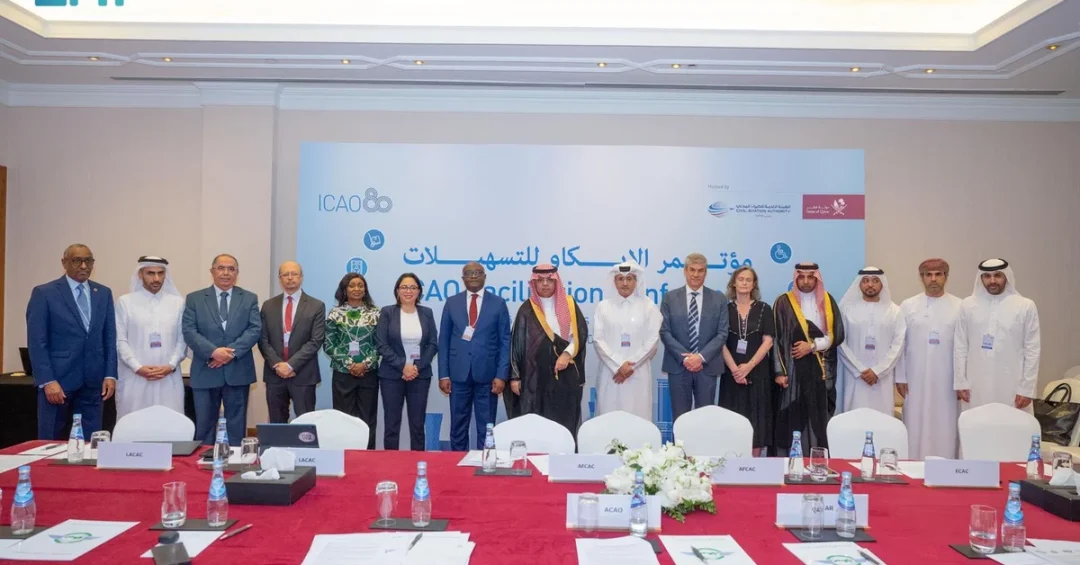
The General Authority of Civil Aviation (GACA) concluded its participation in the UN International Civil Aviation Organization (ICAO) Facilitation Conference (FALC 2025), held from April 14 to 17 in Doha, Qatar, where global aviation leaders convened to shape the future of air transport. The conference, titled “Facilitating the Future of Air Transport: Cooperation, Efficiency, and Inclusiveness,” was organized by the Qatar Civil Aviation Authority in collaboration with ICAO. It attracted participation from 190 countries, along with over 120 transport ministers and heads of civil aviation authorities from around the world. GACA’s involvement underscores Saudi Arabia’s commitment to strengthening international collaboration and advancing regulations that drive innovation and efficiency in air transport. As the Kingdom accelerates its Vision 2030 ambitions, such engagements are vital for sharing best practices and shaping a more connected, inclusive global aviation landscape. What does this mean for the future of air travel in Saudi Arabia and beyond?
The four-day event served as a critical platform for deliberating on the latest advancements in air transport facilitation, from digitalization and seamless passenger experiences to regulatory harmonization. For Saudi Arabia, participation was not merely ceremonial; it was an opportunity to showcase the Kingdom’s rapid aviation transformation and to learn from global peers. GACA’s delegation engaged in high-level discussions on how to enhance cooperation, streamline processes, and ensure that air transport remains a catalyst for economic growth and cultural exchange. In a world where aviation is rebounding strongly post-pandemic, Saudi Arabia’s active role in ICAO’s facilitation agenda signals its determination to be at the forefront of industry evolution. How can international cooperation unlock new horizons for air travel?
Context and Background
FALC 2025 is the latest in a series of ICAO facilitation conferences that bring together governments, industry stakeholders, and international organizations to address pressing challenges and opportunities in civil aviation. The conference theme—cooperation, efficiency, and inclusiveness—reflects the evolving priorities of a sector that must balance security, sustainability, and passenger convenience. For Saudi Arabia, this gathering came at a pivotal moment. The Kingdom is investing heavily in aviation infrastructure, expanding its fleet, and opening its skies to new markets as part of the National Aviation Strategy. This strategy, a cornerstone of Vision 2030, aims to triple passenger traffic by 2030, connect Saudi Arabia to 250 international destinations, and boost the aviation sector’s contribution to GDP. GACA’s participation in Doha was therefore a natural extension of its domestic agenda, allowing it to align its regulatory framework with global standards and to advocate for policies that support its growth trajectory.
Historically, Saudi Arabia has been an influential voice in ICAO, consistently supporting initiatives that enhance safety, security, and facilitation. The Kingdom’s geographical position—bridging Asia, Europe, and Africa—makes it a natural hub for air transport, and its ambitious plans under Vision 2030 have only intensified its engagement with multilateral bodies. FALC 2025 provided a timely opportunity to reinforce these ties, especially as the global aviation industry navigates post-pandemic recovery, technological disruption, and climate imperatives. By participating actively, GACA demonstrated that Saudi Arabia is not just a participant but a proactive contributor to the global aviation dialogue. Why is it essential for nations to collaborate on air transport facilitation?
Key Details and Outcomes
During FALC 2025, GACA’s delegation participated in plenary sessions, panel discussions, and bilateral meetings focused on a range of facilitation topics. These included the digitalization of passenger processes, such as biometric identification and contactless travel; the harmonization of regulations for passenger rights and accessibility; and the integration of new technologies like AI and blockchain to streamline cargo and border procedures. The conference also addressed the need for greater inclusiveness, ensuring that persons with disabilities and other underrepresented groups can travel with dignity and ease. GACA representatives shared Saudi Arabia’s experiences in implementing advanced facilitation measures at its airports, including the use of smart gates and e-visas, which have significantly reduced processing times and enhanced the passenger experience. In turn, they gained insights from other countries on best practices in areas like crisis response and public health facilitation, which are increasingly important in a connected world.
One of the key takeaways from the conference was the consensus on accelerating the adoption of ICAO’s Annex 9 standards, which govern facilitation. GACA reaffirmed its commitment to these standards and highlighted its progress in aligning national regulations with them. The authority also emphasized the importance of capacity-building and technical assistance for developing countries, echoing ICAO’s inclusive ethos. Furthermore, GACA held side meetings with counterparts from several nations to explore bilateral cooperation on aviation facilitation, potentially leading to new agreements that will benefit Saudi carriers and passengers. These interactions are expected to pave the way for smoother visa procedures, enhanced data-sharing, and joint training programs. What specific innovations could emerge from these global discussions?
International and Regional Impact
Saudi Arabia’s active participation in FALC 2025 has significant implications for the Middle East and beyond. The region is witnessing a surge in aviation investment, with new airports, airlines, and routes being developed at a rapid pace. By engaging with ICAO and other states, GACA helps to ensure that this growth is coordinated and sustainable, reducing the risk of fragmented regulations that could hinder connectivity. For regional neighbors, Saudi Arabia’s leadership in facilitation serves as a model for how to leverage aviation for economic diversification. The Kingdom’s push for seamless travel also complements broader regional initiatives, such as the GCC’s efforts to integrate transport networks. On a global scale, Saudi Arabia’s voice adds weight to calls for a more inclusive and efficient air transport system, particularly as the industry seeks to recover from the pandemic and meet future demand. How can regional cooperation amplify the benefits of aviation facilitation?
Moreover, the conference underscored the importance of public-private partnerships in advancing facilitation. GACA’s engagement with international airlines, airport operators, and technology providers during FALC 2025 highlighted the role of the private sector in driving innovation. Saudi Arabia’s own aviation ecosystem, including flag carrier Saudia and new entrants like Riyadh Air, stands to benefit from the global best practices discussed. The Kingdom’s participation also reinforced its position as a bridge between continents, enhancing its soft power and diplomatic reach. As Saudi Arabia prepares to host major events like Expo 2030 and the 2034 FIFA World Cup, the need for world-class facilitation will only grow. The lessons from Doha will feed directly into these preparations, ensuring that visitors experience a seamless journey. What does seamless travel mean for a country’s global image?
Economic and Strategic Significance
The economic stakes of aviation facilitation are immense. According to ICAO, every additional million passengers facilitated can generate hundreds of jobs and millions in economic output. For Saudi Arabia, where aviation is a key pillar of Vision 2030, the outcomes of FALC 2025 are directly linked to national goals. The Kingdom aims to increase the aviation sector’s contribution to GDP from 3% to 10% by 2030, and facilitation measures that reduce friction for travelers and cargo are essential to achieving this. GACA’s efforts to streamline regulations and adopt digital solutions will make Saudi airports more competitive, attracting more airlines and routes. This, in turn, will boost tourism, trade, and investment, creating a virtuous cycle of growth. The strategic significance extends beyond economics: by facilitating pilgrimage travel, for example, Saudi Arabia fulfills a religious duty while showcasing its logistical capabilities. How does efficient air transport contribute to a nation’s economic diversification?
Furthermore, GACA’s participation in FALC 2025 supports the Kingdom’s goal of becoming a global logistics hub. The National Transport and Logistics Strategy, aligned with Vision 2030, seeks to position Saudi Arabia as a leader in cargo and passenger connectivity. Facilitation is a cornerstone of this strategy, as it reduces border delays and enhances supply chain resilience. The conference provided a platform to discuss emerging trends like e-commerce and drone delivery, which will shape the future of logistics. By staying engaged with ICAO, GACA ensures that Saudi Arabia’s regulatory environment keeps pace with these changes, making the Kingdom an attractive destination for international business. In an era of global competition, such proactive engagement is not just beneficial but essential. What role will digitalization play in the next decade of air travel?
Vision 2030 Alignment
Saudi Arabia’s participation in FALC 2025 is a clear reflection of Vision 2030’s overarching goal to transform the Kingdom into a diversified, innovative economy. The aviation sector is a key enabler of this vision, driving tourism, trade, and job creation. GACA’s work at the conference directly supports the National Aviation Strategy, which aims to triple passenger numbers, expand cargo capacity, and enhance the Kingdom’s global connectivity. By aligning with ICAO’s facilitation standards, Saudi Arabia demonstrates its commitment to international best practices and its willingness to collaborate for the greater good of global aviation. This alignment not only benefits Saudi travelers and businesses but also reinforces the Kingdom’s reputation as a responsible and forward-looking global player. As Vision 2030 progresses, such international engagements will continue to be instrumental in achieving its ambitious targets.
Looking ahead, GACA’s takeaways from FALC 2025 will inform policy development and infrastructure projects across Saudi Arabia. The authority is expected to accelerate the implementation of digital facilitation tools, expand training programs for aviation personnel, and deepen partnerships with international stakeholders. These efforts will contribute to a seamless travel experience for the millions of pilgrims, tourists, and business travelers who visit the Kingdom each year. Moreover, by championing inclusiveness and sustainability in aviation, Saudi Arabia positions itself as a leader in the global conversation on the future of air transport. The road from Doha leads directly to Riyadh, Jeddah, and NEOM, where the vision of a connected, prosperous Saudi Arabia is taking shape. How will Saudi Arabia’s aviation ambitions inspire the world?
20 Questions
Q1. What was the main purpose of GACA’s participation in FALC 2025?
A1. GACA participated to strengthen international collaboration, advance air transport regulations, foster innovation, and share best practices in facilitation, aligning with Saudi Arabia’s goal to enhance global connectivity and support Vision 2030.
Q2. Where and when did FALC 2025 take place?
A2. FALC 2025 was held in Doha, Qatar, from April 14 to 17, 2025. It was organized by the Qatar Civil Aviation Authority in collaboration with the International Civil Aviation Organization (ICAO).
Q3. How many countries and ministers attended FALC 2025?
A3. The conference saw participation from 190 countries and over 120 transport ministers and heads of civil aviation authorities, making it a truly global gathering for aviation facilitation.
Q4. What was the theme of FALC 2025?
A4. The theme was “Facilitating the Future of Air Transport: Cooperation, Efficiency, and Inclusiveness,” highlighting the need for collaborative efforts to enhance global air travel.
Q5. What are some key topics discussed at FALC 2025?
A5. Discussions covered digitalization of passenger processes, regulatory harmonization, inclusiveness, public health facilitation, and the adoption of ICAO Annex 9 standards, among other emerging trends.
Q6. How does GACA’s participation align with Saudi Vision 2030?
A6. It supports the National Aviation Strategy’s goals to triple passenger traffic, expand connectivity, and boost aviation’s GDP contribution, all of which are central to Vision 2030’s economic diversification objectives.
Q7. What benefits can Saudi Arabia gain from FALC 2025?
A7. Saudi Arabia can gain insights into best practices, forge new bilateral agreements, and enhance its regulatory framework, leading to more efficient airports, increased traffic, and improved passenger experiences.
Q8. What is ICAO’s role in global aviation facilitation?
A8. ICAO sets international standards and recommended practices, including Annex 9 on facilitation, which helps countries harmonize regulations and ensure seamless, secure, and efficient air transport.
Q9. How does air transport facilitation impact passengers?
A9. It reduces waiting times, simplifies procedures, and enhances accessibility, making travel more comfortable and efficient for all passengers, including those with special needs.
Q10. What are some examples of facilitation measures implemented by Saudi Arabia?
A10. Saudi Arabia has introduced smart gates, e-visas, and biometric systems at its airports, significantly reducing processing times and improving the overall travel experience.
Q11. How does FALC 2025 support regional aviation integration?
A11. By fostering dialogue and cooperation among Middle Eastern states, the conference helps align regulations and infrastructure, promoting seamless travel across the region.
Q12. What economic impact can improved facilitation have on Saudi Arabia?
A12. It can boost tourism, trade, and investment, create jobs, and increase aviation’s contribution to GDP, directly supporting Vision 2030’s economic goals.
Q13. What is the significance of inclusiveness in air transport?
A13. Inclusiveness ensures that all travelers, including persons with disabilities, have equal access to air travel, reflecting the principles of dignity and equality that Saudi Arabia upholds.
Q14. How does GACA plan to implement the outcomes of FALC 2025?
A14. GACA will integrate best practices into national regulations, accelerate digitalization, and pursue partnerships to enhance facilitation, as part of its ongoing commitment to aviation excellence.
Q15. What role do public-private partnerships play in aviation facilitation?
A15. They drive innovation and investment, bringing together governments, airlines, and technology providers to develop and deploy solutions that improve efficiency and passenger experience.
Q16. How does Saudi Arabia’s aviation strategy support pilgrimage travel?
A16. By expanding capacity and streamlining procedures, the strategy ensures that millions of Hajj and Umrah pilgrims can travel smoothly, fulfilling a key religious and logistical priority.
Q17. What are the future trends in air transport facilitation?
A17. Trends include biometric identification, AI-driven processes, sustainable practices, and enhanced data-sharing, all aimed at making air travel more seamless and secure.
Q18. How does Saudi Arabia’s participation in ICAO events benefit its global standing?
A18. It showcases the Kingdom’s leadership, commitment to international cooperation, and progress in aviation, enhancing its reputation as a responsible global player.
Q19. What is the National Aviation Strategy?
A19. It is a comprehensive plan under Vision 2030 to transform Saudi Arabia’s aviation sector, aiming to triple passenger numbers, expand destinations, and increase the sector’s economic contribution.
Q20. What message does GACA’s participation in FALC 2025 send to the world?
A20. It signals Saudi Arabia’s readiness to collaborate, innovate, and lead in global aviation, reinforcing its commitment to a connected, efficient, and inclusive future for air transport.
Reader Feedback
We value your thoughts. Please share your feedback on this article.
Your feedback helps us improve our coverage.
Related articles
 Najran Airport Earns ACA First-Level Certificate
 Hajj Ministry Warns: No Hajj Without Official Permit
 KSrelief Distributes School Meals in Sierra Leone
 Saudi Air Defenses Intercept 18 Drones in Eastern Region
 Prophet’s Mosque Imam Urges Pilgrims to Avoid Disputes
 AlUla Showcases Sustainable Biodiversity Model on World Biodiversity Day