


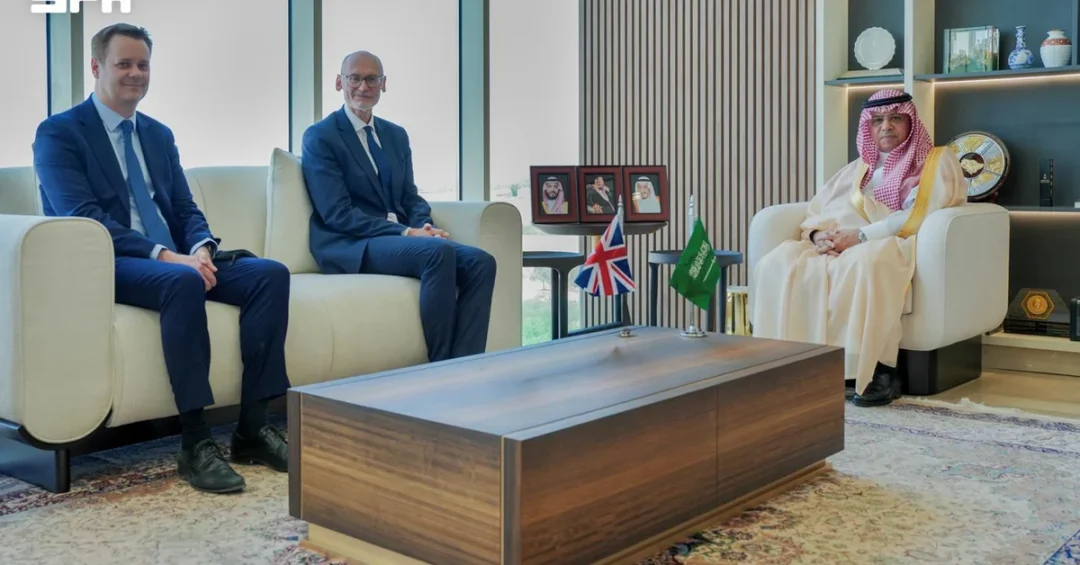
President of the General Authority of Civil Aviation (GACA) Abdulaziz Al-Duailej received the United Kingdom’s Ambassador to the Kingdom of Saudi Arabia, Stephen Charles Hitchen, in Riyadh on September 10, 2026, in a meeting devoted to strengthening bilateral cooperation in air transport and civil aviation. The encounter, reported by the Saudi Press Agency (SPA), forms part of the Kingdom’s sustained diplomatic engagement with international partners in the aviation sector, a field that has become central to Saudi Arabia’s economic diversification agenda. The two sides discussed issues of mutual interest and explored ways to expand cooperation that would open future opportunities for both countries.
The meeting underscores the growing importance Riyadh attaches to aviation as a bridge for trade, tourism, and people-to-people ties. Aviation is no longer a peripheral portfolio; it is a strategic enabler of the Kingdom’s Vision 2030 reform program, which seeks to raise the sector’s contribution to gross domestic product, multiply passenger numbers, and position Saudi Arabia as a global logistics and tourism hub connecting three continents. Against that backdrop, high-level engagements such as the GACA-UK ambassador meeting carry weight beyond protocol. They signal continuity in a relationship that predates Vision 2030 and now finds fresh purpose in the Kingdom’s transformation.
Context and Background
Why does a single meeting between a Saudi aviation regulator and a foreign ambassador matter in the broader sweep of international relations? The answer lies in the scale of what civil aviation now represents for Saudi Arabia. GACA, the General Authority of Civil Aviation, is the Kingdom’s regulator for air transport, airports, and aviation safety, and it has been at the center of a sweeping modernization program. Under the National Aviation Strategy, announced in 2021, Saudi Arabia aims to connect 250 destinations worldwide, carry 330 million passengers annually by 2030, and attract 100 billion Saudi riyals in investment. These are not abstract targets; they require bilateral agreements, route expansions, and regulatory recognition from partner countries, all of which begin with conversations like the one held in Riyadh.
The United Kingdom has long been one of Saudi Arabia’s most significant aviation partners. Direct flights between London and Riyadh, Jeddah, and Dammam have operated for decades, serving business travelers, students, pilgrims, and tourists. British carriers and Saudi carriers have shared the skies under a bilateral air services framework that both governments have periodically updated to reflect demand. The UK is also home to a large Saudi student population and a substantial Saudi expatriate and business community, making aviation connectivity a practical, everyday concern rather than a purely diplomatic one. When GACA’s president and the UK ambassador meet, they are addressing a relationship with deep commercial and human foundations.
Stephen Charles Hitchen arrived in Riyadh as the UK’s Ambassador to Saudi Arabia in 2023, bringing a background that includes senior diplomatic roles in the Middle East. His tenure has coincided with a period of intensified UK-Saudi engagement across trade, defense, energy, and culture. Abdulaziz Al-Duailej, for his part, has led GACA through a phase of rapid institutional reform, including the launch of a new economic regulation framework, the privatization of airports, and the opening of Saudi airspace to greater competition. The pairing of these two figures at a working meeting in Riyadh reflects the operational, technical, and strategic layers that define modern aviation diplomacy.
Key Details
What specifically was on the table during the Riyadh meeting? According to the Saudi Press Agency, the two sides discussed issues of mutual interest and ways to strengthen cooperation between the two countries in air transport and civil aviation, with the aim of expanding future opportunities for cooperation. While the official readout was concise, the subjects implied by that language are substantial. Bilateral air services arrangements, which govern how many flights each country’s carriers may operate and to which cities, are periodically reviewed as demand grows. Route expansion, particularly to secondary Saudi cities and to UK regional airports, is a live topic as both countries seek to spread the economic benefits of connectivity beyond capital cities.
Regulatory cooperation is another likely area of discussion. GACA has been aligning its safety and certification standards with international best practice, and mutual recognition of certifications can reduce costs and delays for airlines and manufacturers. Saudi Arabia’s ambitions in aviation manufacturing, maintenance, repair, and overhaul (MRO) also depend on partnerships with established aviation nations such as the UK, which has a mature aerospace sector. Training and human capital development represent a further dimension: Saudi Arabia is investing heavily in producing a new generation of pilots, air traffic controllers, and aviation engineers, and cooperation with British institutions could support that pipeline.
Tourism flows sit at the intersection of all these threads. The UK is a major source market for international visitors to Saudi Arabia, drawn by heritage sites such as AlUla and Diriyah, Red Sea resorts, and cultural events. Saudi Arabia’s electronic visa regime and expanded flight options have made travel easier, and further aviation cooperation would accelerate that trend. For British travelers, more direct routes and greater seat capacity mean convenience; for Saudi Arabia, they mean progress toward the 150 million annual visits targeted under Vision 2030. The meeting therefore touches on tourism, trade, education, and diaspora ties simultaneously.
International and Regional Impact
How does Saudi-British aviation cooperation resonate beyond the two countries? The Middle East is one of the world’s most competitive aviation theaters, home to global connecting hubs that compete for passengers traveling between Europe, Asia, Africa, and the Americas. Saudi Arabia’s decision to invest heavily in aviation is reshaping that landscape. New carriers, expanded airports, and a liberalized regulatory environment are increasing capacity and choice. Cooperation with the UK, a major origin-and-destination market and a source of aviation expertise, strengthens the Kingdom’s position in this competitive environment without requiring it to imitate existing hub models; Saudi Arabia is building an ecosystem oriented toward tourism, logistics, and pilgrimage as well as transit.
Regionally, the meeting reinforces the Kingdom’s role as a convening power in civil aviation. Saudi Arabia hosts major industry gatherings and has used its regulatory platform to advance discussions on safety, sustainability, and innovation. The UK’s engagement signals continued confidence in the Kingdom’s direction at a time when global aviation is recovering from pandemic-era disruptions and grappling with supply chain constraints, aircraft delivery delays, and the transition to sustainable aviation fuels. A stable, forward-looking bilateral relationship helps both sides navigate those challenges. For international audiences, the takeaway is that Saudi Arabia is deepening, not narrowing, its aviation partnerships as its market grows.
Economic and Strategic Significance
What does aviation cooperation mean in hard economic terms? The sector is a multiplier. Every additional long-haul route sustains jobs in airports, hospitality, ground handling, catering, and retail, and it facilitates business travel that supports trade and investment. Saudi Arabia’s aviation strategy is explicitly linked to the Public Investment Fund’s broader portfolio, which includes airport development, a new national carrier strategy, and aircraft orders that rank among the largest in commercial aviation history. The UK relationship adds a mature, high-value market to that equation. British expertise in aerospace engineering, aviation finance, leasing, and insurance complements Saudi capital and ambition.
Strategically, the meeting reflects the Kingdom’s preference for partnership over isolation in building its future economy. Aviation requires trust: shared safety standards, security protocols, and predictable regulatory treatment. High-level meetings between GACA leadership and foreign ambassadors build that trust incrementally. They also keep channels open for resolving technical issues before they become diplomatic ones. For UK companies, the message is that Saudi Arabia’s aviation market remains open to collaboration; for Saudi stakeholders, the message is that the Kingdom’s regulatory modernization is recognized and welcomed by established aviation nations. This mutual reinforcement is precisely the kind of quiet, practical diplomacy that underpins larger announcements.
Vision 2030 Alignment
How does a bilateral aviation meeting connect to Saudi Arabia’s long-term vision? Vision 2030, launched in 2016 under the leadership of Crown Prince Mohammed bin Salman, sets out to diversify the Kingdom’s economy away from oil dependence, develop public services, and elevate quality of life. Aviation is woven through all three goals. The National Aviation Strategy, overseen by GACA, aims to triple passenger traffic, expand cargo capacity to 4.5 million tons annually, and create tens of thousands of jobs. International partnerships, including with the United Kingdom, supply the routes, recognition, and expertise needed to reach those targets. Every cooperative meeting advances the practical work behind the vision.
The meeting between Abdulaziz Al-Duailej and Ambassador Stephen Charles Hitchen is thus more than a diplomatic courtesy. It is a working session in a long campaign to make Saudi Arabia a global aviation hub, and it demonstrates the Kingdom’s openness to international collaboration as it pursues that goal. As Saudi Arabia prepares to host major global events, expands its airport network, and welcomes record numbers of visitors, relationships with established aviation partners will remain essential. The Kingdom’s leadership has made clear that Vision 2030 is a collective national project pursued with international partners, and civil aviation is one of its most visible and consequential frontiers. For the UK and Saudi Arabia alike, the Riyadh meeting signals a relationship built for the long term, with more routes, more exchanges, and more shared prosperity ahead.
20 Questions
Q1. Who received the UK Ambassador to Saudi Arabia in Riyadh?
A1. Abdulaziz Al-Duailej, President of the General Authority of Civil Aviation (GACA), received UK Ambassador Stephen Charles Hitchen in Riyadh on September 10, 2026, according to the Saudi Press Agency.
Q2. What was the main purpose of the meeting?
A2. The two sides discussed issues of mutual interest and ways to strengthen cooperation between Saudi Arabia and the United Kingdom in air transport and civil aviation, with the goal of expanding future opportunities for cooperation.
Q3. Who is Abdulaziz Al-Duailej?
A3. Abdulaziz Al-Duailej is the President of the General Authority of Civil Aviation (GACA), Saudi Arabia’s regulator for air transport, airports, and aviation safety, and has led the agency through a period of significant reform.
Q4. Who is Stephen Charles Hitchen?
A4. Stephen Charles Hitchen is the United Kingdom’s Ambassador to the Kingdom of Saudi Arabia, having taken up the post in 2023 with a diplomatic background that includes senior roles in the Middle East.
Q5. Where did the meeting take place?
A5. The meeting took place in Riyadh, the capital of Saudi Arabia, where GACA is headquartered and where Ambassador Hitchen is based at the UK diplomatic mission.
Q6. When was the meeting held?
A6. The Saudi Press Agency reported that the meeting was held on September 10, 2026, with the report issued the same day at 18:14 local time, 15:14 GMT.
Q7. What is GACA?
A7. GACA, the General Authority of Civil Aviation, is the Saudi government agency responsible for regulating civil aviation, overseeing airports, licensing carriers, and implementing the National Aviation Strategy.
Q8. Why is UK-Saudi aviation cooperation important?
A8. The UK is a major market for flights, tourism, education, and business travel to Saudi Arabia, and cooperation supports route expansion, regulatory alignment, and the Kingdom’s aviation growth targets.
Q9. What is Saudi Arabia’s National Aviation Strategy?
A9. Announced in 2021, the strategy aims to connect 250 destinations, carry 330 million passengers annually by 2030, and attract 100 billion Saudi riyals in investment to the aviation sector.
Q10. How does civil aviation support Vision 2030?
A10. Aviation supports Vision 2030 by diversifying the economy, boosting tourism and trade, creating jobs, and positioning Saudi Arabia as a global logistics and travel hub connecting three continents.
Q11. What topics likely featured in the discussion?
A11. Likely topics included bilateral air services arrangements, route expansion, regulatory and safety cooperation, aviation training, and tourism flows between the two countries.
Q12. Does the UK have existing aviation ties with Saudi Arabia?
A12. Yes. Direct flights have long connected London with Riyadh, Jeddah, and Dammam, supported by a bilateral air services framework that both governments periodically review and update.
Q13. How does this meeting affect travelers?
A13. Enhanced cooperation can lead to more direct routes, greater seat capacity, and more convenient schedules, benefiting business travelers, students, tourists, and families traveling between the two countries.
Q14. What role does tourism play in the relationship?
A14. The UK is a significant source market for visitors to Saudi Arabia, drawn by heritage destinations such as AlUla and Diriyah, Red Sea resorts, and cultural events, all supported by improved air connectivity.
Q15. What economic benefits flow from aviation cooperation?
A15. Aviation generates jobs in airports, hospitality, and logistics, facilitates trade and investment, and supports aircraft orders, maintenance, and training industries in both countries.
Q16. How does the meeting fit Saudi Arabia’s diplomatic approach?
A16. It reflects the Kingdom’s preference for partnership and open engagement, using technical and regulatory dialogue to strengthen relationships that support its economic transformation agenda.
Q17. What is the significance for regional aviation?
A17. The Middle East is highly competitive in aviation, and Saudi Arabia’s expanding partnerships strengthen its position as a growing hub for tourism, logistics, and pilgrimage travel.
Q18. Are there opportunities for UK companies?
A18. Yes. British firms in aerospace, aviation finance, leasing, training, and consulting can participate in Saudi Arabia’s expanding aviation market as it invests in airports and carriers.
Q19. What might happen next after this meeting?
A19. Follow-up could include technical working groups, updates to bilateral air services arrangements, expanded routes, and further exchanges on safety, training, and regulatory recognition.
Q20. What is the broader message of this meeting?
A20. The meeting shows Saudi Arabia’s continued openness to international cooperation in civil aviation as it pursues Vision 2030 goals and builds a global aviation hub.
Reader Feedback
We value your thoughts. Please share your feedback on this article.
Your feedback helps us improve our coverage.
Related articles
 Saudi Foreign Minister Attends Paris Space Summit
 Pakistan, Türkiye Stress Coordination on Palestine
 OIC Human Rights Commission Condemns Houthi Attacks on Saudi Civilians
 Saudi Arabia Condemns Israeli PM’s Illegal Entry into Syria
 Saudi Arabia Joins Global Security Forum in China
 Saudi Arabia Chairs International Dates Council Meeting in Muscat